Umbrella Assembly Line Balancing for Reliable Bulk Output
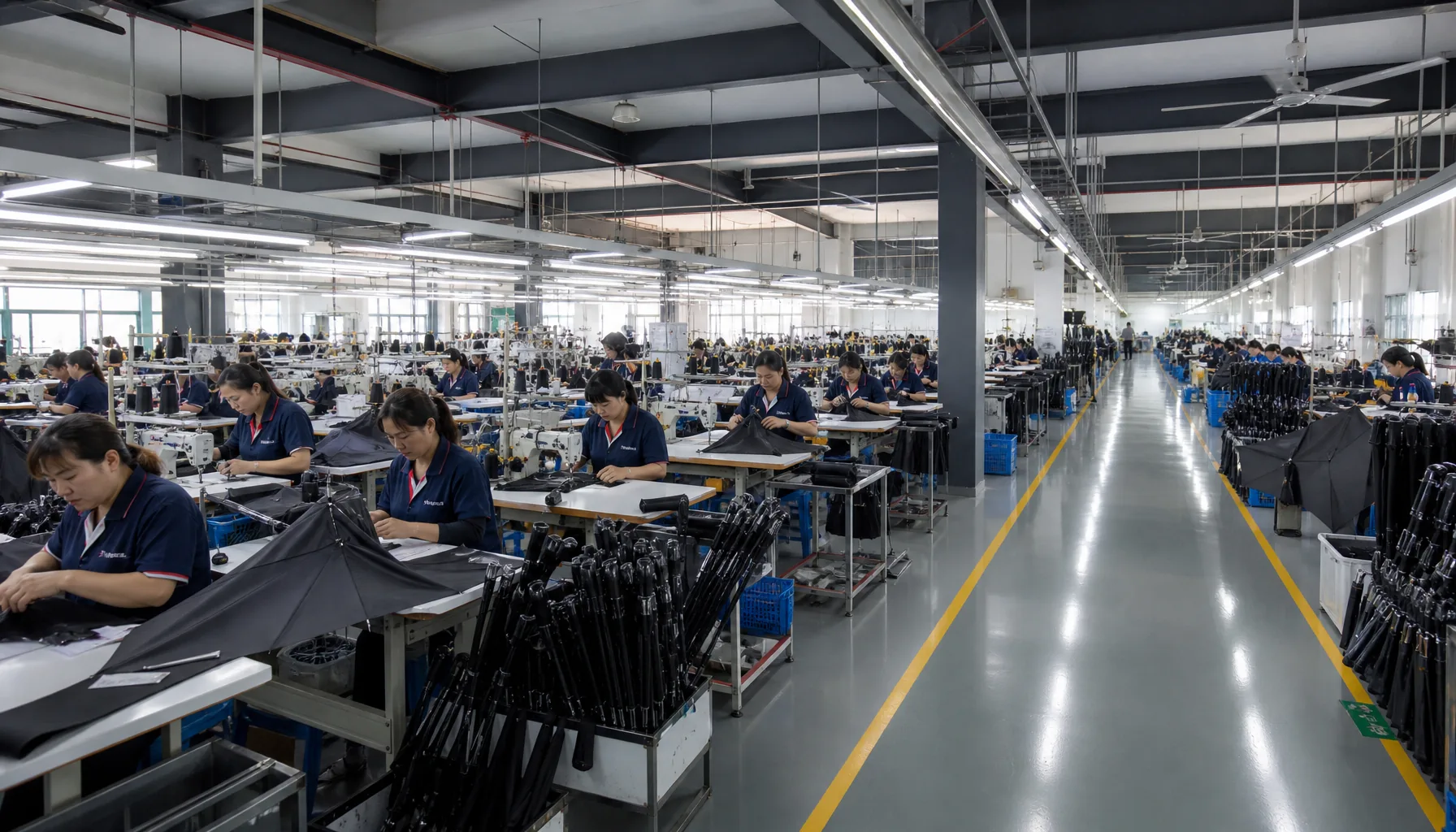
When a bulk umbrella order is late, the problem usually started long before packing—at the cutting table, rib setting bench, sewing stations, or final inspection queue. On our Songxia factory floor, umbrella assembly line balancing is how we keep fabric panels, frames, handles, tips, and QC moving at the same pace, so one slow process does not distort lead time or push defects downstream.
Where Umbrella Assembly Lines Commonly Slow Down
The slowest umbrella line is usually not the line with the fewest workers; it is the line where station times are mismatched. A clean umbrella factory production flow starts with frame preparation, then canopy sewing, canopy mounting, handle fixing, mechanism check, packing, and carton sealing. Frame preparation looks simple, but 8K steel frames, 10K fiberglass frames, and 16K windproof frames do not move at the same rhythm. A 23" manual 8K straight umbrella may need only basic rib alignment and runner movement checks, while a 27" 16K double-canopy model needs more rib inspection, spring tension checking, and vent-layer orientation before it can feed mounting. If frame prep sends mixed models without buffering, canopy mounting workers either wait for frames or get overloaded with complex units. Good umbrella assembly line balancing starts by timing each station by SKU, not by assuming one umbrella equals one unit of labor.
Canopy sewing is another common choke point because fabric behavior changes by material and print method. A 190T pongee solid-color canopy runs faster than a 210T pongee panel with edge binding, UV coating, or tight logo placement. POE, PVC, and EVA canopies slow sewing further because the material stretches, sticks, or marks if the presser foot pressure is wrong. In OEM umbrella assembly, the sewing team must also match panel sequence, logo direction, vent overlap, and seam allowance before the canopy reaches mounting. Sublimation panels are less forgiving than plain fabric because one rotated panel can fail brand inspection even if the umbrella opens correctly. For bulk umbrella manufacturing, we normally separate simple promotional 21" or 23" models from 30" golf umbrellas and vented windproof models, otherwise the fast line keeps stopping behind the slowest canopy style.
Auto-open and auto-open-close mechanisms create bottlenecks after mounting because every unit must pass functional checks before packing. A manual umbrella check is mostly open-close smoothness, rib seating, cap tightness, and canopy tension; an auto-open unit adds spring force, button response, shaft lock, runner engagement, and safety clearance. If a 16K frame is paired with a double-canopy vented construction rated for 50+ mph wind-tunnel performance, the mechanism check cannot be rushed without creating returns. Complex packaging slows the back end in the same way: sleeve insertion, hangtag, barcode label, silica gel, gift box, master carton layout, and carton sealing may take longer than handle fixing. This is where umbrella lead time control often breaks down. At ZheBrella, our standard practice is to balance packing labor separately for retail-box orders and inspect to AQL 2.5 before FOB or DDP shipment scheduling.
Balancing Labor Across Frame and Canopy Work
The first rule of umbrella assembly line balancing is that sewing output must be planned against frame output by model, not by total order quantity. A simple 23" 8K straight umbrella with steel shaft and 190T pongee canopy may need one canopy sewer for every 2.5 to 3 frame assemblers, because the canopy is flat, single-layer, and quick to lock at the top notch. A 30" golf umbrella with 16K fiberglass ribs and a double-canopy vented windproof structure changes the ratio completely; the vent layer, overlap tolerance, and extra bartacks often require 30% to 45% more sewing minutes per piece. If the frame line keeps pushing ribs, stretchers, runners, and tips at full speed while sewing lags, WIP piles up in tied canopy bundles, and final assembly starts mixing lots, which is where shade variation, wrong logo panels, and missing inspection marks happen.
For OEM umbrella assembly, we balance labor after confirming the real bottleneck: panel cutting, printing, sewing, frame riveting, or final mounting. Multi-panel promotional prints are usually not limited by frame assembly; they are limited by registration control and panel sorting. A 10K auto-open umbrella with four-color screen prints on alternating panels may need extra workers before sewing just to check left-right panel sequence, especially when PMS color matching is required. Heat-transfer logos on 210T pongee can move faster once the jig is set, but sublimation on white panels needs longer curing and cooling control. In our standard practice at ZheBrella, a line leader records hourly output for canopy sewing and frame assembly separately, then moves two or three cross-trained operators during the shift instead of waiting until the end-of-day report shows 3,000 unfinished canopies or 5,000 idle frames.
Good umbrella factory production flow protects umbrella lead time control more than any promise written on a quotation sheet. For bulk umbrella manufacturing, I prefer to release frames and canopies in matched batches of 300 to 500 pieces, with color, rib count, handle type, and logo version marked on each traveler card. Manual-open 21" compact models can often flow through with lighter balancing because frame assembly is fast and repetitive, but auto-open-close mechanisms need more functional checks for spring force, runner lock, and shaft retraction before canopy mounting. Windproof models rated for 50+ mph in a wind-tunnel test also need more time at final inspection, because fiberglass rib recovery, vent alignment, and seam tension affect performance. If AQL 2.5 inspection finds skipped stitches or loose tips late, rework consumes the same operators needed for the next shipment, so balancing has to include inspection and repair capacity, not only sewing and riveting.
Station Controls for Consistent Mechanism Quality
Open-close testing should be short enough to fit production rhythm but strict enough to protect umbrella lead time control. Our standard practice at ZheBrella is 100% functional open-close testing at the mechanism station, then sampling again after canopy attachment and final packing under AQL 2.5 unless the buyer specifies tighter inspection. For manual and auto-open styles, every unit should open fully, lock at the crown, close without rib inversion, and show no runner slip after a firm shake. For auto-open-close, I require open, close, shaft reset, and second open as one complete cycle; many weak springs pass the first open and fail only after reset. During umbrella assembly line balancing, I keep this station slightly ahead of sewing and final inspection rather than overloaded at the end, because mechanism rework after canopy stitching damages 190T or 210T pongee and ruins throughput. A stable line catches sticky buttons, weak springs, loose handles, and short runner travel before they become late-stage rejects that push a 25-day lead time into 35 days.
How Planning Protects MOQ and Lead Time Commitments
The safest way to protect MOQ and lead time promises is to freeze the critical path before cutting fabric, not after the sewing floor is already waiting. In bulk umbrella manufacturing, the schedule is usually controlled by four gates: component readiness, fabric arrival, PP sample approval, and carton booking. Frames, ribs, runners, tips, handles, springs, and shafts must be matched to the confirmed spec, especially when the order uses mixed structures like 8K fiberglass ribs for a 23" auto-open stick umbrella or 10K steel ribs for a 21" folding model. If one plated shaft or custom EVA handle arrives three days late, the whole OEM umbrella assembly line loses rhythm because canopy sewing cannot feed final assembly at the planned takt time. For printed 190T or 210T pongee, we also check greige fabric stock, dye lot, coating, logo film, and color fastness before PP approval, because a rejected Pantone shade can add 5-7 days before mass cutting.
PP approval is not paperwork; it is the production lock. Once the buyer signs the pre-production sample, we release the BOM, cutting marker, print screens or heat-transfer films, sewing guide, packing method, and AQL 2.5 inspection checkpoints. Good umbrella assembly line balancing depends on that lock because canopy cutting, panel printing, sewing, frame assembly, final inspection, and packing must all move at compatible speed. A 27" double-canopy vented golf umbrella with UPF 50+ coating, fiberglass shaft, and windproof ribs takes more floor time than a simple manual 23" straight umbrella, even if the order quantity is the same. Our standard practice at ZheBrella is to build a backward schedule from the ex-factory date, then reserve sewing lines, assembly benches, and inspection capacity only after PP approval is realistic, not assumed. This is how umbrella lead time control stays honest when buyers request tight event deadlines.
Small MOQ trial orders need a different planning mindset from container-level FOB or DDP shipments. For a 300-500 piece MOQ, the risk is usually setup loss: printing plates, fabric spreading, thread changes, and carton labeling take almost the same preparation time as a larger run, so factories often batch trial orders with similar 21", 23", or 30" constructions to avoid idle machines. Lead time may be 15-25 days if stock fabric and standard frames are used, but custom Pantone fabric, sublimation panels, or molded handles can push it beyond 30 days. For 20-foot or 40-foot container shipments, the umbrella factory production flow must also include carton booking, pallet plan, container loading sequence, customs documents, and DDP delivery buffers. FOB Ningbo or Shanghai usually needs earlier booking during peak rain-season months, while DDP orders require extra days for carton marks, HS code checks, inland trucking, and destination clearance.
Production Data Buyers Should Request
Pre-shipment inspection results should be requested in full, not only as a pass or fail email. For bulk umbrella manufacturing, buyers should ask for AQL 2.5 reports showing sample size, critical/major/minor defects, carton count checked, labeling verification, and functional tests such as 20 open-close cycles, water spray testing, and wind resistance checks where relevant. If the order claims Teflon coating, UPF 50+ UV protection, or 50+ mph wind-tunnel survival, the report should reference the test method or internal standard, not just a product tag. This data should drive delivery promises for retail launches, trade shows, and outdoor events. If inspection history shows 3 days of normal rework on a 20,000-piece order, do not sell a 25-day lead time as if every carton will clear first pass. Strong umbrella lead time control means adding buffer for printing approval, material incoming inspection, AQL 2.5 recheck, and FOB or DDP booking windows before confirming the launch calendar.
Frequently Asked Questions
Why does a 16K umbrella usually take longer to assemble than an 8K umbrella?
A 16K umbrella has more ribs, more sewing seams, more attachment points, and more frame checks. Even when materials are ready, the extra operations can reduce daily line output.
Can line balancing shorten lead time without lowering quality?
Yes, if bottlenecks are removed without skipping inspections. The goal is to control WIP, add operators at slow stations, and keep in-line checks before the AQL 2.5 final inspection.
What line balance target should a bulk umbrella factory aim for?
For stable OEM output, many factories target each station within about 10-15% of the bottleneck cycle time. That usually keeps work-in-process under control and reduces waiting between cutting, sewing, frame assembly, and packing.
How does line balancing affect umbrella lead time for large orders?
When the slowest station is removed or split, total lead time often drops by 10-20% on repeat bulk programs because stations stop idling behind one bottleneck. The actual gain depends on canopy type, frame style, and whether the order uses printed panels or special packaging.
Which umbrella processes are most likely to create bottlenecks?
Printing, panel sewing, frame riveting, and final inspection are common choke points, especially on automatic or large-diameter umbrellas. These stations usually need extra operators, dedicated fixtures, or pre-kitted materials to keep the line moving.
Looking to Launch Your Custom Umbrella Line?
ZheBrella is a Zhejiang-based OEM/ODM umbrella manufacturer with 17 years of export experience. Free design, low MOQ from 100 pieces, windproof construction, full-color print.
Get Free Quote Now »People Also Search For
Related Articles
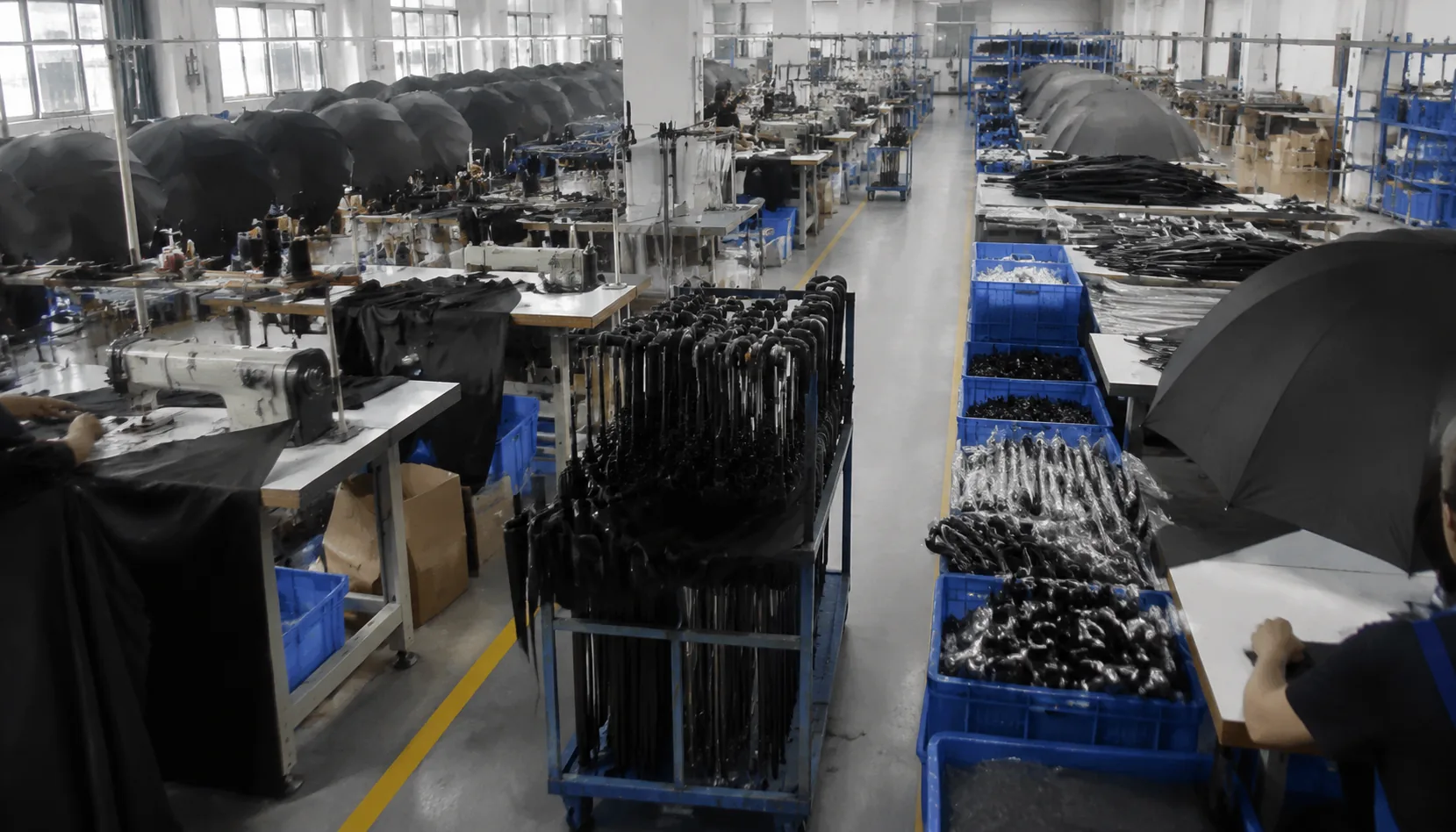
Umbrella Production Line Balancing for Bulk OEM Orders
Understand how balanced cutting, sewing, frame assembly, QC, and packing lines improve umbrella lead times and reduce bo...
Read More »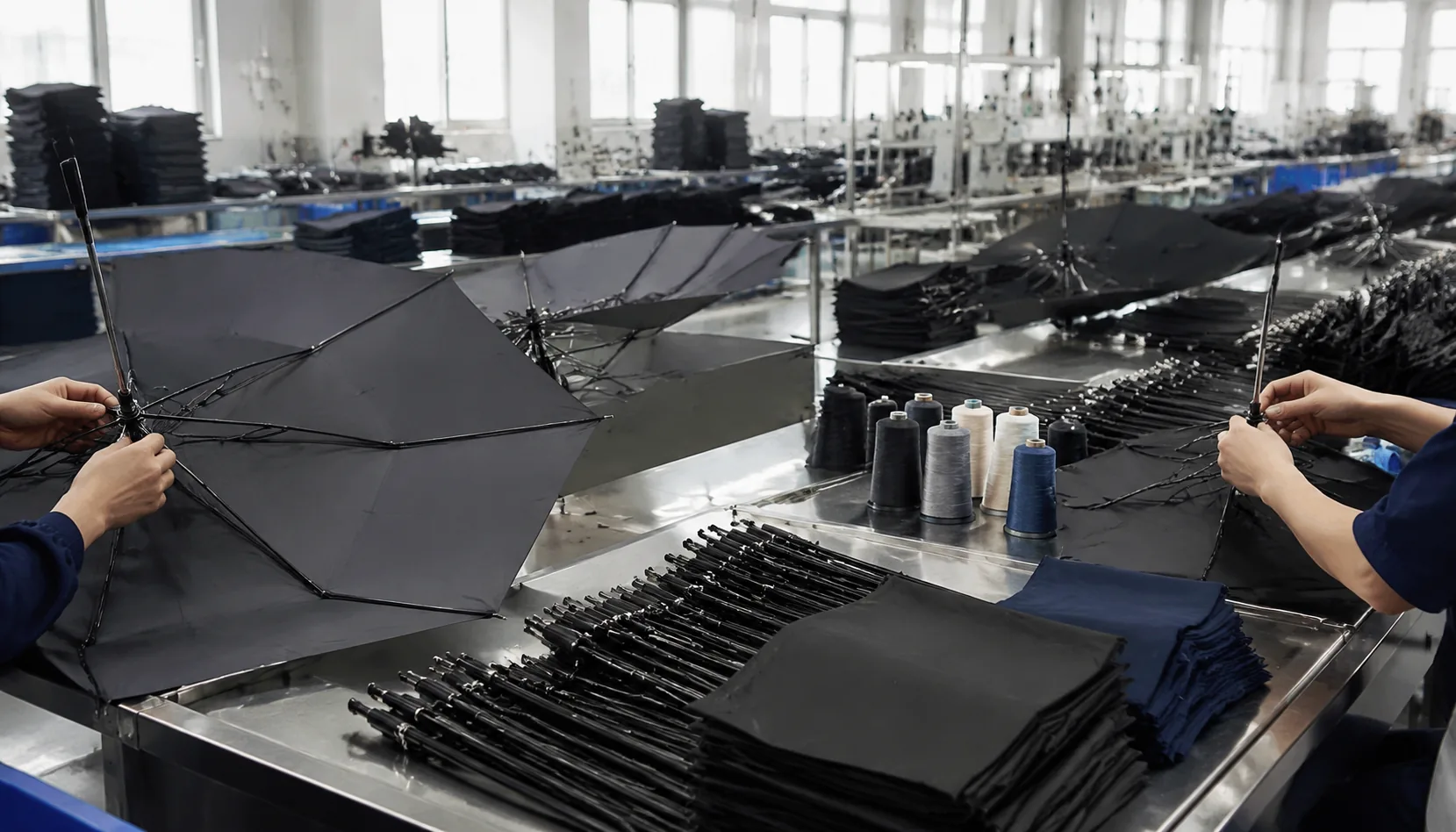
Umbrella Assembly Line Balancing for OEM Production
Plan umbrella assembly stations, labor allocation, and QC gates to keep bulk OEM orders on schedule without sacrificing ...
Read More »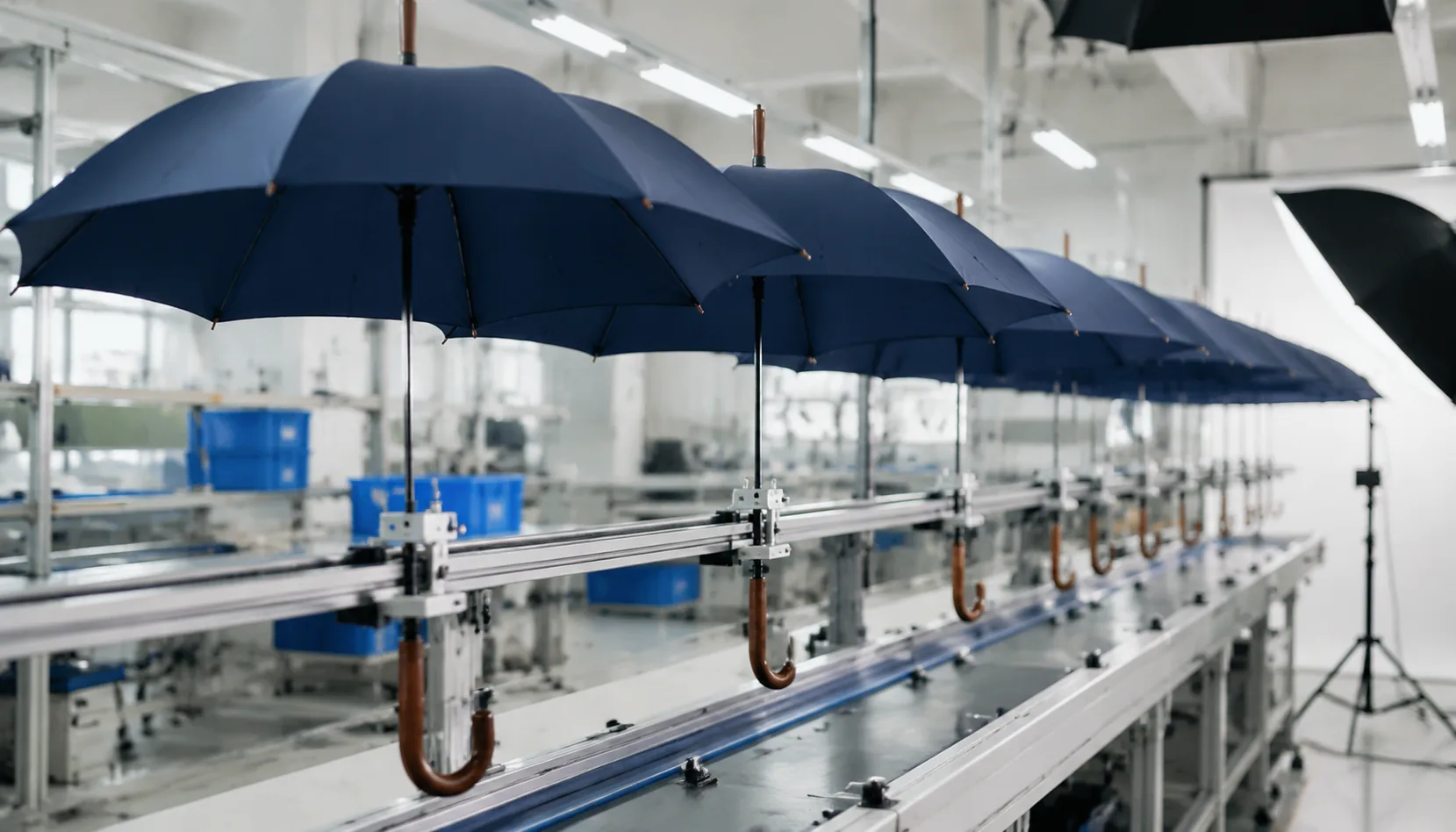
Umbrella Line Balancing for Consistent Mass Assembly
Understand how balanced workstations, takt time, and in-process QC keep OEM umbrella assembly stable for auto-open, wind...
Read More »