Inline Umbrella Assembly QC Gates Before Final Inspection
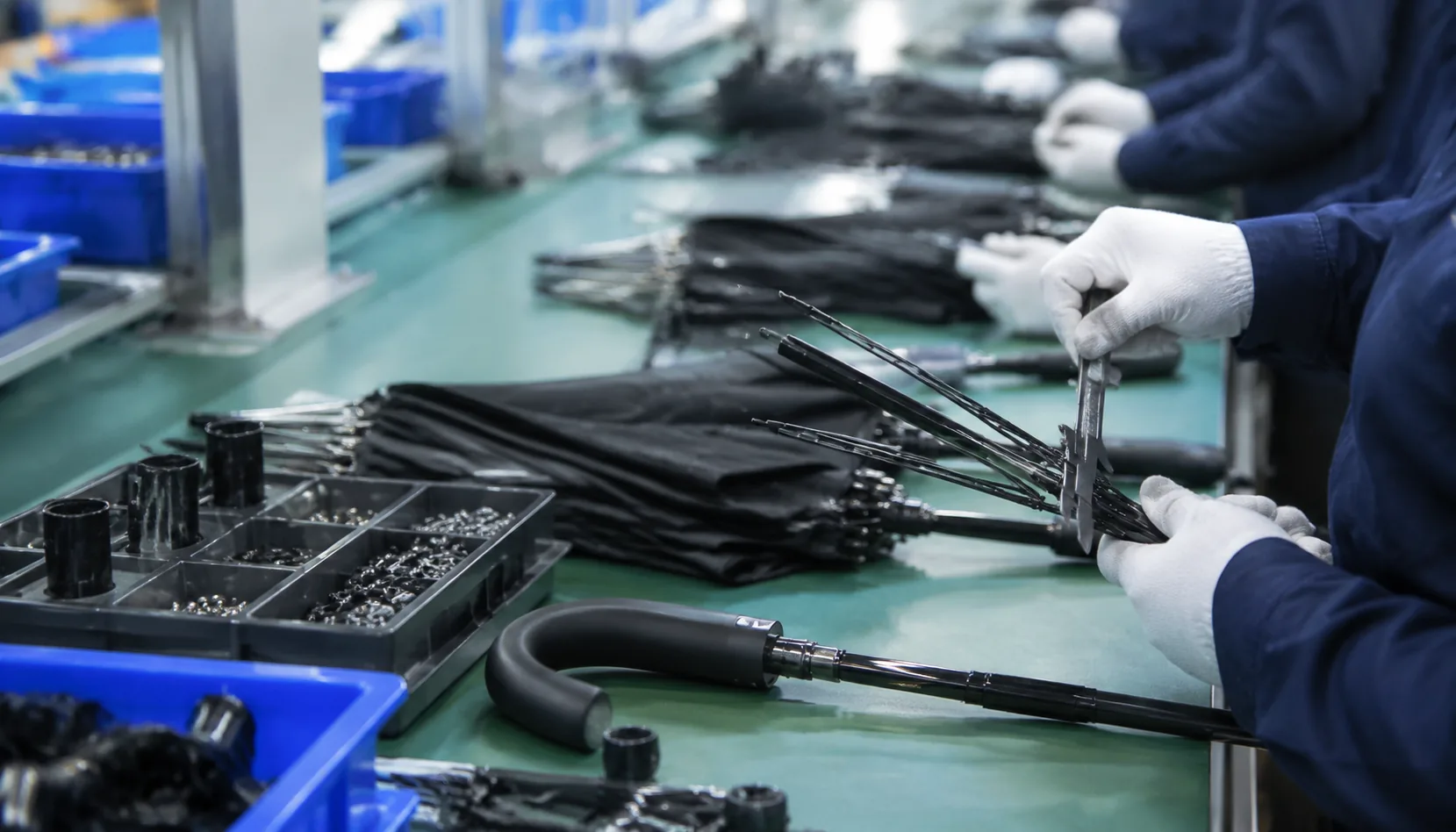
By the time an umbrella reaches AQL 2.5 final inspection, the expensive defects are already sewn, riveted, and packed in. On our Songxia assembly floor, umbrella assembly quality control works best as a series of small gates: frame alignment before canopy loading, stitch and tension checks before tips are fixed, auto-open cycling before handle packing, and carton checks before sealing. Buyers need those stops defined clearly, or rework becomes schedule risk.
Why Inline QC Reduces Final Inspection Failures
Final inspection is too late to discover a systemic assembly problem. By the time an AQL 2.5 umbrella inspection samples finished cartons, the fabric is already sewn, the runner is locked, the tips are fitted, the handle is attached, and the PO has been packed for FOB or DDP shipment. If 8K steel ribs are mis-riveted, if a 23" auto-open shaft has weak spring force, or if a 190T pongee canopy was sewn with uneven panel tension, the factory is no longer fixing one defect; it is opening cartons, sorting hundreds or thousands of pieces, and losing days. Good umbrella assembly quality control puts gates inside the line: frame opening test after rib assembly, canopy fit check before tip sewing, water-spray or coating spot check before packing, and function testing before carton sealing. Those checks catch drift when the batch is still small, usually within the first 30 to 100 pieces of a process step.
Inline umbrella inspection works because umbrella defects often come from process variation, not random accidents. A rib jig that shifts 1.5 mm can create poor canopy symmetry across an entire 10K golf umbrella order. A sewing operator using the wrong needle size can cause skipped stitches on 210T pongee before anyone sees a finished umbrella. A heat-transfer logo pressed at the wrong temperature can look acceptable at first but peel after a simple tape test. In our standard practice at ZheBrella, QC does first-piece approval, patrol inspection every 1 to 2 hours, and focused checks at frame assembly, canopy sewing, printing, handle fixing, and packing. For OEM umbrella QC, we record defect type, station, operator, and lot number, so the line leader can isolate the source instead of blaming the final inspector. That is the difference between correcting a setup and rebuilding a shipment.
The money is in preventing late rework. Once umbrellas are packed, even a minor defect such as loose tips, tilted logos, weak auto-open-close action, or mismatched EVA/POE/PVC canopy color can turn into a shipment delay, air-freight upgrade, retailer chargeback, or rejected promotional event deadline. Inline gates also protect the real umbrella production process schedule: cutting feeds sewing, sewing feeds assembly, assembly feeds packing, and one blocked stage can push a 25-day lead time into 30 days. AQL is still necessary because buyers need independent lot acceptance, but it should confirm that the process is stable, not discover that the process failed. When umbrella assembly quality control is staged correctly, final inspection failure rates drop because high-risk points have already been challenged with opening cycles, visual standards, seam-pull checks, coating confirmation, and carton quantity verification before the inspector ever pulls samples.
Frame Assembly Gate: Structure and Motion
Frame problems must be caught before canopy sewing, because a crooked skeleton will make even a well-cut 190T or 210T pongee cover look cheap. At this gate in the umbrella production process, we open every sampled frame fully and check rib alignment from the top view and side view. On an 8K frame, opposing ribs should sit at the same arc height, with no rib tip leading or lagging more than about 3 mm. On a 16K frame, balance is more sensitive; one over-bent stretcher can twist the whole canopy shape. For umbrella assembly quality control, I ask inspectors to spin the open frame slowly by hand and look for wobble at the notch, runner, and cap line, not just measure one rib with a ruler.
Rivets are checked for tight clinching, correct washer use, and no sharp burrs that can cut thread or canopy tape during later assembly. Steel ribs need attention for paint cracks, rust spots around drilled holes, and weak spring temper; fiberglass ribs need checks for splintering, whitening, loose end plugs, and inconsistent pultrusion diameter. Shaft straightness is checked by rolling the shaft on a flat table or sighting down the tube under light; a bent 23 inch or 27 inch shaft will cause sticky operation even if the frame technically opens. In OEM umbrella QC, I reject frames where the top spring, runner spring, or lower spring does not seat cleanly after three open-close cycles.
Runner movement is the motion check most buyers underestimate. The runner should slide smoothly without grinding, catching, or side play, and auto-open frames must lock positively without the user forcing the button. For manual umbrellas, we check hand force, notch engagement, and whether the safety cap prevents finger pinch. For auto-open-close compact frames, the shaft must collapse section by section without rebound or tube scraping. This inline umbrella inspection is separate from AQL 2.5 umbrella inspection at final packing; the point is to stop bad frames before fabric, printing, handle fitting, and labeling add cost. Our standard practice at ZheBrella is to quarantine any frame lot with repeated asymmetric 8K/16K balance issues and send it back to the frame cell for rivet, stretcher, or shaft correction before canopy mounting.
Canopy Mounting Gate: Fit, Sewing, and Appearance
The canopy mounting gate is where umbrella assembly quality control stops being theoretical, because a good frame can still become a rejected umbrella if the fabric is pulled unevenly. On 23" and 27" straight umbrellas, we check seam tension after the canopy is tied to each rib: the fabric should sit smooth between tips without diagonal drag lines, puckering at the top notch, or loose panels that flutter before the umbrella is even wind-tested. For 8K and 10K frames, one twisted panel usually means the crown sewing mark was missed or the runner was held off-center during mounting. On 16K golf umbrellas, the tolerance is tighter because small tension errors repeat across more ribs and show clearly under retail lighting.
Tip attachment is a hard gate, not a cosmetic note. Plastic tips must fully capture the canopy corner, metal tips must be crimped without cutting the fabric, and sewn-in tips need consistent bartack length so they do not tear out after repeated opening. During inline umbrella inspection, we open and close samples from each sewing bundle before trimming thread ends, because hidden stress shows at the tips first. For double-canopy vented windproof models, the upper and lower canopy vents must align rib-to-rib; if the vent overlap shifts by even 10–15 mm, airflow becomes uneven and the umbrella may invert earlier in a 50+ mph wind-tunnel test.
Appearance checks at this gate prevent expensive rework later in the umbrella production process. Printed logos must face the agreed panel direction, usually opposite the handle logo or centered on the front panel for promotional orders, and heat-transfer edges cannot lift when the canopy is flexed. For 190T and 210T pongee, shade consistency is checked under neutral light because mixed dye lots can pass in the sewing room and fail under warehouse LEDs. We also reject water-repellent surface damage here: scratches in Teflon coating, press marks from dirty sewing tables, needle oil, and shiny abrasion lines on dark navy or black panels. Our standard practice at ZheBrella is to record these defects before OEM umbrella QC final sampling, so AQL 2.5 umbrella inspection is not overloaded with problems that should have been caught at the mounting bench.
Mechanism Gate: Manual and Auto-Open Testing
The mechanism gate is where umbrella assembly quality control catches failures that a pretty canopy can hide. For manual frames, we sample each operator’s output at the line, not just the packed cartons: normally 5 pieces per 200-piece lot for routine inline umbrella inspection, increasing to 13 or 20 pieces if a new runner, shaft, or spring supplier is involved. Each sample is opened and closed 20 cycles, with the runner pushed to the top notch and released without hand assistance. A good manual 23" or 27" umbrella should lock with a clean click, no rib hesitation, and no canopy twist. Button force is checked by feel and with a simple push gauge when needed; 1.5–3.5 kgf is our usual working window, depending on handle style. Too light means accidental release in a bag; too heavy means complaints from older users or retail returns.
Auto-open and auto-open-close models need stricter testing because stored spring energy can turn a small defect into a safety issue. During OEM umbrella QC, we cycle auto-open units at least 30 times per sampled piece and confirm three things: the shaft extends fully, the top lock engages before the canopy rebounds, and the release button resets after every operation. On compact 21" auto-open-close umbrellas, we also check the close stroke because weak compression springs often pass the first open test but fail after 10–15 cycles. The runner must not stop halfway on 8K or 10K steel frames, and fiberglass rib models must not over-flex at the joint when the canopy snaps open. If the button sticks, if the shaft rotates, or if the spring sounds dry and metallic, the lot is held before sewing and packing continue in the umbrella production process.
Safety checks are not optional for auto-open-close orders, especially for promotional batches where end users are not trained to handle the product carefully. We inspect pinch points around the runner, exposed wire tips, burrs on the shaft slot, and sharp edges under plastic handles. The lock must hold when the canopy is shaken downward five times, and the close button must not fire from side pressure during carton vibration. For higher-risk models, our standard practice at ZheBrella is to record mechanism defects separately from canopy defects, so an AQL 2.5 umbrella inspection does not bury a dangerous spring problem under minor print or sewing issues. A failed mechanism gate triggers 100% sorting of that assembly station’s work-in-progress, plus a check of rivet setting, notch depth, and spring batch code. It is cheaper to stop 800 half-built umbrellas than to rework 800 finished umbrellas with sewn labels, hangtags, and export cartons already applied.
Packing Gate: Cartons, Labels, and Shipment Terms
Packing is the last inline umbrella inspection gate before goods leave the assembly floor, and it catches problems that final AQL sampling may only see too late. We check that each umbrella has the correct inner sleeve, hang tag, care card, silica gel where specified, and polybag warning print if the destination requires it. A 23" auto-open promotional umbrella and a 30" golf umbrella may both use 190T pongee, but their sleeve length, tip protection, and carton cube are not interchangeable. For retail OEM umbrella QC, we scan EAN/UPC barcodes from the actual label, not from the artwork file, because poor contrast or a 2 mm quiet-zone error can fail at the customer’s warehouse. PO labels are matched against item number, color code, quantity per carton, gross/net weight, carton dimensions, and made-in-China marking before the first master carton is sealed.
Master carton strength is not decoration; it is shipment insurance. A 16K windproof umbrella with fiberglass ribs and rubberized handle can become a rejected claim if 24 pieces are packed into a weak 5-ply carton with no corner support. We normally run a practical drop-risk review: carton weight under control, umbrellas alternating handle direction, no canopy compression against sharp tips, and enough tape width on the center seam. For e-commerce or DDP shipments, cartons may face more hand sorting than a straight FOB pallet load, so we use stronger cartons, clearer side marks, and sometimes individual kraft boxes. This packing gate is part of umbrella assembly quality control because crushed ferrules, bent shafts, cracked handles, and rubbed heat-transfer logos often happen after the umbrella production process is technically finished.
Packing approval also protects the shipment schedule. If carton marks, barcode labels, or PO stickers are corrected after final AQL 2.5 umbrella inspection, the loading date can slip by one or two days while workers reopen cartons, relabel, and reseal. FOB orders need clean commercial invoice, packing list, booking data, and shipping marks aligned with the buyer’s forwarder instructions; DDP orders add carton-level data, HS code confirmation, destination phone/address details, and sometimes Amazon FBA or retailer routing compliance. At ZheBrella, our standard practice is to approve one sealed carton as the packing standard before mass packing starts, then keep it at the line for comparison. That simple control reduces rework, keeps customs documents consistent with physical cartons, and gives procurement teams a cleaner handoff from factory inspection to vessel or truck departure.
Frequently Asked Questions
How many inline QC gates are typical in umbrella production?
Most OEM lines use at least four gates: frame assembly, canopy sewing, final assembly, and packing. More complex windproof or auto-open models may add mechanism-specific checks.
Does inline QC replace third-party AQL inspection?
No. Inline QC reduces defect rates during production, while AQL 2.5 final inspection verifies the finished shipment against the buyer’s approved sample and checklist.
Which inline QC gates should be completed before AQL 2.5 final inspection?
For OEM umbrella orders, typical gates include incoming material checks, frame assembly inspection, canopy cutting and stitching checks, runner and shaft function testing, logo position verification, and export carton packing review before final AQL sampling.
How many umbrellas should be checked during inline inspection?
Factories commonly inspect the first 20–50 pieces after line setup, then sample each production batch or every 1–2 hours depending on order size. Critical parts such as auto-open mechanisms may require 100% function testing before packing.
What defects are easiest to catch during assembly instead of final inspection?
Bent ribs, loose tips, uneven canopy tension, skipped stitches, weak rivets, misaligned logos, and sticky auto-open buttons are best caught inline. Fixing these before packing reduces rework and lowers the risk of failing AQL 2.5 final inspection.
Looking to Launch Your Custom Umbrella Line?
ZheBrella is a Zhejiang-based OEM/ODM umbrella manufacturer with 17 years of export experience. Free design, low MOQ from 100 pieces, windproof construction, full-color print.
Get Free Quote Now »People Also Search For
Related Articles
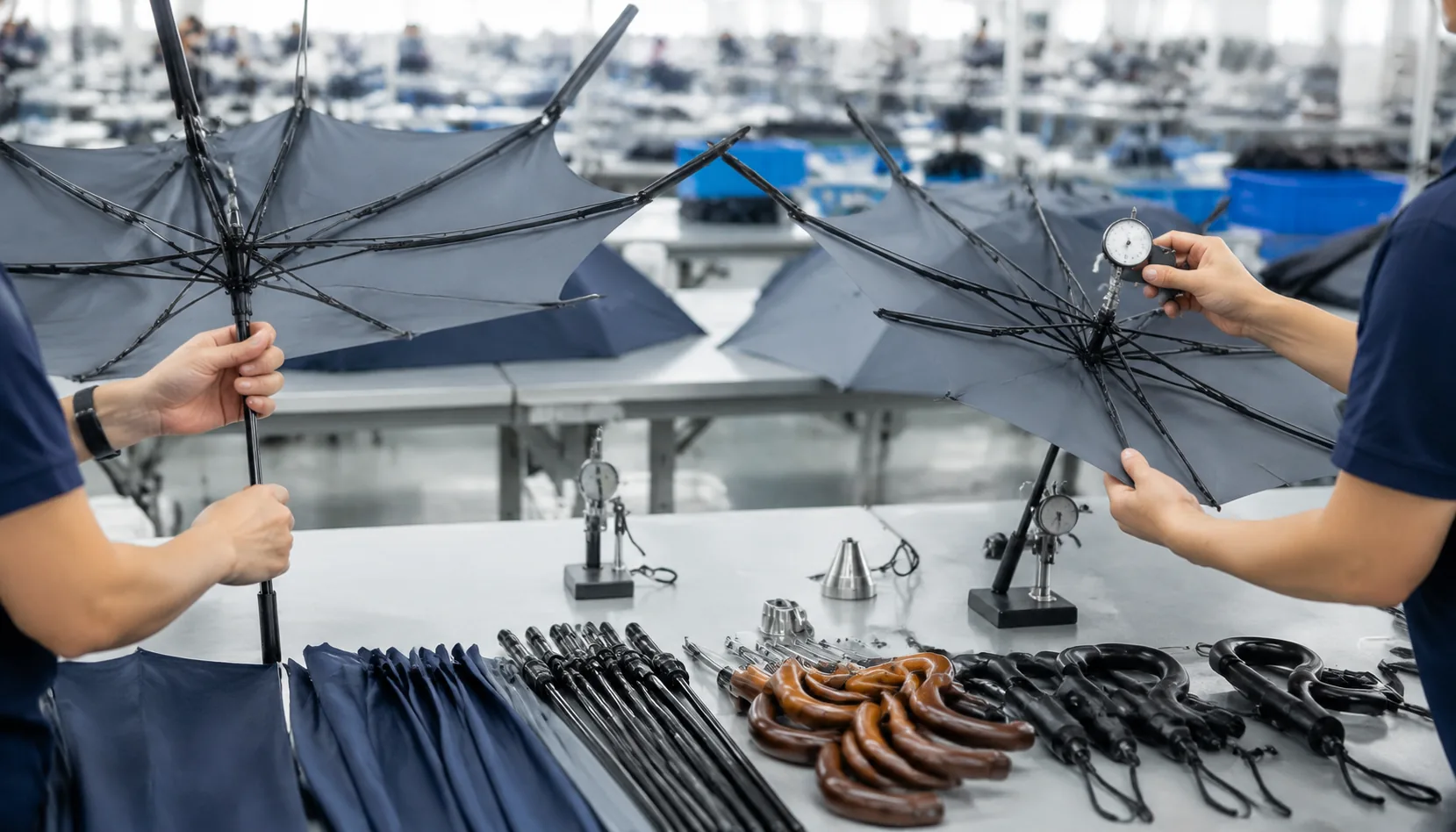
Inline Umbrella Assembly Checks Before Final Inspection
Use inline assembly checks to catch frame, fabric, handle, and mechanism issues earlier, reducing rework before final AQ...
Read More »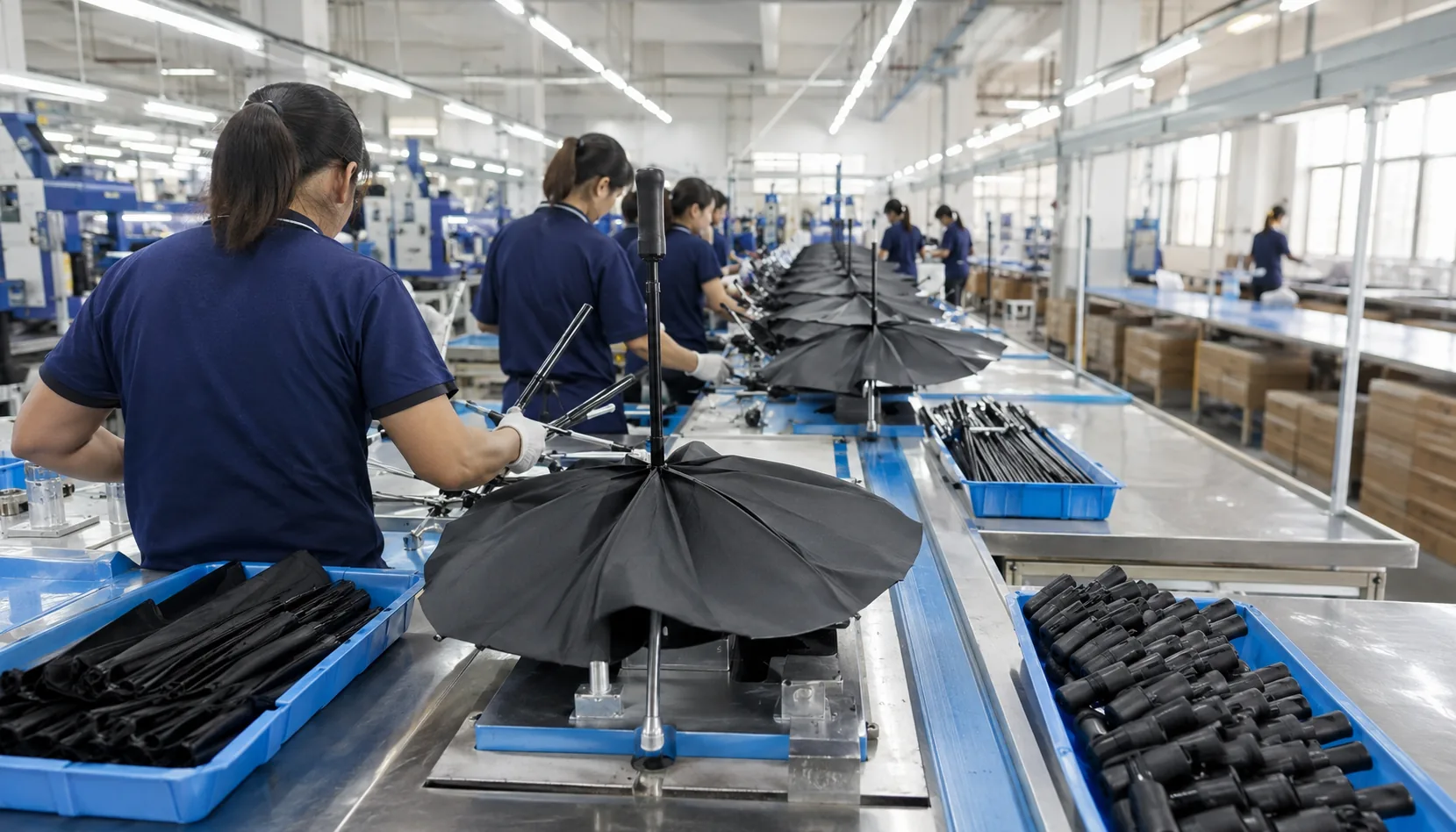
Umbrella Final Assembly Line Balancing for OEM Production
Plan umbrella assembly cells with takt time, inline QC gates, and pack-out checks to stabilize output, lead times, and A...
Read More »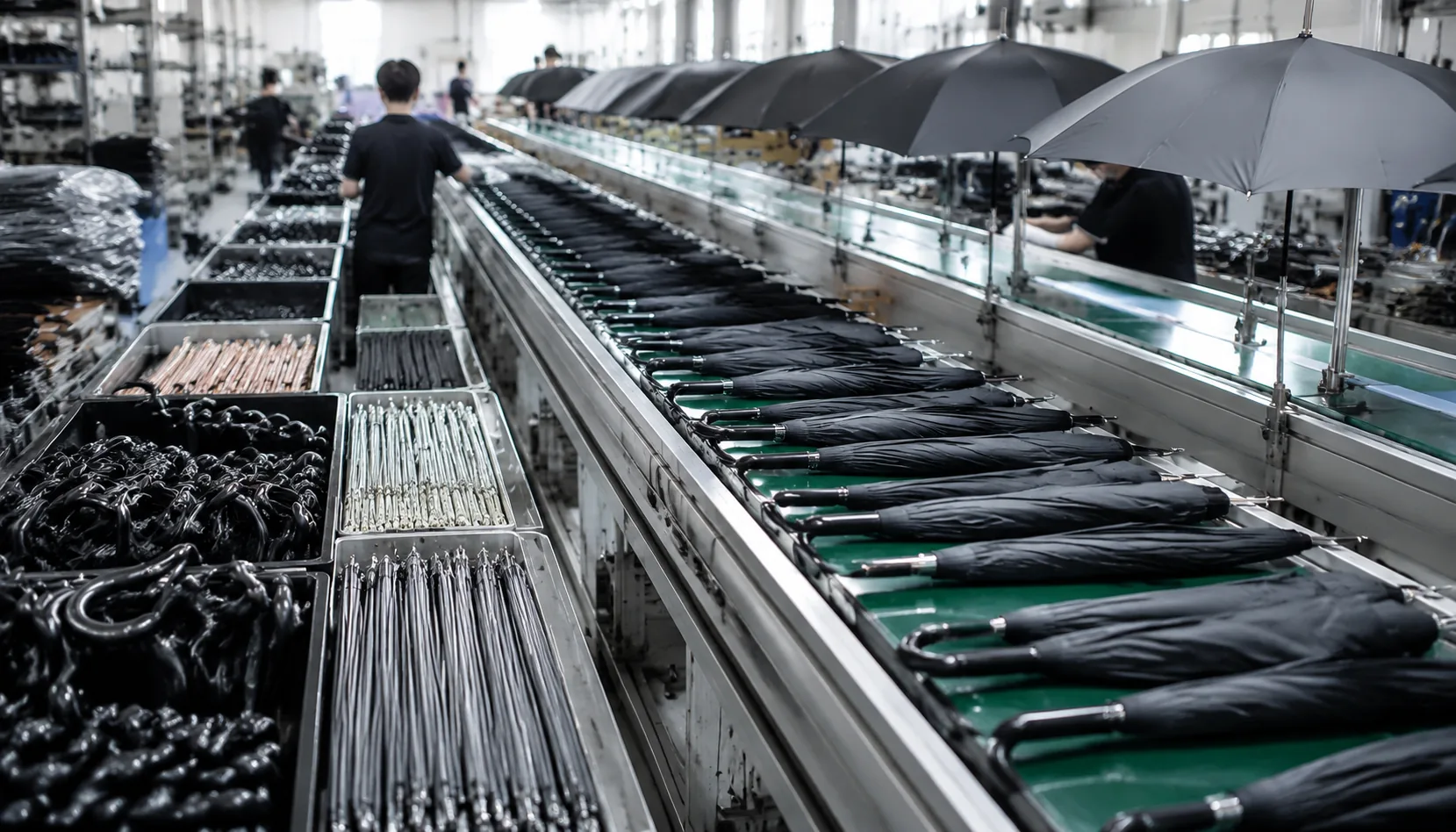
Umbrella Final Assembly Line Controls for Bulk OEM Orders
Improve bulk umbrella order consistency with final assembly controls for frame fit, auto-open function, canopy tension, ...
Read More »