Single-Canopy vs Double-Canopy Umbrellas for Buyer Programs
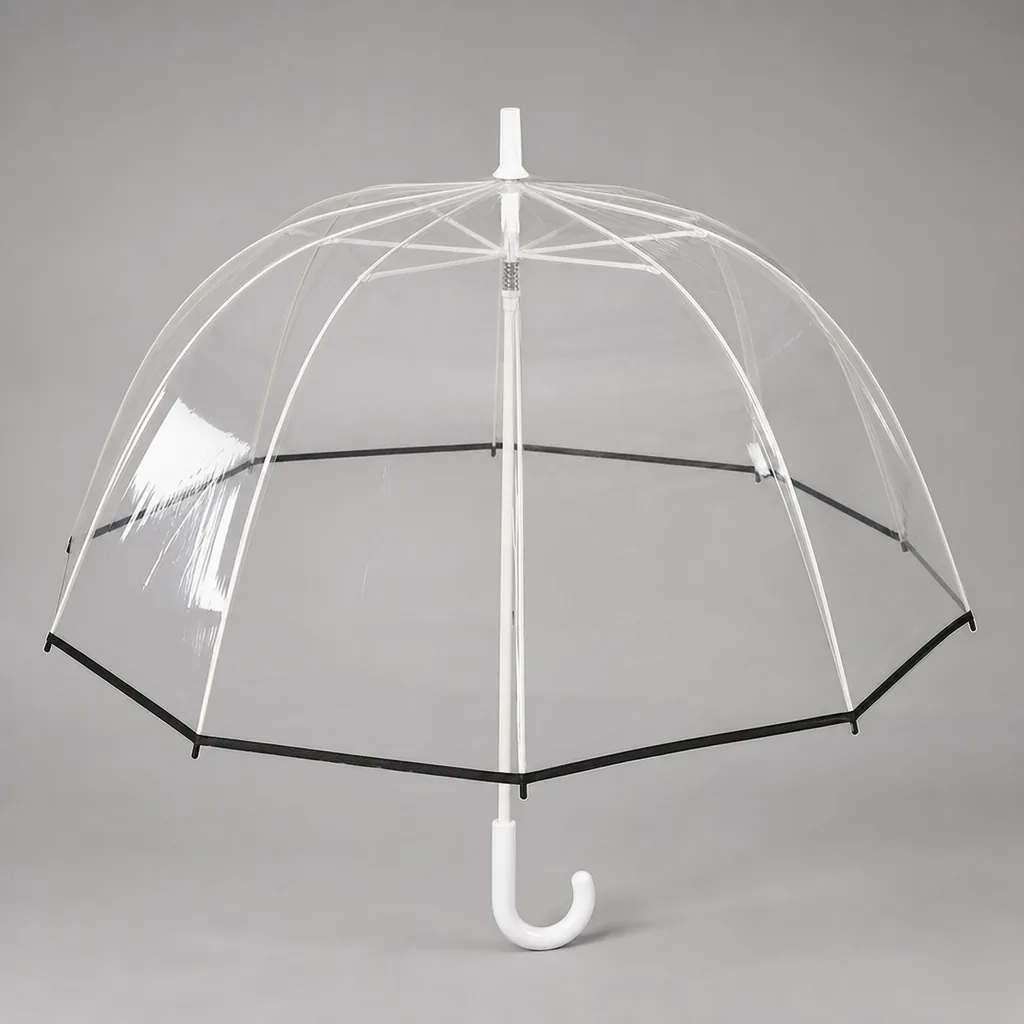
Choosing between single-canopy and double-canopy umbrellas looks simple until program requirements collide with wind claims, print layout limits, fabric yield, and landed cost targets. For buyer teams comparing specs across catalogs, a practical double canopy umbrella guide needs to account for how vent construction changes sewing time, frame loading, panel registration, and carton efficiency on the factory floor. The right choice usually comes down to matching end use and import constraints to the build method, not picking the more expensive option by default.
How the Two Constructions Differ
A single canopy umbrella uses one fabric layer attached to the rib tips and runner. In sourcing terms, it is the simpler construction: one panel set, one sewing pass for the canopy, and no vent structure between layers. Standard promotional runs typically use 190T or 210T pongee; clear dome styles usually switch to POE or EVA. A double-canopy umbrella adds a second fabric layer under the outer cover and builds in vent gaps so air can pass between the two layers instead of pushing against one solid surface. That changes the bill of materials and the production route. The factory must cut and match two panel sets, keep seam alignment consistent across all 8K or 10K panels, and control top-notch and tie-down placement so vent spacing stays even. Any practical double canopy umbrella guide should start there: the buyer is specifying a different construction method with more material, more labor, and tighter assembly control, not just an upgraded look.
The vent layout is what separates a true windproof umbrella design from a standard cover. On a proper double-canopy build, the outer layer overlaps the inner layer near the crown and panel edges to form concealed exhaust channels that release pressure in gusts. On larger 27-inch and 30-inch golf frames, especially with fiberglass ribs, that construction can test above 50 mph under controlled conditions. A single canopy umbrella has no secondary air path, so uplift loads the full canopy at once; on lower-cost steel frames, inversion usually starts at the stretcher or rib joint. That is why double-canopy construction is common in golf umbrella sourcing and outdoor event programs, where 23-inch to 30-inch coverage is used in open, windy spaces and buyers accept a higher FOB for better field performance. Cost-sensitive promotional umbrella program orders usually stay single-canopy because the simpler build keeps print cost, pack weight, MOQ planning, and DDP pricing more predictable on 5,000- to 20,000-piece runs.
Wind Performance, Frame Pairing, and Failure Points
Wind performance comes from the canopy and frame working as a system, not from canopy shape alone. A single canopy umbrella takes the full uplift load through one fabric skin, so the ribs, stretchers, runner, and center shaft absorb the pressure spike when a user turns a corner or steps out of a vehicle. On folding umbrellas, that usually means a 21-inch or 23-inch frame with fiberglass ribs and a steel or aluminum telescopic shaft built with enough wall thickness to limit wobble under load. On straight umbrellas, 27-inch and 30-inch frames create more leverage, so shaft stiffness and runner strength matter more than whether the canopy is 190T or 210T pongee. In a practical double canopy umbrella guide, the advantage of vented construction is straightforward: the overlapping upper and lower panels let air escape before pressure fully loads the rib set. When buyers pair a vented canopy with fiberglass ribs, the result is a windproof umbrella design that can often hold shape in 50+ mph testing. When the same canopy is paired with low-cost plated steel ribs, bending and kinking usually appear before the fabric fails.
Frame material is where showroom samples and field performance diverge. Fiberglass ribs recover after inversion, which is why buyers handling golf umbrella sourcing for coastal resorts, tournament merchandise, and commuter programs commonly specify fiberglass main ribs with fiberglass or mixed fiberglass-steel stretchers on 27-inch or 30-inch straight frames. Steel reduces unit cost and can feel rigid on first opening, but economy steel frames often fail at the rib joint, crack at the top notch, or pull out at the stretcher connection after repeated wind loading. The shaft spec matters just as much: a thin two-section auto-open-close shaft is not comparable to a 14 mm or 16 mm straight shaft on a vented 30-inch frame, and buyers should evaluate the spring housing and runner on any auto-open assembly with the same scrutiny as the rib set. For a promotional umbrella program shipped FOB with limited rework options, require rib material callouts, shaft diameter, frame weight, opening-cycle data, and AQL 2.5 inspection with inversion and stitching checks. The unit-cost premium for a double-canopy fiberglass frame is usually lower than the claim cost for bent ribs, broken runners, and blown canopy panels.
Printing, Color Matching, and Visual Trade-Offs
For print coverage, a single canopy umbrella is usually the lower-risk choice. On a standard 8K frame, buyers get eight uninterrupted outer panels; on common 23-inch and 27-inch sizes, each wedge stays free of vent cut lines, which preserves usable width for logos, sponsor names, and retail graphics. That matters for screen printing and heat transfer, where seam proximity quickly exposes small placement errors. Registration is simpler because the canopy is a single layer of 190T or 210T pongee cut from one marker set, so panel-to-panel variation is easier to control before sewing and easier to hold through AQL 2.5 inspection. For a promotional umbrella program with large marks, step-and-repeat branding, or tight setup tolerances, a single canopy umbrella generally means fewer sampling rounds, lower reject risk, and cleaner visual results after the canopy is stretched over ribs. Buyers should still watch artwork that runs near seam lines or rib pockets, because a shift that looks minor on a flat panel becomes obvious once the umbrella is assembled.
A practical double canopy umbrella guide should state the print compromise without softening it: vented construction supports windproof umbrella design, but it breaks up logo area and adds color decisions between the outer and inner layers. In golf umbrella sourcing, the outer canopy usually carries the primary branding, while the inner canopy is either matched or deliberately contrasted; black outside with red or safety yellow inside is a common choice because it stays conservative when closed and more distinctive when open. The trade-off is visual consistency. Under daylight or backlighting, the two layers can change how inks read: white backing can brighten translucent colors, while a dark inner canopy can mute them, so Pantone approval on its own is not enough. On an 8K layout, each panel is already a narrow triangle, and double-canopy vent seams reduce the safe print zone further. Critical marks should be shifted lower on the panel, text should stay clear of the vent area, and panel registration should be checked before full sewing. That extra sample round can add a few days to lead time, but it is usually cheaper than correcting a branded double-canopy program after approval.
Cost, Weight, and Shipping Implications
The unit-cost gap between a single canopy umbrella and a double-canopy build starts with measurable inputs: fabric yield, cutting, and sewing minutes. A standard 23 inch 8K auto-open stick umbrella in 190T pongee uses one panel set, one cutting marker, and one canopy assembly flow before final fitting to the shaft, runner, and rib set. A double-canopy version adds a second canopy layer, typically a smaller upper canopy over a full lower canopy with a vent gap, so the factory consumes more pongee, runs additional markers, and spends more operator time aligning panel points and vent spacing. That cost spread is more visible on 27 inch and 30 inch 8K golf frames because each panel is larger and crown alignment has to stay consistent around the full circumference. If the upper and lower canopies use contrast colors, separate logo placements, UV coatings, or Teflon finishes, the factory must manage two fabric lots and two inspection stages, which increases setup waste and AQL 2.5 defect risk beyond the basic piece-price uplift covered in most double canopy umbrella guide comparisons.
Assembly and freight move the same way: more parts, more handling, more landed cost. A single-canopy umbrella is faster to sew, fit, and inspect because it has one canopy attachment and fewer cosmetic reject points. A double-canopy build requires even vent height, centered upper-canopy tension, and balanced stitching so the windproof umbrella design opens cleanly and does not twist on the frame; if the top canopy tracks off center, rework follows. Finished weight typically rises by about 40 to 90 grams per unit from the second fabric layer, added thread, and, on some golf umbrella sourcing programs, reinforcement tape on fiberglass-rib frames. For distributor orders and event programs, that extra weight affects carrying comfort and carton efficiency. Under FOB terms, the buyer sees the higher ex-factory price first. Under DDP, the bigger penalty is usually freight: fewer pieces per export carton, higher gross weight, and more CBM, especially on 27 inch and 30 inch golf models that already cube out faster than 21 inch or 23 inch sticks. For a promotional umbrella program, compare unit FOB with carton dimensions, pieces per carton, and estimated landed cost before approving the build.
When Buyers Should Choose Each Option
Choose a single canopy umbrella when the program is cost-led, the distribution volume is high, and the use case does not justify paying for a vented frame. For budget promotions, campus handouts, bank openings, and similar events, a 23-inch or 27-inch straight umbrella with 190T pongee, a black metal shaft, and fiberglass end ribs usually delivers the lowest landed cost without dropping to an all-steel frame that feels disposable. It also suits logo-first jobs with simple decoration: a 1-color imprint on stock fabric colors and a standard handle is typically ready in 20 to 25 days after artwork approval, because standard materials are easier to source than custom vent panels, contrast trims, or molded components. Buyers should stay with a single canopy umbrella when open-wind exposure is occasional, the failure risk is manageable, and scale matters more than premium positioning. In a promotional umbrella program, that choice controls unit cost, keeps panel printing straightforward, and reduces lead-time risk on replenishment orders.
Choose double-canopy construction when visible wind failure would hurt the program more than the higher unit cost. For golf giveaways, country clubs, resort retail, and other outdoor-use programs, start with a 27-inch or 30-inch straight frame, 8K or 16K ribs, fiberglass ribs, and either a fiberglass or reinforced steel shaft, paired with 190T or 210T pongee. The vented upper layer is the core of windproof umbrella design, helping a well-built frame handle gusts above 50 mph instead of inverting on an exposed fairway or pool deck. That is the practical value behind a double canopy umbrella guide: lower field-failure rates, better perceived value, and a stronger fit for golf umbrella sourcing and retail sell-through. For corporate gifting, specify a double-canopy model with auto-open, a wooden hook or rubberized EVA handle, woven label, and UPF 50+ or Teflon-coated 210T pongee when the umbrella needs to perform after unboxing; if the gifting budget is fixed, a refined 23-inch or 27-inch single-canopy model can still work. Standard-frame programs usually run 25 to 30 days, while custom-dyed fabric, full-panel sublimation, custom vent colors, or molded handles extend production to 35 to 45 days. Premium programs should be inspected to AQL 2.5, with vent alignment, spring action, and stitching consistency treated as primary reject points.
Frequently Asked Questions
Does a double-canopy umbrella always perform better in wind?
Not always. It generally helps wind release, but performance still depends on frame quality, rib material, and assembly tolerances. A poorly built double-canopy umbrella can fail sooner than a well-made single-canopy fiberglass model.
Is double-canopy construction suitable for large promotional logos?
Yes, but artwork planning is more complex because vent openings and seam positions reduce continuous print area. Buyers should review panel templates before approving proofs, especially for multi-panel logos.
How much more fabric does a double-canopy umbrella usually require than a single-canopy model?
A double-canopy design typically uses about 15% to 30% more fabric, depending on arc size and vent overlap. That extra material affects unit cost, carton weight, and print planning, especially on 60 to 68 inch golf umbrellas.
Does a double-canopy design reduce printable area for logos or sponsor graphics?
Yes. The vent opening and top-layer panel layout can reduce uninterrupted print space, so large logos or full-panel artwork may need resizing or repositioning. Buyers should request a panel dieline before approving artwork, particularly for multi-logo promotional programs.
For an import program, when is single-canopy usually the better buying choice?
Single-canopy umbrellas are usually the better fit when target pricing is tight, logo coverage matters more than wind performance, and order volumes are high enough to prioritize landed cost efficiency. For many promotional programs, they also simplify packing, shorten sampling cycles, and support lower starting MOQs such as 500 to 1,000 pieces per colorway.
Looking to Launch Your Custom Umbrella Line?
ZheBrella is a Zhejiang-based OEM/ODM umbrella manufacturer with 17 years of export experience. Free design, low MOQ from 100 pieces, windproof construction, full-color print.
Get Free Quote Now »People Also Search For
Related Articles
Single-Canopy vs Double-Canopy Umbrellas for Brand Programs
Learn when single-canopy or double-canopy umbrellas make sense for promo, retail, and golf programs based on wind perfor...
Read More »Double-Canopy Umbrellas for OEM Orders: Spec Guide
Learn how to specify double-canopy umbrellas for OEM orders, from vent gaps and rib materials to print limits, MOQ, QC, ...
Read More »
Single-Canopy vs Double-Canopy Umbrellas for Buyers
Compare single- and double-canopy umbrellas for sourcing decisions on wind performance, cost, weight, print options, and...
Read More »