Private Label Umbrella Assortment Planning for Retailers
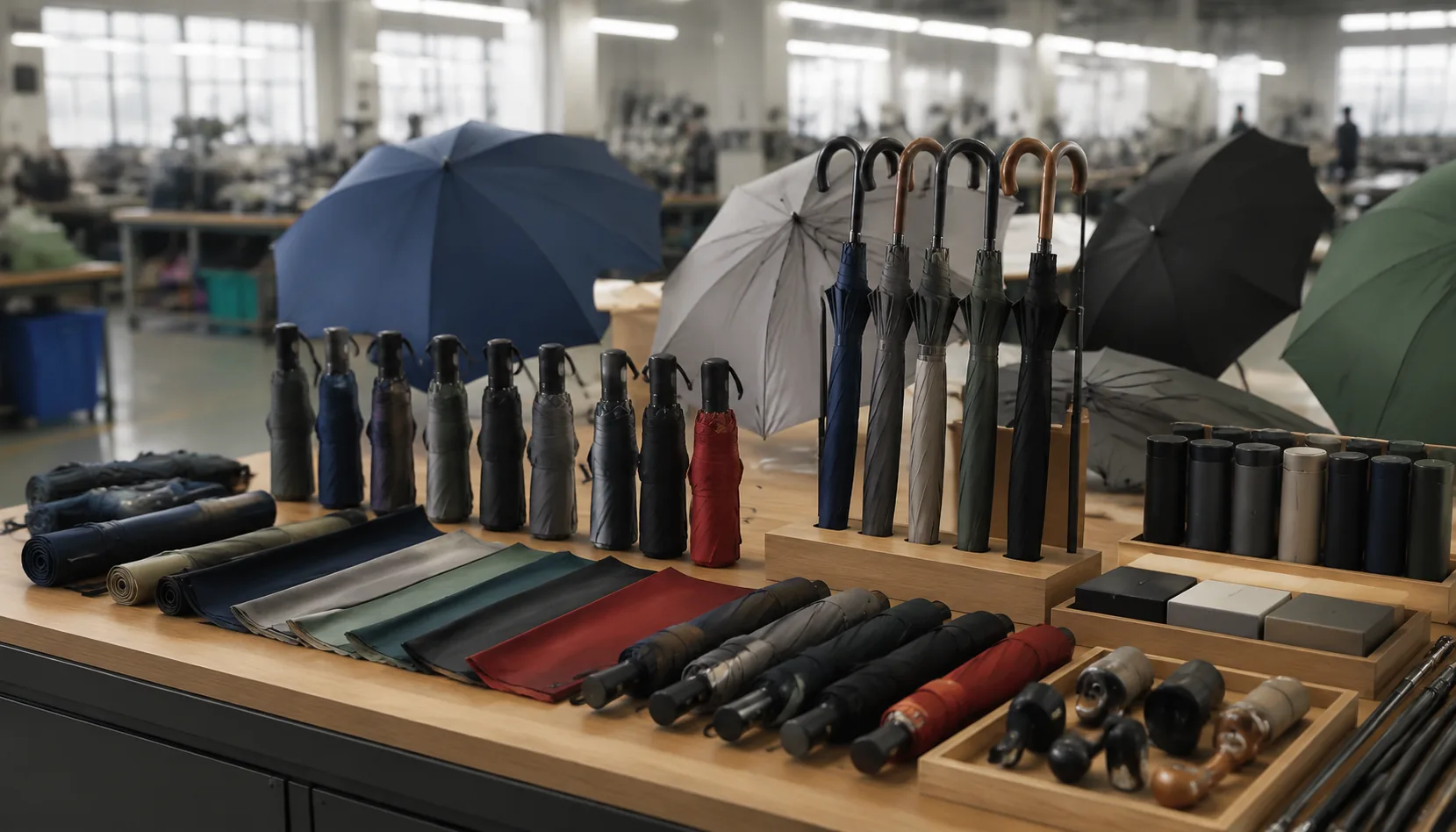
Retailers lose margin when an umbrella line is built from catalog guesses instead of production realities: too many SKUs, weak price ladders, mismatched fabrics, and cartons that do not suit store or e-commerce handling. On our Songxia factory floor, a workable private label umbrella assortment starts with good-better-best specs tied to frame type, canopy fabric, handle finish, MOQ breaks, packaging, and a lead time calendar that keeps inventory risk under control.
Start With a Good-Better-Best Assortment Map
A good-better-best map should start with function, not color. For the opening price point, I usually recommend a 21" manual 3-fold umbrella with 8K steel ribs, steel shaft, plastic handle, and 190T pongee canopy. This is the unit that carries volume in drugstores, supermarkets, campus shops, and value chains because it fits a handbag and keeps FOB cost controlled. Do not overbuild it with fiberglass or auto-open if the retail ticket cannot support it; spend the small extra budget on tighter canopy sewing, rust-resistant plating, and a sleeve that does not tear after five uses. In a private label umbrella assortment, this tier should cover black, navy, and one seasonal print, with AQL 2.5 inspection focused on open-close cycling, rib tip attachment, and seam leakage after a basic spray test.
The mid-tier is where retailers can make the shelf look like a real program instead of a bin of rain items. A 23" auto-open compact with 8K or 10K ribs, chrome-plated steel shaft, partial fiberglass rib ends, 190T or 210T pongee, and a rubberized straight handle is a solid good-level SKU. For umbrella product line planning, this tier should include stronger retail cues: Teflon water-repellent coating, matching sleeve, heat-transfer logo patch, and packaging that explains auto-open clearly. If the buyer wants an OEM umbrella program for commuters, I would add one auto-open-close compact at 21" or 22" with a three-section black metal shaft and reinforced runner, but only after confirming the spring force and closing effort are acceptable for average customers.
The best tier should justify its space with visible performance, not just a higher price. A 27" or 30" straight umbrella with 8K fiberglass ribs, fiberglass shaft, EVA or molded crook handle, double-canopy vented construction, and 210T pongee can be positioned as windproof for golf, city walking, or family use. In our standard practice at ZheBrella, we separate claimed windproof models from regular straight umbrellas by frame test: repeated open-close cycles, inverted recovery checks, and wind-tunnel samples targeting 50+ mph when the construction supports it. This premium layer is also where UPF 50+ coating, reflective piping, and branded woven labels make sense. For seasonal umbrella inventory, keep the best tier narrower in colors but stronger in replenishment logic, because bulky straight umbrellas consume more carton space and affect FOB/DDP freight calculations quickly.
Match Specs to Price Points and Channels
Channel packaging should decide the final spec stack. Supermarkets need simple good-better choices: 21" compact auto-open with 190T pongee, then 23" stick with 8K steel ribs and a stronger handle. Department stores can carry 210T pongee, UPF 50+ coating, color-matched sleeves, rubberized handles, and 8K or 16K fiberglass frames because shoppers compare feel in hand. Travel retail is different: compact size, weight, and mechanism reliability matter more than decorative rib count, so a 21" or 23" auto-open-close with fiberglass ribs and a tested shaft is safer than an oversized fashion item. E-commerce multipacks need low return rates, so I prefer fewer SKUs, neutral colors, clear spec claims, and AQL 2.5 inspection focused on opening force, seam leakage, and runner lock. For an OEM umbrella program, ZheBrella usually builds price ladders from mechanism and frame first, then tunes fabric and printing after the target FOB or DDP cost is fixed.
Plan Colorways, Packaging, and MOQ Efficiently
The fastest way to reduce SKU complexity is to make the consumer see variety while the factory sees repetition. Use one 8K auto-open frame for core fashion colors, one double-canopy 27" golf frame for premium rain, and one 21" auto-open-close compact for checkout or travel. Then vary canopy colors, logo placement, sleeve print, and hangtag story by channel or season. This keeps seasonal umbrella inventory flexible because leftover black, navy, gray, and red pongee can be reused across reorder waves, while trend colors stay controlled. A buyer asking for 18 finished SKUs may only need three frame tools, five fabric colors, and two handle finishes. That structure improves AQL 2.5 inspection consistency, reduces spare-parts confusion, and shortens lead time because frame assembly can start while final color allocation is still being adjusted.
Build Sampling and Production Into the Retail Calendar
The retail calendar has to start with the spec sheet, not the purchase order. For a private label umbrella assortment, I like to lock product architecture 90–120 days before the in-warehouse date: 21" compact auto-open-close for checkout racks, 23" straight manual or auto-open for department stores, 27" golf umbrellas for outdoor and corporate channels, and a few POE clear domes if the retailer sells fashion rainwear. A usable spec sheet should call out rib count and material—8K steel, 10K fiberglass, or 16K windproof frame—plus canopy fabric such as 190T pongee, 210T pongee, POE, PVC, or EVA. Add handle finish, shaft color, Teflon coating, UPF 50+ requirement, carton size, barcode placement, hangtag format, and AQL 2.5 inspection level. If those details arrive piecemeal, the calendar slips before the factory even cuts fabric.
Sampling usually takes 7–15 days after artwork, Pantone references, and frame choice are confirmed. A plain frame and stock pongee color can be sampled in a week; custom molded handles, sublimation panels, reflective tape, FSC paper packaging, or retailer compliance labels push it closer to 15 days. Our standard practice at ZheBrella is to make a pre-production sample using the intended rib material, runner, tips, canopy fabric, print method, and packing method, not a showroom substitute. That matters because a screen-printed logo on 190T pongee behaves differently from heat transfer on Teflon-coated 210T, and sublimation requires white or very light fabric. For an OEM umbrella program, approve the sample with comments in writing: canopy tension, opening force, logo position, seam alignment, hangtag copy, master carton marks, and drop-test requirements should be closed before bulk materials are purchased.
Bulk production normally needs 30–45 days after deposit and sample approval, assuming materials are available and MOQ is realistic. A simple retail umbrella sourcing order with 8K steel frames and one-color canopy printing may finish closer to 30 days; mixed umbrella product line planning across compact, stick, golf, and kids’ styles needs more line balancing because frame assembly, canopy cutting, sewing, printing, final fixing, and packing do not move at the same speed. Build in 2–4 days for final inspection under AQL 2.5, especially when the private label umbrella assortment includes multiple SKUs, UPC stickers, warning labels, inner cartons, PDQ trays, or retailer-specific carton routing. FOB Ningbo or Shanghai shipping is straightforward, but DDP delivery needs extra time for booking, customs clearance, duty calculation, appointment scheduling, and retailer compliance labeling. For seasonal umbrella inventory, missing the rain window by two weeks is often worse than paying slightly more for earlier material booking.
Use AQL Inspection to Protect Sell-Through
AQL 2.5 is the minimum I would accept for a private label umbrella assortment going into retail, because most umbrella returns are not caused by dramatic frame failure; they come from small workmanship defects shoppers notice in the first rain. For each SKU, pull cartons by PO, color, and size, then inspect canopy stitching for skipped stitches, loose threads over 5 mm, uneven seam allowance, and weak bartacks at the tips. Misaligned panels are a common return trigger on printed 23" auto-open models because the logo looks cheap even if the umbrella still opens. Loose tips, exposed rib ends, tilted caps, and off-center Velcro straps should be classified as major defects, not cosmetic issues, because they affect safety, appearance, and perceived value on the shelf.
Mechanical checks need the same discipline as fabric checks. Open and close every sampled unit 3 to 5 times, verifying runner smoothness, spring tension, latch hold, shaft straightness, and auto-open performance. A 21" compact auto-open-close umbrella should not jam halfway, rebound at the runner, or require two thumbs to collapse. For 8K steel ribs, check rib symmetry against the shaft and confirm no bent stretchers after cycling; for fiberglass ribs, look for splintering, poor rivet setting, or ribs sitting at different canopy heights. On double-canopy vented windproof designs, the upper and lower canopies must align cleanly, or the umbrella twists in wind and looks defective before it actually fails. These checks are especially important in an OEM umbrella program where the retailer’s brand, not the factory name, absorbs the complaint.
Fabric and packing controls protect sell-through just as much as frame inspection. Test water repellency with a spray or bead test on 190T or 210T pongee, confirm Teflon or UV UPF 50+ coating requirements against the approved sample, and compare color under consistent light so navy, black, and charcoal do not drift between lots. Packaging accuracy matters for retail umbrella sourcing: hang tags, care labels, warning labels, carton marks, inner pack count, and barcode scans must match the PO and planogram data. In umbrella product line planning, I recommend separating inspection lots by style and delivery window so seasonal umbrella inventory is not mixed across promotions. At ZheBrella, our standard practice is to scan UPC/EAN codes during final inspection, because one wrong barcode can block receiving even when the umbrellas are physically acceptable.
Frequently Asked Questions
How many umbrella SKUs should a retailer launch first?
Many retailers start with 3–6 SKUs: one low-cost compact, one auto-open compact, one family-size stick umbrella, and one premium windproof option. This keeps MOQ and inventory risk manageable.
Can one factory produce multiple private-label umbrella tiers?
Yes. A vertically integrated OEM/ODM factory can often share fabric sourcing, printing, frame assembly, and inspection while adjusting ribs, fabric weight, handle material, and packaging by tier.
What is a practical good-better-best structure for a retail umbrella assortment?
A common structure is 3-5 SKUs: a value 21-inch manual compact umbrella, a mid-tier auto-open or auto-open/close model, and a premium windproof fiberglass umbrella. Retailers often separate tiers by fabric, frame material, ribs, handle finish, and packaging rather than only by size.
What MOQ should retailers expect for a private label umbrella program?
For OEM retail umbrellas, typical MOQs range from 500-1,200 pieces per style or color, depending on fabric, frame, printing, and packaging. A mixed assortment may require higher total order quantities if several colors, sizes, or custom cartons are included.
How far ahead should retailers place seasonal umbrella inventory orders?
For spring or fall rain seasons, place production orders about 90-120 days before the target in-store date. This usually allows 30-45 days for sampling and approval, 35-60 days for bulk production, and additional time for ocean freight and customs.
Looking to Launch Your Custom Umbrella Line?
ZheBrella is a Zhejiang-based OEM/ODM umbrella manufacturer with 17 years of export experience. Free design, low MOQ from 100 pieces, windproof construction, full-color print.
Get Free Quote Now »People Also Search For
Related Articles
Retail Umbrella Line Planning: Good-Better-Best Specs
Build a retail umbrella range with clear good-better-best specs, target costs, MOQs, AQL checks, and packaging choices f...
Read More »
Private Label Umbrella Programs for Retail Brand Owners
Build a retail-ready private label umbrella line with the right SKUs, fabrics, frame specs, packaging, MOQ, and inspecti...
Read More »
Umbrella Sourcing for Outdoor Retail and Gear Brands
Build outdoor retail umbrella ranges with UPF 50+ fabric, fiberglass frames, 210T pongee, tested packaging, and order te...
Read More »