Private Label Umbrella Programs: SKU Planning for Retail Buyers

Retail umbrella programs fail most often before production starts: too many similar SKUs, fabric specs that do not match price points, packaging that slows assembly, or delivery dates that ignore material lead times. On our Songxia factory floor, a strong plan starts with disciplined size, frame, fabric, and color decisions before tooling, printing, and carton layouts are locked. A reliable private label umbrella supplier should help buyers balance MOQ, shelf presentation, and FOB or DDP timing before the purchase order is placed.
Build the Assortment Around Use Cases
A retail umbrella assortment should start with the job the umbrella does, not with fabric colors. For entry and impulse price points, the 21 inch 3-fold compact is the workhorse: it fits handbags, backpacks, glove boxes, and checkout displays. In OEM umbrella production, I usually see this built with 8K steel ribs for value programs or fiberglass-reinforced ribs when the buyer wants fewer returns from wind damage. A 190T pongee canopy is enough for a basic tier, while 210T pongee with a Teflon water-repellent finish feels more premium in hand. This SKU speaks to commuters, students, hotel guests, and promotional buyers. If the retail target is under $10 to $15, keep the handle simple, use manual or auto-open only, and avoid overloading the canopy with expensive all-over printing unless the order volume supports it.
The 23 inch straight umbrella belongs in the core everyday tier because it looks more substantial on shelf and gives better coverage than a compact. This is the right place for office workers, urban commuters, gift programs, and department-store basics. A 23 inch 8K or 10K frame with fiberglass ribs, a J-handle or EVA grip, and 190T or 210T pongee can sit comfortably in the mid-price range. For branded umbrella sourcing, this model also carries logos well because the canopy panels are larger and flatter than on a 3-fold. If a buyer asks a private label umbrella supplier for one “safe” family SKU, I would usually suggest a black/navy/gray 23 inch straight umbrella first, then add seasonal colors only after sell-through is proven. The umbrella MOQ by SKU often becomes the constraint here; splitting 1,200 pieces across six colors can weaken price and delay production.
Golf and kids' umbrellas should be planned as separate use cases, not stretched versions of the same SKU. A 27 inch golf umbrella targets drivers, outdoor staff, sports spectators, and corporate gift buyers; it normally needs a stronger 8K fiberglass shaft-and-rib system, double-canopy venting, and wind-tunnel performance around 50+ mph if it is positioned above the basic tier. A 30 inch golf model gives stronger shelf impact but raises carton size and DDP freight cost quickly. Kids' umbrellas, usually 17 to 19 inch, need POE or polyester canopies, rounded tips, safer manual opening, and smaller handles; bright licensed-style graphics matter more than technical coatings. Our standard practice at ZheBrella is to separate compact, straight, golf, and kids' umbrellas into different cost sheets, because frame tooling, fabric waste, AQL 2.5 inspection points, and packing specifications are not interchangeable across these categories. That keeps the assortment clean and prevents margin surprises.
Set Technical Specs That Control Cost
The fastest way to lose control of a retail umbrella assortment is to approve samples by appearance only and leave the frame spec loose. Rib count is the first cost driver: an 8K frame is standard for compact and stick umbrellas, 10K gives a smoother canopy shape and better wind load distribution, while 16K is mainly a style or premium-positioning choice unless the umbrella is 27" or larger. Shaft material matters just as much. A steel shaft keeps cost down and gives a solid hand feel, but it adds carton weight and can rust if plating is poor. Aluminum reduces weight but dents more easily. Fiberglass shafts are rare outside golf and storm umbrellas because the price jump is hard to recover at retail. For ribs, steel is acceptable for opening-price 21" and 23" units, but fiberglass ribs justify the premium when the product must survive repeated inversion, especially on double-canopy vented windproof models rated around 50+ mph.
Fabric spec looks simple on a line sheet, but 190T versus 210T pongee changes both performance and landed cost. 190T polyester pongee is a good baseline for promotional and value retail programs because it prints cleanly, folds compactly, and keeps weight under control. 210T pongee has a denser weave, a smoother hand, and better water shedding after Teflon or other durable water-repellent treatment, but it usually adds several grams per panel and a noticeable cost increase across a 12,000-piece order. If the buyer also adds UV black coating for UPF 50+, the canopy becomes heavier and stiffer, which can require stronger ribs or a larger runner spring. A serious private label umbrella supplier should price fabric, coating, and frame together instead of treating them as separate decorations. That is where many branded umbrella sourcing projects get squeezed: the fabric is upgraded, but the frame is left unchanged, so failure rates rise during AQL 2.5 inspection or store returns.
Mechanism choice is another spec that changes more than the opening action. Manual-open frames are cheaper, lighter, and usually more reliable for kids, budget, and small travel umbrellas. Auto-open adds convenience and a stronger retail story, but the spring, button housing, runner, and shaft tolerance must be consistent; a low-grade auto frame can pass a showroom demo and still fail after 200 cycles. Auto-open-close compact umbrellas cost more again because the reverse spring system and multi-section shaft need tighter assembly. One spec change can affect the whole shipment: moving a 23" umbrella from 8K steel ribs with 190T pongee to 10K fiberglass ribs with 210T pongee may add unit cost, increase carton gross weight by 2–4 kg per master carton, and reduce container loading. In OEM umbrella production, our standard practice at ZheBrella is to lock a costed technical sheet before quoting umbrella MOQ by SKU, because MOQ is not only about fabric color; it also depends on frame parts, handle tooling, and mechanism inventory.
Plan MOQ by Color, Print, and Packaging
MOQ should be planned at the SKU level, not only at the program level, because the factory has to schedule fabric cutting, frame assembly, handle fitting, printing, and packing separately. For a basic 23" auto-open stick umbrella in 190T pongee, a realistic umbrella MOQ by SKU is often 600 to 1,200 pieces when the canopy color, handle type, sleeve, and carton marking are all the same. If the buyer wants four canopy colors, two handle finishes, and both a hangtag sleeve and a retail box, that is not one SKU anymore; it can become 16 SKUs before artwork is even discussed. A private label umbrella supplier will usually treat a new Pantone-dyed canopy, custom EVA or rubberized handle, and printed retail box as separate cost drivers because each one creates setup time, material minimums, and inspection checkpoints.
Color is usually the first place to control complexity. Black, navy, red, royal blue, and forest green 190T or 210T pongee can often be sourced from mill stock, so factories may consolidate demand across several SKUs if the fabric specification is identical. Custom Pantone canopy fabric, especially with Teflon coating or UPF 50+ treatment, may require 1,000 to 3,000 meters per color depending on the mill, which can push MOQ higher than the buyer expects. Print method matters too: a one-panel screen print on a stock color has a much lower setup burden than full-panel sublimation or all-over logo repeats. For branded umbrella sourcing, I usually advise retail buyers to separate “core replenishment colors” from “seasonal fashion colors” so they do not trap cash in slow-moving variants.
Factories can reduce total program MOQ by sharing the hidden components across SKUs. For example, a retail umbrella assortment might use the same 8K black steel shaft, fiberglass ribs, auto-open mechanism, tips, runner, and carton size across 21", 23", and 27" styles, while only changing canopy color and logo position. Packaging should be designed the same way: one universal branded sleeve with a size sticker is easier than four different sleeves, and a shared retail box with variable barcode labels is better than separate litho boxes for every print. In OEM umbrella production, our standard practice at ZheBrella is to quote the buyer both ways: strict per-SKU MOQ and consolidated MOQ using common frames, fabrics, and packaging. The second version often cuts the initial commitment by 20% to 40% without weakening retail presentation.
Approve Samples Before Opening Production
Do not open cutting or frame assembly until the approval sample is signed, dated, and sealed, because that umbrella becomes the production law for the factory. In OEM umbrella production, the proto sample should prove the structure first: 21-inch compact, 23-inch stick, 27-inch golf, or 30-inch vented golf; manual, auto-open, or auto-open-close; 8K, 10K, or 16K ribs; steel shaft versus fiberglass ribs; and canopy choice such as 190T pongee, 210T pongee, POE, PVC, or EVA. I like proto samples made from correct tooling, not “close enough” parts borrowed from another order, because rib length, runner travel, spring force, and handle fit affect opening smoothness and wind performance. A serious private label umbrella supplier should also test the proto for seam tension, tip alignment, cap tightness, water repellency, and basic wind resistance before asking the buyer to approve colors or logos.
The pre-production sample is where retail details must be locked: Pantone color, logo size, print method, barcode placement, care label, hangtag, sleeve, inner carton, and master carton marking. For printed canopies, Pantone checks should be done on the real substrate, because a navy logo on 190T pongee does not look the same as on coated 210T fabric or transparent POE. Screen printing is usually stable for one- or two-color logos, heat transfer handles gradients better, and sublimation needs tight control on temperature and fabric lot. Barcode placement should be scanned on the folded umbrella inside the sleeve and again on the retail display pack; I have seen good goods delayed because the UPC curved around a handle window or sat under glossy film. For a retail umbrella assortment, every SKU needs its own signed sample, not one approval covering five colors and two handle types.
Packaging drop checks are not cosmetic; they decide whether your umbrellas arrive saleable after warehouse handling. For retail cartons, I prefer a drop test covering corners, edges, and faces, followed by checking cracked handles, bent ribs, sleeve scuffing, barcode readability, and crushed gift boxes. If the program ships DDP to a U.S. warehouse, the carton spec matters even more: flute strength, gross weight, carton dimensions, pallet pattern, and moisture control all affect claims. Umbrella MOQ by SKU should be tied to approved packaging as well as fabric, because changing from poly sleeve to printed box can change line speed and carton loading. Our standard practice at ZheBrella is to keep the signed approval sample in the QC room and compare bulk goods against it during inline checks and AQL 2.5 final inspection. That signed sample protects both sides in branded umbrella sourcing because it removes arguments about shade, logo position, strap length, and retail labeling after production is complete.
Build a Realistic Import Timeline
A realistic import timeline starts before the purchase order. For a new retail umbrella assortment, allow 7 to 14 days for specification lock: size, rib count, fabric, handle, carton pack, barcode position, hangtag, and print artwork. A 23-inch auto-open 8K umbrella in 190T pongee moves faster than a 30-inch golf umbrella with double-canopy venting, fiberglass shaft, custom EVA handle, and four-panel heat-transfer logo. Strike-off samples normally take 5 to 10 days for screen print or heat transfer, and 10 to 18 days for sublimation or yarn-dyed fabric. A private label umbrella supplier should not buy bulk fabric or open frame production until color, logo placement, and packaging are signed off in writing, because one wrong Pantone or UPC can freeze an entire retail shipment at the distribution center.
After sample approval, material purchasing usually takes 7 to 15 days for standard black steel frames, 190T/210T pongee, POE, PVC, or EVA. Custom fiberglass ribs, windproof 10K/16K frames, Teflon coating, UV UPF 50+ coating, molded handles, and branded sleeves can add another 5 to 12 days. Production for OEM umbrella production typically runs 25 to 40 days after deposit and approved pre-production sample, depending on umbrella MOQ by SKU. Small quantities spread across too many colors are the biggest schedule killer: 1,200 pieces in one SKU is easier than 3,000 pieces split into 12 SKUs with different canopies, trims, and labels. Our standard practice at ZheBrella is to hold inline checks during cutting, sewing, frame assembly, and final packing, then conduct final AQL 2.5 inspection before shipment release.
Freight planning should be decided when costing the program, not after cartons are packed. FOB Ningbo or Shanghai works well for experienced importers who already control forwarders, consolidation, customs brokerage, and marine insurance. Under FOB, the factory delivers cleared goods to the port, and the buyer manages ocean freight, destination charges, duties, and final delivery. DDP is cleaner for buyers who need landed-cost clarity for branded umbrella sourcing, especially promotional distributors or retailers without an import department. With DDP, the supplier quotes product, export, ocean or air freight, customs clearance, duty, and delivery to the warehouse as one number. As a planning rule, add 25 to 35 days for ocean freight to the U.S. West Coast, 35 to 50 days to the East Coast, and 7 to 12 days for air freight when launch dates are tight.
Frequently Asked Questions
Can one private label umbrella order include multiple retail SKUs?
Yes, if the factory can share fabrics, frames, or packaging components across SKUs. MOQ is usually easier to manage when only canopy colors or prints change, rather than frame size and handle tooling.
What specs should a retail buyer lock first?
Lock canopy size, rib material, opening mechanism, fabric grade, and packaging format first. These drive price, lead time, carton dimensions, and shelf presentation more than small logo changes.
How should buyers split MOQ across multiple umbrella SKUs in one private label program?
A common structure is to keep 1-2 core frames shared across several designs, then split fabric prints or colors by SKU. Many factories can support around 300-500 pieces per colorway on a shared frame, while completely different frame constructions usually require higher MOQ and longer production planning.
Which umbrella specifications are easiest to standardize across a retail assortment to control cost?
Buyers usually standardize canopy fabric, shaft/rib construction, handle mold, and packaging format first. Keeping the same frame and carton pack across 4-8 SKUs can reduce sampling complexity, simplify drop testing, and help keep replenishment lead times closer to 45-60 days FOB.
When does DDP make sense for a retail umbrella launch instead of FOB?
DDP is often useful for smaller launches, first-time imports, or programs shipping directly to a domestic warehouse with fixed landed-cost targets. For larger repeat orders, FOB often provides better freight flexibility, especially when buyers are booking mixed containers or consolidating umbrella SKUs with other seasonal products.
Looking to Launch Your Custom Umbrella Line?
ZheBrella is a Zhejiang-based OEM/ODM umbrella manufacturer with 17 years of export experience. Free design, low MOQ from 100 pieces, windproof construction, full-color print.
Get Free Quote Now »People Also Search For
Related Articles
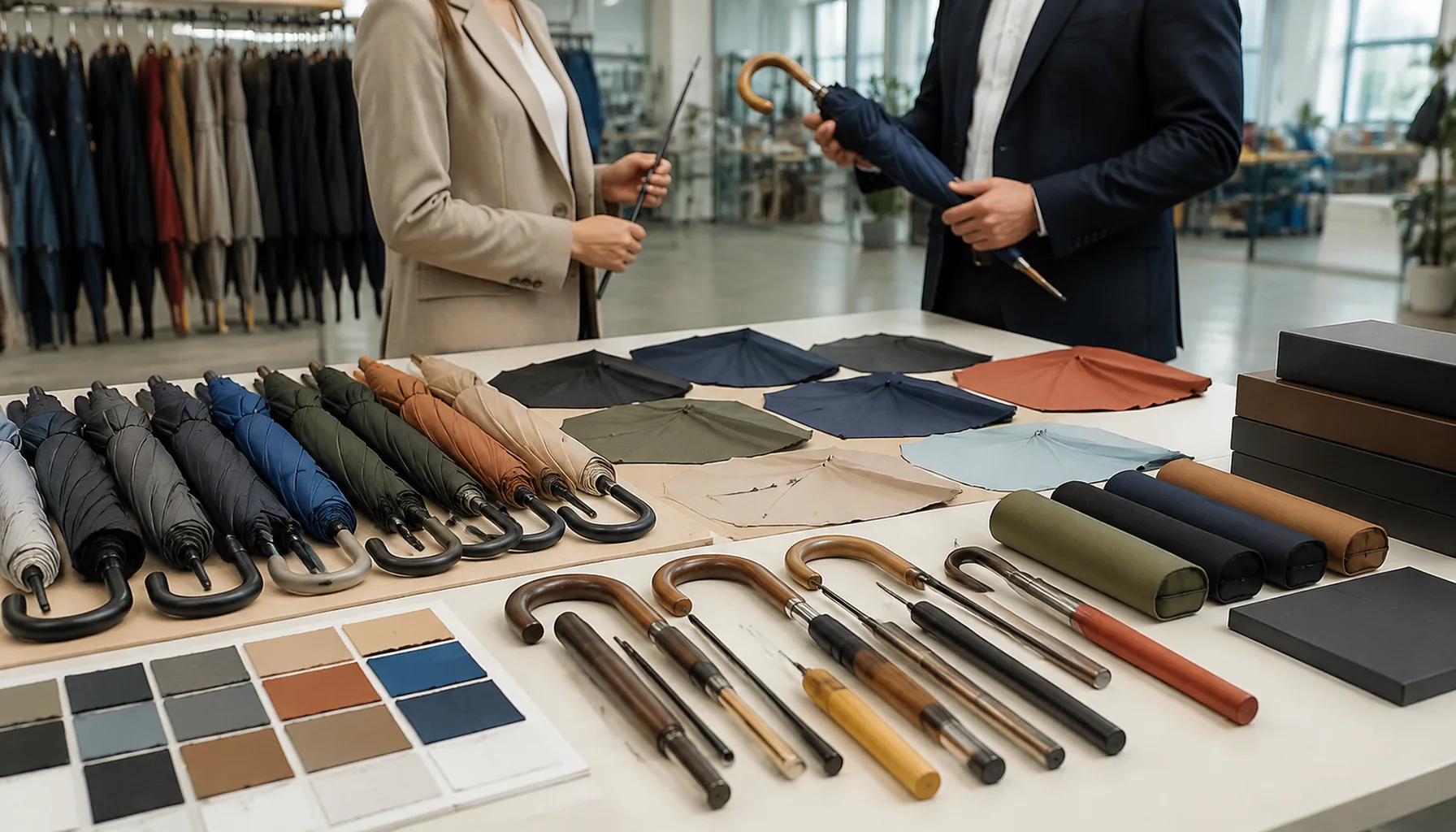
Private Label Umbrella Programs for Retail Buyers and Chains
Plan a private label umbrella line with realistic MOQ, fabric, frame, packaging, AQL, and FOB/DDP details for retail pro...
Read More »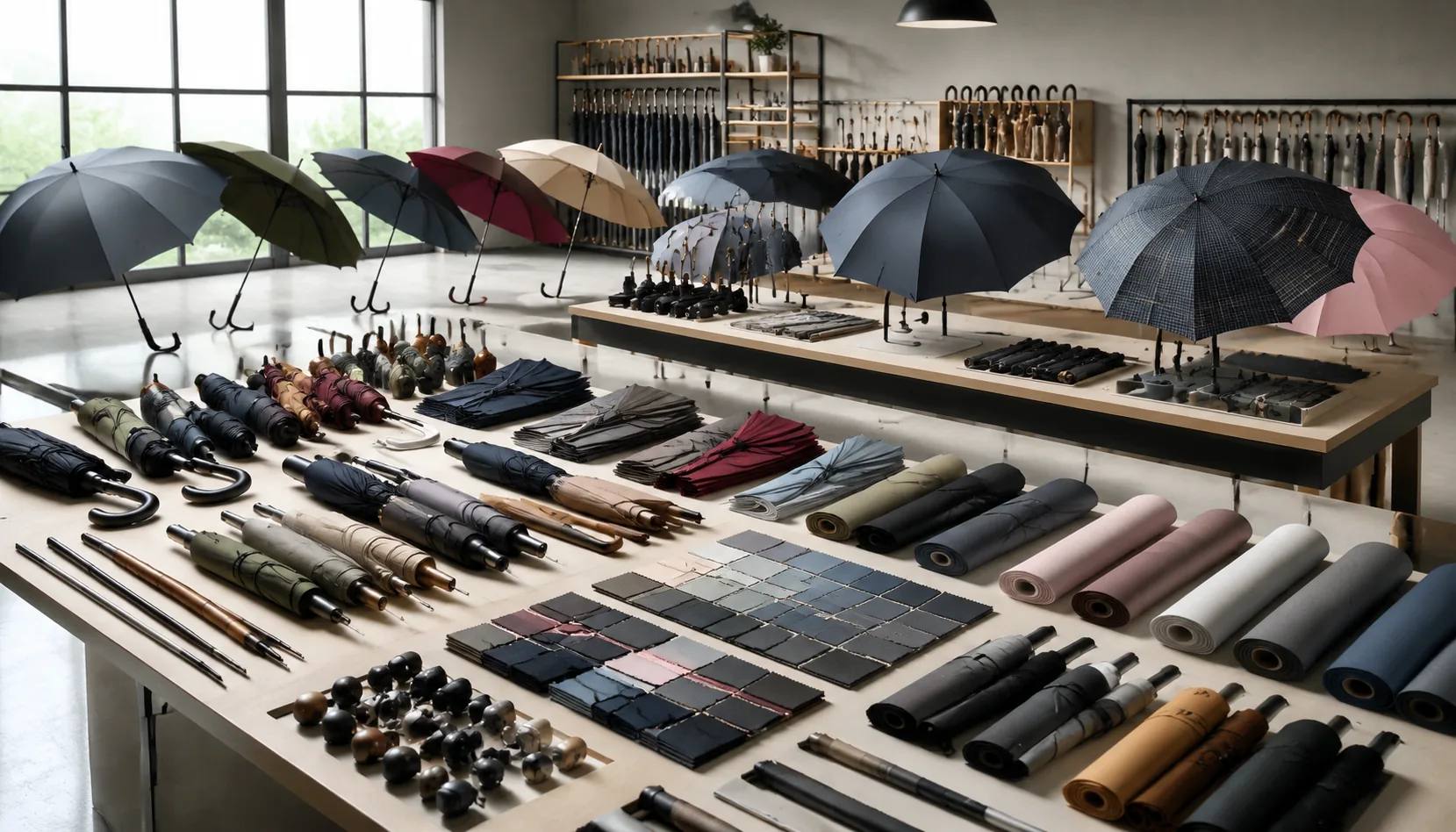
Private Label Umbrella Assortment Planning for Retail Buyers
Build a balanced private label umbrella range with clear SKUs, fabric specs, MOQ planning, AQL targets, and retail-ready...
Read More »Private Label Umbrella Assortments for Retail Buyers
Plan retail umbrella assortments with size mix, fabric specs, packaging, MOQ tiers, inspection points, and landed-cost l...
Read More »