Retail Umbrella Assortments: How to Build a Profitable SKU Mix
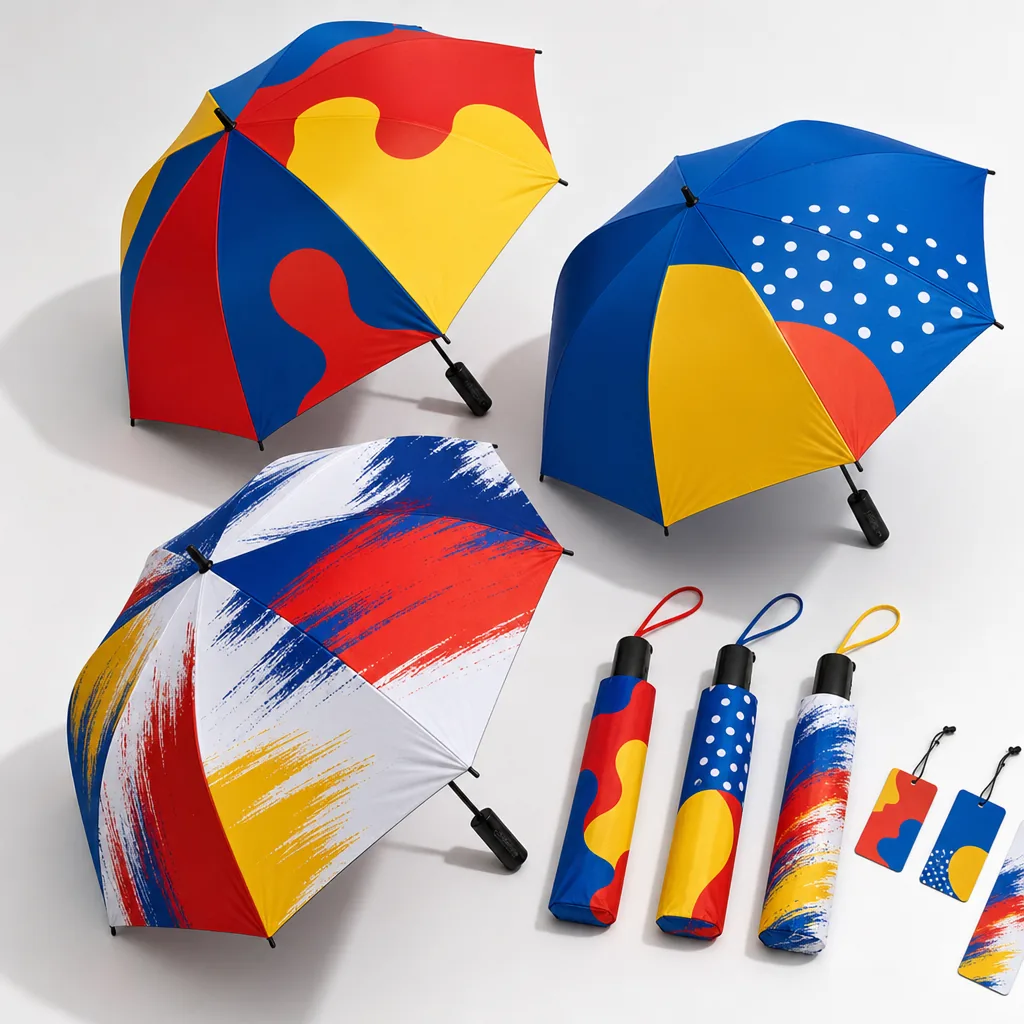
A profitable retail umbrella assortment is not built by adding more colors or chasing the lowest FOB price; it starts with knowing which frames, fabrics, handle styles, and packing choices will survive daily shopper handling while still meeting margin. On our factory floor in Shangyu, we see how small specification changes—shaft thickness, rib material, canopy size, print method—affect cost, defect risk, carton efficiency, and reorder speed.
Start with the shelf price architecture
The shelf price architecture should be fixed before color cards, handle shapes, or print artwork are discussed, because margin leakage usually starts with too many umbrellas sitting in the same price band. For a retail umbrella assortment, I would normally build three tiers: entry at impulse price, mid-tier as the volume driver, and premium as the margin and giftable line. Entry SKUs are simple 21" or 23" manual folding umbrellas with steel shafts, steel ribs, plastic handles, and a 190T pongee canopy or basic polyester canopy. They should hit opening price points without pretending to be windproof. In many markets, that means a landed cost target that supports a 2.2x to 3.0x retail markup after freight, duty, retail packaging, and markdown allowance. Keep this tier tight: 2 to 4 SKUs, usually black, navy, one seasonal color, and one compact printed option.
The mid-tier is where SKU mix planning matters most, because this is where customers trade up from the emergency umbrella to something they expect to last. Good candidates are a 21" or 23" auto-open folding umbrella, a 27" stick umbrella, and a compact model with fiberglass ribs or mixed steel-fiberglass construction. A proper mid-tier spec might use 190T or 210T pongee, metal shaft, rubberized handle, Velcro strap, and improved runner assembly. If the buyer wants a windproof umbrella build, do not rely on the word alone; specify fiberglass ribs, reinforced joints, and ideally a vented or flexible frame that survives 40 to 50 mph lab testing without rib inversion failure. For most retailers, 5 to 8 mid-tier SKUs are enough: two core solids, two fashion colors, one print, one larger stick umbrella, and one travel compact.
Premium umbrellas should be fewer in number but visibly different on the shelf, not just the same frame with a higher retail tag. This tier can include 27" or 30" golf umbrellas, 10K or 16K rib stick models, double-canopy vented frames, auto-open-close compact umbrellas, UV-coated UPF 50+ sun-rain styles, or EVA/POE clear dome umbrellas for fashion retail. Packaging can also justify price: sleeve quality, hangtag claims, barcode placement, and a stronger retail carton reduce damage and returns. For a first buy, I prefer 2 to 4 premium SKUs, then reorder based on sell-through by color and handle type. Umbrella wholesale MOQ can push buyers into over-assortment, so negotiate shared fabric colors across tiers or use the same canopy cloth for multiple frames. That keeps factory efficiency intact while preventing slow-moving odd colors from eating open-to-buy.
Use construction choices to separate value from premium
Construction is where a retail umbrella assortment stops being a row of similar-looking colors and becomes a margin ladder. For opening-price SKUs, a 190T pongee canopy is usually the right floor: it feels smoother than cheap polyester, prints cleanly, dries fast enough for daily use, and keeps landed cost under control. Moving to 210T pongee gives a denser hand feel, better drape, and stronger perceived value, especially when paired with Teflon water repellent or UPF 50+ coating. Buyers should not treat 190T versus 210T as only a fabric spec; it changes how the umbrella feels in the customer’s hand at the shelf. For most supermarkets, campus stores, and tourist retail, 190T works well on 21" and 23" folding models. For department stores, lifestyle chains, and giftable rainwear displays, 210T supports a higher ticket because the customer can immediately feel the upgrade.
Frames create the clearest separation between value and premium. Steel ribs are economical and acceptable for basic 8K stick umbrellas or low-price folders, but they bend more easily after side gusts and add weight. Fiberglass ribs cost more, but they flex back instead of staying deformed, which is why we use them on any serious windproof umbrella build. An 8K frame is the normal retail workhorse: simple, familiar, and efficient for MOQ planning. A 10K frame can improve stability without making the canopy look crowded, while 16K frames are best positioned as premium because they use more rib material, more tips, more sewing points, and more assembly labor. In SKU mix planning, I would not put 16K into every color. Use it for black, navy, gray, or one seasonal hero color where the shelf tag can justify the extra cost.
Auto-open also deserves selective use, not blanket use. An auto-open folding umbrella is easy to demonstrate in-store and works well at the mid-price tier, especially in 21" or 23" sizes for commuters. Auto-open-close mechanisms cost more and have tighter QC requirements because spring force, shaft locking, and runner alignment must stay consistent; our standard practice at ZheBrella is to test opening cycles and locking strength before final AQL 2.5 inspection. Double-canopy vented designs make sense on 27" and 30" golf or storm umbrellas where customers expect a heavier-duty product and a wind-tunnel claim such as 50+ mph has real selling value. For umbrella wholesale MOQ decisions, keep basic manual models broad in color, then concentrate premium construction in fewer SKUs with clearer signage: 210T pongee, fiberglass ribs, 10K or 16K frame, vented canopy, and upgraded handle.
Plan colorways and print programs around sell-through
Color planning should start with sell-through math, not a designer’s favorite palette. For a retail umbrella assortment, I usually recommend a core set of 5 to 7 colors: black, navy, charcoal, deep green, burgundy, beige, and one clean light color such as ivory or pale gray if the store can keep it clean on shelf. These colors work across 21" compact, 23" auto-open folding umbrella, and 27" stick umbrella formats, and they hide small handling marks better than bright solids. Seasonal accents should be capped at 2 to 4 colors per drop: spring pastels, summer brights, autumn earth tones, and holiday red or metallic-look prints. If a buyer orders 12 colors with equal depth, slow movers will eat margin. A safer SKU mix planning rule is 70% core neutrals, 20% seasonal accents, and 10% test prints, adjusted after the first 60 to 90 days of POS data.
Print placement must respect the umbrella’s panel geometry. Most retail umbrellas are 8K, meaning eight canopy panels; golf umbrellas may be 8K or 16K, while fashion pieces sometimes use 10K for a rounder silhouette. A logo placed on one panel is cheap and clean, especially with screen print or heat transfer on a 190T pongee canopy. A full-repeat pattern across all panels has more shelf impact but needs tighter cutting and sewing control because every seam can interrupt the artwork. On dark pongee, white ink often needs an underbase; on sublimation, the fabric should be white or very light before printing. Our standard practice at ZheBrella is to keep critical artwork at least 20 mm away from seam lines and 35 mm away from the canopy edge, because tension during rib assembly can distort circles, thin lines, and small text.
Retailers with steady year-round demand should keep neutral stock separate from limited-edition drops. Black, navy, and charcoal in a windproof umbrella build with fiberglass ribs, double-canopy venting, and a 50+ mph wind-tunnel target can stay in replenishment, while floral, licensed, city-map, or event graphics should be bought as controlled capsules. This protects margin and reduces dead stock when an accent color misses. Umbrella wholesale MOQ also changes the decision: a factory may accept 300 pieces per color for stock fabric with simple one-panel printing, but custom-dyed canopy fabric, all-over digital print, or matched handle colors often push MOQ to 1,000 pieces or more. For a retail umbrella assortment, the practical rule is simple: put high-depth inventory into colors that can sell in any weather, and use limited runs for patterns that create urgency without locking the buyer into six months of markdown risk.
Set quality and packaging rules that reduce returns
Returns usually start with weak receiving standards, not customer abuse. For a retail umbrella assortment, I would set AQL 2.5 for major defects and AQL 4.0 for minor cosmetic issues, with 100% checking only on high-risk items like auto-open-close mechanisms or premium gift-boxed SKUs. The inspection sheet should call out frame symmetry, loose rivets, bent ribs, handle scratches, canopy stains, skipped stitches, and print registration if the umbrella carries a logo or pattern. Every sampled unit should be opened and closed at least 3 times; auto-open folding umbrella models need button response, runner lock, shaft wobble, and reset force checked separately. Canopy tension matters more than many buyers think: if a 190T pongee canopy is cut too loose, it looks cheap on the sales floor; if it is too tight, seam stress and rib-tip tearing show up after a few rainy uses.
For carton planning, do not let the factory overpack just to make the CBM look efficient on paper. A common export pack for 21 inch folding umbrellas is 12 pieces per inner carton and 48 or 60 pieces per master carton, depending on handle weight and sleeve type. Stick umbrellas at 23 inch, 27 inch, or 30 inch sizes often run 12 or 24 pieces per carton because the length drives both freight cost and crushing risk. Master cartons should use 5-ply corrugated board for export, with corner compression strong enough for container stacking. I prefer carton gross weight below 18 kg for retail programs because heavier cartons get dropped more often in DC handling. Carton marks should match the PO, SKU, color, barcode, quantity, and country of origin; one wrong color ratio can create more chargebacks than a small material defect.
Packaging should protect the retail face without turning a profitable SKU mix planning exercise into a freight penalty. For mass retail, a poly sleeve with barcode sticker, hang tag, and care label is usually enough for standard manual and auto-open folding umbrellas. Gift boxes look good but add CBM fast; they make sense for higher-margin compact umbrellas, UV UPF 50+ models, or a windproof umbrella build with fiberglass ribs and double-canopy venting. Header cards can improve shelf visibility, but they must be tested for tearing around the hang hole after vibration. Our standard practice at ZheBrella is to confirm packaging during pre-production by drop testing a packed master carton and checking whether sleeves, handles, tips, and hang tags still look retail-ready. Also clarify umbrella wholesale MOQ by packaging format, because a custom box, printed sleeve, or private barcode label may require a higher order quantity than a plain bulk pack.
Align replenishment with MOQ, lead time, and freight terms
The first mistake I see in a retail umbrella assortment is ordering every color too thin just to make the shelf look broad. Umbrellas do not replenish like T-shirts; fabric, frame, printing, carton packing, and vessel space all add friction. For a first buy, size the order around case-pack logic and umbrella wholesale MOQ, not only store count. A basic 21" or 23" auto-open folding umbrella with a 190T pongee canopy may have an MOQ of 500–1,000 pcs per color if the fabric is stock, while a custom PMS canopy, special handle, or printed sleeve can push the practical MOQ higher. For SKU mix planning, I usually advise retailers to put 50–60% of the opening quantity into proven black, navy, and dark gray, 20–30% into seasonal colors, and the balance into margin builders like vented golf umbrellas or UV UPF 50+ sun/rain models.
Reorders should be protected before the first storm hits, because peak demand compresses factory calendars fast. In normal months, a stock-color 190T/210T pongee folding umbrella can often ship in 25–35 days after PO and deposit; printed promotional runs usually need 35–45 days; complex windproof umbrella build specs with fiberglass ribs, double-canopy vents, 10K or 16K frames, and AQL 2.5 inspection should be planned at 45–60 days. Before spring rain season and late-summer typhoon or hurricane buying windows, add another 10–20 days because dyeing mills, rib assembly lines, and export bookings all get crowded. A good rule is to hold four to six weeks of buffer stock for A-level SKUs at the DC, and trigger replenishment when sell-through plus open orders fall below the next import cycle.
FOB and DDP should be chosen by network maturity, not by habit. FOB Ningbo or Shanghai works best for retailers with a freight forwarder, consolidated Asia programs, and enough volume to fill LCL or FCL space; it gives better control over sailing schedules, insurance, and landed-cost auditing. DDP is cleaner for smaller chains, e-commerce sellers, and regional distributors that need cartons delivered to one warehouse with duty, customs, and inland freight already included. The unit price looks higher, but it prevents surprises from exam fees, demurrage, or weak consolidation. Our standard practice at ZheBrella is to quote both when the buyer is still validating the retail umbrella assortment, because a 30" golf umbrella can be freight-sensitive while a compact 21" auto-open folding umbrella may tolerate DDP better. Peak weather months should drive delivery dates backward from the shelf date, not forward from the PO date.
Frequently Asked Questions
How many umbrella SKUs should a retailer launch with?
Many buyers start with 4 to 8 SKUs: a few core colors, one or two premium builds, and one seasonal or promotional style. That range gives enough choice without making MOQ and inventory risk too high.
What spec is best for a profitable mid-tier retail umbrella?
A 3-fold auto-open umbrella with 190T or 210T pongee, fiberglass ribs, and an 8K frame is a common balance of cost and perceived value. Retailers can add a sleeve, barcode label, and compact carton to keep the program store-ready.
What is a practical starting SKU count for a new retail umbrella assortment?
For most mid-sized retailers, 12-24 SKUs is a workable starting range: typically 4-6 opening price umbrellas, 4-8 mid-tier everyday styles, and 2-4 premium or wind-resistant options. This gives enough choice by function and color without tying up too much inventory in slow-moving variants.
How should buyers split volume between core colors and fashion colors?
A common buy plan is 70-80% core colors such as black, navy, and gray, with 20-30% seasonal or fashion colors. Core colors usually support faster replenishment and lower markdown risk, while fashion shades help lift perceived assortment value.
How do MOQ and lead time affect umbrella SKU planning at wholesale level?
If the factory MOQ is 300-500 pieces per color or style, buyers should avoid over-fragmenting the range into too many low-volume SKUs. For OEM programs, lead times often run 35-55 days after sample approval, so assortment plans should include at least one replenishable core style that can be reordered in bulk.
Looking to Launch Your Custom Umbrella Line?
ZheBrella is a Zhejiang-based OEM/ODM umbrella manufacturer with 17 years of export experience. Free design, low MOQ from 100 pieces, windproof construction, full-color print.
Get Free Quote Now »People Also Search For
Related Articles
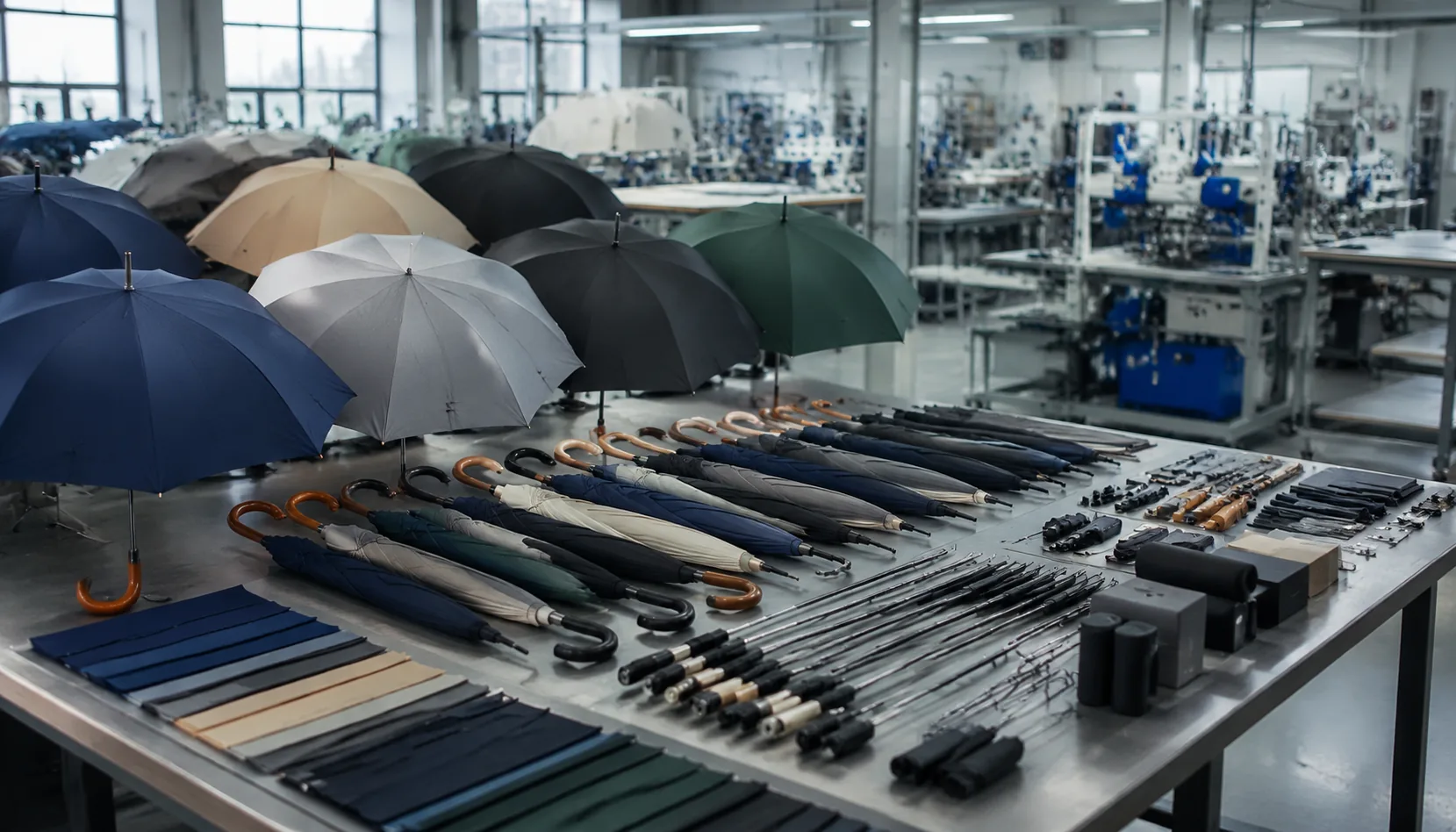
Retail Umbrella Assortment Planning: SKU Specs That Sell
Plan retail umbrella SKUs by size, rib count, fabric, packaging, and MOQ to balance shelf price, durability, and repleni...
Read More »
Double-Canopy Golf Umbrella Build Guide for Buyers
Learn how double-canopy golf umbrellas are built, which rib specs improve wind resistance, and what buyers should ask fo...
Read More »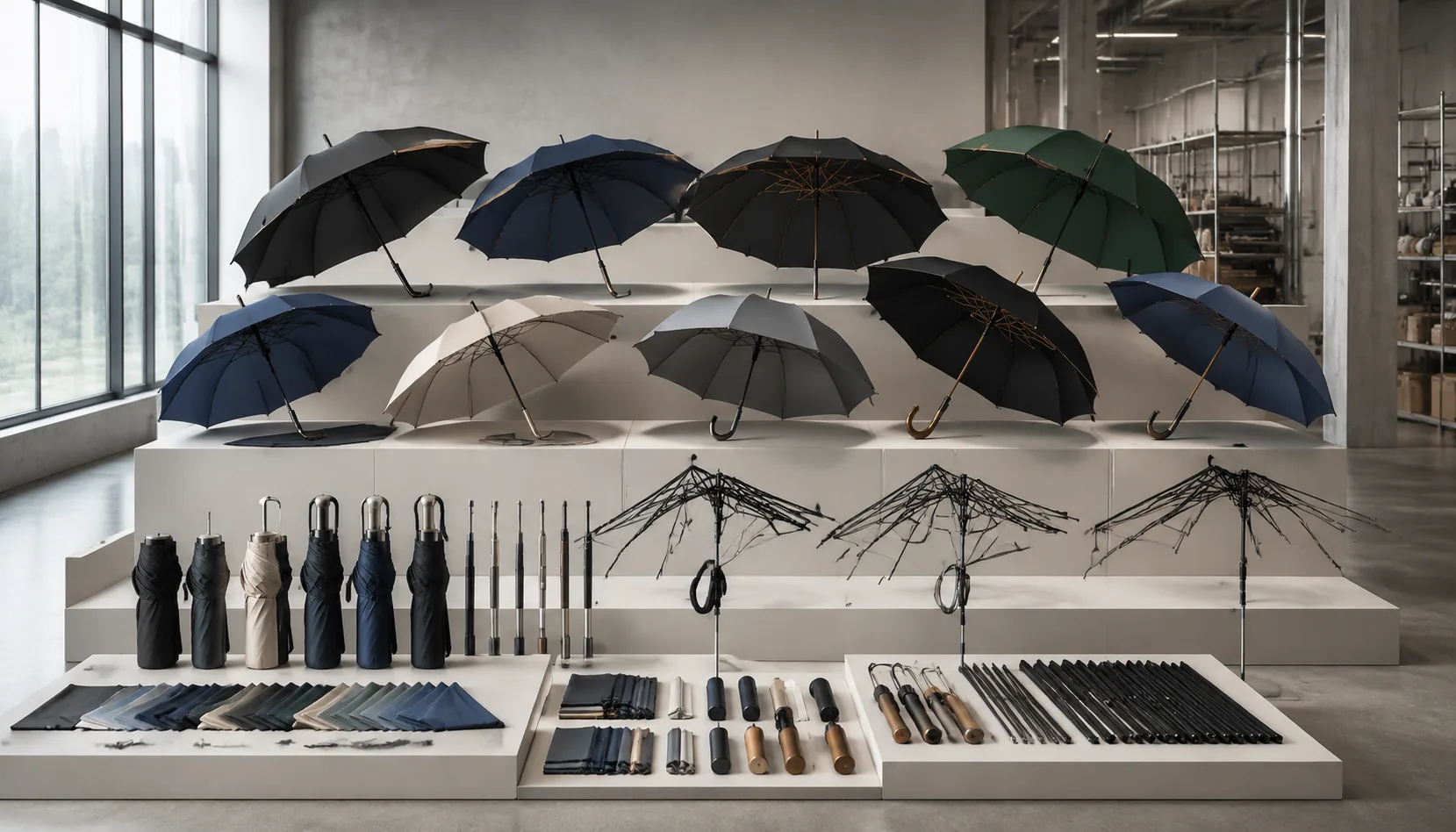
Retail Umbrella Assortment Planning: Specs by Price Tier
Plan a private-label umbrella range with 3-fold, stick, and golf models, clear good-better-best specs, realistic MOQs, F...
Read More »