Double-Canopy Golf Umbrella Build Guide for Buyers
A double canopy golf umbrella looks simple on a spec sheet, but small choices in vent overlap, rib material, runner fit, and stitching tolerance decide whether it survives a windy course or comes back as a claim. On our factory floor in Songxia, we check these umbrellas by how the canopy breathes under load, how the ribs recover after inversion, and whether the frame stays balanced through repeated open-close cycles.
How Double-Canopy Construction Improves Wind Performance
A double canopy golf umbrella improves wind performance by giving trapped air a controlled exit before pressure forces the canopy inside out. On a single-canopy 30-inch golf umbrella, a gust loads the underside like a bowl and transfers stress into the runner, stretchers, notch, and rib tips at the same time. When that load exceeds the frame limit, the canopy flips sharply; steel ribs often stay bent after inversion. In a vented build, the lower 190T pongee canopy keeps rain coverage while the overlapping upper layer lifts enough to release air through the gap. ZheBrella wind-tunnel checks show that a properly tensioned 190T pongee canopy with fiberglass ribs can withstand repeated 50+ mph gusts, while low-cost single-canopy models may fail around 30-35 mph even when the fabric itself does not tear.
The vent improves pressure release, but it cannot turn a weak frame into a windproof golf umbrella. A vented 8K rib umbrella outperforms a flat single canopy, but serious golf, hospitality, and event orders still need fiberglass ribs, reinforced tips, and a shaft matched to the 27-inch or 30-inch canopy size. Steel ribs lower unit cost and feel rigid in calm weather, but they deform after inversion; fiberglass flexes and returns. Vent geometry also affects both durability and leak risk. If the upper overlap is too narrow, rain can blow through in side wind. If it is too tight, air cannot escape quickly enough during a gust. An OEM umbrella factory should sample vent height, panel tension, rib arc, and runner lock before confirming bulk price, rather than approving production from a catalog photo.
Double-canopy construction matters most in coastal cities, stadium seating, golf courses, outdoor launches, and event queues, where cross-gusts and building wind tunnels push air upward under the canopy. A single-canopy model that feels stable in light rain can become hard to control near barriers, grandstands, and entrances. For a MOQ umbrella order, define the use case before locking the cost target. Promotional giveaways may accept 190T pongee, manual-open hardware, and a lighter frame. Retail, hospitality, and staff umbrellas should specify double-canopy construction, fiberglass ribs, auto-open cycling checks, and AQL 2.5 inspection for stitching, vent alignment, runner lock, and rib tip pull strength. The added frame and sewing cost reduces field failures, replacement claims, and the visible brand damage of umbrellas flipping in public.
Rib and Frame Specs to Request for Windproof Builds
Lock the frame specification before artwork, handle style, or packaging. A vented double canopy golf umbrella only dumps pressure when the rib set flexes, recovers, and keeps the canopy aligned at the joints. For 27" and 30" golf sizes, an 8K rib umbrella is usually the best commercial build: eight ribs keep weight down, open smoothly, and leave enough room for a clean vent gap. A 16K frame creates a rounder canopy and a heavier retail feel, but it also doubles many stitch points, rib-tip pockets, and inspection points. If the factory uses thin spreaders or low-grade steel, the extra ribs can increase breakage risk instead of improving wind performance. For corporate, tournament, and distributor programs, a properly specified 8K fiberglass frame is often more durable in use than a cheap 16K steel frame. Require rib length, rib diameter, wall thickness where applicable, and material on the quote sheet; do not accept “windproof frame” as a spec. Thin ribs may pass a showroom open-close test but crack at the joint after 200 cycles or one hard inversion.
Specify fiberglass ribs for any windproof golf umbrella sold as wind-resistant, especially with a 190T pongee canopy. Pongee sheds water quickly, but the tighter canopy can load sharply when the user turns into wind. Fiberglass bends and returns; steel ribs lower cost but are more likely to kink, stay deformed, or pull stitching at the rib tips after inversion. A practical mid-cost build for many 27" promotional and MOQ umbrella order programs is fiberglass ribs with a steel shaft. Upgrade to a fiberglass shaft for coastal events, resort use, premium retail, or 30" arc builds where the shaft may be braced against 40 to 50+ mph gusts. The cost is justified when shaft bending would create returns, warranty disputes, or brand risk. Confirm fiberglass shaft availability before finalizing artwork timing, because material batching can affect handle color matching, logo scheduling, and lead time. At ZheBrella, we test the approved frame with the actual canopy fabric and vent gap because ink, PU coating, and seam tape change canopy tension.
Ask the OEM umbrella factory to identify the spreaders, runner, notch, rib joints, and rib tips as standard or reinforced. Many frame failures start in these small parts, not in the long rib. Reinforced spreader sets are worth the cost on auto-open golf umbrellas, 30" models, heavier 210T pongee, silver UV coating, and large heat-transfer logos that stiffen the canopy. For manual 27" promotional builds, standard spreaders may be acceptable if rib thickness is consistent, the runner travels cleanly, and the open frame has no side play. Do not over-spec rigidity: slightly flexible ribs usually protect the notch, top cap, rib tips, and canopy pockets better than rigid ribs that transfer gust force into the stitching. Require open-close cycle testing, inversion recovery testing, and any wind-tunnel claim to be tied to the approved sample, not a catalog frame. During AQL 2.5 inspection, check cracked tips, loose joints, torn pockets, and runner wobble with the same priority as print alignment and canopy appearance.
Canopy Fabric Choices for Large Wind-Resistant Umbrellas
For a large wind-resistant canopy, fabric stability after coating and sewing matters more than fabric weight alone. 190T pongee is the practical baseline for most golf umbrellas because it balances tear resistance, logo printability, folding behavior, and unit cost. A finished 190T pongee canopy with a consistent water-repellent treatment should bead rain cleanly and dry without wicking heavily at stitch lines. 210T pongee has a tighter weave and smoother hand, so it suits sharper digital or heat-transfer logos and a more retail-grade feel, but it raises cost and adds closing bulk on 30 inch arc frames. On a double canopy golf umbrella, the vent layer already adds fabric, seams, and labor, so 210T should be a buyer-driven upgrade, not the default. For corporate giveaways, tournaments, hotel loaners, and other cost-sensitive programs, 190T pongee is usually the stronger specification.
Water repellency must be quoted as a finish, not assumed from the fabric name. During production, check even coating penetration, clean runoff in a spray test, and no sticky hand-feel after heat drying. A 190T pongee canopy with a quality Teflon-style water-repellent finish can outperform a poorly coated 210T canopy in real rain. The vent in a windproof golf umbrella helps gust pressure escape, but the overlap still needs stable stitching; loose fabric will flap, stretch, and pull at rib tips. Fabric cannot compensate for a weak frame. Use fiberglass ribs for wind programs: an 8K rib umbrella is acceptable for basic orders, while 10K fiberglass is a better choice for 27 inch and 30 inch golf models, especially when the buyer expects a 50+ mph wind-tunnel claim.
If the umbrella will be used for sun as well as rain, define UV performance at the fabric stage. A silver UV coating or black-out layer can bring the canopy to UPF 50+, but it changes the inside color, print method, hand-feel, and folding behavior. For rain-only programs, specify 190T pongee, double canopy construction, fiberglass ribs, and an auto-open handle. For rain-plus-sun programs, use 190T or 210T pongee with UPF 50+ coating, confirm logo compatibility, and test for coating cracks after repeated opening. For premium retail, specify 210T pongee, double-canopy venting, a 10K or 16K fiberglass frame, clean seam binding, and AQL 2.5 inspection before shipment. As an OEM umbrella factory, ZheBrella confirms fabric, coating, and frame before quoting an MOQ umbrella order because they affect FOB price, DDP freight weight, and lead time by 5 to 10 days.
Mechanisms, Handles, and Opening Options for Bulk Orders
For a bulk double canopy golf umbrella, choose the opening mechanism by use case, not personal preference. Auto-open fits promotional programs, tournament gifts, hotel loaners, and corporate events because users often need one-hand deployment while carrying a bag, badge, or phone. On a 30-inch windproof golf umbrella built with a fiberglass shaft and an 8K rib umbrella frame, the mechanism should use a push-button spring, controlled runner, and reinforced notch; low-grade auto-open parts are a common source of returns. The tradeoff is direct: auto-open raises unit cost, adds a moving assembly, and requires tighter incoming inspection on springs, buttons, and runner locks before production release. Manual open is usually the better choice when the order is price-sensitive or the umbrellas will see hard use. For rental pools, school orders, construction programs, and export shipments that may sit in storage for months, a manual runner gives better long-term reliability because it has fewer failure points and handles grit and moisture with less risk of sticking.
Manual open also protects the FOB price on an MOQ umbrella order, especially when you pair the frame upgrade with a 190T pongee canopy instead of moving to heavier 210T fabric. In most cases, it is better to spend budget on fiberglass ribs and a stronger double-canopy vent than on a low-grade auto-open mechanism. ZheBrella cycle-tests opening and closing before packing because a runner that feels stiff at the factory will be treated as defective by the end user after one wet day. Handle choice also affects user experience and return rates. Straight EVA foam handles are light and comfortable for golf but can dent in rough cartons; rubberized plastic presents better at retail but gets slippery with sunscreen or wet hands; wood reads premium but adds weight and needs grain sorting for consistency. For large double canopy golf umbrella orders, a molded EVA or rubber-coated straight handle with a wider end cap usually gives the best balance on a long shaft and reduces wrist fatigue in wind. Closure straps should fully wrap the vented canopy without forcing the user to crush the ribs, with hook-and-loop for promo distribution and a metal snap for retail programs; short straps, weak stitching, and misaligned labels create minor frustrations that quickly turn into complaints and lower reorder rates.
MOQ, QC, and Delivery Considerations for OEM Programs
Set the MOQ umbrella order from the bill of materials, not the finished-unit target. A standard double canopy golf umbrella with black 190T pongee canopy, fiberglass 8K rib umbrella frame, EVA handle, and one-color panel print can often start at 500 to 1,000 pcs per design when fabric and frames are in stock. MOQ typically moves to 1,000 to 3,000 pcs when buyers specify custom-dyed 190T or 210T pongee, molded handles, color-matched tips, printed sleeves, retail hangtags, or barcoded packaging, because fabric mills, molding vendors, and packaging suppliers each apply their own minimums. Before deposit, freeze the spec sheet: 23 inch or 27 inch arc size, manual or auto-open runner, 8K/10K/16K rib count, shaft material, canopy coating, logo process, carton marks, barcode labels, and spare-parts ratio. Any change after pre-production sample approval can reopen costing, trigger supplier MOQs again, and add production days.
Put QC terms in the purchase order before cutting fabric. ZheBrella’s standard basis is AQL 2.5 for major defects, AQL 4.0 for minor defects, and zero tolerance for critical defects. For a windproof golf umbrella, inspection should include open-close cycling, runner lock strength, rib tip attachment, stitch density, canopy tension, logo registration, color shade, water repellency, and carton drop condition. Double-canopy vents need panel-by-panel checks because weak vent stitching causes flutter, noise, and early seam failure under wind load. Confirm export carton specs before shipment: pieces per carton, gross weight, net weight, dimensions, inner polybag thickness, silica gel use, and retail box crush resistance when boxes are used. A typical 27 inch golf umbrella ships 24 pcs per export carton, but auto-open frames or long EVA handles may require 12 or 18 pcs to keep carton weight practical for warehouse handling.
Plan lead time around the least standard component, not the frame alone. A stock-frame OEM umbrella factory can usually complete a repeat 190T pongee canopy order in 25 to 35 days after sample approval and deposit. New fabric color, custom packaging, or heat-transfer artwork usually moves production to 35 to 50 days. Sublimation all-over print, UPF 50+ coating, or a nonstandard windproof frame can require 45 to 60 days because bulk fabric approval and frame testing must finish before cutting. Compare FOB and DDP on landed cost, not unit price. FOB Ningbo or Shanghai leaves ocean freight, duty, customs clearance, inland delivery, and tariff exposure with the importer. DDP gives distributors one delivered price for event or retail planning, but the quote should state the HS code, duty assumptions, destination warehouse address, and whether final-mile delivery includes liftgate or appointment service.
Frequently Asked Questions
Is a double-canopy umbrella always stronger than a regular vented umbrella?
Not always. It performs better only when the frame, rib joints, and canopy tension are properly matched; a weak frame can still fail in strong wind.
What specs should I ask for when sourcing a double-canopy golf umbrella?
Start with canopy size, 8K or 16K rib count, fiberglass rib material, 190T or 210T pongee, and whether you need auto-open or manual open. Then confirm MOQ, AQL 2.5, and shipping terms.
What rib configuration is most practical for a double-canopy golf umbrella order?
For most B2B programs, an 8-rib fiberglass frame balances wind performance, weight, and cost better than heavier metal frames. Buyers commonly spec 30-inch panels with an 8K structure for a full-size golf umbrella that is stable but still manageable for retail and promotional use.
How should buyers confirm that the double canopy is actually vented for wind release?
Ask the factory for cross-section photos or a sample showing the upper and lower canopy attachment points, vent gap width, and stitching method. A real vented design should show a consistent airflow channel, not just two fabric layers sewn flat together.
What order details should be locked before approving a custom golf umbrella sample?
Confirm canopy size, rib material, shaft type, fabric spec, handle material, logo printing method, carton pack, and test requirements before sampling. For OEM orders, typical MOQs start around 300-500 pieces per color, with sample lead times often 7-14 days and bulk production around 35-50 days after approval.
Looking to Launch Your Custom Umbrella Line?
ZheBrella is a Zhejiang-based OEM/ODM umbrella manufacturer with 17 years of export experience. Free design, low MOQ from 100 pieces, windproof construction, full-color print.
Get Free Quote Now »People Also Search For
Related Articles
How to Specify a Double-Canopy Golf Umbrella Build
Learn which vented canopy, rib, and fabric specs make a double-canopy golf umbrella genuinely wind resistant for retail,...
Read More »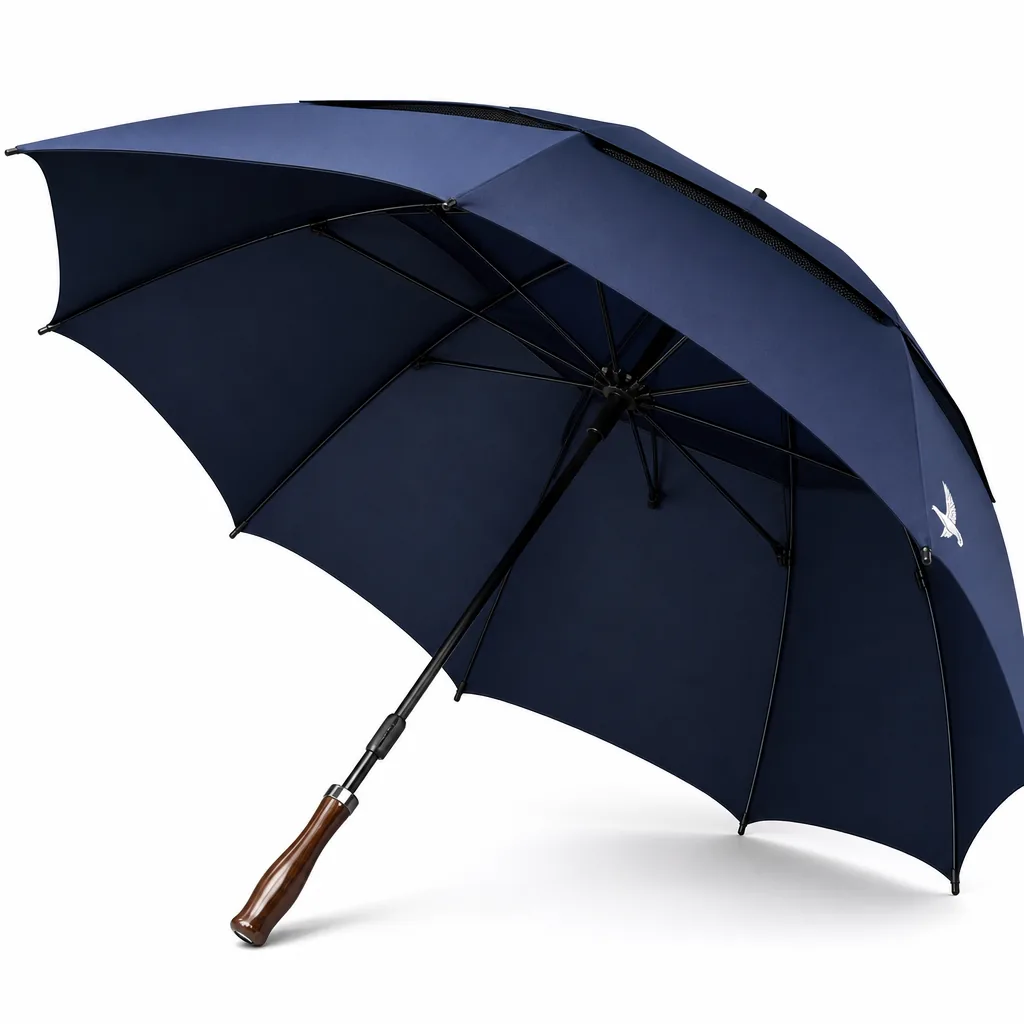
Double-Canopy Golf Umbrella Specs for Corporate Event Buyers
Learn how to specify double-canopy golf umbrellas for events, including frame materials, canopy fabric, wind performance...
Read More »
How to Specify a Windproof Double-Canopy Umbrella Build
Learn how double-canopy umbrellas are built, what rib and vent details matter, and which specs buyers should request for...
Read More »