How to Specify a Windproof Double-Canopy Umbrella Build
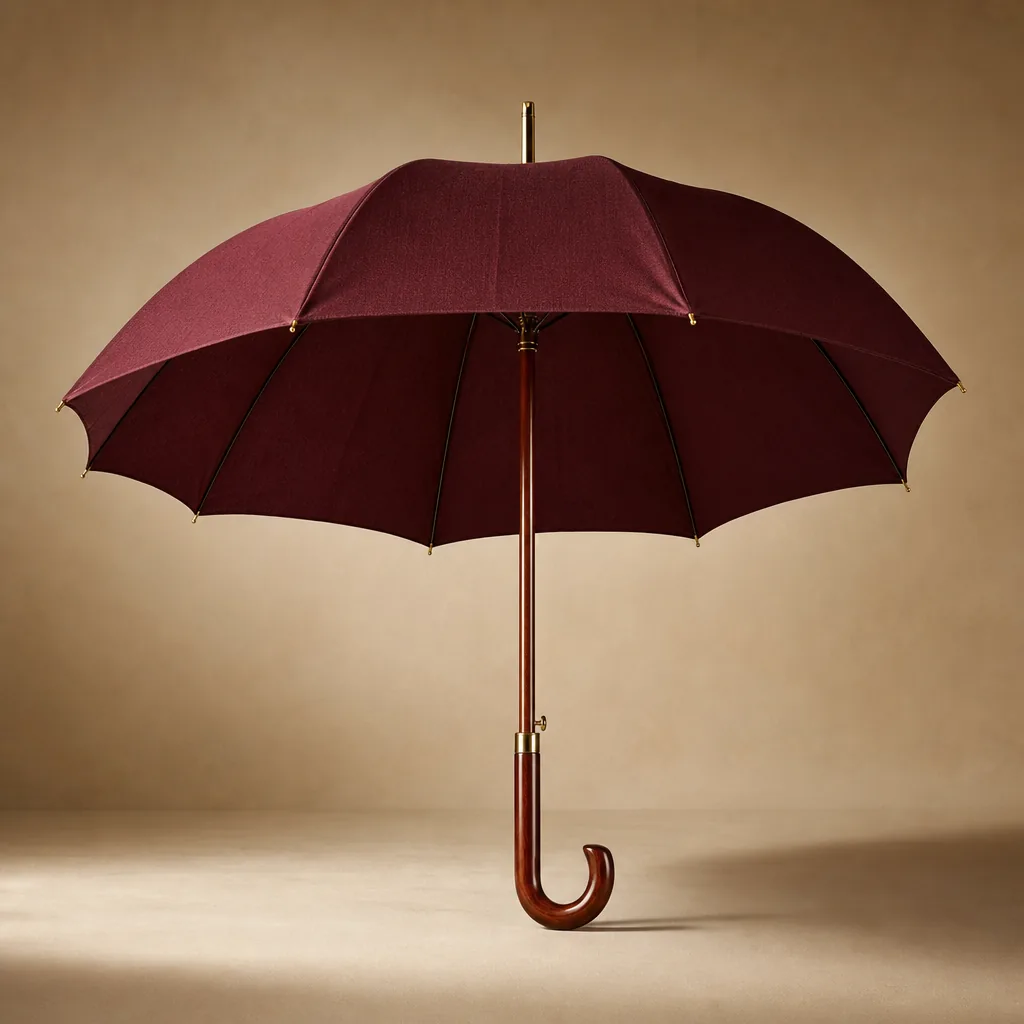
When buyers ask for a double canopy umbrella specification, the real challenge is not the label but the build behind it: vent size, canopy overlap, rib stiffness, tip locking, and how the frame behaves when wind hits it from below. On the factory floor, we see that weak stitching, mismatched panel tension, or oversize vents can turn a promising sample into a liability in gusty markets. The right spec has to balance airflow, coverage, and frame durability before production starts.
When a double-canopy build is worth specifying
Specify a double canopy umbrella only when wind exposure is part of the use case, not a marketing preference. The strongest fit is coastal retail, golf retail, commuter programs, and premium city promotions, where gusts routinely hit the canopy from the side or underneath. A vented canopy umbrella gives wind a path to escape between layers, which reduces inversion, eases load on the runner, and lowers the chance of bent or broken ribs. That is the practical value of a double canopy umbrella specification: fewer return claims, better field performance, and a stronger durability story in exposed markets. It is most defensible in 23" or 27" manual and automatic builds, especially when the buyer needs a stronger reputation in open, windy locations.
The cost only makes sense when the program can recover it through lower damage or a higher retail price. Golf users stand in fairways, parking lots, and clubhouse drop zones with little shelter, so a vented canopy is usually worth the added sewing and QC. Commuter programs also benefit because street-level gusts can force a single canopy inside out at bus stops and subway entrances. Premium promotions can justify the upgrade when the umbrella is part of a higher-ticket gift and the buyer expects better hand feel and longer service life. But it is not a cure-all: a double layer reduces inversion and frame stress, it does not make the umbrella indestructible. For short-run giveaways, indoor events, or low-risk seasonal promos, the extra labor often adds cost without enough end-user value.
Build details determine whether the upgrade earns its keep. The upper and lower canopies need proper spacing so the panels do not rub or trap air, and the custom umbrella ribs must match the canopy diameter and target wind load; otherwise the vent flaps can chafe the fabric and shorten life. Ask the OEM umbrella factory to pair the frame with fiberglass ribs when wind resistance matters, because thin steel ribs are more likely to deform under repeated gust loading. Confirm the fabric spec before sampling: 190T or 210T pongee for standard woven polyester, or POE/PVC only when the brief calls for a clear or budget visual. If the program also requires UPF 50+ or a Teflon coating, the double canopy is easier to justify because the buyer is already paying for a higher-spec umbrella. If the frame is low-cost and the fabric is thin, the second layer usually consumes margin faster than it improves performance.
Vent structure, airflow, and canopy engineering
A vented canopy umbrella controls gust pressure by giving air a path to escape instead of forcing it under a sealed top. The simplest layout is a single-vent canopy: one upper panel overlaps a continuous lower canopy and opens a pressure-release slit near the crown. A true double canopy umbrella specification uses two separated layers with a defined air gap, so wind can pass through without lifting the whole top sheet. The buyer should ask the OEM umbrella factory to state the target wind rating in mph, the vent style used to reach it, and the exact gap dimension. If the gap is too small, airflow chokes and inversion risk rises; if it is too large, the upper layer flaps, increases noise, and weakens recovery after a gust.
For real performance comparison, request measurable overlap width at the vent seam and tie it to the frame size. On 23" and 27" umbrellas, 1.5 to 2.5 cm of overlap is a practical starting range, but the factory should confirm the value for the chosen rib count and panel cut. Ask for bar-tack reinforcement at every stitch end and rib attachment point, plus the seam allowance, topstitch spacing, and whether the vent edge is double-stitched or taped. Fabric matters as much as geometry: 190T or 210T pongee with a Teflon water-repellent coating holds shape better than a softer weave, and that stiffness changes how the vent opens under load. If the custom umbrella ribs are fiberglass, canopy tension should match rib flex so the opening stays active under gusts instead of choking the air gap or ballooning at the crown.
Use testing data to separate a marketing claim from a usable build. A good vented canopy umbrella should deform, vent, and recover without twisting, while a loose build with weak seam alignment or poor reinforcement will invert quickly when the crown catches wind. Ask for cycle-test results, blow-test or wind-tunnel data, and extension photos that show the upper layer lifting cleanly and reseating flat. For production control, specify canopy symmetry, vent spacing, and stitch consistency under AQL 2.5, especially on 21" and 23" samples where small errors show up first. Those checks make the cost and durability tradeoff visible before mass production and reduce the risk of rework, delays, and failed field use in a windproof umbrella buyer guide.
Rib count, material mix, and wind test expectations
In a double canopy umbrella specification, rib count drives load distribution, inversion resistance, and snap-back speed after a gust passes through the vent. An 8K frame uses eight main ribs with matching stretchers and is a practical baseline for 21" to 23" folding umbrellas where pack size and unit cost matter. A 16K frame roughly doubles the support points and is better suited to 27" to 30" golf umbrellas, where panel tension and canopy span increase wind stress. Buyers should ask more than “how many ribs”: confirm whether the vented canopy umbrella stays open, resists inversion, and returns to shape without a permanent bend at the ferrule, joint, or crown stitching.
Fiberglass is usually the better choice for outer ribs and stretchers because it flexes and rebounds under load; steel still makes sense for the center shaft, lower stretcher sections, and budget builds where weight is acceptable. Mixed builds often give the best cost-to-performance result: fiberglass main ribs with a steel shaft, nylon runner, and reinforced tips can outperform an all-steel frame in repeated wind cycling. An OEM umbrella factory should not rely on a vague “windproof” claim. Ask for controlled sample testing with recorded wind speed, test angle, number of inversion cycles, and whether the frame snapped back cleanly or held a set. For a custom umbrella ribs review, confirm rib diameter, joint type, and vent-edge reinforcement before approving production.
Fabric and finish requirements for premium programs
For a premium double canopy umbrella specification, call out pongee first and name the weave, not just “polyester.” Use 190T pongee as the baseline for promotional and retail programs; move to 210T when the buyer needs a tighter weave, cleaner drape, and better edge definition for logos. If the umbrella is dual-use, specify a water-repellent finish and state whether UPF 50+ applies to the outer canopy only or to both layers. That distinction affects hand feel, drying time, and color depth. If you want a more durable finish, name the coating type, such as C0 or C6 DWR, so the OEM umbrella factory can quote the same build across samples and bulk orders without reinterpreting “premium” finish language.
Color control should be written into the purchase spec, not left to a photo or a single preproduction sample. Require Pantone references, strike-offs, and a defined shade band for repeat lots so corporate colors stay consistent from sample to shipment. Ask whether both canopies come from the same dye lot, because mismatch becomes obvious in daylight and under D65 lightbox review. On a vented canopy umbrella, the inner canopy often reads darker because it sits in shadow, so logo visibility must be approved with the umbrella open and backlit, not only flat. If the build uses custom umbrella ribs or a specific panel count, approve one assembled sample in the open position before bulk production, since venting changes print area, panel registration, and the way the logo lands across seams.
How to brief the factory and control order risk
A usable double canopy umbrella specification starts with the dimensions the OEM umbrella factory can actually hold on the line: canopy diameter, rib length, finished open height, and open style. State whether the mechanism is manual, auto-open, or auto-open-close, and match the size to the product class: 21" and 23" folding umbrellas are common retail bases, while 27" and 30" stick models fit golf and outdoor promotions. For fabric, name 190T or 210T pongee, or POE/PVC/EVA if the program needs a different hand feel or weather profile. If you want a vented canopy umbrella, define the vent overlap, vent gap, and seam construction; otherwise the factory may deliver a sample that looks right but behaves differently in wind.
On the frame, specify custom umbrella ribs in plain terms: fiberglass or steel, rib count such as 8K, 10K, or 16K, and whether stretcher joints need reinforcement. Windproof claims should be tied to signed sample approval and a clear test criterion, not a sales phrase. State the pass/fail standard in the PO, such as no inversion, rib breakage, or seam failure at or above 50 mph gusts, and require the same build to be used for mass production. If the program needs UV or weather resistance, call out UPF 50+ or a Teflon coating explicitly. That keeps the double canopy umbrella specification measurable and reduces the risk of a supplier substituting a lighter frame or weaker coating.
Commercial fields control risk as much as the build spec. State MOQ, packing format, carton count, and whether you need retail-ready polybag, hang tag, or gift box packing. Put AQL 2.5 in the purchase order for inspection, and separate major and minor defects if artwork, opening action, or panel alignment is sensitive. FOB and DDP are not interchangeable, so name the port or destination and who covers inland freight, customs, and duty. Write lead time in days, then link it to sample approval, deposit receipt, and mass-production start date. A practical windproof umbrella buyer guide should freeze the approved sample, lock the revision, and release production only against that version to avoid drift in canopy shape, print placement, or rib hardware.
Frequently Asked Questions
Is a double-canopy umbrella always more windproof than a single-canopy model?
Not automatically. Performance depends on vent design, rib materials, build quality, and how the canopy is stitched and tensioned. A poorly made double-canopy umbrella can still fail in strong wind.
Will a double-canopy design increase MOQ or lead time?
Usually the MOQ is similar to standard models if the factory already has the construction in production. Lead time may be a little longer because of extra sewing steps and stricter sampling checks.
What rib material should I request for a windproof double-canopy umbrella?
For higher wind resistance, ask for fiberglass ribs or a fiberglass-steel hybrid frame. Fiberglass flexes without permanent bending, and many buyers specify 8 or 10 ribs with reinforced joints for better performance in gusts.
What canopy vent details matter most for windy-market orders?
Request a clearly separated upper and lower canopy with overlap that allows airflow to escape without collapsing the frame. In most OEM builds, a vent gap of about 1 to 2 inches and reinforced stitching at the vent edge are common points to confirm.
What should I include in a windproof umbrella RFQ to a factory?
Include frame material, rib count, shaft diameter, canopy fabric weight, vent style, and target wind speed if you have one. Also ask for sample testing, because lead times for custom specs are often 25 to 35 days after approval, with MOQ depending on decoration and frame setup.
Looking to Launch Your Custom Umbrella Line?
ZheBrella is a Zhejiang-based OEM/ODM umbrella manufacturer with 17 years of export experience. Free design, low MOQ from 100 pieces, windproof construction, full-color print.
Get Free Quote Now »People Also Search For
Related Articles
Double-Canopy Umbrellas: Venting, Stability, and Buyer Specs
Learn how double-canopy construction improves wind release, where vent size matters, and what buyers should specify for ...
Read More »
Double-Canopy Golf Umbrella Build Guide for Buyers
Learn how double-canopy golf umbrellas are built, which rib specs improve wind resistance, and what buyers should ask fo...
Read More »
Double-Canopy Windproof Umbrellas: Buyer Selection Guide
Compare double-canopy builds, vent vents, rib materials, and MOQ so buyers can source windproof umbrellas that match ret...
Read More »