Retail Umbrella Assortment Planning for Private Labels
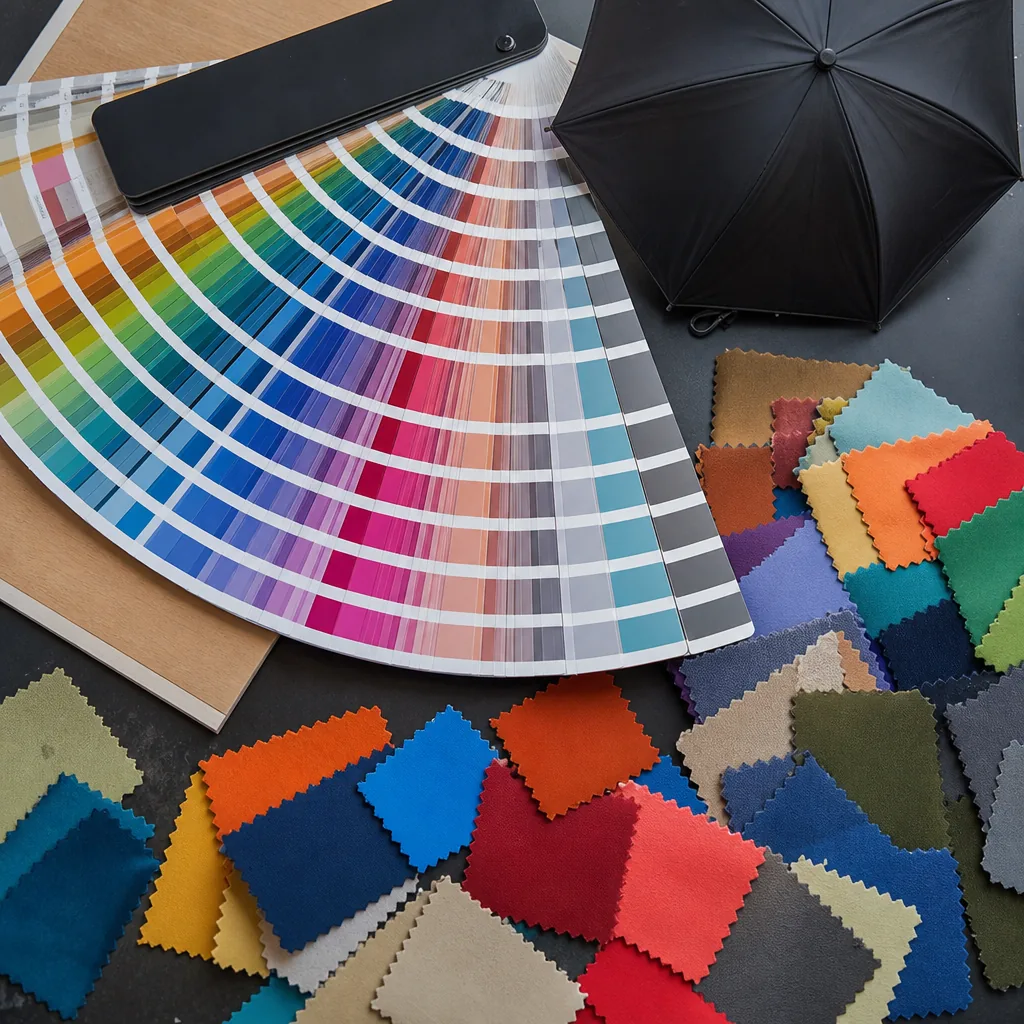
A profitable private label umbrella assortment is not built by picking colors from a catalog; it starts with controlling SKU count, canopy sizes, rib strength, fabric grade, packaging cost, and reorder timing before production begins. On our Songxia factory floor, the problems we see most often are over-wide assortments, weak opening-price specs, and MOQ splits that look fine on a spreadsheet but create delays, mixed quality, and slow-moving inventory.
Start With a Good-Better-Best SKU Structure
A good-better-best structure keeps a private label umbrella assortment from becoming a pile of random shapes and colors. I normally map “good” to a 21" 3-fold manual compact with steel shaft, 8K steel ribs, 190T pongee, and a simple sleeve; this is the checkout, drugstore, campus bookstore, or value-channel item where the buyer needs emergency rain cover under a sharp opening price. “Better” usually moves to a 21" or 23" auto-open compact with 8K fiberglass ribs or mixed steel/fiberglass construction, 190T or 210T pongee, Teflon water-repellent coating, and a rubberized or ABS handle. That SKU works for department stores, travel accessories walls, corporate gift programs, and e-commerce bundles because the mechanism feels noticeably easier without pushing freight cost too high.
The “best” tier should not just be a more expensive compact; it needs a different job in the retail umbrella program. A 23" straight stick with 8K or 16K fiberglass ribs, metal shaft, curved EVA or wood-look handle, and 210T pongee gives stores a classic commuting umbrella with stronger visual presence on a floor stand. For premium outdoor, club, and resort channels, a 27" or 30" golf umbrella with 8K or 10K fiberglass frame, double-canopy vented windproof construction, and UPF 50+ coating earns its shelf space because it covers two people, survives 50+ mph wind-tunnel testing when engineered correctly, and carries a large logo panel cleanly. This is also where branded umbrella SKUs can use contrast piping, woven labels, and color-matched tips without confusing the value story.
Do not let every tier compete for the same shopper. Entry 3-fold manuals should be bought deep in black, navy, and one seasonal color, with carton-level replenishment and AQL 2.5 inspection focused on rib alignment, runner lock, and canopy seam leakage. Better auto-open compacts can carry the main private label rain gear identity, so I would plan more colorways, tighter handle finishing, and retail packaging that explains auto-open, Teflon coating, and canopy diameter. Premium straight and golf models should have fewer colors but stronger materials, because oversized umbrellas expose weak sewing, loose tips, and poor frame balance quickly. For umbrella assortment planning, the cleanest range is often 4 to 6 core SKUs: manual compact, auto-open compact, straight stick, vented golf, plus one fashion print and one UV travel style if the channel supports it.
Match Specs to Each Retail Price Tier
The fastest way to control margin in a private label umbrella assortment is to lock the frame and fabric by price tier before discussing colors or prints. For value SKUs, I would start with 190T pongee, 8K steel ribs, a chrome-plated steel shaft, and a manual or basic auto-open runner. A 21" compact or 23" straight umbrella in this build keeps cost predictable, passes normal retail use, and avoids the cracked-canopy look you get from cheaper polyester. Use a straight plastic J-handle or EVA foam grip, not rubberized coating that peels after humidity storage. Sleeve should be same-fabric with a simple woven label, because zipper sleeves add labor without improving sell-through at opening price points.
Mid-tier branded umbrella SKUs should feel noticeably better in hand, not just carry a nicer logo. I recommend 210T pongee, 8K or 10K fiberglass ribs, a black metal or fiberglass shaft, and auto-open for stick umbrellas or auto-open-close for 21"/23" compacts. Fiberglass ribs matter because shoppers may not understand the material, but they feel the flex when the umbrella inverts less in a gust. This is the right tier for Teflon water-repellent coating, color-matched handles, matte ABS grips, wrist straps, and printed sleeves with barcode labels. For a retail umbrella program, mid-tier is usually where the volume sits, so keep no more than 4 to 6 core colors plus one seasonal print per drop.
Premium specs need a real construction upgrade, not just heavier packaging. For $25–$50 retail, use double-canopy vented windproof builds, 10K/16K fiberglass frames, 27" golf sizes, or a dense 30" arc for commuter coverage. A good 16K frame has more sewing points and slower assembly, but it gives the canopy a rounder profile and a stronger shelf story than a standard 8K umbrella. Add UPF 50+ coating for sun-rain positioning, especially in private label rain gear programs that run beyond spring. In umbrella assortment planning, I would separate premium by use case: vented golf, UV commuter, and compact executive, then test to AQL 2.5 with wind checks around 50+ mph before approving bulk production.
Control Colorways, Logos, and Packaging Costs
Color discipline is the fastest way to keep a private label umbrella assortment affordable. Every extra Pantone shade creates separate fabric dye lots, handle matching work, sleeve printing, and QC checks under D65 light. For most retail umbrella program launches, I push buyers toward 3 to 5 core colorways across the season: black, navy, red, one fashion color, and maybe a clear POE option if dome umbrellas are included. On 190T or 210T pongee, a mill will usually want 300 to 500 yards per dyed color, so spreading that across 21 inch folding, 23 inch auto-open, and 27 inch stick umbrellas helps reduce dead stock. If each branded umbrella SKU uses a different canopy color and different logo placement, MOQ pressure rises fast because cutting tables, screen frames, and sewing bundles cannot be shared efficiently.
Shared components matter just as much as shared fabric. A black EVA handle, matte plastic runner, steel shaft, fiberglass rib tips, and common wrist strap can support multiple models without opening new tooling or holding excess parts. Our standard practice at ZheBrella is to build private label rain gear around component families: 8K steel ribs for value folders, 8K fiberglass ribs for windproof midrange, and 16K fiberglass for premium golf umbrellas. The buyer can still differentiate with canopy size, logo print, sleeve artwork, and hangtag story, but the factory avoids 12 small component purchase orders. That usually lowers practical MOQ from 1,200 pieces per exact style to a more workable 600 to 1,000 pieces when colors and trims are pooled across the assortment.
Packaging is where many private label teams accidentally spend money they never see on shelf. A woven label, full-color hangtag, EAN/UPC barcode sticker, warning label, care insert, printed sleeve, inner carton, and retail master carton all need artwork control and packing-line time. For umbrella assortment planning, I recommend one hangtag size, one barcode label format, and one retail carton structure across all compact models, with only SKU text and barcode changing. Display-ready packaging should be decided before sampling, not after production, because PDQ tray dimensions affect sleeve length, carton count, and drop-test results. A 12-piece counter display for 21 inch auto-open-close umbrellas packs differently from a 24-piece stick umbrella floor display. Standardizing these details keeps AQL 2.5 inspection cleaner and reduces repacking charges before FOB or DDP shipment.
Plan MOQ and Reorder Quantities by SKU
MOQ should be planned at the model/color level, not only at the total order level, because the factory cost is driven by setup time, component allocation, and print changeovers. For a retail umbrella program, a practical floor is often 1,200–3,000 pieces per frame model, with 600–1,000 pieces per canopy color when using stock-dyed 190T or 210T pongee. Custom-dyed fabric usually needs 3,000+ pieces per color to justify lab dips, bulk dyeing, and shade-control risk. If a buyer spreads 10,000 units across 20 branded umbrella SKUs, the unit cost rises because cutting markers, sewing thread, tips, handles, logo screens, and carton labels all change too often. I have seen the same 23-inch auto-open umbrella cost 8–15% more simply because the PO was split into too many color/logo combinations.
The smarter way to build a private label umbrella assortment is to share the engineering platform and vary only the buyer-facing elements. For example, use one 23-inch 8K steel shaft/fiberglass rib frame across five canopy colors, or one 21-inch auto-open-close compact frame across three logo placements. The factory can then purchase ribs, runners, springs, shafts, ferrules, and handles in larger lots while the retail team still gets differentiated SKUs on shelf. Canopy customization is flexible: panel color, contrast binding, heat-transfer logo on one panel, screen print on two panels, woven label on the tie wrap, or retail hangtag. At ZheBrella, our standard practice is to lock the frame BOM first, then build color and branding variations around it so inspection, spare parts, and AQL 2.5 checks stay consistent.
Reorder quantities should follow sell-through speed, not the buyer’s original launch mix. For umbrella assortment planning, I recommend classifying SKUs before production: core black/navy at 40–60% of volume, seasonal colors at 20–35%, and promotional or fashion prints at 10–20%. Reorders below 600 pieces per color are possible only when fabric, handles, and packaging are still in stock; otherwise the buyer pays restart costs and waits 30–45 days instead of 20–30 days. A disciplined private label rain gear program usually keeps 2–3 shared frames, 4–6 core colors, and limited seasonal drops. That structure protects margin, keeps FOB/DDP pricing predictable, and avoids dead inventory without making the shelf look thin.
Build a Sampling and Launch Calendar
Shipping buffers are where many private label rain gear launches fail. For FOB Ningbo or Shanghai, add 7–10 days after final inspection for booking, inland trucking, customs, and vessel cutoff; ocean transit to the U.S. West Coast is often 16–22 days, East Coast 30–40 days, and Europe 28–38 days before port handling. For DDP, plan a wider 35–55 day buffer to cover destination clearance, duties, last-mile trucking, and retailer delivery appointments. Air freight can rescue a late umbrella assortment planning mistake, but it destroys margin on heavy 30 inch golf umbrellas and long steel-shaft stick umbrellas. For a clean private label umbrella assortment launch, I would freeze SKUs at least 90 days before FOB ship date and keep two weeks of contingency for failed inspection, carton relabeling, or retailer routing-guide changes.
Frequently Asked Questions
How many umbrella SKUs should a new private-label program start with?
Most new programs should start with 3 to 5 core SKUs across compact, stick, and large-canopy formats. This keeps MOQ manageable while testing customer demand.
Can one frame be used across multiple private-label designs?
Yes, using the same frame with different canopy colors, prints, sleeves, and hangtags is a common cost-control strategy. It can simplify sampling, spare parts, and reorder planning.
How many umbrella SKUs should a private label launch include?
A practical launch is usually 3 to 5 SKUs: one value model, one core mid-tier, one premium style, and optionally a compact or golf umbrella. This keeps inventory manageable while covering key price points and use cases.
What MOQ is typical when building a branded umbrella assortment?
For OEM/ODM umbrella programs, MOQ is often 300 to 1,000 pieces per style or colorway, depending on canopy fabric, handle, and printing setup. Higher customization usually pushes MOQ up, while repeat orders can often be split across replenishment batches.
Which canopy size and rib count mix sells best in retail?
Many private-label assortments use a 21-inch or 23-inch compact umbrella for everyday carry and a 27-inch or 30-inch option for higher coverage. Rib counts commonly range from 6 to 8 ribs for compact models and 8 to 10 ribs for larger or wind-resistant styles.
Looking to Launch Your Custom Umbrella Line?
ZheBrella is a Zhejiang-based OEM/ODM umbrella manufacturer with 17 years of export experience. Free design, low MOQ from 100 pieces, windproof construction, full-color print.
Get Free Quote Now »People Also Search For
Related Articles
Private Label Umbrella Programs for Retail Brand Owners
Build a retail-ready private label umbrella line with the right SKUs, fabrics, frame specs, packaging, MOQ, and inspecti...
Read More »
Private Label Umbrella Line Planning: SKUs, Specs, and MOQ
Plan a private label umbrella range with smart SKU tiers, shared frames, MOQ control, lead times, and specs that protect...
Read More »Private Label Umbrella Programs for Retail Chains and Hotel Groups
Plan private label umbrella assortments with brand control, packaging, MOQ, and FOB/DDP terms that fit multi-location re...
Read More »