Private-Label Umbrella Brand Building for Online Retailers
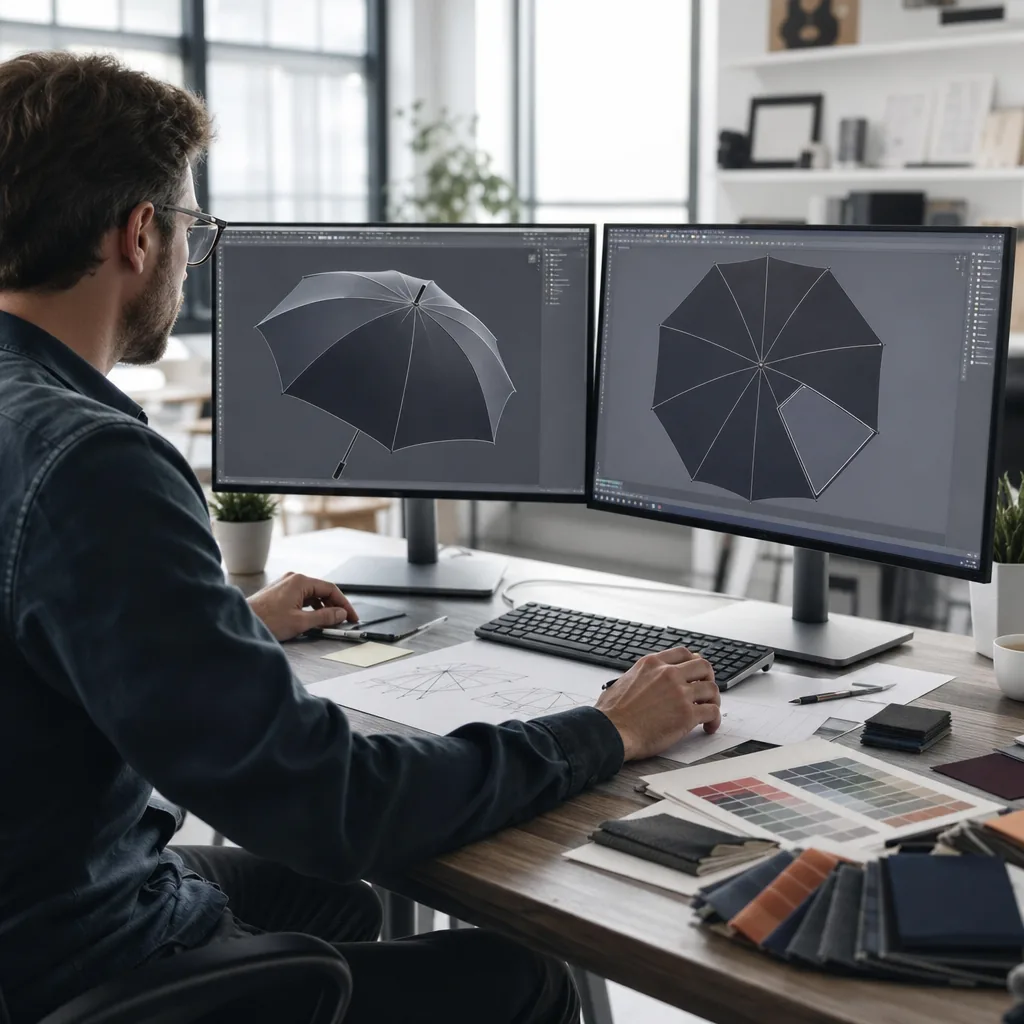
Online retailers trying to build a private label umbrella brand quickly run into the same problem: most umbrellas look interchangeable, but the details that support a higher price are buried in the factory process. From frame tolerances and canopy hand-feel to carton structure, hangtag placement, and print consistency, the real difference comes from choices made before the first shipment leaves the line. We see those tradeoffs every day on the factory floor, where small design decisions determine whether a listing feels generic or branded.
Differentiation beyond a logo
A real private label umbrella brand is built on a visible reason to buy, not a printed name on a stock frame. If every seller is offering the same 23-inch manual open umbrella with 190T pongee and a one-color logo, the market treats it as commodity product and price becomes the only lever. For umbrella brand building, the first decision is the use case: compact travel, golf, commuter, fashion retail, or corporate giveaway. Those choices drive the frame, panel count, canopy fabric, and opening mechanism. A 21-inch auto-open close model with a slim EVA handle serves a different buyer than a 30-inch vented golf umbrella with fiberglass ribs and a rubberized grip. That distinction is the beginning of umbrella brand differentiation, not the print method.
Materials are where a private label umbrella brand becomes defensible. Pongee 210T feels and drapes differently than 190T; POE and PVC behave differently in translucency and weather use; fiberglass ribs flex under wind in a way low-grade steel does not. A double-canopy vented structure, Teflon water-repellent finish, or UPF 50+ coating gives the retailer a story that customers can understand and repeat. At ZheBrella, standard practice is to match the frame spec to the channel, because white label umbrella online listings fail when the product looks nice in photos but snaps in real rain. If you want to build umbrella brand equity, the product has to solve a specific problem better than the generic alternative, whether that is wind resistance, sun protection, or a cleaner retail finish.
Use-case positioning matters as much as construction. A promotional distributor needs different specs than a direct-to-consumer seller, and a retail brand needs tighter color control, packaging discipline, and a repeatable sample standard. The fastest way to weaken a private label umbrella brand is to chase every request and end up with no clear product identity. Decide whether the line is about compact portability, premium storm performance, or a fashion silhouette, then lock the details: rib count, canopy weight, handle shape, print area, and carton spec. That is how umbrella brand building becomes operational instead of cosmetic. When the product, channel, and customer use case line up, the logo becomes a signal rather than the only thing holding the offer together.
Choosing a defensible niche
A defensible niche starts with climate and use case, not with a catalog. If you are trying to build a private label umbrella brand, choose a position that has a clear failure mode in the market: windproof models for coastal cities, compact travel umbrellas for commuters, premium gift umbrellas for corporate buyers, or eco-oriented builds using recycled canopy fabric and reduced packaging. That gives you something more concrete than "good quality," which is meaningless in white label umbrella online listings and easy for competitors to copy. The point of umbrella brand building is to own a reason to exist that survives a 10% price cut from a generic seller.
In practice, the niche has to be defensible on hardware and not just on artwork. A coastal line should mean fiberglass ribs, reinforced stretcher joints, double-canopy venting, and a real wind rating, not a marketing claim printed on the sleeve. A gift line should mean 190T or 210T pongee, a cleaner finish, consistent panel alignment, and packaging that looks intentional in a gift box or mailer. Our standard practice at ZheBrella is to separate those programs early, because once you mix them, your MOQ, lead time, and inspection standards all get messy. If you want to build umbrella brand equity instead of chasing commodity listings, anchor the SKU around one clear buyer problem, then lock the spec, margin, and channel before you scale.
Packaging and unboxing as brand
Packaging is the fastest way to make a private label umbrella brand look deliberate instead of cheap. A 23-inch auto-open umbrella in a plain OPP bag reads like a commodity; the same umbrella in a 350 gsm SBS gift box with matte lamination, a tight paper sleeve, and a die-cut insert suddenly feels like a retail item. For umbrella brand building, I care more about fit and structure than printing noise: the canopy should not rattle, the runner should not punch through the box, and the package should open cleanly in one motion. A rigid tray or folded card insert is usually enough for a white label umbrella online program, and it costs far less than overengineering the art. If the unboxing is sloppy, buyers assume the frame and fabric are sloppy too.
The insert is where you build umbrella brand differentiation without raising the unit cost much. Add a short care card with fiberglass-rib handling notes, a QR code for opening instructions, and a one-line warranty statement; that is enough to make the product feel engineered, not tossed into a carton. For higher-margin sets, a printed sleeve, tissue wrap, and a belly band can make a $5 umbrella feel like a $25 product because the customer sees presentation before they see price. ZheBrella standard practice is to match packaging strength to the shipping path: sleeve-only for bulk FOB cartons, boxed presentation for DDP e-commerce, and reinforced corners for gift sets so the box survives last-mile abuse. If you want to build umbrella brand credibility, packaging has to protect the first impression, not just the umbrella.
Brand assets and consistency
Color control is the first place a private label umbrella brand either looks disciplined or cheap. Lock the canopy to one primary Pantone, then define one approved backup for production tolerance, because pongee 190T and 210T will shift slightly under different dye lots and coatings. For umbrella brand building, I prefer a simple rule: one main canopy color, one frame color, and one accent used only on the sleeve or closure strap. That keeps white label umbrella online listings consistent across 21-inch compact, 23-inch stick, and 30-inch golf formats. If the retail assortment has UV or Teflon finishes, test the color on coated swatches, not on uncoated lab cards, because the finish changes saturation and gloss. That is where umbrella brand differentiation starts: not with a louder design, but with colors that repeat cleanly from sample to mass production.
Logo placement should be fixed before sampling, not adjusted after the first carton ships. On the canopy, the best locations are usually one or two opposite panels near the mid-height area, sized to avoid seam distortion when the ribs flex in wind. For an auto-open-close frame, keep the mark away from the runner path and the vent zone on double-canopy models, or you will get warped print edges and cracked heat-transfer film. Sleeve branding needs the same discipline: one logo position, one orientation, one size. If the product set includes manual and auto-open versions, keep the logo placement consistent in relation to the handle, not the mechanism, so the line reads as one private label umbrella brand instead of a mix of random SKUs. This is basic build umbrella brand work, and it prevents a lot of avoidable rework.
Kit consistency matters because buyers judge the whole package, not just the umbrella. The canopy, sleeve, hang tag, carton, and polybag should share the same color code, logo file, and copy hierarchy, with the product name and size written the same way everywhere. I like to specify a master artwork pack that controls logo clear space, barcode placement, carton side marking, and any warning text, especially when the order spans retail packs and bulk export cartons. For a real private label umbrella brand, the sleeve should not introduce a second font or a different shade of black just because it is easier for the print vendor. Our standard practice is to approve the canopy strike-off, then match the sleeve and packaging to that approval, not the other way around. That keeps umbrella brand building tight, reduces false rejects at AQL 2.5, and makes white label umbrella online listings look like one coherent line instead of a factory assortment.
Telling the quality story
For a private label umbrella brand, the strongest listings do not start with lifestyle language; they start with proof. If the canopy is 190T or 210T pongee, say it. If the frame uses fiberglass ribs instead of low-grade steel, say that too, because buyers understand the difference once they see how the umbrella behaves in a wind test. A white label umbrella online listing should show the mechanism, the rib count, the open diameter, and whether it is manual, auto-open, or auto-open-close. Those details are what separate a generic umbrella from a product that can support umbrella brand building over time. If you want to build umbrella brand trust, the first job is to make the product legible.
Wind-test footage is worth more than polished copy. Show a double-canopy vented windproof model bending and recovering in gusts, then back it up with the actual spec, such as a 50+ mph survival target in controlled testing. Add close-ups of water beading on a Teflon-coated canopy, UV claims like UPF 50+, and photos of stitching density at the edge binding and tips. For umbrella brand differentiation, these are the details that buyers can compare against competitors. A 21-inch travel model, a 23-inch commuter umbrella, or a 30-inch golf umbrella each needs different proof points, because the buyer is not evaluating the same use case. The content should make the performance story obvious without asking the customer to guess.
Factory details also matter, but only when they are tied to consistency. At ZheBrella, our standard practice is to show the rib material, canopy cutting method, print process, and final inspection standard, because those are the points that affect returns and repeat orders. Mention AQL 2.5 if you are talking about inspection, and state MOQ, FOB or DDP terms, and lead times in days if the audience is a procurement team. For private label umbrella brand programs, that level of transparency is not extra information; it is the product page. It helps a retailer build umbrella brand credibility, and it gives a distributor enough technical grounding to sell the item as more than a logo on fabric.
Frequently Asked Questions
How do I make a private-label umbrella stand out from generic listings?
Pick a clear positioning (e.g. windproof, luxury gift, or eco) and back it with real spec differences, branded packaging, and a quality story — wind-test results, fabric GSM, frame material. A logo alone on a generic umbrella competes only on price.
Is private label the same as white label for umbrellas?
Roughly: white label is a stock factory umbrella with your logo, while private label usually implies more customization — your colors, packaging, and sometimes design tweaks — to build a distinct brand. Private label costs more but is far more defensible.
What minimum customization is usually needed to make a factory umbrella feel like a real brand?
For most online retailers, the baseline is a custom canopy color, one branded swing tag, a printed sleeve, and a retail box or hang-ready carton. In practice, many factories can support this at 300-500 units per style, depending on the umbrella model and print complexity.
How much extra lead time does private-label packaging add?
Custom packaging usually adds 7-15 days to the production schedule because the factory has to coordinate box printing, inserts, and labeling. If the order includes new mold parts or special handle finishes, total lead time can extend to 35-50 days instead of a standard 25-35 days.
Which design details most often support a higher online retail price for umbrellas?
Buyers usually pay more for features they can see in photos and unboxing: a unique handle shape, better fabric texture, branded sleeve packaging, and a cleaner logo application. A stronger story around wind resistance, UV protection, or recycled materials also helps justify a premium when the product specs are real and documented.
Looking to Launch Your Custom Umbrella Line?
ZheBrella is a Zhejiang-based OEM/ODM umbrella manufacturer with 17 years of export experience. Free design, low MOQ from 100 pieces, windproof construction, full-color print.
Get Free Quote Now »People Also Search For
Related Articles
How to Build a Strong Umbrella Branding Program Across SKUs
Create a repeatable umbrella branding system across styles, colors, and packaging so every SKU looks consistent and fact...
Read More »Umbrella Insert Cards for Private-Label Brand Storytelling
Use insert cards to explain fabric, frame, care, warranty, and brand values while improving perceived value in private-l...
Read More »
Premium Umbrella Finishing Details That Elevate Brand Perception
Learn which umbrella details raise perceived value, from pongee weight and rib material to closures, trims, QC, and priv...
Read More »