Premium Umbrella Finishing Details That Elevate Brand Perception
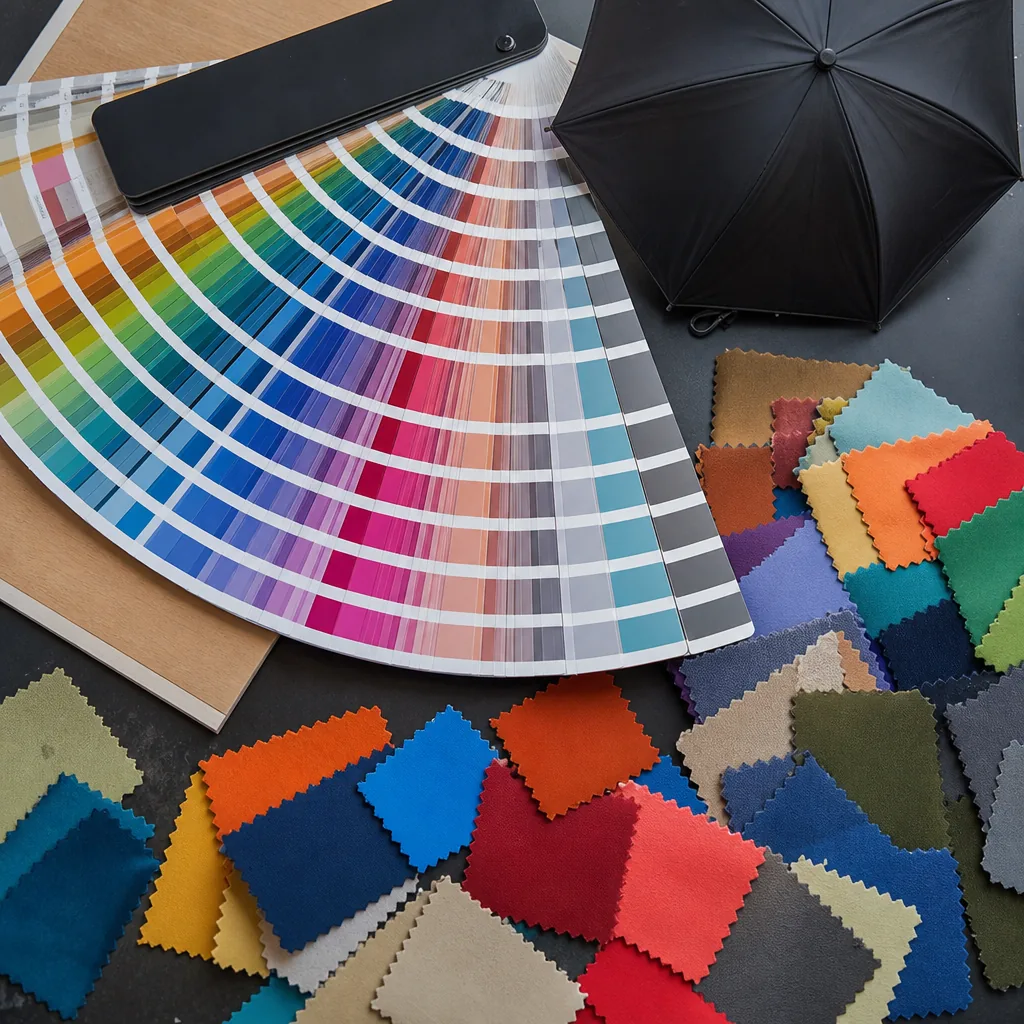
When buyers compare custom umbrellas at similar price points, the finish details usually decide whether the product reads as promotional or genuinely upscale. On our production lines in Songxia, we see how premium branded umbrella details—pongee weight, rib stability, stitching accuracy, closures, trims, and final packing—directly affect hand feel, appearance, and return rates before the first shipment ever leaves the factory.
Which Finishing Details Buyers Notice First
Buyers form a quality judgment before they read the logo, so the first quality gate is the canopy itself. Hand feel, drape, and how evenly the fabric sits over the frame do more for premium perception than adding another printed panel. A 190T pongee canopy can reproduce graphics well, but 210T pongee with a PU or Teflon finish usually feels denser, hangs flatter, and shows fewer stress lines at rib pockets and panel joins. On dome umbrellas, POE generally looks clearer and less brittle than low-grade PVC, while EVA gives a softer hand but demands tighter seam control to avoid visible waviness. These premium branded umbrella details also affect complaint risk: heavy flood printing can stiffen lower-grade fabric, increase puckering at the seams, and make the canopy look strained once opened. For buyers reviewing pre-production samples, better fabric and cleaner finishing usually raise perceived value faster than more print coverage.
The next details buyers notice are the ones that reveal factory control: seam accuracy, strap closure, handle finish, and tip alignment. On a premium umbrella, panel seams run straight, stitch density stays consistent, thread tension is balanced, and the hook-and-loop or snap strap lands square instead of twisting off-axis. Loose thread tails, crooked woven-label placement, or a sloppy closure tab will hurt perceived value faster than skipping a metallic ink upgrade. The same applies to branded umbrella trims. Ferrules should sit centered, top-cap threads should seat cleanly, and tip alignment across an 8K or 10K frame should remain uniform when the umbrella is opened under showroom lighting. Handle finish is equally exposed. Rubberized ABS should have a clean mold line with no sink marks; kiln-dried wood should show even lacquer; matte-coated straight handles should be free of seam flashing. In private label umbrella presentation, these visible tolerances matter more to luxury umbrella finishing than oversized graphics alone.
Material Upgrades That Signal Better Quality
Canopy fabric is the first quality cue, so the 190T versus 210T choice should follow the selling context, not habit. 190T pongee is a solid mid-to-premium spec for larger MOQ programs because it keeps unit cost controlled while still delivering a smooth hand, clean drape, and dependable print results for screen print or heat-transfer logos. For premium retail shelves, executive gifting, or private label umbrella presentation where the buyer handles the product before purchase, 210T pongee usually justifies the upcharge. Its denser weave gives the canopy more body, a cleaner face under retail lighting, and fewer visible fold marks after packing and transit. Print quality also benefits, especially on navy, black, and deep green: ink coverage reads more even, edges stay cleaner, and fine logo lines reproduce with less breakup. Those gains are modest on paper but obvious at first open, which is where premium branded umbrella details do the most work. Use 190T when the brief calls for budget discipline with an upgraded look; use 210T when the umbrella must read immediately as premium retail, executive gifting, or a higher-ticket private label item.
Frame spec decides whether the umbrella still feels premium after repeated use. Steel ribs help meet aggressive FOB targets and can perform well under static load, but they add weight and are more likely to hold a bend after stress. Fiberglass ribs recover better in gust conditions, resist corrosion, and improve balance on 23-inch and 27-inch frames, which matters in daily-carry and gifting programs. A mixed construction, typically fiberglass ribs with a reinforced steel shaft, is often the most defensible upgrade for luxury umbrella finishing because it improves resilience without excessive top weight. If wind performance is part of the brief, a double-canopy vented build is a meaningful step up: on golf or city umbrellas, a well-executed vented frame can outperform a single-canopy build of the same size in 50+ mph gusts. UPF 50+ also supports a higher-end position, but only when the claim is backed by construction, usually a dense weave, darker dye package, and UV-blocking finish. For premium umbrella materials, spend first on durability and verifiable performance, then on branded umbrella trims such as color-matched tips, woven labels, and upgraded handle finishes that reinforce perceived quality without adding avoidable risk.
Construction Choices That Change the User Experience
Opening feel is one of the fastest ways a buyer judges umbrella quality, and it directly affects claim risk, repair rate, and unit cost. On 23-inch and 27-inch stick styles, a good auto-open frame should reach full lock in one motion, with even spring force, a clean runner track, and no drag from shaft burrs or loose latch tolerances. That crisp deployment signals quality before the user notices the canopy print, handle, or branded umbrella trims. Manual-open frames can feel equally refined if slider travel is controlled and notch engagement is precise, but they remove a common failure point: weak spring assemblies that lose force after repeated opening cycles. For premium branded umbrella details, the tradeoff is practical. Auto-open improves convenience and first-use perception; manual open usually lowers final unit cost, simplifies repairs, and reduces failure risk in rough-use programs such as hospitality, golf, and school distribution.
Rib layout changes both appearance and stability in hand. An 8K frame remains the standard because it balances weight, fabric yield, and replacement-part simplicity; in a 23-inch auto-open using fiberglass ribs with a steel shaft, wind performance around 45-50 mph is realistic when the stretchers, tips, and top-notch fit are controlled. A 16K frame creates a denser, more formal silhouette that supports luxury umbrella finishing and stronger private label umbrella presentation: narrower panels, a rounder canopy arc, and a cleaner closed profile. The cost is higher labor and tighter tolerances. A 16K frame adds joints, sewing operations, and alignment risk, so unit price rises, especially if the frame must stay slim rather than bulky. Material choice matters as much as rib count. Steel gives a solid handfeel at lower cost, but thin-gauge or poorly treated steel is more prone to wobble at the runner and top notch. Fiberglass ribs recover better after inversion and hold canopy shape more reliably, which often contributes more to a premium feel than decorative add-ons alone.
Private-Label Touchpoints Beyond Basic Logo Printing
For a more premium read, shift branding away from the canopy and onto the first touchpoints: the handle, closure strap, and opening hardware. Debossed handle marks on straight wood, matte ABS, or rubberized plastic are one of the most cost-effective upgrades because they usually use a steel stamp insert rather than a new handle mold. That keeps these premium branded umbrella details realistic at roughly 500 to 1,000 pieces, depending on handle geometry and mark depth. Closure straps are another high-yield area. Woven hook-and-loop or snap straps with the brand name stitched into the tape are typically workable at factory MOQ and show cleanly on 190T or 210T pongee canopies, where the smoother surface makes branded umbrella trims more visible. Compared with another printed canopy panel, these details do more for perceived value because buyers and end users judge quality first at the grip point and closure point. If the goal is luxury umbrella finishing without moving into custom tooling, handle debossing and woven closures usually deliver the best return on unit cost.
The practical rule for private label umbrella presentation is that decorative additions scale more easily than structural changes. Sewn-in seam labels, edge flag labels, and printed care labels are low-risk options when artwork is approved before canopy sewing; around 1,000 pieces is a common workable MOQ, and sometimes lower if the label supplier already carries the required yarn colors. Branded buttons need a stricter review. A one-color pad-printed mark on a standard auto-open or auto-open-close button is usually feasible on mid-volume runs, but the print must hold up against finger oils and repeated actuation. Once you move to a molded logo in the button, a custom-shaped metal cap, or a die-cast handle nameplate, you are paying for tooling, longer approvals, and higher volume thresholds, typically closer to 3,000 to 5,000 pieces. The same cost logic applies to ferrule engraving and handle-end medallions. Expect additional sample sign-offs and about 10 to 15 extra days on top of a typical 35 to 45 day production lead time. For most programs, the safest mix of premium umbrella materials and branding is debossed handles, woven tabs, stitched PU wraps, and clean interior labels, rather than forcing every component into a high-MOQ custom program.
Inspection Standards and Order Planning for Premium Programs
Lock the premium standard before production starts. For premium branded umbrella details, approval should be based on a signed pre-production package, not email comments or a shipment-day inspection. Freeze the bill of materials at sample stage: frame gauge, fiberglass versus steel rib mix, 8K/10K/16K construction, 190T or 210T pongee, POE/PVC/EVA canopy where applicable, handle coating, tip plating color, woven-label position, and print color viewed under the approved light source. Use two sealed references: one structural sample for open-close function, runner travel, shaft straightness, rib symmetry, and top-notch security; one cosmetic sample for badge placement, deboss depth, binding width, handle seam alignment, and print appearance. Write tolerances into the file instead of relying on factory memory: canopy diameter plus or minus 1 cm, strap length consistency, shaft alignment, and stitch spacing. For luxury umbrella finishing, cosmetic thresholds should be explicit and tighter than standard promotional goods: no visible ferrule scratches, no exposed glue, no skipped stitches, no print ghosting, and no fabric-lot color drift visible under retail lighting.
AQL 2.5 is a practical final inspection level for premium programs, but only if inline checks are already screening out functional and cosmetic defects. Final inspection should verify open-close cycling, lock strength, broken rib rate, canopy sewing, coating performance, severe print misregistration, hangtag attachment, zipper sleeve assembly, and outer-carton drop condition. Treat functional failures, weak springs, broken ribs, and major logo defects as major or critical defects. Clear POE, PVC, or EVA canopies need tighter cosmetic review because haze, weld marks, and scuffing show immediately; dark 210T pongee can allow faint weave variation only when it is not visible at arm's length. Order planning should match the build complexity. A 23 inch or 27 inch premium straight umbrella with an 8K fiberglass frame typically starts at 500 to 1,000 pieces per colorway, while auto-open-close folding styles, custom molds, double-canopy vented construction, or 10K and 16K frames usually require 1,000 to 3,000 pieces. Plan 7 to 10 days for samples and 35 to 50 days for bulk production after deposit and artwork approval. FOB Ningbo works for buyers managing consolidation; DDP reduces schedule risk for fixed launch dates and protects private label umbrella presentation at delivery.
Frequently Asked Questions
Does 210T pongee always make an umbrella look more premium than 190T?
Not always. 210T can give a denser hand feel and cleaner appearance, but the final impression also depends on coating, stitching quality, frame finish, and how the fabric tension looks when open.
Are fiberglass ribs necessary for a premium umbrella line?
They are common in premium programs because they improve flexibility and corrosion resistance compared with basic steel setups. But a well-finished steel frame can still fit a mid-premium brief if cost targets are tight and the umbrella is not positioned as windproof.
Which finishing details have the biggest impact on perceived value without changing the canopy print?
The fastest upgrades are usually 190T-210T pongee, a stitched closure strap with woven label, matte handle finishes, matched edge binding, and a cleaner top cap and ferrule set. For many OEM programs, these changes add modest unit cost but noticeably improve shelf presentation and unboxing.
How should a buyer evaluate rib and shaft materials for a premium private-label umbrella line?
For a better hand feel and retail positioning, buyers often move from basic steel frames to fiberglass ribs with a black electroplated or aluminum shaft, depending on target price. A common approach is to request 2-3 frame specs side by side and compare weight, opening smoothness, and salt-spray or cycle-test results before approval.
What private-label presentation options usually require longer lead times?
Custom woven labels, molded handle badges, printed sleeves, color boxes, and non-standard hangtags typically add about 5-10 days after artwork approval. If multiple packaging components are sourced separately, buyers should confirm carton pack-out and barcode placement before mass production to avoid rework.
Looking to Launch Your Custom Umbrella Line?
ZheBrella is a Zhejiang-based OEM/ODM umbrella manufacturer with 17 years of export experience. Free design, low MOQ from 100 pieces, windproof construction, full-color print.
Get Free Quote Now »People Also Search For
Related Articles
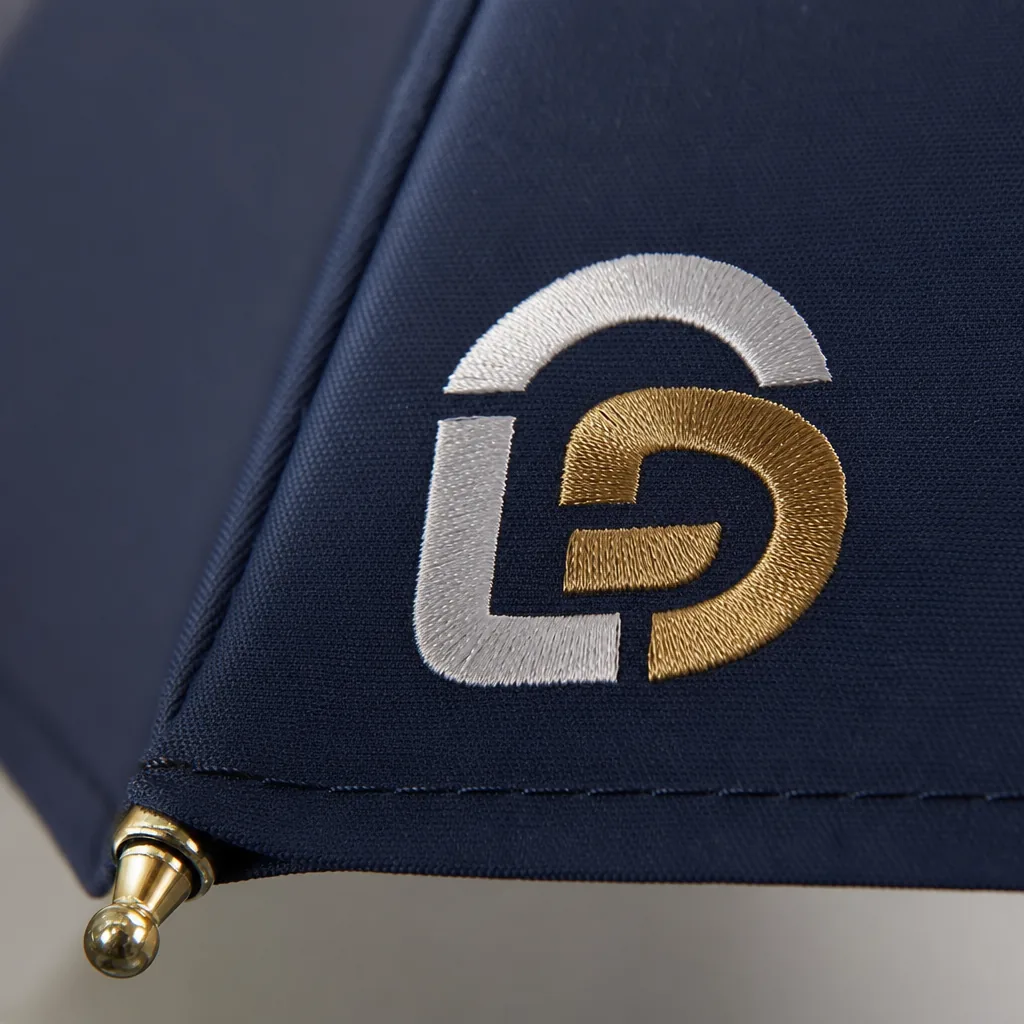
Premium Umbrella Belly Bands for Retail Brand Storytelling
Use belly bands to add brand story, sizing, care details, and scan codes to umbrellas without raising packaging cost or ...
Read More »
Umbrella Packaging Inserts for Premium Brand Storytelling
Plan insert cards, care leaflets, and story pieces that elevate umbrella gifting, support retail sell-through, and stay ...
Read More »Luxury Umbrella Presentation for VIP Gifts and PR Seeding
Plan premium umbrella presentation for VIP gifting with material, frame, and box choices that balance perceived value, M...
Read More »