Premium Umbrella Belly Bands for Retail Brand Storytelling
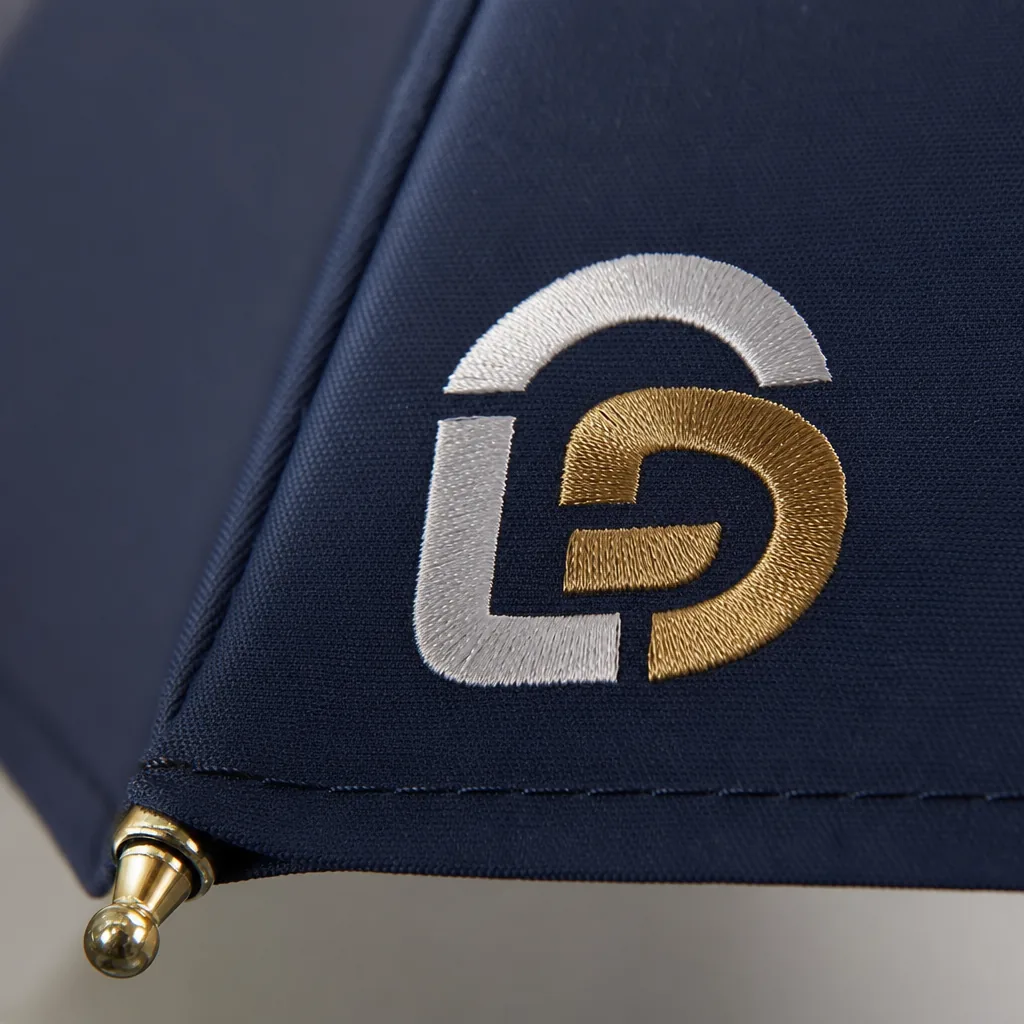
Retail buyers often want more brand story on an umbrella, but cartons, sleeves, and hangtags can add cost, weight, or extra handling at the packing table. On our Songxia production floor, umbrella belly band packaging is one of the simplest ways we add sizing, care details, UPC or QR codes, and collection messaging without changing the umbrella build or slowing final inspection and carton loading.
Why Belly Bands Work for Branded Umbrella Lines
A belly band gives a folded umbrella a retail face without hiding the product the buyer actually wants to inspect. For branded umbrella packaging, that matters because canopy color, handle finish, sleeve fabric, rib count, and folded size all influence purchase decisions at the shelf. A full box can look premium, but it adds cost, freight cube, and inspection steps; a simple 250–350 gsm art paper band or kraft band keeps the umbrella visible while carrying the logo, barcode, care icons, UPF 50+ claim, windproof wording, and country-of-origin labeling. On the factory floor, we see belly bands work best when the band wraps firmly around the sleeve or closed canopy but does not compress the runner, tips, or ferrule. If the band is too tight, it dents EVA handles and can wrinkle 190T pongee sleeves during carton pressure testing.
Compact umbrellas usually need the shortest band, often 45–60 mm wide, positioned around the folded sleeve so the hang tag, wrist strap, and auto-open-close button remain visible. A 21-inch 8K compact with a three-fold steel shaft and fiberglass ribs can be merchandised in countertop trays, PDQ displays, or shallow retail shelves because the belly band creates one clean front panel while the umbrella stays around 28–32 cm long. Straight umbrellas and 23-inch stick umbrellas need a longer wrap and better glue control, especially when the handle is J-shaped or EVA foam. For private label umbrellas, our standard practice at ZheBrella is to place the band above the handle shoulder, not over the grip, because customers want to feel wood, rubberized plastic, or crook-handle finish before buying.
Golf umbrellas and 16K stick umbrellas benefit from belly bands because they are too long for most rigid retail boxes and too visually bulky for loose bin display. A 27-inch or 30-inch double-canopy vented golf umbrella, especially with fiberglass shaft and ribs, already communicates value through size, rib structure, and canopy tension; the band only needs to organize the story. Good umbrella packaging design puts wind rating, canopy material such as 210T pongee, coating details like Teflon or UV protection, and brand message on a flat readable panel. For 8K stick umbrellas, a narrower band can look elegant, but 16K frames need a wider band or secondary hang tag because buyers often need to understand why the higher rib count costs more. Done properly, umbrella belly band packaging improves retail umbrella presentation without making the item harder to ship, scan, inspect, or restock.
What to Print on a Retail Belly Band
The belly band should answer the buyer’s first three questions before they open the umbrella: who made it, what model is it, and what specification justifies the price. Put the retail brand logo on the front panel, not wrapped around the side seam where it disappears on shelf. Under it, print the product name in plain language, such as “23-inch Auto-Open Windproof Umbrella” or “21-inch Compact Auto-Open-Close Umbrella.” The next line should carry measurable specs: 8K or 10K rib count, open diameter such as 42 in. or 48 in., shaft material, and canopy fabric like 190T pongee or 210T pongee. For private label umbrellas, this is where many brands lose credibility by using vague words like “premium” instead of hard numbers. Good umbrella belly band packaging lets a shopper compare models without guessing.
Claims need to be printed with discipline. If the canopy has a tested UV coating, use “UPF 50+” and keep the test report on file; do not print “100% UV proof” unless your legal team enjoys problems. If the product uses Teflon water-repellent finishing, say so, but keep it separate from waterproof claims because umbrellas are sewn products with seams. Care icons belong on the back or side panel: air dry open, do not machine wash, keep away from flame, and close before storage. For a vented double-canopy model, add a small line such as “wind-tested to 50+ mph” only when the frame construction supports it, typically fiberglass ribs and reinforced joints. On branded umbrella packaging, every printed statement should match the actual BOM used in production, including fabric denier, rib count, handle type, and mechanism.
Barcode placement should be boring and consistent, which is exactly what retail operations want. Reserve one clean white box, usually 35 x 25 mm minimum, for the UPC/EAN barcode with quiet zones untouched by background art. A QR code can sit nearby, but do not crowd it against the barcode; it should link to care instructions, warranty registration, brand story, or a short assembly-free product video. For distributor and retailer stickers, leave at least 45 x 30 mm of blank space on the back or bottom overlap of the band, because many North American and EU channels add price labels, import stickers, or seasonal promo tags after arrival. Our standard practice at ZheBrella is to mark the dieline with a “no-print sticker zone” before mass printing. That small control prevents beautiful umbrella packaging design from being ruined by a crooked retail label covering the main logo or UPF 50+ claim.
Material, Finish, and Construction Choices
For retail work, the belly band should be specified like a small carton component, not an afterthought. The most common paper choices are 250–350 gsm C1S or C2S art paper when the brand wants sharp four-color printing, and 300–400 gsm kraft paper when the line is positioned as outdoor, eco, or heritage. Below 250 gsm, bands curl and crease during packing; above 400 gsm, they become stiff enough to leave pressure marks on a tightly rolled 190T or 210T pongee canopy. For umbrella belly band packaging, I usually prefer 300 gsm art paper with matte lamination for premium retail umbrella presentation because it resists fingerprints and keeps barcode areas readable under store lighting.
Finish selection should match both the umbrella fabric and the sales channel. Gloss lamination gives stronger color pop for promotional graphics, but it can look cheap on private label umbrellas if the canopy already has a satin or Teflon-coated finish. Matte lamination with spot UV on the logo is safer for department-store shelves, while foil stamping works best on simple marks, not tiny text under 6 pt. Gold, silver, and black foil are stable; holographic foil needs careful approval because it can shift color under LED lighting. For branded umbrella packaging, we also test rub resistance by sliding the band against printed panels, especially on heat-transfer logos, to make sure the finish does not scuff ink during container vibration.
Construction is where many good umbrella packaging design concepts fail on the packing table. A belly band width of 45–70 mm is practical for 21 inch compact umbrellas, while 70–90 mm works better on 23 inch stick umbrellas and 27–30 inch golf models. Adhesive closures must use low-tack or removable glue zones placed paper-to-paper, never directly against the canopy, because adhesive residue can ruin light-colored pongee, POE, PVC, or EVA panels. Elastic closures look more premium and tolerate small diameter differences after hand rolling, but the elastic tension must be controlled so it does not create hard creases on printed canopies. Our standard practice at ZheBrella is to check band fit after final sewing, tip alignment, and sleeve packing, not from a paper mockup alone.
Factory Workflow, MOQ, and Brand Approval
Belly bands should enter the workflow only after the umbrella itself has passed final AQL 2.5 inspection, not before. On our floor, inspectors first check rib tension, shaft straightness, runner lock, tip alignment, canopy stitching, print position, and sleeve fit on a packed sample lot. For a 23" auto-open straight umbrella with 190T pongee canopy, that means the belly band is not hiding defects or forcing workers to repack rejected units. Once the umbrellas are accepted, the packing team folds the canopy to the approved panel line, inserts the umbrella into the sleeve if required, and applies the band at a fixed distance from the handle or top notch. This keeps retail umbrella presentation consistent when cartons are opened at the warehouse or store level. Umbrella belly band packaging looks simple, but if the band width, paper stiffness, or glue overlap is wrong, it will slide during carton compression or wrinkle around thicker 16K frames.
Brand approval should start with a digital proof, but no serious private label umbrellas order should move to mass printing on proof alone. We normally require artwork in AI or PDF format with outlined fonts, Pantone or CMYK values, barcode size, country-of-origin text, warning labels if applicable, and any retailer-required recycling marks. After the digital layout is confirmed, a pre-production sample band is printed on the selected paper stock, commonly 250–350 gsm art paper or kraft paper, then wrapped on the actual umbrella size: 21", 23", 27", or golf 30". This is where problems show up, such as a logo being covered by the sleeve seam, a QR code sitting on the curve, or a matte laminate cracking at the fold. ZheBrella’s standard practice is to photograph the banded sample from front, back, and carton-facing angles before releasing custom paper printing.
MOQ for umbrella belly band packaging usually follows the umbrella order quantity because separating the two creates inventory mistakes. If the umbrella MOQ is 500 or 1,000 pieces for a standard 8K steel frame or fiberglass model, the belly band MOQ is normally matched one-to-one, with 2–3% extra bands printed to cover line damage and repacking. For offset printing, very small runs are expensive because plate setup and color calibration do not shrink with quantity; digital printing is possible for trial orders, but color consistency across repeat PO batches is weaker. Custom branded umbrella packaging typically adds 3–7 days after artwork approval for digital printing, and 7–12 days for offset printing with lamination, foil stamping, embossing, or special die-cut shapes. If the buyer also needs retail carton labels, hang tags, and sleeve inserts, umbrella packaging design should be approved as one system to avoid delaying the FOB shipment date.
Carton Packing and Retail Handling Considerations
Belly bands look simple at the sales counter, but they change the packing method upstream. If the band carries the barcode and retail story, we usually reduce the polybag to a thin clear protective sleeve or eliminate printed polybags entirely, depending on the retailer’s dust and handling requirements. For private label umbrellas, I do not recommend removing the polybag without testing rub marks on black rubberized handles, plated shafts, and soft-touch coatings; carton vibration can leave visible scuffs after a 30-day sea shipment. Umbrella belly band packaging also affects carton quantity because the folded umbrella diameter increases by 2–5 mm when using 250–350 gsm art paper bands, especially on 23 inch auto-open and 27 inch golf models. That small increase can reduce a master carton from 60 pieces to 48 pieces if the layout is already tight.
FOB and DDP costing should be recalculated after the belly band structure is approved, not before. A banded 21 inch compact umbrella may still pack efficiently at 50 or 60 pieces per export carton, but a vented 30 inch golf umbrella with a wide retail band often needs staggered packing, stronger 5-ply corrugated cartons, or inner dividers to prevent band edge crushing. For DDP shipments, dimensional weight can hurt more than gross weight, particularly on air or courier replenishment orders for promotional-product distributors. Our standard practice at ZheBrella is to run a pre-production carton fit test with the final band width, polybag thickness, hangtag position, and carton grade before confirming the packing list. That avoids the common mistake of quoting FOB Ningbo based on a plain bulk umbrella, then discovering the branded umbrella packaging requires larger cartons.
Retail handling checks must be treated like functional inspection, not decoration review. Barcode scannability should be tested on the curved band surface with common handheld scanners, including after the umbrella is rotated inside the band; poor contrast on metallic ink or matte lamination can fail at shelf replenishment. Band tightness needs a practical range: tight enough that the canopy does not slip out during carton unloading, but loose enough that store staff can remove and reapply it without tearing the paper or wrinkling 190T/210T pongee. Color consistency matters because umbrella packaging design often sits next to the canopy color; we check band print against approved Pantone or CMYK drawdowns under D65 lighting. For retail umbrella presentation, cartons should pass a basic drop and compression review, with corner protection if the band is the primary customer-facing label.
Frequently Asked Questions
Can belly bands replace individual umbrella sleeves?
For some retail programs, yes, especially when the canopy print or handle needs to remain visible. For wet-weather use or premium gifting, a matching sleeve may still be needed for protection and perceived value.
Do belly bands add much lead time to a custom umbrella order?
Usually they add only a few days if artwork is approved early. Foil stamping, spot UV, or special paper can extend the packaging schedule and should be confirmed before production.
How much space is usually available on an umbrella belly band for branding and product info?
Most belly bands can carry a logo, model name, size, care icons, barcode, and a short brand story on one wraparound strip. For compact and folding umbrellas, retailers often use a band width around 1.5 to 2.5 inches, which is enough for essentials without adding bulk.
Can a belly band replace a full umbrella box for retail sales?
Yes, for many mass-market and private label umbrellas it can. A belly band works well when the retailer wants faster shelf handling, lower packaging cost, and clear product identification, while still keeping the product secure and presentable.
What production details should be prepared before ordering branded umbrella belly bands?
Have the final umbrella open size, folded length, panel count, barcode format, and print colors ready before sampling. If the band includes care text or QR codes, confirm the translation and scan test early so artwork and die lines can be finalized without delays.
Looking to Launch Your Custom Umbrella Line?
ZheBrella is a Zhejiang-based OEM/ODM umbrella manufacturer with 17 years of export experience. Free design, low MOQ from 100 pieces, windproof construction, full-color print.
Get Free Quote Now »People Also Search For
Related Articles
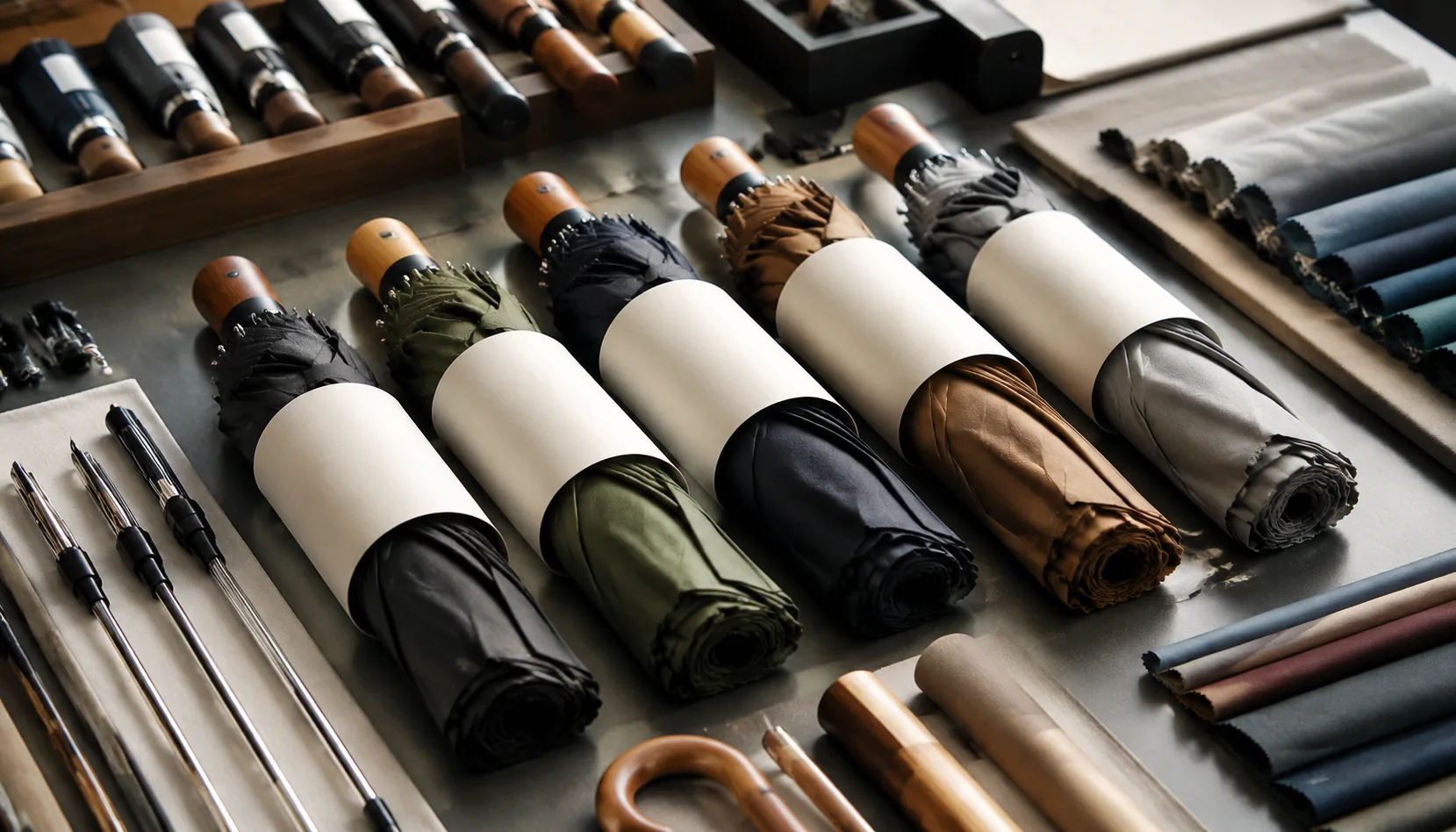
Custom Umbrella Belly Bands for Retail Brand Storytelling
Use printed belly bands to add brand story, size cues, and retail polish to folded umbrellas without changing sleeves or...
Read More »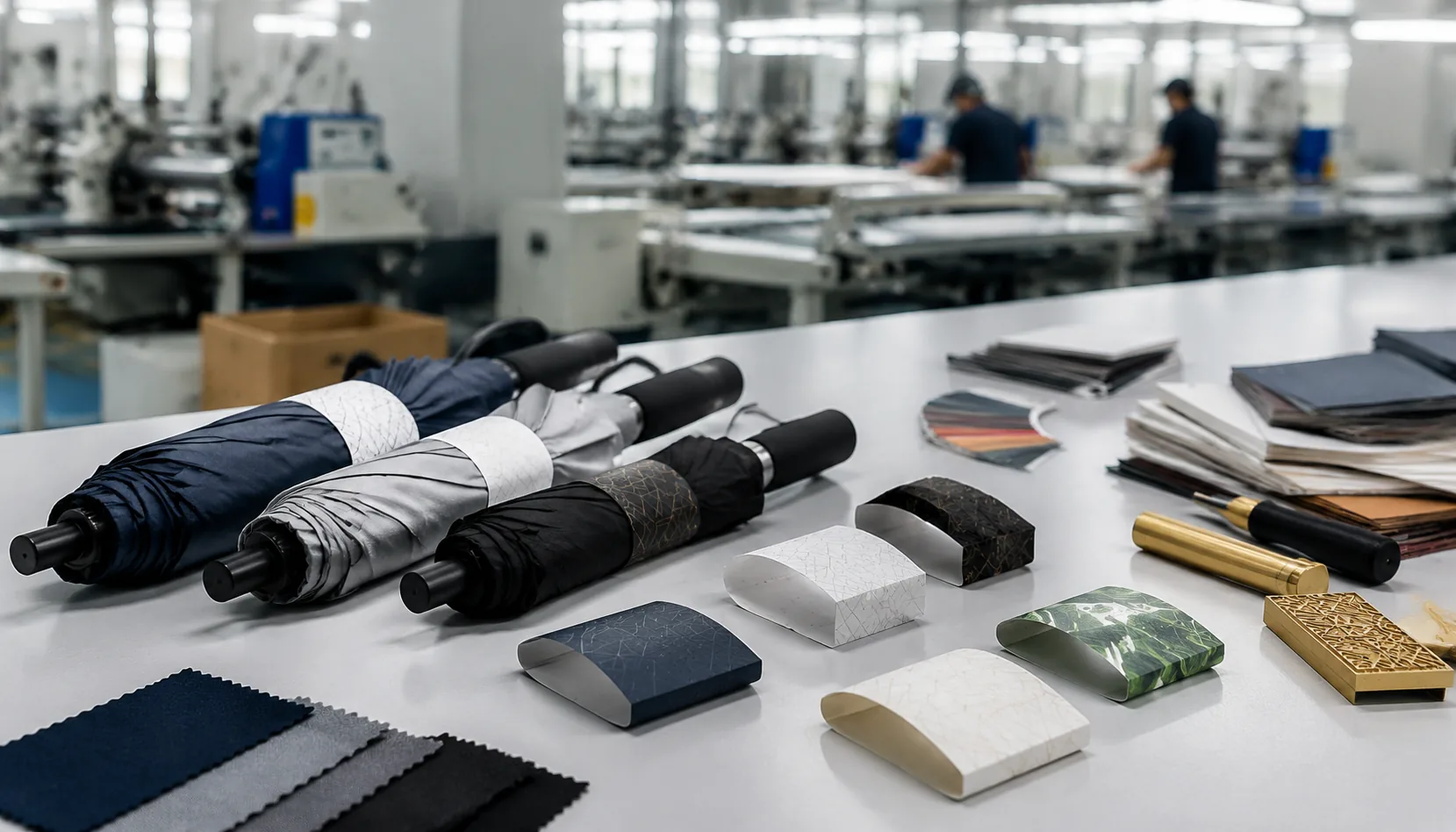
Branded Umbrella Belly Bands and Wrap Cards for Retail
Use belly bands and wrap cards to add brand story, barcodes, and specs without a full box, while keeping umbrella retail...
Read More »
Umbrella Belly Bands and Wraps for Retail Brand Recall
Plan belly bands and wraps for branded umbrella retail lines, with substrate choices, barcode space, MOQ, packing flow, ...
Read More »