Umbrella Insert Cards for Private-Label Brand Storytelling
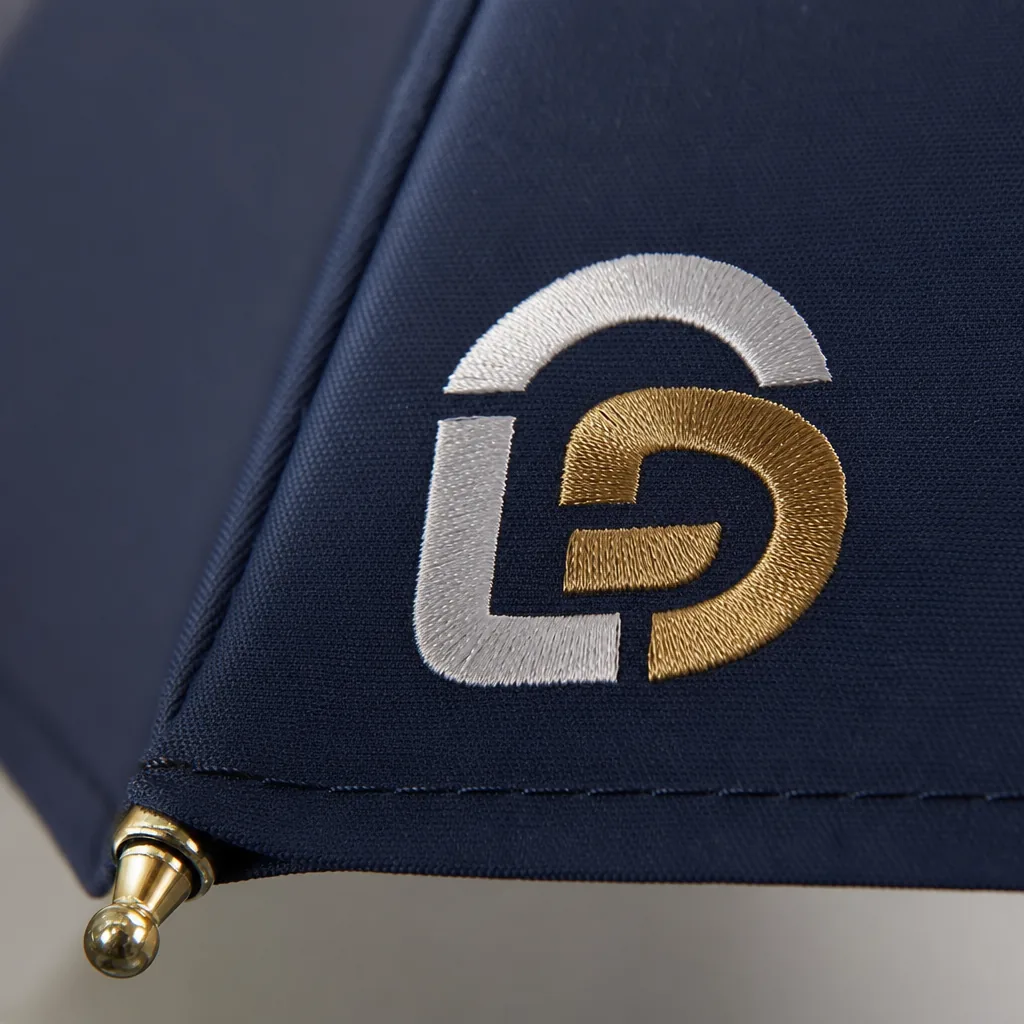
Private-label buyers often spend heavily on canopy fabric, ribs, handles, and packaging, then leave the customer-facing story to a generic tag. On our Songxia factory floor, umbrella insert cards are treated like a small but practical production component: they must fit the packing method, survive moisture and compression, and clearly explain fabric, frame, care, warranty, and brand values without slowing final inspection or carton loading.
Why Insert Cards Matter in Private-Label Umbrellas
Umbrella insert cards are one of the cheapest parts of a private-label program, but they often do more work than the hangtag. A buyer can see 190T or 210T pongee, fiberglass ribs, an auto-open-close runner, or a double-canopy vent only after handling the umbrella; the card explains those details before the customer guesses. For private label umbrella branding, I like cards that name the useful specs plainly: 23 inch arc, 8K fiberglass frame, UPF 50+ coating, Teflon water repellency, or wind-tested to 50+ mph when that claim is backed by testing. That small explanation changes the product from a generic rain item into a considered retail purchase. It also gives the brand a controlled voice: technical for outdoor and travel lines, warm for gift sets, minimal for fashion retail, or instruction-first for corporate safety packs.
Placement matters because the customer should find the message before the first opening, not after the umbrella is already wet and thrown in a car. In gift boxes, we usually place the card on top of the folded canopy, under a thin tissue sheet, so it is seen immediately when the lid opens. In retail cartons, umbrella packaging inserts can sit in each inner box or be tucked behind the sleeve window, depending on whether the product is sold sealed or touchable. For sleeves, a narrow 90 x 160 mm card works well without bulging the fabric tube; for bundled corporate packs, one larger instruction card per set may be enough if the umbrellas are distributed at an event. Our standard practice at ZheBrella is to confirm insert placement during pre-production packing review, because a nice card is wasted if the warehouse team hides it under a divider.
Good branded umbrella care cards should guide first use and reduce avoidable complaints. For compact auto-open-close models, the card should say to press the button to open, press again to collapse the canopy, then push the shaft down until it clicks; many returns come from users forcing the shaft the wrong way. For manual golf umbrellas, it can remind users to dry the 27 inch or 30 inch canopy open before storing, especially with PVC, POE, or EVA panels that can trap moisture. A care card can also explain why a vented canopy moves in gusts, why fiberglass ribs flex differently from steel ribs, and why a UV-coated fabric should not be scrubbed with solvent. Done properly, these inserts support retail umbrella presentation, protect the brand story, and cost only a few cents per unit at normal MOQ volumes.
Content Buyers Should Include
Warranty and care language should be narrow enough that the brand can actually honor it. Good branded umbrella care cards state what is covered, such as manufacturing defects in ribs, runner, shaft, handle attachment, or canopy stitching for 6 or 12 months, and what is excluded, such as storm damage, misuse, abrasion, lost sleeves, or forced operation. Care notes should mention drying the canopy open before storage, wiping POE/PVC/EVA panels with a soft cloth, and avoiding prolonged compression when wet. For retail umbrella presentation, umbrella packaging inserts can also include a QR code for registration, reorder information, recycling notes for the sleeve or carton, and customer service contacts. Our standard practice at ZheBrella is to match every printed claim against the approved sample, material sheet, and any available AQL 2.5 inspection record before inserts go into mass packing.
Design Specs for Print and Packaging Fit
Card size should be decided after the folded umbrella, sleeve, hangtag, and carton insert are mocked up together, not after artwork is finished. For compact 21" auto-open-close umbrellas, the common insert card is 90 x 55 mm or 100 x 70 mm, because it sits cleanly inside a fabric sleeve or PET window box without curling. For 23" stick umbrellas and 27" golf umbrellas, 120 x 80 mm or 150 x 100 mm gives enough space for brand story, warranty terms, and care icons. Value programs usually run 250–300 gsm C1S art card with square corners; premium retail lines move to 350–400 gsm matte art card, black-core board, or FSC kraft stock with a 3–5 mm corner radius so the card does not snag 190T pongee or POE/PVC canopy panels during packing.
Finish choice changes the perceived retail umbrella presentation more than many buyers expect. Gloss lamination is cheap and bright, but it shows scratches inside clear boxes; matte lamination feels cleaner for private label umbrella branding and photographs better under store lighting. Soft-touch lamination works well for luxury 16K fiberglass frame umbrellas, but we avoid it for humid warehouse routes unless the buyer accepts anti-scuff varnish or protective interleaving. Spot UV on the logo, silver foil, or debossing can be used on umbrella packaging inserts, but the raised area should stay away from fold lines and QR codes. Our standard practice at ZheBrella is to match card finish to the umbrella tier: uncoated kraft for eco EVA/wood-handle lines, matte C1S for mid-range 190T pongee models, and laminated or foil-stamped stock for gift-boxed 10K and 16K retail sets.
Artwork files for umbrella insert cards should include 3 mm bleed, 5 mm safe margin, CMYK output, and Pantone references for logo colors that cannot drift, especially red, navy, and metallic brand marks. QR codes should be at least 18 x 18 mm for reliable scanning after lamination, with a quiet zone of 4 modules and no spot UV over the code. If the card includes care instructions, keep branded umbrella care cards practical: dry open after rain, do not force auto-open-close mechanisms, rinse salt from fiberglass ribs, and avoid folding the canopy while wet. For multilingual layouts, plan language blocks before translation; English, Spanish, French, German, and Arabic can easily increase copy area by 25–40%. Icons, batch code, AQL 2.5 inspection reference, country of origin, and warranty URL should be placed consistently so retail staff and end users can find them fast.
Coordinating Cards With SKUs and Brand Ranges
Insert cards are the cheapest way to separate a good-better-best umbrella range when the frame and canopy stay almost the same. A retailer may use one 23-inch auto-open frame with 8K fiberglass ribs and 190T pongee across three price points, then change only the handle finish, sleeve, hangtag, and card message. The “good” card can focus on daily rain coverage and manual care; the “better” card can explain Teflon water repellency and reinforced rib joints; the “best” card can call out double-canopy venting, 50+ mph wind testing, or a 210T pongee upgrade. This is practical private label umbrella branding because the buyer gets shelf differentiation without opening new tooling or pushing MOQ across too many frame variants. For retail umbrella presentation, I prefer cards sized to sit flat inside the sleeve or tied to the runner with a thin cotton loop, not loose in the carton where warehouse staff will lose them during repacking.
Color collections also benefit from disciplined umbrella packaging inserts. A spring pastel range, corporate navy-black-gray range, and event capsule collection can all share the same 21-inch compact or 27-inch golf umbrella construction, while the insert card carries the collection name, color story, barcode logic, and care tone. For example, a “Coastal Series” card may reference salt-air drying and light color transfer precautions, while a “City Commuter” card may emphasize subway-friendly compact storage and auto-open-close operation. Branded umbrella care cards are especially useful when the canopy material changes by color: white and beige pongee often receive stronger anti-stain instructions, while black POE or PVC clear-panel umbrellas need warnings about heat deformation in a car trunk. The card lets merchandising create retail variants without asking the factory to manage dozens of tiny construction changes that increase inspection risk.
SKU version control matters more than most buyers think, because a wrong claim on umbrella insert cards becomes a compliance problem, not a design mistake. We lock card artwork to the BOM number, not just the product name, so a UPF 50+ card cannot be packed with a non-UV model that only has standard 190T pongee and no certified coating. The same control should apply to windproof claims, fiberglass versus steel rib descriptions, manual versus auto-open mechanisms, and canopy material such as EVA, POE, PVC, or pongee. Our standard practice at ZheBrella is to include the card code on the pre-production sample approval sheet and carton packing list, then verify it during AQL 2.5 final inspection by opening units across inner cartons. That sounds basic, but it prevents mixed retail messages when the same shell color is used for 8K and 10K ribs, or when a UV-coated summer SKU ships beside a non-UV promotional reorder.
Factory Workflow, MOQ, and Quality Checks
Approval samples should be locked before umbrella mass production reaches final packing, not after cartons are already sealed. For umbrella insert cards, we usually ask the buyer to confirm the AI/PDF artwork, Pantone or CMYK targets, paper weight, folding style, and exact placement method at the same time as the umbrella pre-production sample. A typical card is 250-350 gsm art paper, matte or gloss laminated, single fold or flat, sized around 90 x 55 mm for hangtag-style messaging or 100 x 150 mm for a fuller brand story. If the umbrella uses a sleeve, EVA pouch, gift box, or retail belly band, the insert card dimension must be checked against the packed unit, especially on 21" compact auto-open-close umbrellas where space is tight. Our standard practice at ZheBrella is to photograph the card inside the final packed sample so procurement, design, and QC teams approve the same reference.
MOQ should follow the umbrella order quantity, because mismatched card counts create either packing shortages or dead stock. If a private-label order is 3,000 pcs of 23" auto-open umbrellas, we print at least 3,000 cards plus a 2-3% overage for machine setup waste, QC pulls, and damaged pieces during packing. Digital printing can handle smaller trial runs, but offset printing becomes more stable and cost-efficient above 2,000-3,000 pcs, especially when color consistency matters for private label umbrella branding. Normal lead time for umbrella packaging inserts is 5-7 days after artwork approval for simple CMYK cards, and 8-12 days if the buyer requests spot UV, foil stamping, embossing, or special textured paper. The safest workflow is to release card printing during canopy sewing and frame assembly, so inserts arrive before final inspection and do not delay carton closure.
AQL 2.5 inspection for branded umbrella care cards is not just a glance at the logo. We check print color against the approved sample under consistent light, trim tolerance, folding alignment, ink smudging, lamination bubbles, QR code readability, spelling, barcode accuracy, and whether the correct language version goes into the correct SKU. Placement is also inspected: inside sleeve, under handle strap, inside gift box, or paired with the hangtag, depending on the retail umbrella presentation approved by the buyer. If cards are packed inside each unit, FOB and DDP costing must include extra labor time, added carton weight, and possible dimensional changes. One card rarely changes freight class, but a folded booklet in 10,000 units can affect gross weight and customs declarations. For DDP shipments, the card content should avoid unsupported claims such as “stormproof” or “lifetime warranty” unless the umbrella construction and warranty policy can defend it.
Frequently Asked Questions
Can one insert card be used across several umbrella models?
Yes, if the card avoids model-specific claims or clearly lists compatible features. Do not use a UPF 50+ or double-canopy claim on models that have not been built and tested to that specification.
Do insert cards add much to umbrella lead time?
Usually not if artwork is approved with the umbrella sample. Custom cards can often run in parallel with canopy printing and frame assembly, but late copy changes may delay final packing.
What information should an umbrella insert card include for a private-label order?
A strong insert card usually covers canopy fabric, frame material, opening mechanism, care instructions, warranty terms, and the brand story. For retail programs, keep the message concise and add a QR code if you want to link to product specs or care videos.
Can insert cards be customized for different umbrella models in the same order?
Yes. Most factories can print model-specific insert cards for different sizes, features, or collections as long as the artwork is separated by SKU. A common setup is one card design per style with variable SKU, care, and warranty text.
What print specs work best for umbrella packaging inserts?
Common options are 300–400 gsm coated paper or uncoated card stock, usually offset or digital printed in full color. If the insert goes inside a retail box, buyers often choose a compact size around 90 x 140 mm or similar, depending on packaging dimensions.
Looking to Launch Your Custom Umbrella Line?
ZheBrella is a Zhejiang-based OEM/ODM umbrella manufacturer with 17 years of export experience. Free design, low MOQ from 100 pieces, windproof construction, full-color print.
Get Free Quote Now »People Also Search For
Related Articles
Umbrella Retail Insert Cards for Brand Storytelling
Use insert cards to explain umbrella quality, care, and brand story while keeping the canopy, pouch, and retail packagin...
Read More »
Custom Umbrella Insert Cards for Brand Storytelling
Use umbrella insert cards to explain brand value, care steps, UPF 50+ claims, and warranty details while improving gifti...
Read More »
Umbrella Insert Cards That Strengthen Private-Label Branding
Use insert cards to explain features, care, warranty, and brand story while supporting premium presentation for retail a...
Read More »