Umbrella Gift Boxes and Retail Packaging That Sell
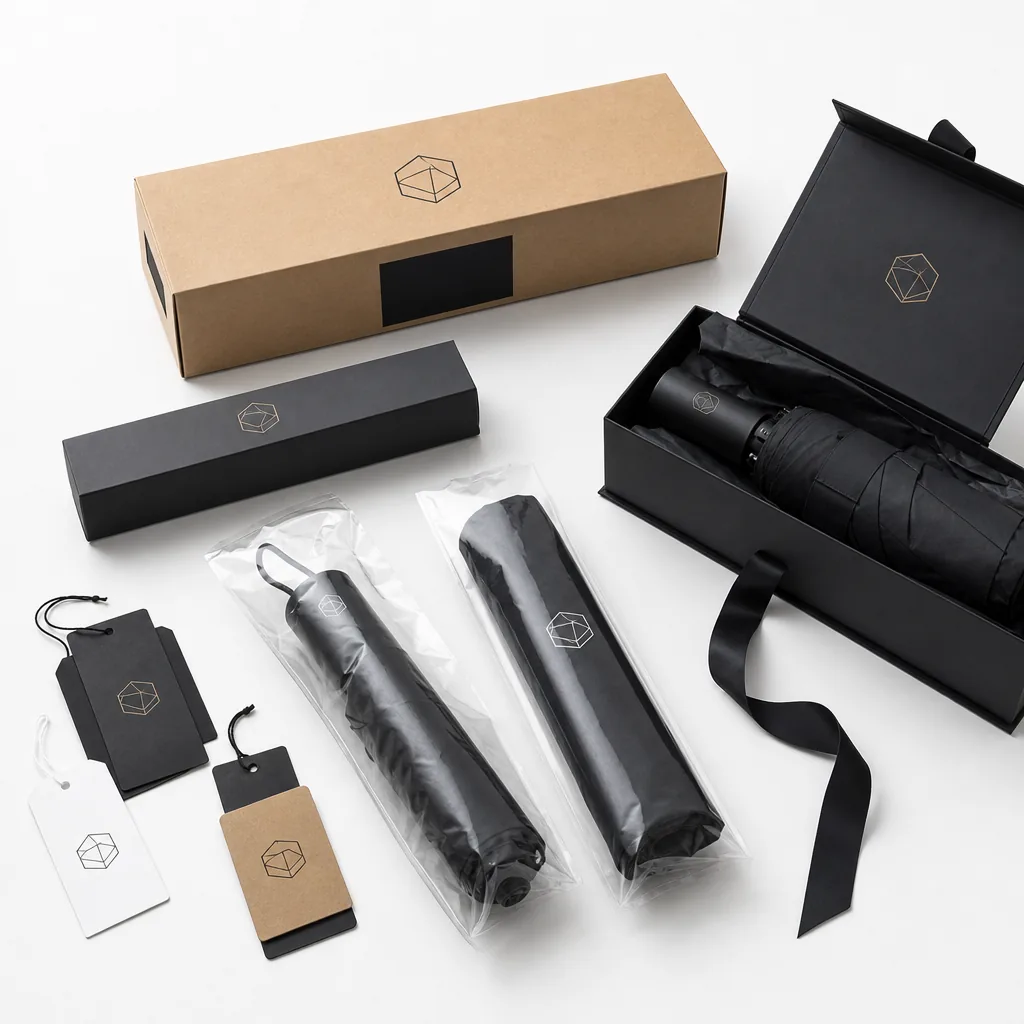
For umbrella brands, packaging has to do more than look good: it needs to protect long, flexible products in transit, fit retail display rules, and still justify a higher shelf price. An umbrella gift box works only when structure, insert design, board strength, and print finishing are balanced for the way the product is sold and shipped. From factory-floor experience, the real challenge is building a box that survives e-commerce handling without losing the premium feel buyers expect.
Packaging goals: protect, brand, sell
An umbrella gift box has three jobs, and protection comes first because umbrellas are awkward products. A folded stick umbrella can punch through thin paperboard, and a long umbrella will crush the corners if the carton is undersized or the insert is sloppy. For export and retail, I prefer rigid paperboard or E-flute outer packaging with a fitted insert that locks the handle, tips, and canopy bundle in place. If the product includes a sleeve, strap, or gift card, the insert has to hold those too, otherwise the box rattles in transit and looks cheap when opened. The right custom umbrella box also needs moisture resistance, because a damp canopy or wet ferrule will stain unfinished board during sea freight or warehouse storage.
Branding is the second job, and umbrella retail packaging has to do it without fighting the product. The box surface should carry the finish level that matches the umbrella: matte lamination for business gifts, soft-touch for premium lines, or a clean kraft look for eco claims. Good umbrella packaging design uses the largest flat face for the main visual, then keeps the side panels for size, mechanism, and material callouts like 190T pongee, fiberglass ribs, or auto-open-close. That is not decoration; it helps a buyer understand the item before opening the box. If the set is for retail shelves, add a barcode panel, hang tab, and barcode-safe quiet zone so the pack moves through the store system without extra relabeling.
The third job is selling, and this is where many packages fail. A box should make the umbrella feel like a deliberate purchase, not a loose accessory tossed into a carton. That means a clear opening sequence, a tidy unboxing presentation, and enough structure that the umbrella sits centered instead of sliding to one side. For a premium umbrella gift box, a paperboard tray, ribbon pull, or magnetic lid can raise perceived value fast, but only if the closure stays aligned after repeated handling. In practice, the best umbrella packaging design balances print area, board thickness, and die-cut cost against freight volume, because oversized boxes hurt carton loading and shipping rates. Our standard practice is to prototype the pack with the actual umbrella sample before final print approval, since a custom umbrella box that looks good on screen can still fail on the line or in a retail drop test.
Gift box formats and materials
A serious umbrella gift box starts with structure, not print. For premium sets, I prefer rigid board at about 1200 to 1500 gsm with wrapped art paper or specialty paper, because it keeps the corners square after shipping and gives enough stiffness for a polished hand feel. Inside, a die-cut EVA insert or molded paper pulp tray holds the handle, shaft, and folded canopy so the umbrella does not rattle. That matters for an umbrella gift box used for corporate gifts, hotel amenities, or retail sets where the box has to survive carton compression and still open cleanly on the shelf. Magnet closures, ribbon lifts, and shoulder-neck construction add cost, but they also stop the lid from warping and make the unboxing feel deliberate instead of flimsy.
For lower-friction umbrella retail packaging, a sleeve-and-tray format is usually the best balance of cost and presentation. A printed paper sleeve over a white SBS tray or corrugated insert gives enough face area for branding, QR codes, and care instructions without paying for a full rigid build. When the product needs a cleaner eco story, a custom umbrella box in kraft board or recycled chipboard works well, especially with soy-based inks, water-based coating, and minimal lamination. In umbrella packaging design, I care more about fit and shipping behavior than decoration: a 21-inch folding umbrella needs a different insert depth than a 27-inch stick umbrella, and the pack should pass drop and edge-crush checks before anyone approves the artwork. Our standard practice is to match material choice to channel, not to overbuild every SKU.
Retail shelf vs e-commerce needs
Retail shelf packaging and e-commerce packaging solve different problems, and mixing them is where most umbrella programs get sloppy. For retail, the box has to hang cleanly, read from 2 to 3 meters away, and survive being handled by shoppers who will squeeze corners and tug hang tabs. That means a rigid enough custom umbrella box for a straight face panel, enough board strength around the hanger hole, and a print layout that shows size, canopy type, and opener style without crowding. An umbrella gift box for store display should also account for the actual product geometry: a 21" compact with auto-open-close needs a different cavity than a 30" golf umbrella with a vented double canopy. On the shelf, umbrella retail packaging is selling visibility first, then protection. If the graphics are weak, the product looks cheap even when the umbrella itself is fine.
For e-commerce, the priority flips to ship-safe design, because the box will be stacked, dropped, and compressed before anyone sees it. A good umbrella packaging design adds crush resistance, internal paper inserts or molded pulp, and enough clearance to keep tips, ribs, and handles from punching through the carton during transit. Our standard practice is to separate the outer shipper from the retail-facing umbrella gift box when the product is meant for both channels, because one format rarely survives both abuse profiles well. Mail-order boxes need stronger corners, flatter surfaces for label application, and less empty void space so the umbrella does not rattle; retail versions can spend more budget on print finish, spot UV, or matte lamination. The best programs treat the box as part of the logistics spec, not just decoration, because a damaged carton destroys perceived value before the buyer even opens it.
Inserts, cards, and unboxing
A strong umbrella gift box is not just a carton around a product; it is the first controlled reveal of the umbrella itself. Tissue paper is the cheapest way to make the opening feel deliberate, but it has to be specified correctly. I prefer acid-free tissue for coated canopies, especially on 190T or 210T pongee, because rough recycled stock can scuff a printed surface or leave lint on a matte Teflon finish. For umbrella retail packaging, a simple wrap with a die-cut belly band or a folded inner sleeve often looks cleaner than stuffing the canopy loose into the box. If the umbrella has a 21" or 23" frame, the insert should hold the shaft and tip so the canopy does not crush the corners, and the carton should close without friction that tears the paper on first opening.
Cards carry more weight than people think. A small warranty card, care card, or brand story insert can turn a generic custom umbrella box into packaging that feels intentional, but the content needs to be short and practical: how to dry the canopy, how to open and close an auto-open-close mechanism, and what to avoid with UV coatings or vented double-canopy construction. In umbrella packaging design, I usually keep printed inserts separate from the product surface so they can be updated by market or language without changing the box spec. Our standard practice is to test the full pack-out at AQL 2.5, because a good-looking box that bursts at the corner or rattles during transit will fail in the customer’s hands. Small details like a satin ribbon pull, a paper spacer, or a molded pulp cradle matter more than extra ink coverage when the goal is retail shelf impact and clean unboxing.
Cost, MOQ, and dimensional planning
Packaging cost is usually decided less by print complexity than by box structure and shipping efficiency. A basic folding-carton umbrella gift box in 350-400 gsm coated paperboard is often the cheapest route, but once you add rigid board, magnetic closure, EVA insert, or foil stamping, unit cost climbs fast. For a 21" auto-open umbrella, the box should be sized to the folded length plus 5-10 mm tolerance, otherwise you pay for rework and crushed corners. In practice, umbrella retail packaging only makes sense when the carton footprint matches the master carton plan, because dimensional weight often costs more than the paper itself. On export programs, our standard practice is to price the custom umbrella box together with the packed-carton cube, not as a standalone print item.
MOQ follows the tooling and print method, not the umbrella alone. Offset-printed umbrella packaging design can usually start around 1,000-3,000 pieces if the artwork is stable, but rigid gift boxes, special inserts, and spot UV commonly push MOQ higher because the die-cut and finishing setup must be amortized. If the box is for retail shelves, ask for the exact folded size, insert depth, and lid clearance before approving samples; a beautiful umbrella gift box that adds 8-12 mm to every side can reduce pallet density by 15-25 percent. That loss matters on FOB and DDP shipments because every extra cubic meter raises freight, and cartons that look small on paper often stack poorly once polybagged and sleeved.
Dimensional planning should start from the umbrella’s closed length, handle shape, and rib profile, then move outward to the shipper carton. A 23" or 27" stick umbrella needs a different internal divider than a compact folding model, and a double-wall mailer is often smarter than a decorative rigid box if the product is going direct to consumer. For umbrella packaging design, I care about two numbers first: how many units fit per master carton, and how many cartons fit per pallet without exceeding the destination warehouse limits. A well-planned custom umbrella box can cut air by 10-20 percent, which is often the difference between a profitable program and an expensive one. If the buyer wants premium presentation, use lighter board, tighter inserts, and smaller headspace before adding decorative layers.
Frequently Asked Questions
Do custom umbrellas need gift boxes?
For gifting and retail, packaging meaningfully raises perceived value and protects the product. For bulk promotional handouts, a printed sleeve or polybag is usually enough. Match the packaging to the channel and budget.
What packaging works best for selling umbrellas online?
E-commerce packaging should be ship-safe and dimensionally efficient to control freight, while still presenting the brand on opening. A right-sized rigid or corrugated box with a branded sleeve balances protection, cost, and unboxing appeal.
What box style works best for folding umbrellas sold in retail stores?
For folding umbrellas, a straight tuck-end or sleeve-style carton usually works best because it is compact, easy to stack, and prints well. Most buyers choose 250-350 gsm coated paperboard with an inner insert to stop the umbrella from shifting during transport.
How much extra space should an umbrella box allow for a compact umbrella and sleeve?
A retail box should allow about 5-10 mm of clearance on each side so the umbrella fits without crushing the fabric sleeve or handle. For a 21-23 inch folding umbrella, the finished box is often around 280-320 mm long, depending on the handle shape and insert design.
What is a typical MOQ and lead time for custom umbrella packaging?
For custom printed umbrella cartons, MOQ is often 1,000-3,000 pcs per size and artwork version. Sample lead time is usually 5-7 days, and mass production is commonly 15-25 days after sample approval, depending on coating, lamination, and insert requirements.
Looking to Launch Your Custom Umbrella Line?
ZheBrella is a Zhejiang-based OEM/ODM umbrella manufacturer with 17 years of export experience. Free design, low MOQ from 100 pieces, windproof construction, full-color print.
Get Free Quote Now »People Also Search For
Related Articles

Window-Cut Umbrella Packaging for Retail Brand Visibility
Design window-cut umbrella packaging that reveals canopy color, logo placement, and handle finish while protecting stock...
Read More »Custom Umbrella Packaging Inserts for Premium Brand Story
Plan custom umbrella packaging inserts that protect the product, carry brand messaging, and support clean retail present...
Read More »
Branded Umbrella Gift Packaging for Retail Buyers
Plan branded umbrella gift packaging that supports retail display, protects the product, and speeds buyer approval from ...
Read More »