Custom Umbrella Packaging Inserts for Premium Brand Story
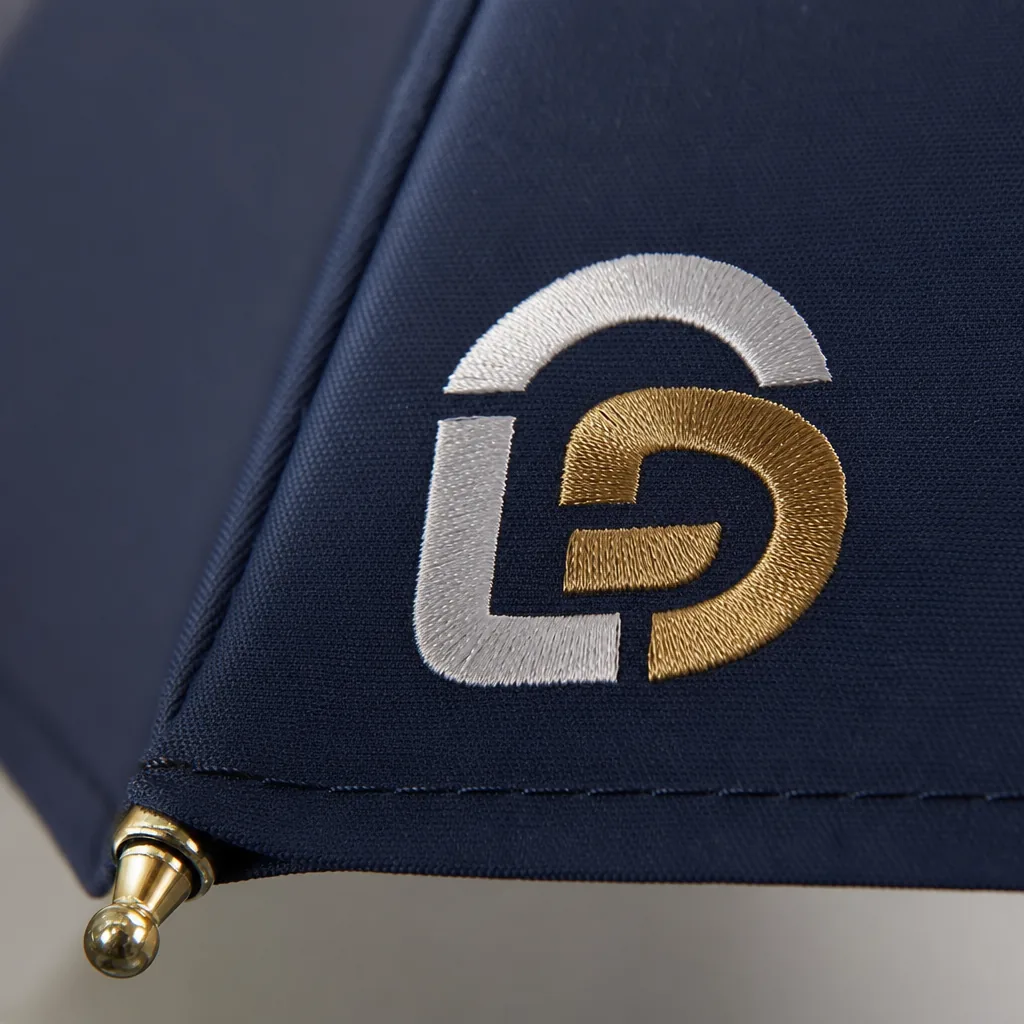
Premium umbrellas get judged before the canopy ever opens, so a weak insert can turn careful branding into bent ribs, loose straps, and a messy shelf presence. From our factory floor in Songxia, we see the same challenge repeat at scale: custom umbrella packaging inserts must lock the frame in transit, present the handle cleanly at unboxing, and still leave room for the brand story without slowing packing lines.
Why Inserts Matter Beyond Protection
Protection is only half the job. For premium programs, custom umbrella packaging inserts also set the value cue before the umbrella is touched. A 21 inch or 23 inch folding umbrella may already use a well-printed 190T pongee canopy, but if it shifts inside a rigid box, the pack still feels cheap. A fitted insert solves that by fixing the closed umbrella in one position and controlling the first-view sequence: branded insert cards on top, care card visible, handle centered, and closure strap facing up. That guided unboxing flow matters for hotel amenities, cosmetics gift sets, and corporate kits where the umbrella is one part of a broader brand story. It also improves retail gift presentation by replacing empty box space with clear structure. On the protection side, the insert should lock the ferrule, shaft, and handle at two or three contact points so the unit cannot build momentum during parcel sorting or line-haul transit. That restraint is especially important for auto-open-close styles, where heavier springs and runners can damage box corners or scuff painted and plated handles if packout is loose.
Material choice should follow the umbrella spec, gifting target, and shipping method. Paperboard is usually the lowest-cost option for slim 21 inch and 23 inch 8K folding umbrellas at higher MOQ: it die-cuts fast, ships flat, adds little weight, and supports efficient umbrella box insert design with printed cards or locking tabs. EVA is the stronger choice for rigid gift boxes, window cartons, influencer mailers, and DDP e-commerce packs, particularly with heavier 10K fiberglass frames, curved J handles, or metal tips that need tighter positioning and cleaner cushioning. Molded pulp fits brands that want a more eco-forward OEM umbrella packaging format and can accept a less refined surface finish; it is practical for larger 27 inch straight umbrellas or boxed sets loaded into snug master cartons. In production, the correct insert is decided only after confirming closed length, handle profile, box inside dimensions, and expected transit abuse, because those inputs show whether the insert will actually reduce damage risk or simply add cost.
Matching Insert Design to Umbrella Specs
Start with the folded umbrella, not the artwork. Folded length determines the insert footprint, pocket depth, and retention spacing, and it should be locked from a physical sample before finalizing custom umbrella packaging inserts. A 21-inch compact auto-open umbrella usually folds to about 11-13 inches, but the packed profile is rarely uniform because the handle, top cap, strap, and canopy roll add bulk at different points. A stepped cavity usually holds that shape better than one straight channel. As a working fit standard, allow 3-5 mm total clearance around the canopy roll and 5-8 mm around the auto-open button and runner zone so shipping vibration does not force the shaft into the board. That tolerance is especially important on spring-tension frames: if the runner sits proud or the channel is undersized, it can mark a paperboard window, bow the insert, or loosen the pack before it reaches retail. For premium umbrella box insert design, CAD is not enough; sample-check the actual folded umbrella because cap geometry and roll density can shift the packed width by several millimeters.
Handle geometry and frame construction control the cutouts. A slim ABS or rubber-coated straight handle can sit in a simple die-cut saddle, while a crook handle, wood J-handle, or oversized EVA grip usually needs a wider anchor area plus a secondary neck cutout to prevent rotation. Straight umbrellas in 23-inch or 27-inch sizes generally pack best with two support points—one at the ferrule and one at the handle shoulder—to keep the shaft centered and protect branded insert cards during transit. Rib count also changes the folded silhouette: an 8K frame stacks flatter, while a 16K frame forms a thicker, rounder bundle at the same arc size and can lift adjacent cards or reduce perceived retail gift presentation quality if the cavity is too shallow. Material choice matters just as much. A double-canopy windproof frame with fiberglass ribs builds more height at the crown than a slimmer steel-rib structure, often needing 8-12 mm more vertical allowance in that zone. For OEM umbrella packaging, specify folded length, handle type, rib count, rib material, and canopy construction together so the insert fits the actual product instead of squeezing a bulkier windproof frame into a cavity sized for a standard steel-rib umbrella.
Materials, Print Finishes, and Brand Execution
Material choice determines whether custom umbrella packaging inserts arrive retail-ready or collapse after export transit. For standard branded insert cards, 250-400 gsm C1S or C2S art paper is the normal working range; premium gift sets usually step up to 1.5-2.0 mm grayboard wrapped with printed art paper to keep edges sharp under master-carton stacking. Structure should match umbrella size and weight, not just the box footprint. A 21 inch or 23 inch folding umbrella typically fits best in a folded sleeve or die-cut cradle that locks the handle, tip, and hook-and-loop strap in place. A 27 inch or 30 inch stick umbrella usually needs more support from an SBS tray or E-flute corrugated insert to limit movement during FOB sea freight and container vibration. That umbrella box insert design choice directly affects damage rate, carton efficiency, and landed cost for buyers sourcing OEM umbrella packaging.
Print finish should support handling, photography, and claim accuracy. Matte lamination is the safest premium option for retail gift presentation because it reduces glare and masks light scuffing better than gloss; soft-touch lamination feels more upscale but marks faster if the insert fit is loose. Spot UV, hot foil, embossing, and Pantone matching can strengthen shelf impact, but only within production limits: foil on score lines tends to crack, and fine serif text can fill in when multiple coatings stack up. Offset printing remains the better choice for image-led storytelling, while digital printing is practical for low-MOQ runs, mockups, or campaign variants with 7-12 day lead times. Pack copy also needs to match the umbrella build. If the canopy is 190T pongee, describe it as a lightweight woven polyester with clear print definition; if it is 210T pongee, position it as a denser fabric with a fuller handfeel. Claims such as UPF 50+, water-repellent, vented windproof, or auto-open-close belong on custom umbrella packaging inserts only when coating specs, frame construction, and test records support them, which lowers dispute risk at AQL 2.5 inspection and after launch.
Factory Controls, MOQ, and Lead-Time Planning
MOQ for custom umbrella packaging inserts is usually set by the paper converter, not the umbrella line. A standard umbrella packed in polybags and export cartons may hold at 300 to 500 pieces per color, but branded insert cards or a folded umbrella box insert design often move the workable MOQ to 1,000 to 3,000 pieces per SKU. The driver is the insert spec: board thickness, print process, and finish. A 1-color logo card can often stay near the low end; full-CMYK retail gift presentation with spot UV or soft-touch lamination typically requires a larger run and increases unit packing cost. If you are buying a 21-inch auto-open umbrella in 190T pongee and changing inserts by language, market, or campaign, ask whether the factory can finish umbrella production first and pack later. That split matters because OEM umbrella packaging regularly becomes the bottleneck after canopy sewing and frame assembly are done, especially when several SKUs share one umbrella body but need different inserts.
Control timing by locking the dieline before mass production starts. A practical schedule is 2 to 4 days for dieline issue, 3 to 5 days for a white sample or digital mockup, and 5 to 7 days for a printed pre-production sample after artwork approval; foil stamping, embossing, or rigid box formats usually extend the sample cycle to 7 to 10 days. Before approving print release, verify barcode position, language copy, umbrella tip orientation, and carton fit on the physical sample, not artwork alone. For planning, standard umbrella production commonly runs 25 to 35 days for 1,000 to 3,000 pieces, while insert sourcing and hand packing add about 7 to 12 days for standard SBS board and 12 to 18 days for more complex retail gift presentation. Ask the supplier to commit, in writing, to four dated milestones: dieline approval, pre-production sample completion, insert arrival at the umbrella factory, and final packed-goods date under FOB terms. Final inspection should cover both the insert and pack-out under AQL 2.5, including print color, scratches, board cracking, language mix-ups, barcode scanability, carton compression, and pack-count accuracy.
Shipping Terms and Cost Tradeoffs for Global Orders
Lead with carton cube, not print cost. For a 23-inch straight umbrella, custom umbrella packaging inserts usually add 8-25 mm to packed thickness, depending on the structure: a folded paperboard cradle, an EVA tray, or a rigid box insert with a lid card. That added depth often drops master-carton density from about 24-36 units in a basic polybag pack to roughly 12-20 units in a premium boxed format, because the carton hits cubic capacity before weight. On a typical 0.45-0.6 kg umbrella, the factory cost increase can look modest while freight exposure rises sharply once pack geometry expands carton volume. Before artwork approval, ask for complete pack-out data: unit size, master carton size, pieces per carton, net weight, gross weight, and container-loading estimate. Those numbers tell you whether the presentation upgrade supports margin, protects the retail gift presentation, and still works for an international distributor program.
Under FOB, the supplier quote should separate the real packaging delta: board grade, print method, hand-assembly labor, and the lower carton yield created by OEM umbrella packaging. FOB does not capture the cost of shipping more air. Under DDP, that penalty shows up immediately because larger packs raise freight, handling, and any dimensional-weight billing, especially on courier or air shipments tied to retail launches. For that reason, buyers should compare delivered cost per saleable unit, not just insert cost, against the expected sales lift from branded insert cards or a full umbrella box insert design. For replenishment, event, or distributor channels, keep inserts flat and light—often 250-400 gsm insert cards with simple glue tabs—and preserve a 20-plus-unit master carton when possible. For gift sets or launch kits, a rigid format can still make sense, but request two models: FOB plus destination freight, and a DDP quote with fixed dimensional assumptions. That side-by-side view shows whether premium presentation offsets the loss in carton density.
Frequently Asked Questions
Do packaging inserts usually increase umbrella MOQ?
Yes, custom inserts often raise the effective MOQ because of separate tooling, print setup, and material purchasing. Many factories can pair insert MOQ with the umbrella order, but buyers should confirm both the umbrella MOQ and the packaging component MOQ upfront.
Are inserts practical for e-commerce umbrella shipments?
They can be, but only if the insert improves protection or presentation enough to justify extra cube. For direct-to-consumer programs, test the insert with the shipper carton to make sure it does not raise damage risk or dimensional freight costs.
Which insert material works best for premium umbrella boxes: paperboard, EVA, or molded pulp?
For most premium retail programs, 350-600 gsm paperboard inserts are the most cost-efficient and easiest to print with brand graphics. EVA fits are better for rigid gift boxes and higher-value sets, while molded pulp works when sustainability claims matter more than a luxury finish.
Can packaging inserts be produced together with the umbrella order, or do they need a separate MOQ?
Most factories can bundle inserts with the umbrella production run, but printed inserts often have their own MOQ based on print setup, commonly 1,000-3,000 pieces. If the umbrella order is larger, the insert count is usually matched to the final packed quantity to avoid repacking later.
What artwork details should a buyer lock before mass production of branded insert cards?
Approve dieline size, fold direction, material thickness, color standard, barcode placement, and language versions before sampling. For export retail, buyers should also confirm whether care instructions, country-of-origin marking, and retailer compliance text need to be printed on the insert.
Looking to Launch Your Custom Umbrella Line?
ZheBrella is a Zhejiang-based OEM/ODM umbrella manufacturer with 17 years of export experience. Free design, low MOQ from 100 pieces, windproof construction, full-color print.
Get Free Quote Now »People Also Search For
Related Articles
Umbrella Packaging Inserts That Improve Brand Story and Sell-Through
Plan insert cards, care sheets, and QR pieces that strengthen umbrella branding, reduce returns, and support retail and ...
Read More »Premium Umbrella Insert Cards for Brand Storytelling
Use umbrella insert cards to explain product value, care, warranty, and brand story while supporting premium gifting and...
Read More »Custom Umbrella Carton Inserts for Premium Brand Presentation
Plan carton inserts that hold umbrellas securely, improve unboxing, and protect branded finishes from factory packing th...
Read More »