Custom Umbrella Carton Inserts for Premium Brand Presentation
Premium umbrellas can leave the sewing line flawless and still arrive looking cheap if the carton lets handles rub, tips shift, or coated fabric take pressure marks. On our packing floor in Songxia, custom umbrella carton inserts are planned around real umbrella dimensions, finish sensitivity, carton stacking, and how a buyer wants the first opening to feel. The goal is simple: lock each piece in place without slowing packing or adding waste that the brand does not need.
Why Inserts Matter for Premium Umbrella Branding
Premium buyers judge the umbrella before they open the canopy, so the carton insert has to control the reveal, not just fill empty space. For a 23" auto-open gift umbrella or a 27" golf model, a loose inner box lets the sleeve, warranty card, hangtag, and desiccant pack drift around during trucking from Songxia to Ningbo or Shanghai port. A die-cut E-flute, grayboard, molded pulp, or EVA insert gives every item a fixed position: umbrella shaft centered, sleeve folded flat, instruction card visible, spare tip or gift card tucked into its own pocket. That structure matters most for retail programs where the customer opens the box under store lighting and expects the product to look intentional. Good umbrella presentation packaging turns a packed item into a staged product, similar to watch or eyewear packaging, without making the carton oversized or wasteful.
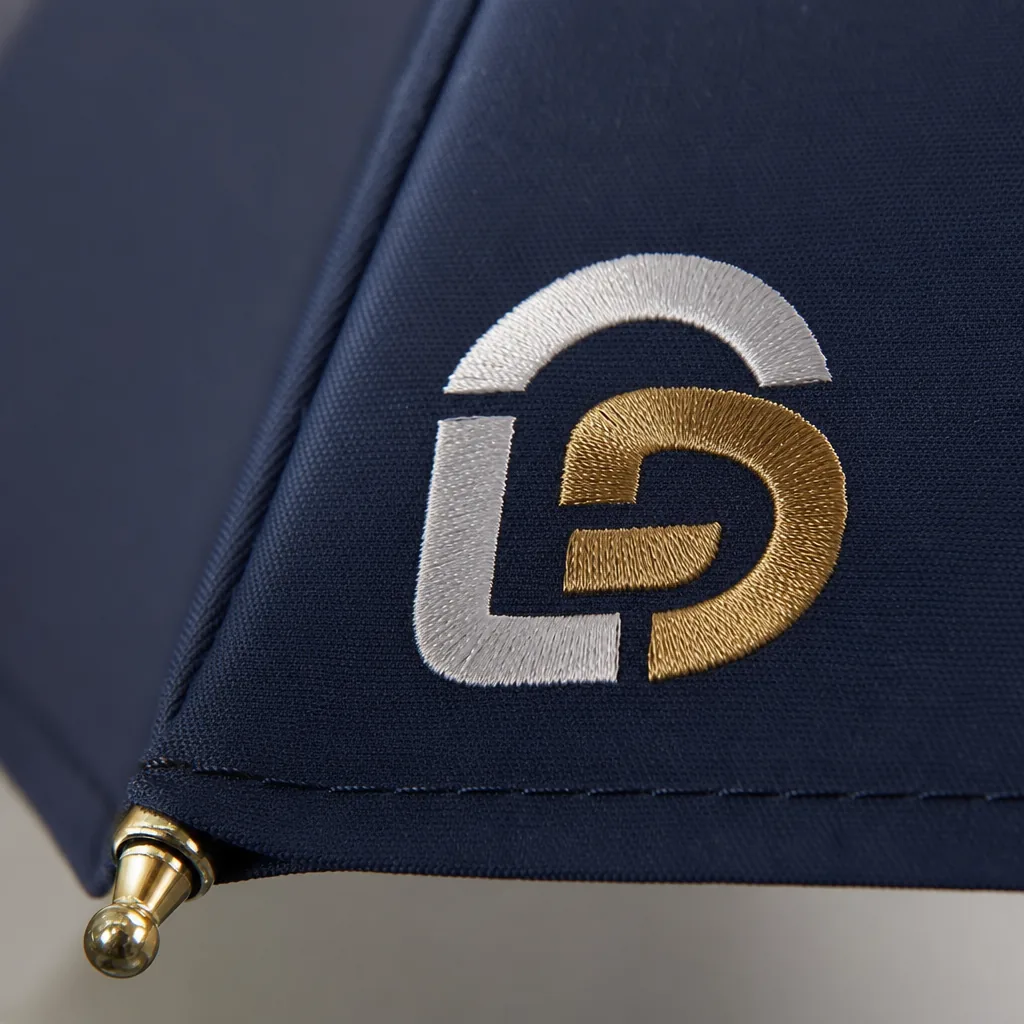
The biggest practical reason for custom umbrella carton inserts is damage control during movement. Printed logos on 190T/210T pongee sleeves, PU-coated handles, rubberized straight handles, and plated metal caps can scuff when they rub against uncoated grayboard or the zipper pull of a sleeve. I have seen clean heat-transfer logos fail visually before AQL inspection simply because the umbrella slid 20 mm back and forth inside a glossy gift box for a week in transit. Inserts should grip the ferrule, handle, or folded canopy at non-decorative contact points, leaving 2-3 mm clearance around raised logos, UV-coated handles, and metal badges. For OEM umbrella packaging, we usually specify abrasion checks after a carton drop test, because a premium umbrella packaging concept is useless if the first batch arrives with cloudy scuff marks on black handles or silver logos.
Branded gift box inserts also make packing repeatable on the line. Without locating slots, one worker may place the sleeve under the umbrella, another may fold it around the canopy, and a third may bury the thank-you card at the bottom of the box; the product then looks inconsistent even if the umbrella itself passes AQL 2.5. A proper insert defines the packing sequence: canopy band facing up, logo on sleeve facing window or lid, care card at the same angle, accessory compartment closed before the lid is fitted. For export cartons, this consistency helps when master cartons are stacked 5-ply, 12-24 pieces per carton, and held 25-35 days through production, inspection, consolidation, and ocean freight. Custom umbrella carton inserts cost more than a plain tuck box, but for retail launches, hotel VIP gifts, financial-service promotions, and licensed brand programs, they protect the presentation that the buyer is actually paying for.
Insert Materials and Structural Options
Paperboard trays are usually the first option I quote for custom umbrella carton inserts because they balance clean presentation, low weight, and predictable die-cutting. A 350–500 gsm white-card tray with folded sidewalls works well for 21" folding umbrellas and slim 23" stick umbrellas when the retail box already has enough crush resistance. It gives good printability for logo blocks, QR codes, and Pantone brand colors, so it fits umbrella presentation packaging without adding much freight cost. Molded pulp is stronger in compression and reads better on sustainability audits, especially when buyers need plastic-free OEM umbrella packaging, but tooling is less flexible and surface detail is rougher. For FOB, paperboard normally wins on unit cost and carton cube efficiency; for DDP, molded pulp can become attractive if the buyer values lower plastic content and can accept a slightly thicker inner pack that increases CBM by 5–12%.
EVA foam is the most protective and the least sustainable choice, so I reserve it for high-margin gift sets: carbon-fiber shaft umbrellas, 16K windproof models, or executive sets with sleeve, card, and spare tips. A 3–8 mm EVA insert can be die-cut to lock the handle, ferrule, and canopy roll so the product arrives aligned instead of rattling inside the box. That makes it useful for branded gift box inserts where the unboxing view matters, but it adds both material cost and chargeable weight. Fabric-lined inserts sit one level above EVA in appearance, usually using flocked paperboard, velvet lamination, satin wrap, or PU lining over a board base. They look right for premium umbrella packaging, but they slow assembly because workers must place the umbrella exactly and avoid glue marks, loose threads, or lint contamination before AQL 2.5 inspection.
Corrugated partitions are the practical answer when presentation is secondary to damage control in export cartons. They separate 12, 24, or 36 umbrellas by handle position, preventing J-handle rub, plastic cap cracking, and transfer-print abrasion during container vibration. For retail-ready sets, I often combine a thin paperboard display tray with an outer E-flute or B-flute partition system, because that protects the box corners without making the inner gift pack look industrial. Custom umbrella carton inserts should be decided before final carton sizing, not after artwork approval, because a 6 mm foam cavity or molded pulp wall can change master carton count and DDP landed cost more than buyers expect. My rule is simple: paperboard for light retail presentation, molded pulp for sustainability claims, EVA for precision protection, corrugated for bulk export, and fabric-lined structures only when the brand can pay for slower packing and tighter cosmetic QC.
Matching Inserts to Umbrella Construction
Insert design has to start from the umbrella’s folded geometry, not from the outside carton size. A 21" compact auto-open model may fold to 11–12" long with a thick stacked diameter because the telescopic steel shaft, runner, spring, and 8K rib nest all sit in the same short body. If the insert cavity is too tight near the runner, the auto-open button can rub during vibration testing; if it is too loose, the umbrella rolls and scuffs the sleeve or printed gift box. For compact umbrellas, I prefer a two-point cradle with a relieved pocket at the button side and 3–5 mm clearance around the sleeve, especially when the canopy is 210T pongee with Teflon coating because the fabric compresses less evenly than cheap 170T polyester. This is where custom umbrella carton inserts earn their cost: they stop small umbrellas from looking like loose hardware inside premium umbrella packaging.
Stick umbrellas create the opposite problem: length control matters more than diameter control. A 23" or 27" steel shaft stick umbrella normally has a slim folded diameter, but the straight shaft, tip, ferrule, and J-handle or EVA straight handle need end support so the umbrella does not spear through the inner box during courier drops. For umbrella presentation packaging, we usually build longer channels with reinforced end blocks, not just a flat paper tray. Steel shaft models are heavier and less forgiving than aluminum or fiberglass shafts; a 27" stick umbrella with 8K steel ribs can concentrate force at the tip if the insert leaves more than 8–10 mm of travel. For branded gift box inserts, handle orientation also matters. A crook handle may need a shaped recess so the logo on the sleeve faces up when the buyer opens the box, while a straight rubberized handle needs anti-rotation tabs to keep the hang loop and woven label aligned.
Golf umbrellas are where insert mistakes become expensive because the folded diameter jumps quickly with frame design. A 30" double-canopy fiberglass golf umbrella with 8K ribs may already need a wide channel, but a 16K rib count increases the folded bulk, adds more rib tips around the ferrule, and can make the canopy stack oval instead of round. Fiberglass ribs flex back after compression, so if the cavity is undersized, the umbrella pushes against the lid and distorts OEM umbrella packaging during sea freight. Our standard practice at ZheBrella is to measure production samples after canopy sewing and final tie-wrap tension, not just after frame assembly, then add support at the handle, runner, and rib-tip zones. For custom umbrella carton inserts, molded pulp, E-flute board, or EVA foam can all work, but the choice should follow weight, retail price point, and whether the buyer needs plastic-free packaging claims.
Branding Touchpoints Inside the Box
The inside of the box should sell the umbrella before the customer touches the handle, but overcrowding is the fastest way to make premium umbrella packaging look cheap. I usually limit the first visual layer to three controlled touchpoints: a debossed logo on the rigid tray or paperboard insert, a printed tray liner in one brand color, and a ribbon pull positioned under the shaft so the umbrella lifts cleanly without dragging against the canopy. For custom umbrella carton inserts, 1.5–2.0 mm grayboard wrapped with 120–157 gsm art paper gives a cleaner edge than thin corrugated E-flute, especially for 23 inch auto-open or 27 inch golf umbrellas with heavier fiberglass frames. If the umbrella uses 190T or 210T pongee with Teflon coating, the insert surface must avoid rough lamination that can scuff dark fabric during transit vibration.
Printed tray liners are useful, but they should carry functional brand information rather than repeat the same logo five times. A small QR care card can explain drying, folding, and storage instructions, plus warranty registration or a video showing how to operate an auto-open-close mechanism without forcing the runner. UPF 50+ claims belong on a separate card or liner panel only when the canopy fabric and coating have been tested; do not print UV claims directly on branded gift box inserts unless the specific PO, fabric lot, and colorway are covered by documentation. Our standard practice at ZheBrella is to keep claim text short, for example “UPF 50+ rated canopy” with the test reference held in the QC file, because retail buyers and customs reviewers dislike inflated copy.
Private-label messaging works best when it supports the unboxing sequence instead of fighting the structure. Put the brand story on the underside of the lid, the care QR near the handle, and the compliance or material callouts on a removable card; that leaves the tray clean and prevents the customer from seeing a wall of small print. For OEM umbrella packaging, remember that inserts must also protect the product: a 30 inch double-canopy vented golf umbrella may need two locking tabs around the ferrule and handle, while a compact 21 inch 8K frame can sit in a molded pulp or EVA tray with one elastic band. Good custom umbrella carton inserts pass a drop test, hold alignment after sea freight compression, and still make the umbrella feel deliberate when opened at retail or at a corporate gifting event.
Sampling, Drop Tests, and Inspection Criteria
Final inspection needs packaging criteria written into the AQL sheet, not left as a vague note saying “check packing.” For custom umbrella carton inserts, our standard practice at ZheBrella is AQL 2.5 for major visual defects: wrong insert material, poor die-cut fit, crushed flute, glue failure, barcode misplacement, color shift beyond the approved sample, dirty lamination, or exposed sharp paper edges that can scratch 190T/210T pongee canopies. Barcode placement should be tested with the box closed and under shrink wrap if shrink is used; keep it on a flat scan surface, not across a fold, window, or textured UV coating. Typical timing is 3–5 days for blank insert samples, 7–10 days for printed and laminated samples, 2–3 days for correction after buyer comments, and 25–35 days for bulk packaging once umbrella PP samples and insert samples are both approved. For DDP orders, add time for carton mark review and Amazon or retailer label compliance.
Frequently Asked Questions
What information does a factory need to design an umbrella carton insert?
Provide the folded umbrella length, maximum diameter, handle shape, sleeve size, gift box dimensions, and any added items such as cards or straps. A physical pre-production sample is best for checking fit.
Do custom inserts increase shipping cost?
They can, especially EVA or thick paperboard inserts that increase box size or weight. Molded pulp and corrugated inserts are usually more freight-efficient for larger DDP or FOB retail programs.
What insert materials work best for premium umbrella packaging?
Common options include E-flute corrugated board, rigid cardboard, molded paper pulp, EVA foam, and paperboard trays. For premium retail umbrellas, paperboard or EVA inserts are often used because they hold the umbrella shape securely and protect coated handles, metal tips, and printed sleeves.
Can carton inserts be customized for different umbrella sizes in one order?
Yes, inserts can be die-cut for compact, folding, golf, or stick umbrellas, but each size usually requires its own dieline and sampling. For mixed-SKU orders, buyers often standardize the outer box and adjust the inner insert to reduce tooling and carton complexity.
What should be confirmed before mass production of umbrella carton inserts?
Confirm the umbrella folded length, handle diameter, sleeve thickness, box dimensions, insert material, drop-test requirement, and whether the insert must show the logo or accessory area. A pre-production sample is typically recommended before bulk packing, especially for premium brand packaging.
Looking to Launch Your Custom Umbrella Line?
ZheBrella is a Zhejiang-based OEM/ODM umbrella manufacturer with 17 years of export experience. Free design, low MOQ from 100 pieces, windproof construction, full-color print.
Get Free Quote Now »People Also Search For
Related Articles
Branded Care Cards for Premium Umbrella Gift Programs
Use branded care cards to raise perceived gift value, explain umbrella features, reduce misuse, and keep corporate gifti...
Read More »
Premium Umbrella Gift Wrapping for Corporate Brand Programs
Create premium umbrella gift wrapping that protects frames, elevates the brand, and stays practical for MOQ, lead time, ...
Read More »Umbrella Packaging Inserts for Premium Brand Education
Use care cards, warranty inserts, and QR cards to explain frame, fabric, and UV benefits while improving buyer confidenc...
Read More »