Window-Cut Umbrella Packaging for Retail Brand Visibility
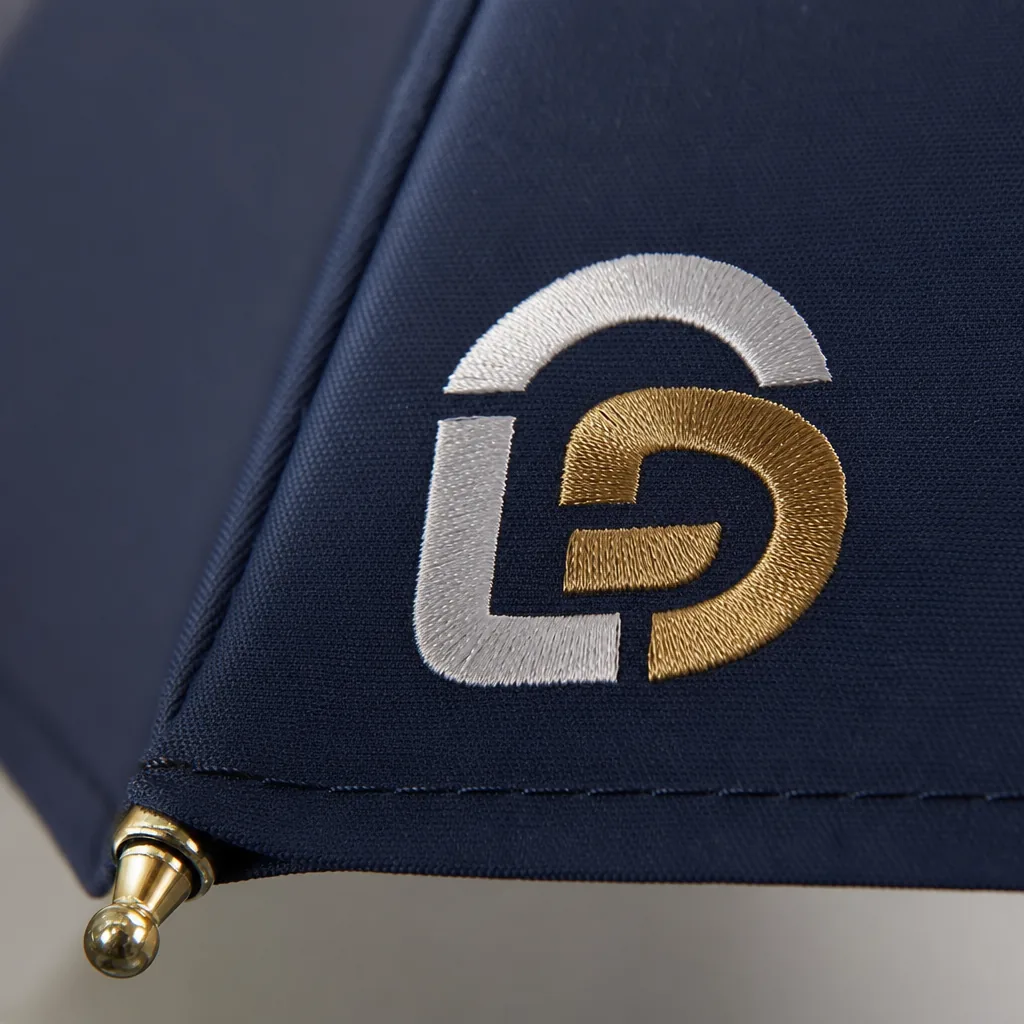
Retail buyers need packaging that lets shoppers see canopy color, logo placement, and handle finish at a glance, but every extra window cut can weaken a carton in transit or create scuffing on packed umbrellas. On our Songxia production floor, we balance die-line opening size, inner bag friction, and ship-test requirements before approving umbrella window box packaging, because a box that sells well on shelf still has to survive master-carton stacking, humidity, and DDP handling.
Decide What the Window Should Reveal
Start with the packed umbrella, then place the window. In umbrella window box packaging, the cutout has to match the folded orientation inside the box, not the dieline on a flat board. A 21-inch or 23-inch compact auto-open-close umbrella usually loads with the handle at one end, the strap at mid-body, and the tip slightly offset; if you ignore that orientation, the window can land on the tie strap, rib cap, or a blank canopy fold. When canopy color or a printed logo is the feature that sells, place the window over the outer canopy wrap after final tensioning, and confirm fold count, strap position, and insertion direction before approving the retail umbrella packaging design. Straight 27-inch or 30-inch umbrellas often need a different approach. Because the folded canopy stack hides edge graphics, the better choice is usually the handle or ferrule. A wood crook, matte EVA grip, or rubber-coated handle reads faster at shelf distance than a partially buried logo.
Choose one feature to reveal based on the sales channel, then engineer the box around it. Promotional programs usually prioritize logo visibility, especially on 190T or 210T pongee where screen-printed edge graphics can stay legible in the folded state. Gift and retail programs more often sell on handle material, sleeve texture, or compact closed length because shoppers judge quality in a few seconds. In a branded umbrella box, a clear POE or PVC window should frame one hero element, not four. Oversized cutouts weaken board stiffness, increase product movement in transit, and reduce consistent umbrella packaging visibility across replenishment orders. That risk is higher in private label umbrella boxes because pack bulk changes by frame and canopy build: a manual 8K mini umbrella with fiberglass ribs can fold 2 to 3 mm thicker than a steel-rib version, and a vented double-canopy model can rotate if the insert is loose. Use a paperboard neck retainer or PET tray to lock orientation, then run a 50- to 100-unit packing trial before freezing the die line.
Balance Visibility With Structural Protection
Start with load, not graphics. The main failure in umbrella window box packaging is a front panel that looks clean in a mockup but loses stiffness after a large window cutout, then collapses when a 27 inch or 30 inch golf umbrella is packed for export. That risk rises fast with 16K ribs, steel shafts, and bent wooden handles because packed weight increases and point pressure concentrates at the window corners during drop testing. PET window film is usually the safest format for these packs: it preserves front-panel integrity while still showing canopy color, handle finish, and printed branding. For lighter 21 inch or 23 inch compact umbrellas with fiberglass or aluminum frames, 350 to 400 gsm SBS board is often enough if the reveal area stays tight. For heavier straight umbrellas, 450 gsm SBS or E-flute laminated board is the better baseline, especially when packed weight reaches about 650 to 800 grams. The board upgrade adds unit cost, but it cuts crush damage, corner cracking, and freight claims that can outweigh the savings from lighter stock.
Open die-cut windows without film only make sense when the cutout is small and the umbrella already has protection from an inner polybag or nonwoven sleeve. Without that barrier, the opening increases dust exposure, allows POE or EVA canopies to scuff against adjacent cartons, and reduces shelf-compression strength. Partial cutouts are usually the better choice for retail umbrella packaging design because they improve umbrella packaging visibility without turning the carton into a weak frame. A narrow vertical window near the handle or a controlled curved reveal over 190T or 210T pongee shows the material and color the buyer needs to inspect, while leaving enough board around the perimeter to hold shape. In practice, board grade should follow frame mass, not just carton dimensions: a 21 inch 8K compact with fiberglass ribs and a plastic hook handle can use a simpler branded umbrella box, but a 30 inch vented golf umbrella typically needs reinforced end tabs, a fitted insert, or neck support to stop shaft migration. For private label umbrella boxes, approve filled samples rather than empty dielines; steel-shaft models usually fail first at the window corners.
Design the Box Around Product Specifications
Start with the packed umbrella, not the graphics. For umbrella window box packaging, the dieline should be built from five control points: closed length, folded canopy diameter, handle profile, sleeve thickness, and clearance around the runner, top notch, and any auto-open or auto-open-close button housing. A 21-inch 3-fold umbrella often closes to 11 to 12 inches, but the packed diameter can grow from about 2.0 inches to 2.6 inches once you add a 190T pongee sleeve, wrist strap, and molded button housing. Hold 8 to 12 mm of internal clearance at the widest section so the canopy keeps its shape and the PET or PVC window panel does not bow after time in a master carton. Handle shape is the other common sizing mistake: EVA and PVC caps, crook handles, and oversized ABS grips need their own cavity allowance. If the box is based only on shaft length, the handle will distort the board in transit, raise damage risk at retail, and create avoidable repacking cost.
The box format should match the umbrella type and the product feature the buyer wants visible. A 21-inch or 23-inch 3-fold model usually lands near 33 x 7 x 6 cm or 35 x 8 x 6.5 cm, with final dimensions driven by 8K steel ribs versus thicker fiberglass ribs and by sleeve bulk. A 27-inch or 30-inch stick umbrella is less demanding on depth but more difficult on length; once you add a J-handle and ferrule, the box can exceed 90 cm, which reduces shelf efficiency and increases freight cost. Double-canopy windproof styles need the most margin. A 27-inch or 30-inch golf umbrella with 8K or 10K fiberglass ribs, vent gaps, thicker tie straps, and lower-compression finishes such as Teflon-treated fabric or UPF 50+ coating typically needs 10 to 15 mm more depth than a single-canopy equivalent. In retail umbrella packaging design, cut the window around the selling detail: canopy print on compacts, handle profile on sticks, or the vented contrast layer on windproof styles. Approve samples only after 24 hours of packed storage; if runner spring pressure creeps upward, it can print through the end panel and trigger false AQL 2.5 failures at final inspection.
Use the Package to Communicate Brand Proof Points
For umbrella window box packaging, print only claims you can verify against the PO, BOM, lab report, or final inspection record. That means the front panel should stick to hard specs: "UPF 50+ coated fabric" only when the canopy has a documented UV test result; "190T pongee" or "210T pongee" only when that exact fabric is on the order; "fiberglass ribs" only when the rib set is fully fiberglass rather than mixed fiberglass and steel; and "8K" or "16K" only when the production frame matches that rib structure. Put these callouts in a narrow vertical block beside the die-cut window so the retailer can confirm canopy color, fabric texture, and core construction in one glance. For rain performance, use "water-repellent coating" only when the canopy has Teflon or an equivalent finish listed in the material spec. Avoid broad claims such as "storm grade" unless the carton file is backed by a frame specification and a wind-test result, such as a vented double-canopy frame rated above 50 mph.
Good retail umbrella packaging design separates measurable construction data from softer selling language. On the front or side panel, use short spec-led callouts such as "23-inch 8K frame," "210T pongee canopy," "fiberglass ribs," "auto-open," and "UPF 50+." If you need a consumer-facing benefit line, keep it secondary and literal, such as "flexible rib structure" or "faster water shedding," rather than making a performance claim you cannot defend. For a branded umbrella box, the most review-efficient layout is one primary badge on the front, three to five proof-point bullets on the side panel, and warranty terms on the back beside the barcode and importer details. On private label umbrella boxes, state the exact warranty term, such as 6 months or 12 months, and define coverage in plain language: frame failure under normal use, exclusions for wind inversion above the rated limit, and whether a receipt or batch code is required for a claim. That structure improves umbrella packaging visibility, speeds retailer compliance review, and lowers return risk.
Test Samples Before Retail Rollout
Approve test samples before the first production run; most retail failures start in the pack, not on the umbrella line. For umbrella window box packaging, lock three approvals before mass production: 6-face drop testing, barcode scan testing, and hard-copy color proof sign-off under consistent lighting. Test the actual packed SKU, because a 23-inch auto-open umbrella in a slim folded carton will not perform like a 27-inch golf umbrella in a deeper retail box, especially once a PET or PVC display window is added. Use handling heights that match real distribution: 80 to 100 cm for the retail pack and about 120 cm for the master carton. After each drop, inspect corner crush, window cracking, glue-line separation, and canopy abrasion at the tip and ferrule. Then scan the barcode from both flat and curved panels. If gloss lamination, dark graphics, or low contrast slows scanning, the retail umbrella packaging design needs correction before rollout. Finish with color proof approval against a physical standard, including the live window area, because large cutouts change how red, navy, and black print reads on shelf and can expose registration problems around logos, legal marks, and country-of-origin text.
Window adhesion is the next high-risk check before any branded umbrella box is released. A window patch can leave the gluing line intact, then lift at the corners after a week in humidity or after container heat exposure. Check film-to-board adhesion with light peel testing, repeated open-close handling, and short-term heat exposure, especially on printed SBS board with matte lamination. EVA and PET windows usually hold shape better than thinner PVC on larger cutouts, but glue-line width and board stiffness still determine whether the pack survives retail handling. Review cartonization at the same time. More packaging volume changes master carton size, can reduce pack-out from 48 pieces to 24 or 36 pieces, and directly affects pallet height, 40HQ loading efficiency, FOB cost, and DDP freight quotes. Before approval, inspect the full retail pack with the umbrella at AQL 2.5: print shade, barcode readability, window bond strength, glue cleanliness, insert fit, and post-drop condition. That is how private label umbrella boxes protect umbrella packaging visibility without adding avoidable freight, rework, or compliance risk.
Frequently Asked Questions
Does a window-cut box increase shipping damage risk?
It can if the board is too thin or the window is placed near a stress point. A reinforced paperboard structure and proper inner locking insert reduce movement during carton and pallet shipping.
What is the best window material for retail umbrella boxes?
Clear PET is common because it protects against dust while showing the umbrella color and finish. For sustainability-focused programs, some buyers choose open die-cuts, but the umbrella sleeve must then protect the product surface.
What window size works best if the buyer wants the canopy color visible without weakening the box?
For most 3-fold umbrellas, a front window showing 25% to 40% of the folded canopy gives enough color visibility while keeping panel strength. If the box also has to pass outer-carton drop handling for DDP shipments, suppliers usually keep at least 15-20 mm of board around the die-cut edge.
Can a window-cut box still protect plated or rubber-coated handles from scuffing in transit?
Yes, but the handle should be locked with a paperboard insert or molded tray so it does not shift inside the box. For retail programs, buyers often request an internal insert plus a poly bag or tissue wrap on the handle to reduce rubbing during container and last-mile handling.
How much extra lead time should buyers allow for custom umbrella boxes with die-cut windows and printing approval?
Compared with a plain stock carton, custom window packaging usually adds about 7-12 days for dieline confirmation, sampling, and print approval. If the umbrella and box are produced together, many factories quote roughly 20-35 days total after deposit and approved artwork, depending on quantity and finish.
Looking to Launch Your Custom Umbrella Line?
ZheBrella is a Zhejiang-based OEM/ODM umbrella manufacturer with 17 years of export experience. Free design, low MOQ from 100 pieces, windproof construction, full-color print.
Get Free Quote Now »People Also Search For
Related Articles
Custom Umbrella Belly Bands for Retail Brand Storytelling
Use printed belly bands to add brand story, size cues, and retail polish to folded umbrellas without changing sleeves or...
Read More »Premium Umbrella Belly Bands for Retail Brand Storytelling
Use belly bands to add brand story, sizing, care details, and scan codes to umbrellas without raising packaging cost or ...
Read More »Umbrella Packaging Inserts That Elevate Brand Storytelling
Plan insert cards, care leaflets, and brand messages that improve perceived value, reduce claims, and fit OEM umbrella p...
Read More »