Umbrella Packaging Inserts That Elevate Brand Storytelling
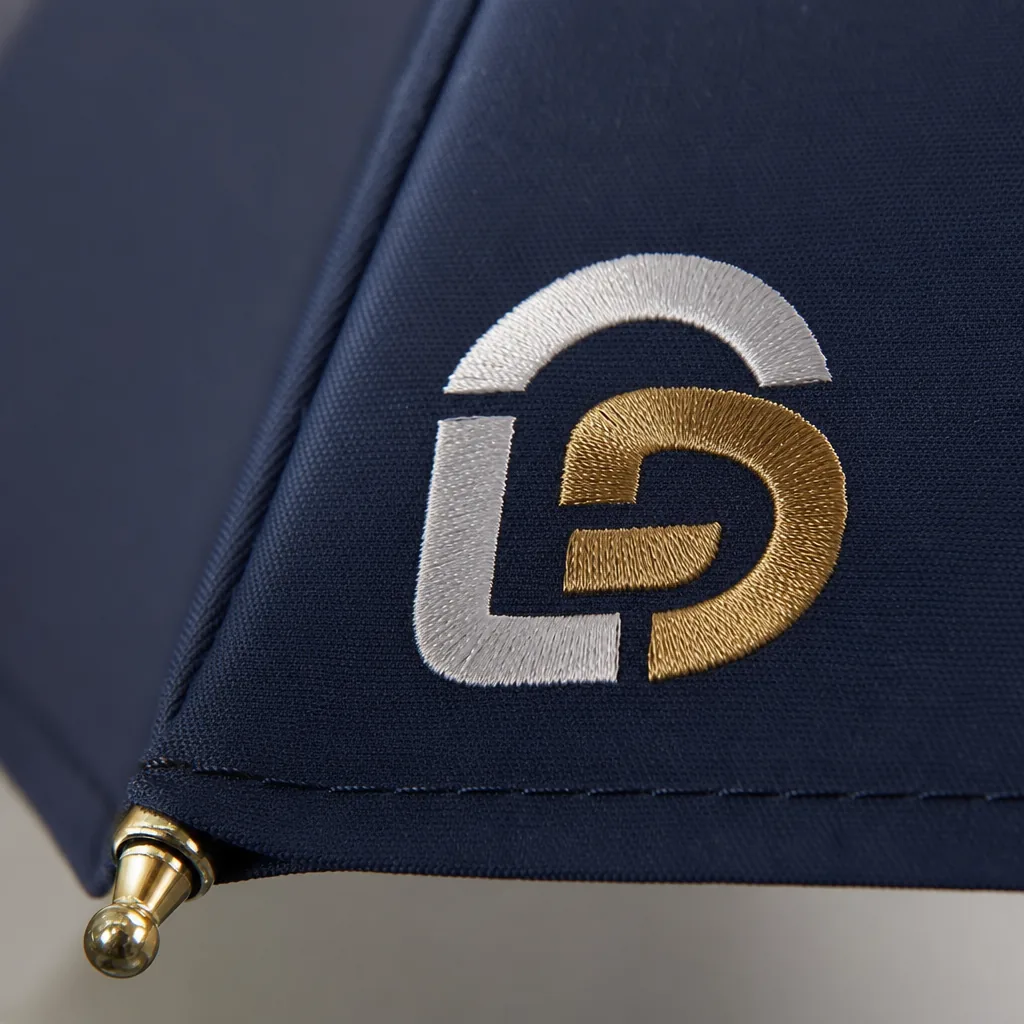
When a custom umbrella reaches the customer, the first paper piece they read often shapes the brand as much as the canopy or handle. Well-planned umbrella packaging inserts can lift perceived value, explain care clearly, and prevent avoidable claims, but only if they fit the realities of OEM packing lines, carton counts, and handwork speed on the factory floor.
Why Packaging Inserts Matter in Umbrella Branding
Umbrella packaging inserts matter because most umbrellas are evaluated folded, sleeved, and in a few seconds. That makes the insert the only controlled brand moment before the product disappears into a tote, car door pocket, or hotel closet. For retail shelves, e-commerce orders, and gifting programs, a single branded insert card can raise perceived value with minimal cost impact versus changing the umbrella itself. A 350 gsm coated card with matte lamination, spot UV, or a QR code for registration or campaign tracking makes a 23-inch auto-open umbrella in 190T pongee feel planned, not generic. The discipline is simple: each insert should do one job well. Use separate umbrella packaging inserts for brand story, warranty terms, care instructions, or a seasonal message instead of crowding all four onto one small card. Buyers get a cleaner presentation, and brands get clearer communication without adding material complexity to the umbrella frame or canopy spec.
The best insert formats are branded insert cards, warranty slips, and care guides because each addresses a different risk in the sale. Branded insert cards are especially effective for private label umbrellas, where the factory stays invisible and the brand needs a voice inside the pack. Warranty slips reduce post-sale disputes by stating coverage for failures such as broken runners, detached tips, or rust on low-grade steel parts; that is most relevant on auto-open-close models, which have more moving parts than a manual 8K frame. Care guides add the most value on premium SKUs using fiberglass ribs, double-canopy vented construction, Teflon-coated 210T pongee, or UPF 50+ fabric, where instructions like dry open, do not force the shaft, and store only after fully drying help prevent mildew, coating damage, and avoidable claims. Inserts usually deliver the best return in OEM umbrella packaging for event gifting, premium retail, and other higher-landed-cost programs, including 27-inch to 30-inch styles packed with upgraded sleeves or gift boxes and inspected to AQL 2.5, where plain pack-out weakens the offer.
Which Insert Types Fit Different Umbrella Programs
Choose umbrella packaging inserts by claim risk and sales channel, not by mockup appeal. For mass retail and e-commerce, a folded care leaflet is usually the highest-value option because it cuts first-use errors: how to open a tight frame without twisting the shaft, how to dry 190T or 210T pongee before putting it back in the sleeve, and how to reset auto-open-close springs correctly. A 21" or 23" compact folding umbrella needs denser, step-by-step instructions because users are handling telescopic shafts, push-button mechanisms, and short hook-and-loop ties. A 27" or 30" golf umbrella needs less operating detail but more storage and drying guidance, especially when the frame uses fiberglass ribs and a vented double canopy rated above 50 mph. In OEM umbrella packaging, a one-color care leaflet often outperforms a decorative card on cost and risk: it packs faster by hand, lowers misuse claims, and keeps printed-piece cost under control.
Use umbrella packaging inserts such as branded insert cards only when they need to carry the brand story or support a premium sale. For private label umbrellas sold in boutiques, hotel gift shops, and higher-end promo kits, thank-you cards and product story cards can explain why the product uses recycled pongee, FSC-certified wood handles, or a POE canopy instead of standard PVC on clear dome styles. Product story cards are especially useful for UPF 50+ sun umbrellas because buyers need a plain explanation of UV coating performance, intended shade use, and why sun-umbrella frames should not be judged by rain-umbrella standards alone. QR cards are the most efficient retail unboxing inserts when the brand needs multilingual content without crowding the pack; they can link to care videos, claim forms, or model-specific instructions for compact auto-open models, golf umbrellas, and sun umbrellas. Warranty cards add value only when the product has mechanical features worth documenting, such as reinforced runner stops, heavier-gauge steel shafts, or tested open-close cycle counts. For runs below 3,000 pieces, combining warranty and care content on one card usually reduces printed MOQ and speeds packing; at higher volumes, separate cards make AQL 2.5 insert checks, batch coding, and branding cleaner.
Technical Limits That Affect Insert and Pack Design
Pack design starts with the closed umbrella, not the graphic concept. For umbrella packaging inserts, the working dimensions are closed length, maximum fold diameter, and rigid contact points at the tip, ferrule, runner, and handle shoulder. A 23-inch straight umbrella with an 8K frame usually suits a long, narrow pack, so branded insert cards are more practical as neck tags, hang cards, or slim sleeve inserts than as full-width wrap panels. A 21-inch or 22-inch 3-fold style reverses the constraint: shorter overall length, but a thicker barrel where the folded canopy, tie strap, and rib ends stack near one end. For folding styles, insert size should be based on the maximum folded diameter, not the advertised open-canopy size. If a wrap card is sized too tightly around that thick end, it can scuff during insertion, deform the pouch, or snag when operators load units into inner cartons.
Frame specification changes pack efficiency fast. An 8K folding frame with standard steel ribs usually nests tighter than a 16K fashion frame because 16 ribs create more overlap and a rounder closed profile. Double-canopy windproof construction adds another layer of bulk: two canopy panels, vent seams, and the internal support structure all collapse into the same closed length. Fiberglass ribs, often specified for wind-resistant umbrellas tested above 50 mph, improve flex recovery but are typically thicker than basic steel ribs, which can push a folded umbrella past an existing pouch or box die line in OEM umbrella packaging. Canopy material matters too: 190T pongee generally folds flatter than 210T pongee, while UV coating, Teflon finishing, or laminated POE/PVC tends to reduce roll tightness and increase fold diameter. Handle choice has the same packing effect. A slim ABS or straight plastic handle fits very differently from a large EVA grip, wood hook, or auto-open-close handle with a larger runner housing. For private label umbrellas, even a 5 to 8 mm increase in folded diameter can cut carton fit, reduce case-pack count, or force larger retail unboxing inserts.
How to Control Cost, Lead Time, and Packing Accuracy
Control cost on umbrella packaging inserts by fixing timing and pack method before bulk production. When inserts run with the umbrella order, buyers usually pay close to print cost only; when artwork is approved after assembly, the factory often adds a second charge for manual packing. For standard 1-color or 4-color branded insert cards, a practical MOQ is usually 1,000-3,000 pieces. Custom die-cuts, folded formats, or QR-coded retail unboxing inserts generally make more sense at 3,000-5,000 pieces because make-ready waste and spoilage are harder to absorb below that range. On a 2,000-5,000 unit order of 23-inch or 27-inch private label umbrellas, the insert itself commonly lands around $0.03-$0.12 per piece. Hand insertion can add another $0.02-$0.08, depending on whether the card is dropped into an OPP bag, tied to the handle, or matched to a color assortment. That labor line is the margin trap, so buyers should confirm one point in writing: is insertion included in the quoted OEM umbrella packaging price, or billed as a separate packing charge?
Lead time risk starts at artwork sign-off, not at canopy sewing. An 8K steel-rib manual style or a fiberglass-rib auto-open umbrella with 190T pongee can move through frame assembly while insert files are still under review, but final packing stops until approved print is on site. A practical checkpoint is to freeze the insert dieline, barcode position, country-of-origin wording, and carton marks before canopy sewing passes 50%; miss that window and finished goods may sit 3-7 days waiting for paper. The clean sequence is: print-ready AI or PDF approval, then a photo or physical pack-out sample to confirm fit, then outer carton layout approval. At final packing, QC should check insert version, language, barcode scan, placement consistency, umbrella function, and carton count under an AQL 2.5 inspection plan. On mixed-SKU orders, reconcile approved insert quantity against finished umbrella quantity plus spare rate before loading. Under FOB terms, that check must happen before container gate-out; under DDP, fixing insert errors after arrival can wipe out any unit-cost savings.
What Buyers Should Standardize Before Mass Production
Standardize umbrella packaging inserts before you release bulk printing. Give the writer a buyer-facing approval checklist that removes guesswork on the packing line: finished size in mm, bleed, fold style, corner radius, hole position if the card hangs from the strap, and exact placement—inside the canopy wrap, on the closure strap, or in the retail box. Lock the paper spec at the same time because 250 gsm art card, 300 gsm SBS, and 157 gsm coated paper mounted to greyboard do not perform the same under ocean-freight humidity or carton compression. For OEM umbrella packaging, barcode details need the same discipline: symbology, quiet zone, scan direction, and exact position relative to seams, handles, belly bands, or box panels. That level of detail matters because a 21-inch compact, 23-inch straight, and 27-inch golf umbrella often use different branded insert cards and different pack geometry, so “standard placement” is not enough for production. Treat language versions and carton pack-out as controlled approvals, not late-stage artwork edits. Approve each language file separately and confirm market-specific care text, country-of-origin marking, and any importer-required icons before printing. Then define units per inner, inners per export carton, whether retail unboxing inserts are pre-loaded or added at final packing, and whether mixed-language cartons are allowed. The cleanest way to hold the factory to one method is a short packing SOP: strap closed, insert added, polybag orientation checked, barcode facing out if required, then master-carton count verified. That sequence reduces repacking labor when manual, auto-open, and auto-open-close styles run on the same floor.
Make the writer state one non-negotiable rule: every claim on umbrella packaging inserts must match the final approved umbrella, not the sales sample. If the card says auto-open, confirm the production mechanism is auto-open rather than manual open or auto-open-close. If it says UPF 50+, verify the final canopy fabric and coating passed the agreed test standard. If it says fiberglass frame, check the bill of materials so ribs and shaft were not partially switched to steel to cut cost. Apply the same match-back to 190T versus 210T pongee, double-canopy vented construction, and any stated wind rating, such as 50+ mph, because those details directly affect returns risk and retailer complaints. For private label umbrellas, tie insert sign-off to the final pre-production sample and the agreed packing inspection standard, including AQL 2.5 for packed goods. That gives the buyer one approval gate covering artwork, product spec, and packing execution instead of treating them as separate decisions. It also makes disputes easier to resolve: if barcode placement, language version, carton pack-out, and spec claims were frozen before mass production, the supplier cannot defend avoidable errors as line-side judgment calls or last-minute substitutions. That is the practical standard buyers should require from branded insert cards before a full run ships FOB or DDP.
Frequently Asked Questions
Can packaging inserts be added if the umbrella order is already in production?
Sometimes, but only if artwork is approved early enough and the packing line has not started. Late insert changes can delay final assembly and export booking because inserts are usually added during final packing.
Do inserts create problems for carton counts or inspection?
They can if they are not counted as part of the packing SOP. Buyers should confirm insert placement, piece counts, and random inspection standards under AQL 2.5 before shipment.
Can insert cards and care leaflets be packed at the factory during umbrella assembly?
Yes. Most OEM factories can insert pre-printed cards during final packing if the card size and packing sequence are approved before mass production. Buyers usually need to lock artwork before production starts and allow 3-7 extra days if the inserts are printed by the factory.
What insert content helps reduce post-sale claims on umbrellas?
The most effective content is a short care guide: how to open and close properly, drying before storage, wind-use limitations, and coating care. For retail programs, a simple 4-6 point leaflet can reduce avoidable damage claims and customer misuse without adding much packing cost.
How do buyers handle multilingual insert cards for different sales regions?
A common approach is one universal graphic layout with market-specific language versions swapped by SKU or carton label. For lower MOQs, importers often use a bilingual insert to avoid splitting production into too many small print runs.
Looking to Launch Your Custom Umbrella Line?
ZheBrella is a Zhejiang-based OEM/ODM umbrella manufacturer with 17 years of export experience. Free design, low MOQ from 100 pieces, windproof construction, full-color print.
Get Free Quote Now »People Also Search For
Related Articles
Umbrella Packaging Inserts That Improve Brand Story and Sell-Through
Plan insert cards, care sheets, and QR pieces that strengthen umbrella branding, reduce returns, and support retail and ...
Read More »
Umbrella Packaging Inserts for Premium Brand Storytelling
Plan insert cards, care leaflets, and story pieces that elevate umbrella gifting, support retail sell-through, and stay ...
Read More »Umbrella Insert Cards for Private-Label Brand Storytelling
Use insert cards to explain fabric, frame, care, warranty, and brand values while improving perceived value in private-l...
Read More »