Custom Umbrella Insert Cards for Brand Storytelling
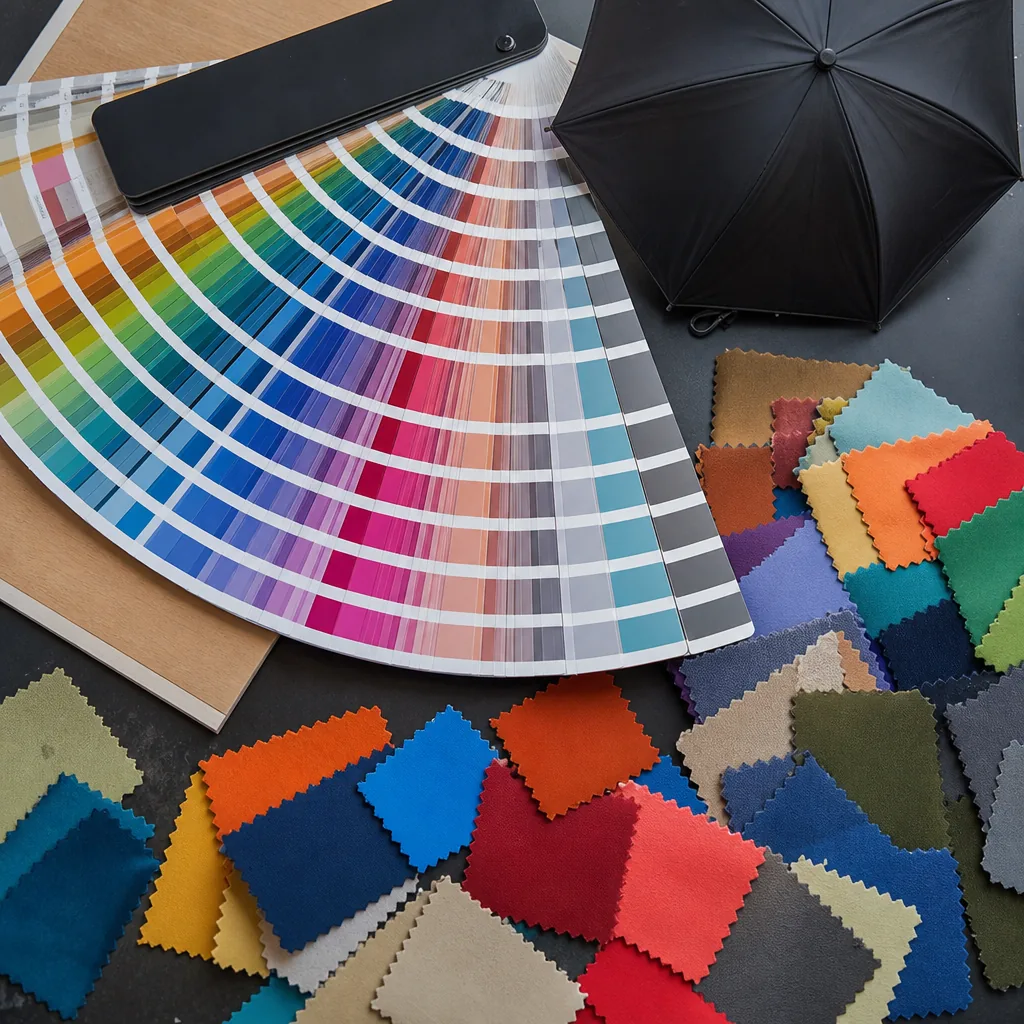
A custom umbrella often ships with strong fabric, good ribs, and careful printing, but the buyer may never see the value if the message is left to a polybag sticker. On our Songxia production floor, we treat umbrella insert cards as part of the pack-out process: they explain UPF 50+ claims, care steps, warranty terms, and brand story while fitting the carton plan, retail display, and gift presentation without slowing final inspection.
Where Insert Cards Fit in Umbrella Packaging
Insert cards sit inside the umbrella pack where the buyer actually pauses: under the lid of a gift box, on top of the folded canopy in an e-commerce carton, beside the product in a welcome kit, or behind the umbrella in a retail tray pack. For corporate umbrella gifts, that card often does more selling than the outer carton because the recipient may never see the purchase order, campaign brief, or brand guideline that justified the product. A good card explains why this 23" auto-open umbrella has 190T pongee, fiberglass ribs, a vented double canopy, or UPF 50+ coating without turning the box into a spec sheet. In private label umbrella packaging, I usually size these cards from A6 to 5" x 7", printed on 250–350 gsm art card with matte lamination so ink does not scuff against a wet handle or sleeve during transit.
Umbrella insert cards are not hangtags, sleeves, or compliance labels, and mixing those jobs creates messy packaging. A hangtag is tied to the handle or runner and should carry quick retail cues: size, barcode, price sticker zone, or one-line feature claims like “windproof fiberglass frame.” A sleeve mainly protects the canopy and gives a large logo surface, especially on 21" compact and 27" golf umbrellas. Compliance labels are functional and often legally sensitive, covering fiber content, origin, warning language, recycling marks, or retailer SKU data. Insert cards are different because they carry the story and education: how to open an auto-open-close mechanism safely, why 210T pongee beads water better after Teflon treatment, how to dry the canopy before storage, and what the gift program represents.
For branded umbrella packaging inserts, the best layout is usually one clear brand message on the front and practical umbrella care card printing on the back. I like a 60/40 balance: 60% buyer-facing story, 40% product education. That keeps the card useful instead of becoming disposable decoration. For a welcome kit, the front can connect the umbrella to an employee onboarding theme, campus event, or VIP travel program; the back can show care icons, QR code registration, warranty terms, and customer service contact. Our standard practice at ZheBrella is to approve insert cards together with the carton artwork and AQL 2.5 inspection checklist, because a beautiful card still fails if it shifts loose, curls in humidity, stains the canopy, or contradicts the umbrella’s actual frame, rib count, coating, or opening mechanism.
Content That Adds Value After Unboxing
The best umbrella insert cards earn their space by answering questions the buyer has after unboxing, not by repeating the logo from the sleeve. I normally structure the front side with a 35- to 60-word brand message, a short model description, and three verified feature bullets. If the umbrella uses 190T or 210T pongee, fiberglass ribs, a double-canopy vented windproof frame, UPF 50+ coating, or an auto-open mechanism, say so only after the production spec sheet and pre-shipment sample match. I have seen too many cards claim “windproof” while the approved sample used steel ribs and a single canopy; that turns a nice corporate umbrella gift into a customer-service problem. For private label umbrella packaging, the insert should also identify size and construction clearly: 21" compact auto-open-close, 23" straight auto-open, 27" golf, or 30" storm model.
The second content block should be functional: QR registration, care steps, warranty terms, and service contact. A QR code can link to warranty registration, product authentication, a landing page for campaign tracking, or a reorder page for promotional distributors. Keep umbrella care card printing practical: dry the canopy fully before closing, shake off standing water, avoid storing inside a sleeve while wet, rinse salt or mud with clean water, and never force a bent rib back by hand. Warranty language should be plain and limited to manufacturing defects such as broken runner, faulty button, loose tips, or seam failure within a defined period, often 6 or 12 months. Exclude storm abuse, vehicle door damage, and normal wear. For branded umbrella packaging inserts, this clarity reduces back-and-forth emails between the end user, distributor, and factory.
Recycling notes are worth adding, but they must be honest about mixed-material construction. Most umbrellas combine polyester pongee or POE/PVC/EVA canopy, metal shaft, plastic handle, tips, runner, and sometimes fiberglass ribs, so full curbside recycling is rarely realistic. A better insert says: separate the paper sleeve and card for recycling, reuse the storage cover, and check local rules before disposing of the frame. If the handle or sleeve uses FSC paper, recycled PP, or a biodegradable polybag, list that specifically rather than using broad “eco-friendly” claims. At ZheBrella, our standard practice for umbrella insert cards is to confirm the final card copy against the BOM, approved sample, and packaging artwork before mass printing, because insert errors are expensive once 5,000 or 20,000 sets are packed into export cartons under FOB or DDP schedules. Good inserts protect the buyer’s brand as much as they inform the user.
Card Format, Stock, and Print Decisions
A6 is the safest default for most umbrella insert cards because it slides into common compact umbrella color boxes without curling at the corners. For 21" and 23" folding umbrellas, our usual retail box is around 6–7 cm wide and 25–30 cm long, so an A6 card at 105 x 148 mm can sit flat above the folded umbrella or tuck beside the pouch depending on the box depth. DL cards, 99 x 210 mm, work better for long stick umbrella cartons or premium gift sets where the card needs to read like a brand note rather than a warranty tag. I avoid square cards unless the buyer has already approved the box dieline; they look good in mockups but often fight the inner flap or get crushed during carton compression.
Stock choice should match the selling channel, not just the artwork. For standard corporate umbrella gifts, 250–300 gsm coated art card is enough: it prints cleanly, keeps cost down, and survives normal FOB carton handling. For private label umbrella packaging going into department stores or e-commerce gift boxes, 350–400 gsm feels more deliberate and resists warping when placed with a damp-proof polybag or EVA pouch. Coated paper gives sharper CMYK photos, QR codes, and fine care diagrams, while uncoated paper feels warmer for sustainability stories but absorbs more ink and can dull dark brand colors. If the card includes umbrella care card printing instructions, keep small text above 6 pt and use high-contrast black or Pantone dark gray, not a pale brand tint.
Print decisions should be locked before mass production because insert cards are often batched with box labels, hangtags, and branded umbrella packaging inserts. Soy-based ink is available for buyers with retail compliance requirements, but Pantone matching still needs a physical drawdown or printed proof, especially for reds, navy, and metallic-looking golds that shift on uncoated stock. Rounded corners are worth specifying at 3–5 mm radius when the card sits directly against 190T/210T pongee fabric or a POE/PVC canopy bag; sharp corners can scuff packaging film and catch on the umbrella strap during packing. At ZheBrella, we usually confirm card size against the actual folded umbrella, pouch, and box sample before approving bulk printing, because a beautiful card that bends inside the box looks like a supplier mistake, not brand storytelling.
Quality Control for Claims and Color Consistency
Claims control starts before a single card goes on press, because a wrong UPF 50+ statement or unverified windproof claim can create more trouble than a crooked logo. For umbrella insert cards, we lock the approved copy, dieline, barcode, QR code, language version, and artwork revision number in one proof sheet, then require buyer sign-off before mass printing. If the card says a 23" auto-open umbrella has a Teflon-coated 190T pongee canopy or survives 50+ mph wind, that wording must match the actual umbrella spec sheet and test record, not a sales assumption. For corporate umbrella gifts, we also check trademark placement, recycling marks, importer address, warning text, and retail compliance notes against the box artwork. QR codes are scanned from printed proofs and again from production samples using both iOS and Android phones, because glossy varnish, low contrast, or a code placed too close to a fold line can fail after packing.
Color consistency is handled against the full packaging set, not just the card file on a monitor. Branded umbrella packaging inserts often sit beside a printed box, hangtag, sleeve, or canopy logo, so we compare the insert card to the canopy print, handle logo, and carton label under D65 light. For most CMYK card printing, a Delta E tolerance around 3 is realistic; for strict private label umbrella packaging, we ask for Pantone references and run a wet proof or digital proof before bulk production. A red logo on a 210T pongee canopy will not look identical on coated 300 gsm paper, especially if the canopy uses silk screen ink and the insert uses offset or digital print. Our standard practice at ZheBrella is to keep the signed color sample at the packing table so line inspectors can compare every production pull against a physical target, not a phone photo.
Final inspection treats insert cards as part of the umbrella order, not as loose paper accessories. Under AQL 2.5, we check for print defects such as ink spots, banding, blurred text under 6 pt, off-register logos, scratches, wrong trimming, and color drift outside the approved range. We also count missing cards, double-loaded cards, wrong language versions, incorrect QR destinations, barcode scan failures, and mismatches between card model number and umbrella size, such as a 21" compact card packed with a 27" golf umbrella. For mixed carton jobs, inspectors verify carton marks, SKU labels, inner polybag labels, and packing lists so navy 8K manual umbrellas do not receive inserts meant for black 10K auto-open-close units. This matters most for umbrella care card printing because care instructions may differ between POE clear umbrellas, PVC kids’ umbrellas, EVA rain gear sets, and vented double-canopy windproof models.
MOQ, Lead Time, and Packing Workflow
Insert cards look simple, but they sit on the critical path once artwork approval involves multiple languages, compliance marks, QR codes, or market-specific warranty wording. For most factory programs, I treat umbrella insert cards like printed components, not afterthoughts: confirm card size, paper weight, folding style, barcode position, and carton allocation before canopy cutting starts. A normal MOQ is 500–1,000 pieces for digital print cards, but offset printing becomes more economical around 3,000–5,000 pieces per version. If a buyer needs English, French, German, and Spanish cards for different retail channels, each language version should have its own SKU map and packing instruction, otherwise the final packing line will slow down and mistakes will show up during AQL 2.5 inspection. Branded umbrella packaging inserts usually add 2–4 days for proofing and 5–7 days for print production after artwork approval, so late copy changes can push the shipment even when the umbrellas themselves are finished.
The cleanest workflow is to coordinate insert printing with umbrella production milestones. While the canopy team cuts and sews 190T or 210T pongee panels, the frame shop is assembling steel or fiberglass ribs, runners, springs, shafts, and handles. For a 23-inch auto-open corporate umbrella gift, canopy printing may need 3–5 days for screen print or heat transfer curing, while frame assembly and canopy mounting run in parallel. Insert cards should arrive before final inspection, not after, because the packing team needs to match each umbrella with the correct sleeve, hangtag, care card, and inner carton label. For umbrella care card printing, I recommend locking wash/care icons, drying instructions, wind-use warnings, and after-sales QR codes at the same time as logo placement on the canopy. Our standard practice at ZheBrella is to stage printed cards by PO, language, and carton mark so operators do not mix retail-market versions during final bagging.
For FOB or DDP shipment planning, private label umbrella packaging must be frozen before carton dimensions and gross weight are finalized. A single flat insert card barely changes freight cost, but a folded booklet, rigid gift box insert, or multi-card retail pack can affect carton count, pallet height, and DDP landed cost calculations. Typical lead time for a custom umbrella order with insert cards is 25–35 days after deposit and artwork approval; complicated multi-market packaging can move that to 35–45 days, especially before Canton Fair season or Q4 promotional peaks. Procurement teams should issue one packing matrix showing umbrella model, color, canopy fabric, frame spec, card language, barcode, inner carton quantity, and destination market. That document prevents the classic problem where 10K windproof umbrellas are ready, but final packing waits three days because the German insert card revision was approved later than the English version.
Frequently Asked Questions
Can one umbrella order use different insert card languages?
Yes, but each language version should have its own SKU or packing mark to avoid mix-ups. Factories usually confirm quantities before final packing and inspect by carton.
Should technical umbrella features be printed on insert cards?
Yes, if the features are confirmed in the approved sample and production spec. Claims such as UPF 50+, fiberglass ribs, or windproof double canopy should match test reports or buyer-approved wording.
What information should a B2B buyer include on an umbrella insert card?
For retail and gifting programs, include brand story, opening and closing instructions, care steps, warranty terms, and any claim language such as UPF 50+ only if it is verified. A typical insert card is 90 x 55 mm or A6, but larger folded cards are common when you need multiple languages.
Can umbrella insert cards be customized for private label orders?
Yes. Private label buyers usually request logo placement, brand colors, SKU or barcode space, and language versions matched to the destination market. Most factories can print offset or digital runs once artwork is approved, with MOQ often starting around 500 to 1,000 pieces depending on size and finish.
How do insert cards help with warranty and retail compliance?
They let you state warranty coverage, claim limits, and care guidance in a consistent format across every carton or gift box. That reduces customer service questions and helps keep product claims aligned with the packaging copy used by distributors and retailers.
Looking to Launch Your Custom Umbrella Line?
ZheBrella is a Zhejiang-based OEM/ODM umbrella manufacturer with 17 years of export experience. Free design, low MOQ from 100 pieces, windproof construction, full-color print.
Get Free Quote Now »People Also Search For
Related Articles

Umbrella Insert Cards for Branded Gifting and Aftercare
Use insert cards to explain features, care, warranty, and brand story while improving the gift feel of 190T, 210T, windp...
Read More »
Umbrella Insert Cards for Private-Label Brand Storytelling
Use insert cards to explain fabric, frame, care, warranty, and brand values while improving perceived value in private-l...
Read More »
Umbrella Retail Insert Cards for Brand Storytelling
Use insert cards to explain umbrella quality, care, and brand story while keeping the canopy, pouch, and retail packagin...
Read More »