Private Label Umbrella Line Planning: SKUs, Specs, and MOQ
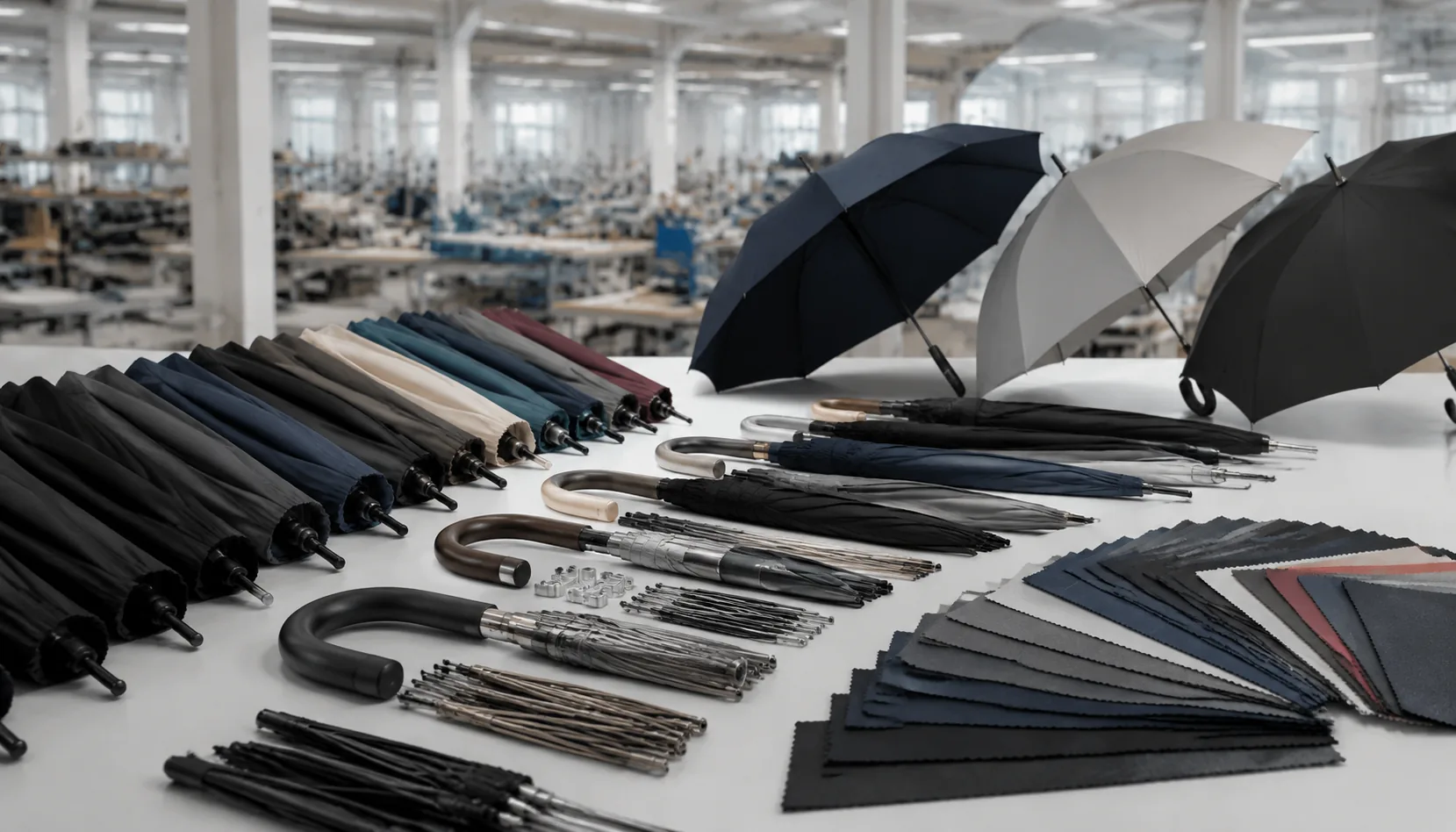
A private label umbrella line can look profitable on a spreadsheet, then lose margin on the factory floor through too many frame types, scattered fabric colors, and small runs that trigger setup waste. When buyers plan SKUs around shared ribs, shafts, handles, and canopy panels, MOQ becomes easier to control and lead times stay predictable. The right spec map balances retail variety with production reality before sampling starts.
Start With a Three-Tier SKU Architecture
A private label umbrella line should start with three clear price ladders, not a random collection of nice samples. I usually recommend good-better-best: a 21" or 23" compact folding umbrella for the entry SKU, a 23" straight umbrella for the everyday retail or corporate SKU, and a 27" or 30" double-canopy windproof model as the premium SKU. That structure keeps umbrella SKU planning simple for purchasing, sales, and warehouse teams. The compact model carries the lower ticket because it uses less fabric and shorter ribs, but the mechanism matters: manual open is cheapest, auto-open is better for gifting, and auto-open-close adds cost and failure points if the spring and runner are not tested properly. The straight umbrella should feel sturdier in hand, usually with 8K steel or fiberglass ribs and 190T or 210T pongee. The premium windproof model earns its price through fiberglass shaft/ribs, vented canopy, stronger tips, and verified wind resistance around 50+ mph.
Set target retail or distributor sell-in prices before choosing frame, fabric, coating, and packaging specs. Too many buyers begin with a beautiful sample, then discover the landed cost destroys the margin after printing, carton volume, duty, and DDP freight. For an entry compact, lock the FOB cost ceiling first, then decide whether 190T pongee is enough or whether 210T with Teflon coating is justified. For the middle straight SKU, decide if the branded umbrella assortment needs retail packaging, a printed sleeve, or just a woven label and hangtag. For the premium SKU, buyers often add UPF 50+ coating, EVA handle, heat-transfer logo panels, and reinforced fiberglass 8K or 10K ribs. Those upgrades are useful only if the target price can absorb them; otherwise, the factory is forced to remove hidden quality, usually from rib thickness, runner material, or stitching density.
MOQ should be planned by tier because OEM umbrella MOQ is driven by fabric color, logo process, handle mold, and packaging, not just total order quantity. A practical starting umbrella product range might be 1,000-2,000 pieces for a standard compact color with screen print, 1,200-3,000 pieces for a straight umbrella with custom handle or sleeve, and 2,000-5,000 pieces for a premium windproof model with special coating, custom carton marks, or multiple logo positions. Our standard practice at ZheBrella is to confirm the SKU ladder with a spec matrix before sampling: size, rib count, shaft material, canopy fabric, opening mechanism, coating, logo method, packaging, AQL 2.5 inspection level, and FOB or DDP delivery term. That matrix prevents the common mistake of approving three samples that look related but cannot be produced efficiently together. A disciplined private label umbrella line should share colors, trims, and cartons where possible while still giving each tier a clear reason to exist.
Standardize Components to Control MOQ
The fastest way to keep a private label umbrella line affordable is to standardize the parts buyers rarely notice first: handles, shafts, tips, sleeves, wrist straps, labels, and export cartons. In umbrella SKU planning, I like to build around one or two frame platforms, such as a 21" 8K compact with a steel shaft and fiberglass ribs, plus a 23" or 27" 8K stick umbrella with a fiberglass shaft. If those models share black plastic tips, the same woven sleeve label, the same hook-and-loop strap width, and one carton footprint, purchasing becomes much cleaner. We can buy rib sets, ferrules, runners, and packaging in larger pooled quantities instead of treating every SKU as a separate project. That reduces changeovers on the assembly line and makes AQL 2.5 inspection easier because defects are judged against the same component standard across the branded umbrella assortment.
Fabric choice has the biggest MOQ swing after the frame. Stock 190T or 210T pongee colors are the most flexible because mills and umbrella factories in Shangyu keep common black, navy, red, royal blue, forest green, and white on hand; depending on the model, an OEM umbrella MOQ can often start around 500 to 1,000 pieces per color using existing fabric. Pantone-dyed pongee is different. Once you ask for a matched canopy color, the dye lot usually needs 1,000 to 3,000 meters, which often translates to 1,500 to 3,000 umbrellas depending on size, panel count, and cutting efficiency. If the umbrella product range includes both compact and golf umbrellas, using the same Pantone fabric across 21", 23", and 30" models helps consume the dye lot without forcing one slow-moving SKU to carry all the MOQ.
Custom molded handles should be treated as a later-stage investment, not the first move, unless the retail price supports it. A new ABS, PP, EVA, or rubberized handle mold can require tooling charges and 3,000 to 5,000 pieces before the unit cost makes sense; wood handles may avoid injection tooling but still need consistent lacquer, logo engraving, and QC for grain variation. For a new private label umbrella line, I usually recommend starting with existing J-handle, straight EVA, crook, or soft-touch compact handles, then applying logo print, debossing, or a metal badge. Sleeves and cartons are better places to customize early because artwork changes do not disrupt frame assembly. Keep master carton sizes consistent, for example 48 pieces for compact umbrellas or 24 pieces for stick umbrellas, so FOB and DDP freight quotes stay predictable and warehouse slotting does not become a hidden cost.
Choose Specs That Separate Each Tier
A good private label umbrella line should not let two SKUs fight for the same buyer. I usually separate tiers first by fabric and frame, because customers can feel those differences immediately. A 190T pongee canopy is fine for an entry 21" or 23" compact umbrella: tight enough weave, decent water shedding with a basic WR coating, and cost-effective for promotional volume. Move the mid-tier to 210T pongee and the hand feel changes; it looks denser, prints cleaner for heat-transfer logos, and holds Teflon or UV UPF 50+ coating more consistently. Do not put 210T on every model just because it sounds better. Use it where the retail price or corporate gift budget can absorb the upgrade, then keep the entry SKU simple so the price ladder makes sense.
Frame choices create the clearest performance story in umbrella SKU planning. Steel ribs are cheaper and give a solid weight, but they bend rather than recover when a gust turns the canopy. Fiberglass ribs cost more, yet they flex back, especially on 8K and 10K golf umbrellas rated around 40–50 mph in wind-tunnel testing. Rib count should also mark tiers: an 8K frame is standard for compact and basic stick umbrellas, while 16K belongs on a premium 23" or 27" executive model where the extra ribs visibly support the canopy. I would not build a 16K budget SKU with thin fabric and a cheap shaft; that mixes signals and eats margin. For a branded umbrella assortment, pair 8K steel with entry pricing, 8K or 10K fiberglass with mid-tier windproof claims, and 16K fiberglass with premium packaging and AQL 2.5 inspection.
Mechanism and canopy construction finish the tier separation. Manual open is reliable and cheap, but it feels basic; use it for event giveaways, school orders, and OEM umbrella MOQ-sensitive jobs where 500–1,000 pcs need to hit a fixed landed cost. Auto-open is the practical mid-tier upgrade on 23" stick umbrellas, while auto-open-close belongs on 21" compact travel models because the user benefit is obvious. Single-canopy construction is lighter and easier to print, but a double-canopy vented design gives a real windproof selling point by releasing pressure instead of forcing the ribs to invert. For a private label umbrella line, the clean umbrella product range is entry manual single-canopy, mid auto-open fiberglass, and premium double-canopy 16K or auto-open-close compact—not five nearly identical black umbrellas with different handles.
Build Branding Rules Across the Line
Branding rules should be locked before sampling, not adjusted SKU by SKU after the first strike-off. For a private label umbrella line, I normally set one logo width standard for each umbrella size: 70–90 mm on a 21" compact, 90–110 mm on a 23" straight umbrella, and 120–150 mm on a 27" or 30" golf umbrella. Panel position matters just as much as size. If the logo sits on panel 1 for the compact but panel 3 for the golf umbrella, the range looks patched together in a retail fixture. For screen print on 190T or 210T pongee, keep fine text above 1.2 mm stroke width; for heat transfer, watch edge cracking on dark Teflon-coated fabric. On POE or EVA clear canopies, we usually shift artwork lower so it does not distort across the dome when the umbrella is open.
A real branded umbrella assortment needs more than canopy printing. Woven labels on the seam, strap tags on the closing band, handle emblems, and sleeve artwork should all follow one brand hierarchy. For example, use the main logo on one canopy panel, a small woven side label near the lower seam, and a debossed or metal badge on the handle for premium 10K or 16K fiberglass models. Budget 8K steel-frame SKUs can use a printed strap tag instead of a molded emblem to control cost and protect OEM umbrella MOQ. Sleeve artwork should carry the same product naming, color code, barcode position, warning label, and care icons, especially when the umbrella product range includes manual, auto-open, and auto-open-close mechanisms. This prevents warehouse mix-ups and gives retailers a cleaner shelf presentation.
Unified branding also helps distributors sell the range as a system instead of a pile of random umbrellas. In umbrella SKU planning, I recommend building a brand matrix that lists canopy color, logo method, logo position, handle color, sleeve type, label type, carton mark, and insert card for every SKU. That matrix becomes part of the pre-production approval file, along with Pantone references, print tolerances, and AQL 2.5 inspection points for logo alignment, color difference, and label placement. Our standard practice at ZheBrella is to allow small placement tolerances, usually plus or minus 5 mm for canopy logos and plus or minus 3 mm for woven labels, because fabric tension changes after sewing and final rib assembly. Clear branding rules reduce sampling rounds, protect lead times of 30–45 days, and make a private label umbrella line easier for sales teams, buyers, and store staff to understand.
Set the Development Calendar and QC Gates
The calendar for a private label umbrella line should be built backward from the retail launch date, not from the day artwork is approved. For a normal branded umbrella assortment, I would allow 7–10 days for concept locking and umbrella SKU planning, including size split, frame choice, canopy fabric, handle material, packaging type, and print position. A compact 21" auto-open-close travel umbrella with 8K fiberglass ribs, a 23" straight manual umbrella with steel shaft, and a 27" golf umbrella with double-canopy venting do not move through sampling at the same speed. First samples usually take 10–15 days after confirmed tech packs, Pantone references, and logo files. If sublimation, heat-transfer panels, or custom molded handles are involved, add another 5–7 days because the tooling and print strike-off must be checked before sewing full samples.
Pre-production sample approval is the gate that protects bulk production, especially when the umbrella product range includes different fabrics and mechanisms. A 190T pongee canopy with Teflon coating, a 210T pongee UPF 50+ sun umbrella, and a transparent POE dome umbrella all behave differently in cutting, sewing, and print adhesion. Color matching should be treated as its own checkpoint: fabric lab dips and printed panels need 5–10 days, and darker Pantone colors on pongee can shift after water-repellent finishing. Packaging approval also needs a buffer of 5–8 days for hangtags, belly bands, inner cartons, barcodes, and retail master carton marks. Our standard practice at ZheBrella is to freeze packaging before bulk fabric cutting, because changing a carton size after production starts can create loading problems and delay FOB booking.
For OEM umbrella MOQ planning, bulk production should normally be scheduled at 25–35 days after the signed pre-production sample, assuming standard frames, available fabric, and no peak-season congestion. From March to June, capacity in Songxia tightens fast, so add a 7–14 day buffer for rib assembly, canopy sewing lines, and printing room allocation. QC gates should include incoming frame inspection, fabric shade check, in-line canopy seam review, mechanism cycling, and final AQL 2.5 inspection before shipment. For export, allow 3–5 days after passed inspection for carton closing, customs documents, and FOB Ningbo or Shanghai handover. DDP shipment needs more time: typically 25–40 days by sea to the U.S. or Europe after sailing, plus local customs clearance and last-mile delivery.
Frequently Asked Questions
How many umbrella SKUs should a new private label line launch with?
Most buyers can start with 3-5 SKUs: one compact, one daily straight umbrella, one windproof upgrade, and optional premium or kids models. This keeps MOQ manageable while covering common price points.
Can different umbrella models share the same brand packaging?
Yes, if carton sizes, sleeve formats, and hangtag designs are planned early. Shared packaging lowers setup work, but model-specific barcodes and care labels still need separate artwork control.
How many SKUs should a new private label umbrella line start with?
Most new retail programs start with 3 to 6 SKUs: one compact umbrella, one automatic folding umbrella, one golf umbrella, and optional premium or kids styles. Using shared fabrics, handles, and frame components helps keep MOQ and tooling costs under control.
Can different umbrella SKUs share the same MOQ?
Yes, if the SKUs use the same frame, fabric color, and logo method, a factory may combine production more efficiently. However, different sizes, prints, or frame types usually require separate MOQ, often starting around 500 to 1,000 pieces per SKU.
What specs should be finalized before quoting an OEM umbrella range?
Confirm canopy size, rib count, shaft material, frame type, fabric weight, opening system, handle design, logo placement, packaging, and test requirements. Finalized specs allow accurate unit pricing, sample timing, and production lead time, typically 30 to 60 days after sample approval.
Looking to Launch Your Custom Umbrella Line?
ZheBrella is a Zhejiang-based OEM/ODM umbrella manufacturer with 17 years of export experience. Free design, low MOQ from 100 pieces, windproof construction, full-color print.
Get Free Quote Now »People Also Search For
Related Articles
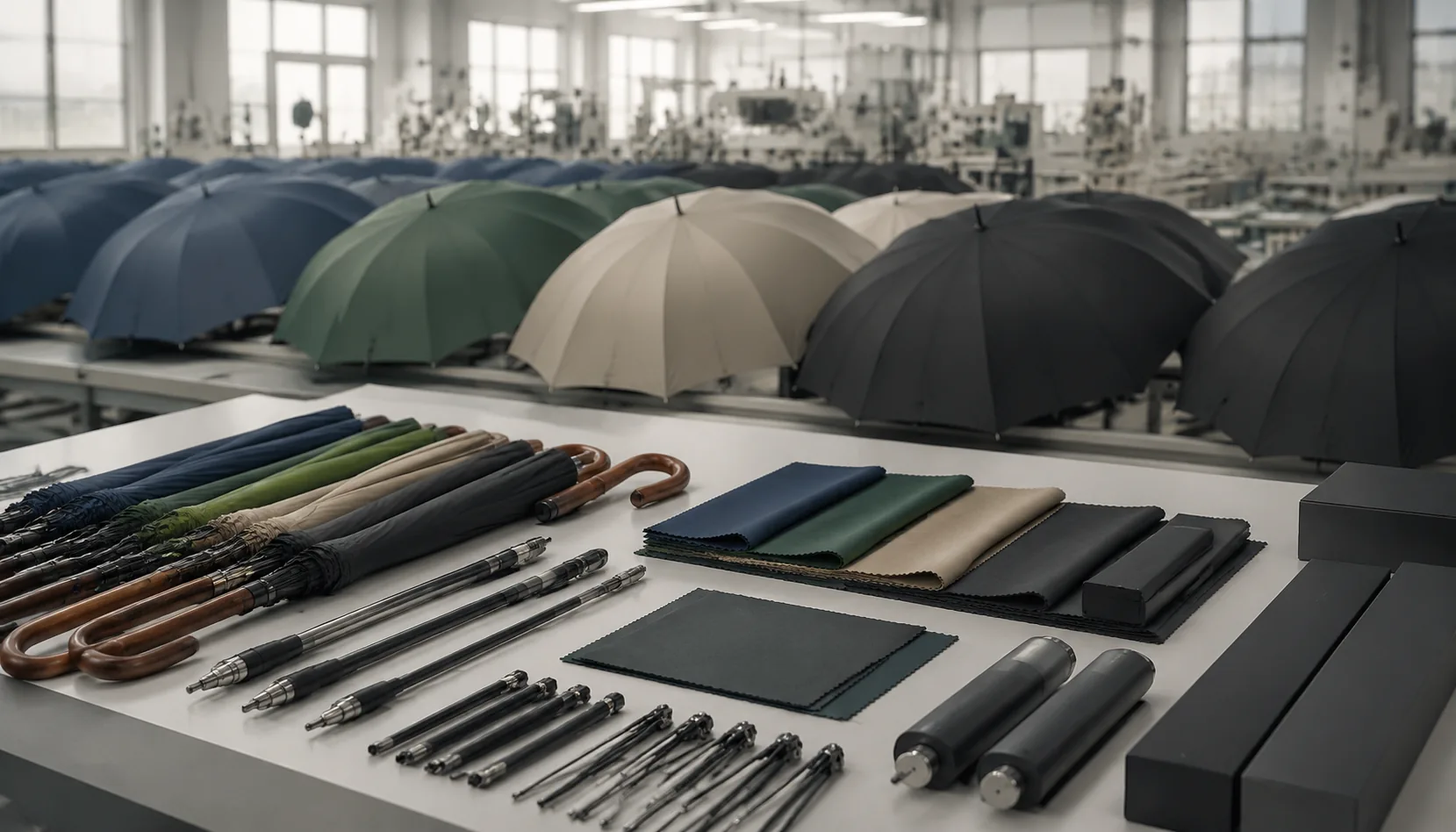
Private Label Umbrella Programs for Retail Brand Owners
Build a retail-ready private label umbrella line with the right SKUs, fabrics, frame specs, packaging, MOQ, and inspecti...
Read More »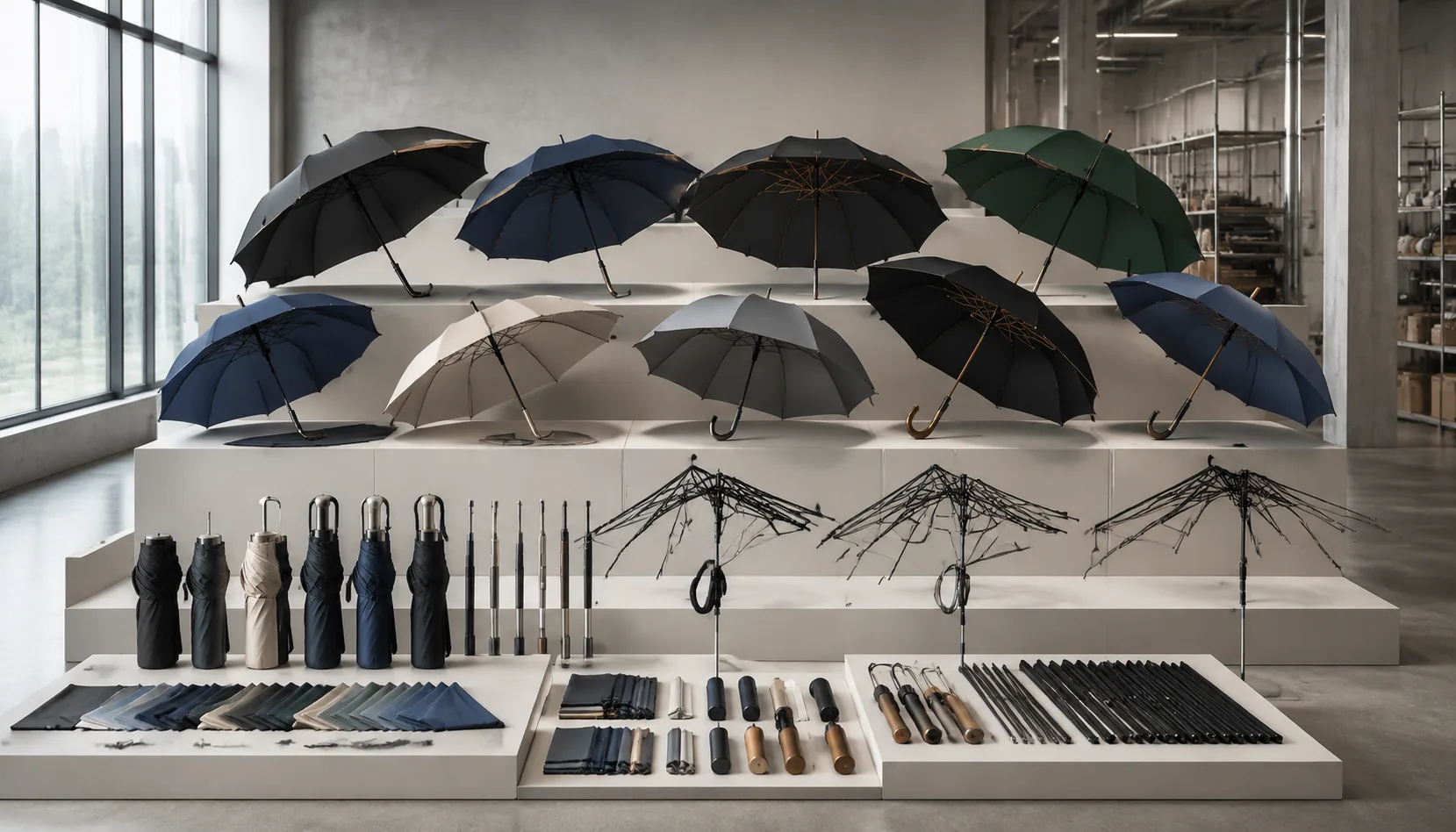
Retail Umbrella Assortment Planning: Specs by Price Tier
Plan a private-label umbrella range with 3-fold, stick, and golf models, clear good-better-best specs, realistic MOQs, F...
Read More »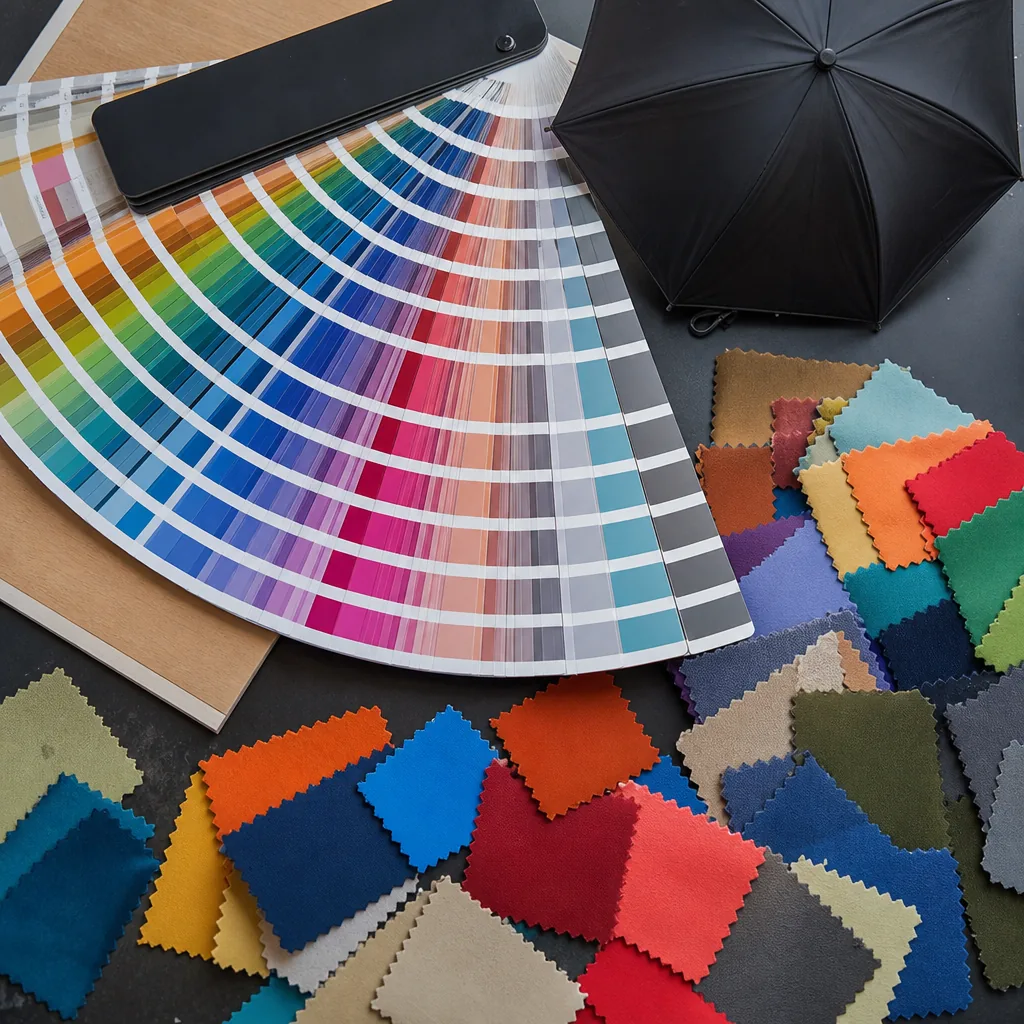
Retail Umbrella Assortment Planning for Private Labels
Build a profitable private-label umbrella lineup with SKU tiers, canopy sizes, rib counts, fabric specs, packaging, MOQ,...
Read More »