Country-of-Origin Marking Rules for Imported Umbrellas (US & EU)
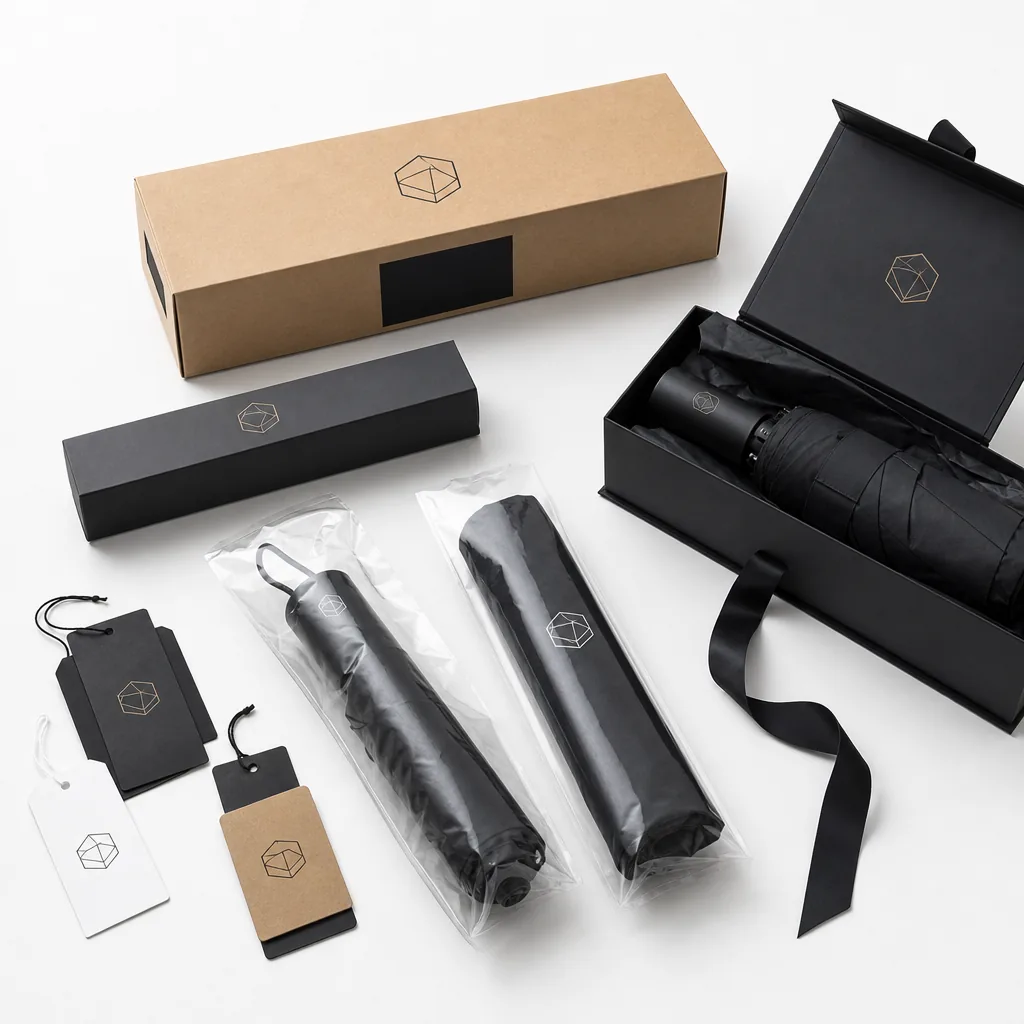
For umbrella importers, country-of-origin marking is not a paperwork detail; it is a customs, labeling, and liability issue that can stop a shipment if the mark is wrong, missing, or placed where buyers cannot find it. A country of origin umbrella must satisfy U.S. and EU marking rules based on how the product is assembled, not just where parts come from. On the factory floor, that means tracking each production step closely enough to prove when substantial transformation occurs and where the final origin mark belongs.
Why origin marking is mandatory
For a country of origin umbrella, the marking is not optional paperwork. US Customs requires imported goods to be marked with the English name of the country of origin so the ultimate purchaser can see it before buying, and the same basic principle applies in EU import and market-access practice: the buyer should not be misled about where the product was made. If the product is entered without a proper origin mark, customs can require relabeling, hold the shipment, or assess penalties. In other words, the origin statement has to be part of the product, not something buried in the invoice file.
On umbrellas, the umbrella origin label has to be placed where an end buyer can actually find it without guessing. A made in China umbrella marking is usually handled on a sewn-in label, a hang tag, the retail sleeve, or packaging, depending on the sales channel and the applicable customs marking rules. The key points are clarity, permanence, and readability after normal handling. A loose sticker that falls off in transit is weak. A printed card that gets separated from the product before the ultimate purchaser sees it is also weak. The standard is practical, not decorative: the umbrella COO label should survive warehouse handling and retail display.
The trap I see most often is mixing origin with brand, factory, or shipping information and assuming that is enough. It is not. Customs looks for the actual country of origin, not a logo, not a port, and not a distributor address. If components come from one country but substantial manufacture happens in another, the origin determination must follow the applicable rules for transformation, assembly, and finishing. For importers, this is a low-cost detail when designed correctly and a high-cost problem when ignored, because a bad marking decision can disrupt clearance, force relabeling at the port, and create a compliance issue for future orders.
Where the mark must appear on an umbrella
For a country of origin umbrella, the mark has to be on the product itself, not just on the carton or outer shipper. In practice, the cleanest options are a sewn-in label inside the canopy, a direct canopy print near a seam, or a permanent marking on the handle or sleeve. The key test under umbrella customs marking rules is simple: the buyer and customs officer should be able to find it without hunting, and it should stay readable through normal retail handling, folding, opening, and transport. A made in China umbrella marking that rubs off, peels, or disappears when the canopy gets wet will not hold up well in inspection.
A sewn-in umbrella origin label is usually the most reliable option for US and EU shipments because it survives abrasion and does not depend on ink adhesion to coated fabric. If you print the origin on the canopy, use a method that actually bonds to pongee, polyester, POE, or PVC, and place it where the panel does not stretch heavily, such as near the lower edge or close to a rib line. Handle embossing, sleeve printing, or a tag attached to the sleeve can work, but only if the umbrella COO label is treated as part of the retail unit and stays permanently attached. Temporary stickers and loose hangtags are weak choices because they can separate before the customer ever opens the box.
The rule I give buyers is to treat the marking as a durability problem, not a paperwork problem. If the label can be removed with a fingernail, washed off with a little moisture, or hidden once the umbrella is assembled, it is the wrong solution. For imported promotional umbrellas, the safest format is a clearly legible origin statement in English, placed on the canopy, inside seam label, or handle area, sized so it is visible without disassembly and fixed in a way that survives export packing and retail handling. That is the practical standard for a country of origin umbrella: visible, permanent, and attached to the unit that actually enters commerce.
How origin is determined: substantial transformation
For a country of origin umbrella, the rule is usually the last place where a real, irreversible manufacturing change happened, not where the cartons were loaded. In US practice, that is the substantial transformation test: if imported tubes, ribs, stretcher tips, canopy panels, and handles are all just being boxed in one country, that does not change origin. But if the frame is cut, drilled, riveted, assembled into a working mechanism, and then joined to a finished canopy in that same country, customs may treat that country as the origin. With umbrellas, the frame and final assembly matter more than a simple label swap or repacking, because the finished article has a new name, character, and use only after those operations are completed.
This is where umbrella customs marking rules get messy. A made in China umbrella marking is correct only if the last substantial transformation happened in China, even if some components were sourced elsewhere. If the steel shaft is from Vietnam, fiberglass ribs are from China, and the canopy is printed in Cambodia, the origin may still be China if the decisive assembly and finishing took place there. If you only attach a handle or add a hangtag in a third country, that usually does not move origin. Buyers should not confuse the umbrella origin label with component sourcing. Customs cares about where the completed umbrella became a finished product, not where each raw part happened to be made.
For EU imports, the same basic logic applies, but the paperwork and market expectations can be stricter because importers often need a clean origin statement for customs valuation, trade measures, and retail compliance. A country of origin umbrella claim should match the production record: cutting tickets, frame assembly logs, sewing records, and final inspection dates. If production spans multiple countries, the safest approach is to map each operation and identify where the last substantial transformation actually occurred. In practice, that means exporters should be able to explain why the umbrella COO label says one country instead of another, and support it with process evidence. If they cannot, the origin declaration is weak and can create clearance delays, relabeling costs, or penalties.
Marking duty and penalties for getting it wrong
For a country of origin umbrella sold into the U.S., the marking is not decorative, it is a customs requirement with money attached. If the umbrella arrives without a clear, legible, and permanent enough origin mark, U.S. Customs and Border Protection can treat it as improperly marked and assess a marking duty, often 10 percent ad valorem, until the issue is corrected or the goods are exported, destroyed, or otherwise resolved. That exposure is separate from normal tariff treatment, so a cheap mistake on the umbrella COO label can turn into a real landed-cost problem. In practice, the mark has to survive handling, storage, and retail unpacking; a sticker that falls off, an English-only description that omits origin, or a tag hidden inside packaging is not a reliable made in China umbrella marking for customs purposes.
The bigger risk is when the umbrella origin label is false, ambiguous, or placed to mislead the buyer. That can trigger detention, demand for re-marking under CBP supervision, seizure in serious cases, and penalties if Customs believes the importer knowingly declared the wrong origin or tried to obscure it. We see this most often when private-label programs mix components and someone assumes the finished goods can be marked from the component source instead of the last substantial transformation location; that is where umbrella customs marking rules get misread. The practical fix is simple: decide the origin before production, print or sew the mark where it will stay visible, and match the commercial invoice, carton marks, and product label so the country of origin umbrella declaration is consistent across the shipment.
Coordinating marking with branding artwork
The cleanest way to handle a country of origin umbrella is to design the marking into the label, hangtag, or sleeve artwork at the same time you approve the logo. If you treat “Made in ___” as an afterthought, it usually lands in the worst possible place: squeezed under a brand mark, pushed into a seam allowance, or printed so small that the customs inspector can still read it but your retail buyer hates the layout. For a made in China umbrella marking, I prefer building a dedicated text zone into the artwork file from the start, with enough clear space that the umbrella origin label remains legible after folding, stitching, or heat cutting. That matters on canopy sleeves, belly bands, retail cartons, and polybags, because each surface has different usable space and different visibility once the umbrella is packed.
The practical rule is to align the umbrella customs marking rules with the actual production method, not just the mockup. Screen print, woven label, heat-transfer, and paper swing tag all behave differently, and the umbrella COO label should be placed where it will survive abrasion, moisture, and repeated handling without covering brand graphics. On a folded 21" or 23" promotional umbrella, the origin statement often works best on the sleeve or inner label; on a retail auto-open-close style with a printed pouch, it may need to move to the carton or sewn-in label so it does not clash with the logo panel. For US and EU shipments, the cleanest files are the ones where artwork, packing spec, and marking copy are approved together, because that prevents last-minute relayout, reprinting, and delays at final inspection.
Frequently Asked Questions
Where should 'Made in China' appear on an umbrella?
It must be conspicuous, legible, and as permanent as the article allows — typically a sewn-in canopy label, a printed mark on the canopy or sleeve, or molded/printed on the handle. A removable hangtag alone is usually not sufficient.
If fabric is Chinese but assembly is elsewhere, what is the origin?
Origin generally follows the country where the last substantial transformation took place. Simple assembly may not change origin, so get a customs ruling before claiming a non-China origin on partially-sourced umbrellas.
Can the country of origin be shown only on the carton for umbrellas sold in the U.S. or EU?
Usually no for consumer retail. For U.S. imports, the origin should be marked on the article itself or on a container that reaches the ultimate purchaser only in limited cases. For EU retail, buyers typically expect the origin to be identifiable on the product or its retail packaging, not just the master carton.
If the canopy is sewn in one country and the frame is assembled in another, which origin applies?
Customs usually looks at where the last substantial transformation happens. If the umbrella is imported as major parts and the final assembly in the second country creates a new finished article, that country may be the origin, but documentation should support the process step by step.
How much time should a supplier budget for origin-marking changes on an umbrella order?
For a standard OEM order, label or print revisions usually add 3-7 days before mass production if artwork is already approved. If the marking changes require new woven labels, canopy printing plates, or packaging updates, plan for 7-15 days depending on the factory schedule.
Looking to Launch Your Custom Umbrella Line?
ZheBrella is a Zhejiang-based OEM/ODM umbrella manufacturer with 17 years of export experience. Free design, low MOQ from 100 pieces, windproof construction, full-color print.
Get Free Quote Now »People Also Search For
Related Articles
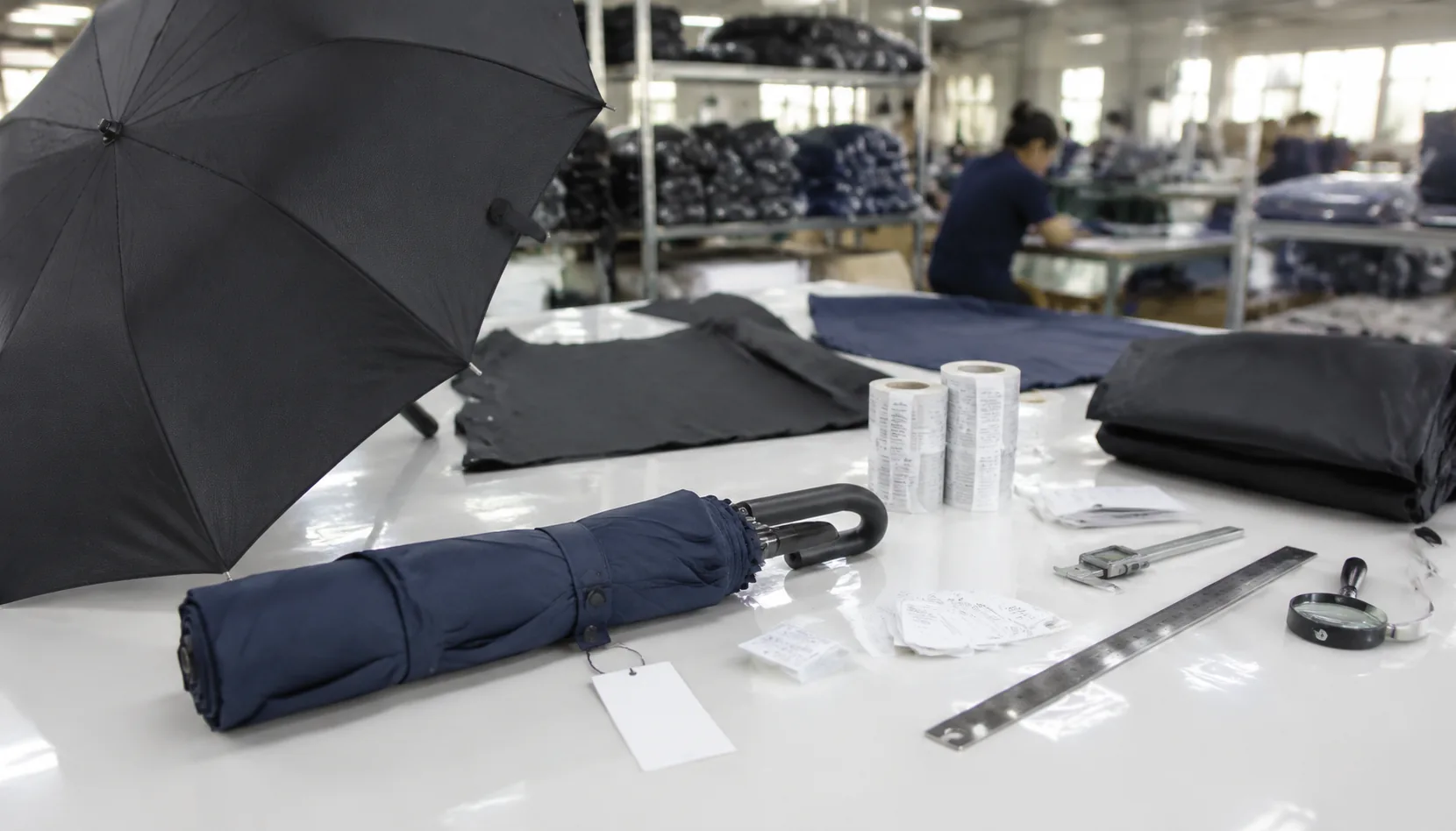
Private Label Umbrella Compliance Labels for US and EU Retail
Avoid retail chargebacks with correct umbrella labels, carton marks, barcodes, COO details, and inspection checks for US...
Read More »
Building a Private Label Umbrella Assortment for Retail
Plan a profitable private label umbrella line with SKU mix, rib counts, fabric grades, MOQ strategy, packaging, and FOB/...
Read More »How to Source Custom Umbrellas for Amazon and Retail Compliance
Build umbrella programs that fit Amazon and retail requirements, from labels and packaging to QC, carton specs, and comp...
Read More »