Custom Umbrella Programs for Apartment Communities and HOAs
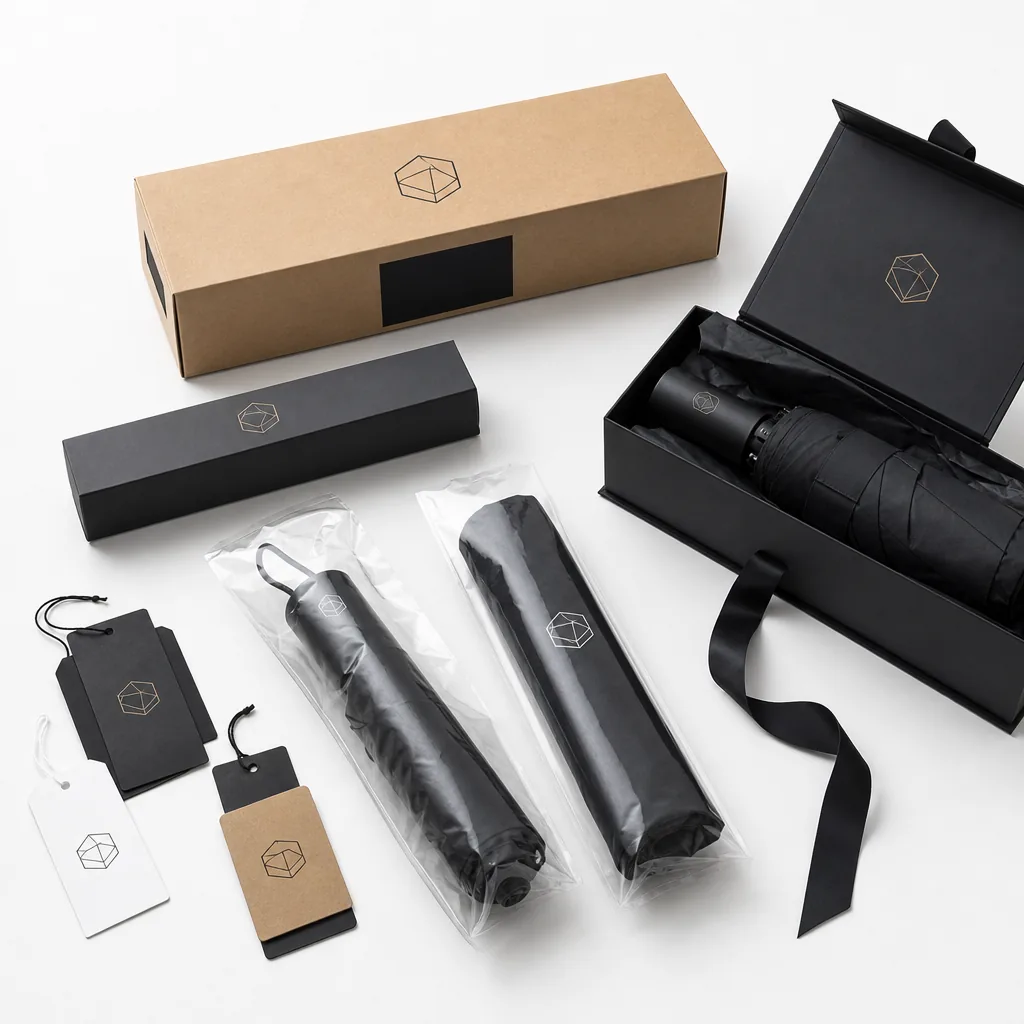
For property managers and HOA boards, umbrellas seem simple until the first storm exposes weak ribs, bleeding logos, and cartons that do not match leasing-office needs. A good program for apartment community umbrellas has to balance resident-gift appeal with tour-day reliability, concierge control, and event quantities. On our factory floor in Songxia, we see the difference in the details: frame gauge, fabric coating, print method, packing count, and replacement planning.
Map Umbrella Needs Across Residential Properties
Start by separating “kept on property” umbrellas from “given away” umbrellas, because the quantities and construction should not be the same. Leasing-office tours usually need 12 to 36 durable 23" auto-open stick umbrellas staged near the front desk, model units, and golf-cart parking; these get handled daily, so I prefer fiberglass ribs, 190T or 210T pongee, and a simple one-color screen print that survives cleaning. Resident welcome kits are different: for move-in, a compact 21" auto-open-close umbrella fits better in a tote or mailroom pickup shelf, and the logo can be smaller because the real value is utility. For apartment community umbrellas used as loaners, number each handle or sleeve so concierge staff can track returns instead of treating them like disposable giveaways.
Property type changes the order size more than most buyers expect. A 280-unit multifamily site may only need 300 to 500 branded residential umbrellas for annual move-ins plus 24 loaners, while a 900-bed student housing property may burn through 1,000 to 2,000 pieces before the first rainy semester if umbrellas are included in orientation kits. Senior living communities often order fewer pieces, sometimes 100 to 300, but should choose safer formats: 23" manual or soft auto-open models with rounded tips, lighter fiberglass frames, and high-contrast canopy colors for visibility near entrances. Gated communities and HOAs usually buy around meeting calendars, board elections, pool openings, or holiday events, so HOA amenity umbrellas may be better packed by event batch rather than all delivered to one storage room.
Map outdoor touchpoints before approving the spec. Shuttle stops, package lockers, pet-wash stations, pool-area events, and HOA meetings all expose umbrellas to different abuse: wind at open curbs, chlorine mist near pools, and rough storage in maintenance closets. For shuttle stops, use 27" vented double-canopy umbrellas with 8K or 10K fiberglass ribs if the site regularly sees 35 to 50 mph gusts. For pool and clubhouse events, lower-cost 23" pongee umbrellas work well as property management giveaways, but avoid cheap PVC unless the buyer specifically wants transparent canopies; PVC cracks faster in cold storage than POE or EVA. Our standard practice at ZheBrella is to build the first quantity plan by location count, resident turnover, and event calendar, then add 5% to 8% spare inventory for damage, lost loaners, and last-minute resident welcome gifts.
Choose Durable Specs for Shared and Personal Use
For resident welcome gifts, I would specify a 21-inch compact auto-open umbrella before I would buy a cheaper manual folding model. Residents actually carry compact umbrellas in a tote, glove box, or backpack, so the logo gets used outside the property. A practical build is 8K fiberglass ribs, a steel shaft, 190T pongee canopy, and a rubberized handle with a wrist strap. That combination keeps the unit light enough for daily use but avoids the brittle rib failures we see on low-cost all-steel frames after two or three windy storms. For apartment community umbrellas used as move-in gifts, auto-open is worth the small cost increase because one-hand operation matters when residents are carrying keys, boxes, or a child. If the program is positioned as premium resident welcome gifts, step up to 210T pongee with a Teflon-style water-repellent finish; the denser fabric sheds rain faster, dries cleaner in the hallway, and holds a screen-printed or heat-transfer logo with less show-through.
For leasing offices, concierge desks, golf carts, and model-home tours, 23-inch or 27-inch stick umbrellas are the better tool. A 23-inch canopy covers one person comfortably; a 27-inch canopy covers a leasing agent walking with a prospect or a doorman escorting a resident to a rideshare. I do not recommend a 16K frame for every property management giveaway because the extra ribs add weight and cost without much benefit for light personal use. But for shared lobby stock, 16K fiberglass construction is a good upgrade: more load points, smoother canopy tension, and better recovery after gusts. Steel ribs can look fine in a sample room, but they bend permanently when a guest flips the canopy in wind. Fiberglass ribs flex back, especially when paired with a double-canopy vented design rated around 50 mph in controlled wind-tunnel testing. For HOA amenity umbrellas, this is where the budget should go.
Expected lifespan is mostly decided by frame material, fabric density, and how the umbrella is handled after use. In our factory inspections, an 8K steel compact with 190T pongee is usually acceptable for one rainy season of occasional use, but it is not what I would put at a concierge desk where ten people may borrow it in a week. An 8K fiberglass compact with 190T pongee is a better baseline for branded residential umbrellas, while 210T pongee adds better hand feel, tighter weave, and improved resistance to seam stress around the tips. For shared stick umbrellas, use fiberglass ribs, a metal shaft of adequate wall thickness, reinforced tips, and either manual open or auto-open depending on staff preference; auto-open is faster, manual open has fewer moving parts. ZheBrella’s standard practice is to test opening cycles, rib recovery, seam slippage, and logo adhesion under AQL 2.5 before packing, because a failed umbrella reflects poorly on the property long after the invoice is forgotten.
Design for Property Branding Without Looking Generic
The fastest way to make apartment community umbrellas look cheap is to oversize the logo. For resident use, I usually recommend a 3.5–5 inch logo on one canopy panel for a 23 inch stick umbrella or 4–6 inches on a 30 inch golf umbrella; larger marks start to feel like event giveaways, not daily-carry items. Neutral canopy colors work better for apartments and HOAs than loud promotional colors: charcoal, navy, forest green, warm gray, sand, or black 190T/210T pongee with a matte finish. If the property has a strict brand book, match Pantone colors through screen print or heat transfer, but keep contrast practical so the mark remains readable after rain, sun exposure, and folding abrasion.
Good apartment community umbrellas can carry local identity without becoming cluttered. A neighborhood street map printed tone-on-tone on one or two panels, a building name on the tie strap, or a small resident-facing message like “Rainy day? We’ve got you covered.” feels more intentional than repeating the logo eight times. For HOAs, I would avoid putting individual homeowner names on the canopy because it complicates sorting and reorders; instead, use a shared association mark with optional sleeve labels by phase, tower, or clubhouse. Our standard practice at ZheBrella is to approve a full-size print proof before bulk production because thin map lines, small serif fonts, and metallic inks often behave differently on wet-coated pongee than they do on a PDF.
For leasing offices, the best property management giveaways are often packaged as resident welcome gifts rather than handed out loose from a carton. A custom sleeve label can show the building name, move-in date, emergency contact QR code, or neighborhood shuttle information, while the umbrella itself stays clean and useful. Luxury communities should upgrade the touch points residents actually feel: EVA or rubberized handles for rainy commutes, curved wood handles for boutique properties, or soft-touch straight handles on 27 inch and 30 inch branded residential umbrellas. For premium HOA amenity umbrellas used at pools, courtyards, and golf carts, fiberglass ribs and an auto-open frame are worth the extra cost because bent steel ribs create complaints faster than a slightly higher unit price.
Set Up Ordering for Portfolios and Regional Managers
Centralized ordering is the only clean way to manage apartment community umbrellas across a portfolio, especially when one regional manager may cover 12, 30, or 80 properties with different names and budgets. I usually recommend building one approved umbrella spec first—such as a 23" auto-open stick umbrella with 190T pongee, fiberglass ribs, steel shaft, rubberized handle, and one-color canopy print—then allowing each property to change only the logo panel or handle tag. That keeps frame tooling, fabric cutting, sewing, and AQL 2.5 inspection consistent while still supporting branded residential umbrellas for each community. If every property chooses its own size, canopy fabric, and mechanism, the purchasing team will lose control of price breaks and production timing.
Mixed-logo production is practical, but MOQ planning has to be done by frame and fabric, not just by logo. For example, a factory may accept 600 pieces total using the same 21" or 23" frame, with 100 to 150 pieces per property logo, because the canopy panels can be printed separately before sewing. For HOA amenity umbrellas or resident welcome gifts, this works well when the base canopy color is shared across all communities, such as navy, black, forest green, or white. Reorder triggers should be set before the rainy season, not after the leasing office runs out. For most U.S. portfolios, I’d flag replenishment when inventory drops below 25% by January for spring delivery, or by July for fall storm season.
Shipping method depends on how disciplined the property management company is with internal distribution. FOB Ningbo or Shanghai is usually better when the buyer has a U.S. warehouse, promotional-products distributor, or facilities hub that can consolidate cartons and allocate apartment community umbrellas by property code. It reduces per-unit freight cost and gives procurement one receiving point. DDP delivery to individual communities is easier for regional managers because cartons go straight to each leasing office or HOA clubhouse, but it requires accurate address lists, carton markings, and split-shipment planning before production closes. Our standard practice at ZheBrella is to label master cartons by property name, logo version, SKU, and quantity so warehouse teams do not have to open boxes to sort them.
Protect Quality, Safety, and Budget Consistency
Quality control for apartment community umbrellas should be written into the PO, not negotiated after production. For community-wide resident welcome gifts or property management giveaways, I recommend AQL 2.5 for major defects and AQL 4.0 for minor cosmetic issues, with a separate function check pulled from the finished-carton lot. We inspect canopy sewing for skipped stitches, loose thread at rib pockets, misaligned logo panels, and color deviation against the approved strike-off. Tip safety matters more than most buyers realize: every metal or plastic tip should be seated firmly, with no sharp burrs, cracked end caps, or exposed rib wire. For auto-open and auto-open-close models, the runner, spring, and shaft lock should be cycled repeatedly; a weak latch that passes once on the line can still fail after 20 openings in a leasing office.
Fabric performance has to match the use case. Standard 190T pongee with basic water-repellent treatment is acceptable for lobby loaners and move-in kits, but HOA amenity umbrellas around pools, clubhouses, and golf-cart parking areas often need 210T pongee with better coating consistency or POE/PVC clear panels when visibility is important. For stronger resident perception, specify Teflon water repellency or UV coating rated UPF 50+, especially on 23-inch and 27-inch models used in open parking lots. During inspection, we run simple spray testing for bead-off behavior, check for dye migration on dark prints, and verify that heat-transfer or screen-printed logos do not crack when the canopy is folded tightly around the frame. Apartment community umbrellas get handled by many people, so fiberglass ribs are usually worth the extra cost over thin steel when wind exposure is high.
Budget consistency depends on separating the program into clear tiers before artwork approval. A standard tier may be a 21-inch or 23-inch manual-open umbrella with 8K steel ribs, 190T pongee, one-color logo, and bulk carton packing for economical resident welcome gifts. A premium tier usually moves to 23-inch auto-open, fiberglass ribs, 210T pongee, color-matched handle, and sleeve printing, which fits branded residential umbrellas for stabilized Class A or Class B properties. An executive leasing gift can be a 27-inch double-canopy vented windproof model, 8K or 10K fiberglass frame, rubberized handle, UPF 50+ coating, and retail-style sleeve. Our standard practice at ZheBrella is to label master cartons by property name, city, SKU, logo version, and count per carton, so multi-site managers can receive FOB or DDP shipments without sorting mixed buildings in the leasing office.
Frequently Asked Questions
What is a practical umbrella MOQ for apartment communities?
Many custom umbrella programs start around several hundred units per design, depending on style and print method. Portfolio buyers can often combine property forecasts to reach better pricing while keeping separate logos by batch.
Which umbrella type is best for leasing tours?
A 23-inch auto-open stick umbrella with fiberglass ribs is practical for leasing staff because it opens quickly, looks professional, and covers two people better than a compact model.
What umbrella styles work best for different apartment and HOA use cases?
For resident welcome gifts, 42 to 46 inch compact or straight umbrellas are the most practical because they store easily and fit standard gift bags. For leasing tours and concierge desks, many property teams choose 48 to 54 inch auto-open straight umbrellas for better coverage and easier handoff, while pool and clubhouse areas typically use 7 to 9 foot commercial patio umbrellas.
What is a typical MOQ for a residential umbrella program with multiple community locations?
For custom handheld umbrellas, many factories quote MOQs starting around 100 to 300 pieces per style and color. If you need split shipments across several properties, buyers often consolidate one production run and then allocate cartons by location to keep unit costs lower.
How long should property managers plan for custom umbrella production before a resident event or lease-up launch?
A common timeline is 7 to 10 days for sample approval and 25 to 35 days for mass production after artwork confirmation. For patio umbrellas with custom canopies or bases, buyers should usually allow 35 to 50 days, especially before peak spring and summer shipping periods.
Looking to Launch Your Custom Umbrella Line?
ZheBrella is a Zhejiang-based OEM/ODM umbrella manufacturer with 17 years of export experience. Free design, low MOQ from 100 pieces, windproof construction, full-color print.
Get Free Quote Now »People Also Search For
Related Articles
Umbrella Programs for Multifamily Properties and HOAs
Create resident amenity and loaner umbrella programs with durable ribs, UPF 50+ options, logo rules, MOQ planning, and r...
Read More »
Branded Umbrellas for Apartment Communities and Leasing Teams
Build umbrella programs for leasing offices, resident gifts, and property tours with durable specs, smart order quantiti...
Read More »
Branded Umbrellas for Apartment and HOA Amenity Programs
Plan resident umbrella amenities with durable specs, MOQ choices, logo placement, and FOB/DDP timelines for apartments, ...
Read More »