Custom Umbrellas for Wineries, Breweries, and Tasting Rooms
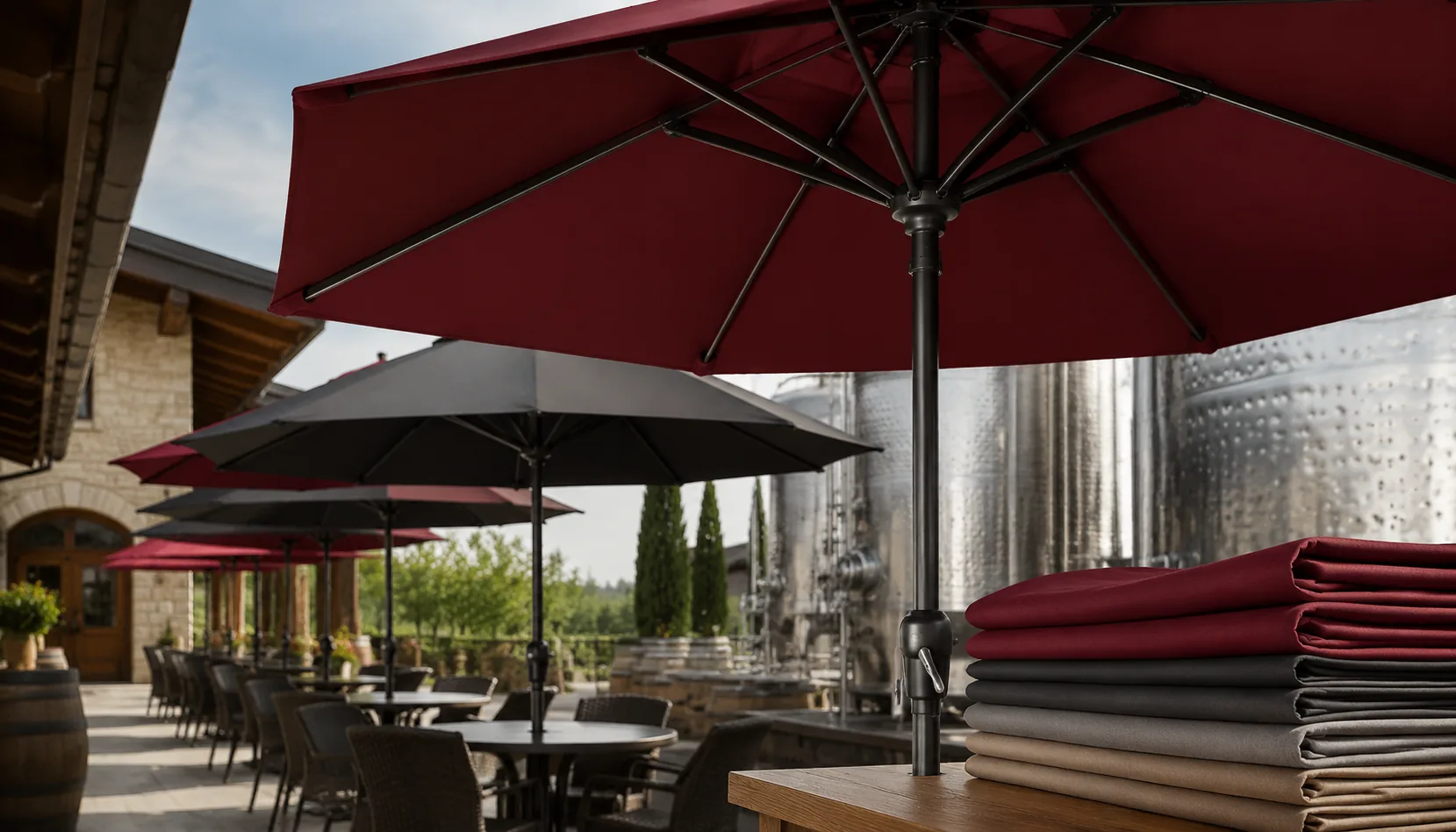
For wineries and breweries, an umbrella program has to do more than look good in photos—it needs to survive patio wind, vineyard dust, wet storage, and repeat handling by guests and staff. When buyers ask us for winery branded umbrellas, we start on the factory floor with frame strength, fabric weight, print method, packing, MOQ, and the delivery window, because those details decide whether the product works for tasting room retail, tours, and outdoor service.
Where Umbrellas Create Value in Beverage Venues
Large-format shade is a separate buying track from handheld umbrellas. Custom patio umbrellas for courtyards, beer gardens, crush-pad lunches, and outdoor tasting flights are typically 7.5 ft to 9 ft market umbrellas with heavier poles, vented canopies, and fade-resistant polyester or acrylic-style fabrics; they are not made on the same assembly line as 21" retail folders. Queue shade for festivals or release weekends may need branded golf umbrellas in 30" size, often 8K fiberglass with double-canopy venting so staff can keep lines moving in 30–40 mph gusts. Outdoor event sales also work well with bundled merchandise: a rain-ready 23" umbrella sold with a tote, bottle opener, or club signup incentive. Our standard practice at ZheBrella is to separate these orders by use case first, then quote MOQ, decoration method, and FOB/DDP lead time, because a patio shade program and a tasting-room retail umbrella have very different failure risks.
Retail Specs for Premium Beverage Branding
For winery branded umbrellas, I would not start with cheap 190T polyester if the product is going into a tasting room retail wall or wine-club gift box. The better retail spec is 210T pongee with a clean water-repellent finish, because it feels tighter in the hand, prints with sharper logo edges, and does not sound as thin when customers open it. For a premium beverage brand, the handle matters almost as much as the canopy: wood-look EVA, curved plastic with hydrographic grain, or real maple/bamboo handles all work better than glossy black J-handles. On a 23" stick umbrella, a wood-look crook handle with a matte gunmetal shaft gives a winery or craft brewery a more giftable feel without pushing cost into luxury territory.
Frame choice should follow the price tier, not just the catalog photo. For entry-level tasting room retail gifts, an 8K fiberglass rib frame is the safest baseline: lighter than steel, better at recovering from gusts, and still cost-controlled for MOQs around 300–500 pieces per color. For higher-ticket winery branded umbrellas or brewery merchandise umbrellas sold at $25–$45 retail, I would move to a 16K fiberglass frame, especially on 23" or 27" models where the extra ribs create a rounder canopy and more stable hand-feel. If the umbrella is meant for outdoor seating or custom patio umbrellas, separate the spec completely: use a 6.5 ft to 9 ft center-pole patio structure with heavier polyester or solution-dyed fabric, not a repurposed rain umbrella frame.
UV-coated UPF 50+ canopies are worth specifying for vineyard tour umbrellas, harvest festivals, summer release parties, and outdoor tasting flights. A silver UV backing gives the strongest sun block but can look too promotional; a black or color-matched UV coating keeps the product more retail-friendly while still blocking over 98% of UVA/UVB when properly tested. For tours, a 27" manual-open stick umbrella with 8K or 16K fiberglass ribs is easier for staff to control than auto-open-close folding models, and it gives enough shade for one guest plus a guide’s tasting notes. Our standard practice at ZheBrella is to confirm canopy coating, rib count, handle finish, logo placement, and AQL 2.5 inspection points before sampling, because beverage brands usually care more about finish consistency than shaving a few cents off FOB cost.
Design Directions for Wine and Craft Beer Brands
The best design direction starts from the bottle label, not from a generic merchandise template. For winery branded umbrellas, crest logos, estate sketches, vintage years, appellation marks, and label borders translate well onto 190T or 210T pongee because the fabric holds fine screen-print edges better than cheap polyester. I usually tell buyers to keep the outside canopy disciplined: one crest on two opposite panels, a repeating label-inspired pattern on the remaining panels, or a single large estate mark across one panel if the umbrella is meant for retail display. PMS color matching matters more than most people expect; burgundy, cream, foil-gold, matte black, and deep green all shift after coating, especially with Teflon water-repellent finish or UPF 50+ UV treatment. For brewery merchandise umbrellas, sharper contrast works better: hop illustrations, can art geometry, taproom icons, and seasonal release names read clearly on 23 inch or 27 inch canopies without looking like a trade-show giveaway.
Under-canopy artwork is where wine and craft beer brands can make the umbrella feel collectible rather than disposable. A vineyard map, barrel-room ceiling, fermentation tank pattern, tasting notes wheel, or illustrated hop field printed inside the canopy gives customers something they notice when the umbrella is open over a patio table or during a rainy estate walk. For vineyard tour umbrellas, I prefer fiberglass ribs over painted steel because guides open and close them all day, and a double-canopy vented windproof build survives gusts far better on exposed rows. Custom patio umbrellas need a different treatment: larger 6.5 ft to 9 ft panels, heavier polyester or solution-dyed fabric, and logo placement that faces the guest at table height, not just the drone camera. Woven labels on the tie strap, a small neck tag, or a branded runner insert add perceived value without overcrowding the main print area.
Limited-edition club designs should be planned like small production runs, not afterthoughts. A reserve wine club umbrella might use a 10K auto-open frame with a wood shaft handle, debossed logo, cream sleeve, and numbered woven label; a brewery anniversary drop might use an auto-open-close compact with can-label artwork and a matching sleeve. Tasting room retail gifts need packaging discipline because the sleeve is often what customers see first in a basket, behind the counter, or beside glassware and corkscrews. Our standard practice at ZheBrella is to confirm print placement with a panel layout file before sampling, then inspect color, seam alignment, logo orientation, sleeve fit, and opening force under AQL 2.5 before shipment. For mixed designs, keep MOQ realistic: combining four artwork versions on one 21 inch compact frame is easier than mixing different rib counts, handle molds, and coating specs in the same order.
Planning Quantities by Season and Visitor Flow
Forecast umbrella quantities from actual visitor peaks, not from a flat annual guess. A tasting room that sees 300 guests on a normal rainy Saturday and 1,200 during harvest festival weekends should split orders into two buckets: operational umbrellas for staff and guest movement, and retail umbrellas for sell-through. For winery branded umbrellas, I normally start with 3–5% of projected seasonal visitors for retail stock if umbrellas are a new item, then move to 8–12% after sell-through data proves the design. Rainy-season demand favors 21" or 23" folding auto-open umbrellas in 190T pongee because they fit handbags and tasting-room shelves. Vineyard tour umbrellas should be larger, usually 27" or 30" golf umbrellas with fiberglass ribs, EVA foam handles, and a vented double canopy if the property gets hilltop gusts above 35 mph.
Event timing changes the math. Harvest festivals, wine club pickup weekends, and outdoor concert nights create short, sharp demand where stockouts are more expensive than leftover inventory. If a winery expects 2,000 guests over a concert weekend, I would not produce only 100 pieces unless the umbrella is positioned as a premium tasting room retail gift at $28–$45. For broader giveaway or rain-rescue use, 300–500 pieces is safer. Brewery merchandise umbrellas often move faster when paired with seasonal beer releases, especially 23" auto-open models with bold screen printing. Custom patio umbrellas need a separate forecast because they are fixtures, not impulse merchandise; count table positions, add 10–15% spare canopies, and plan replacement tops before UV fading becomes visible.
MOQ and lead time should be locked before the event calendar is finalized. For most folding and golf umbrellas, practical MOQ is 300–500 pieces per design; custom patio umbrellas are often 50–100 pieces depending on frame size, pole finish, and canopy fabric. Pre-production samples usually take 7–12 days after artwork confirmation, longer if the buyer wants exact Pantone matching on 210T pongee, sublimation panels, or UPF 50+ coating. Bulk production should be planned 30–60 days ahead: 30–35 days for standard frames and screen print, 45–60 days for custom handles, heat-transfer logos across multiple panels, or mixed carton assortments for wine club shipments. Our standard practice at ZheBrella is to approve the sample, carton mark, and AQL 2.5 inspection checklist before cutting bulk fabric, because late artwork changes waste both fabric and calendar time.
Quality, Freight, and On-Site Distribution
Quality control has to be tougher for beverage programs because umbrellas are handled by staff, guests, and delivery teams before they ever reach the patio or retail wall. For winery branded umbrellas, I would not approve shipment without AQL 2.5 inspection on four points: print registration, rib strength, opening function, and export carton condition. On printed panels, we check logo position within a typical ±3 mm tolerance, ink adhesion after dry rub, and color drift against the approved Pantone or sublimation proof. Rib testing is separate: steel ribs should not deform at the stretcher joint, while fiberglass ribs must flex cleanly without splintering after repeated open-close cycles. For auto-open and auto-open-close umbrellas, inspectors cycle random samples 20–30 times to catch weak springs, sticky runners, or loose buttons before packing.
Carton durability is not paperwork; it decides whether tasting room retail gifts arrive sellable. A 23 inch 8K folding umbrella may look fine at final inspection, but if the master carton uses soft 5-ply board, crushed corners can damage handles, sleeves, and hang tags during LCL handling. Our standard practice at ZheBrella is to specify export cartons by gross weight, not habit: usually under 18–22 kg per carton for handheld umbrellas, with reinforced tape, inner polybags, and moisture protection when shipping during the humid Zhejiang summer. For custom patio umbrellas, carton checks include pole end protection, hub padding, finial separation, and drop resistance because one bent aluminum pole can make a full venue set unusable.
Freight terms should match the buyer’s import experience, not just the lowest unit quote. FOB Ningbo or Shanghai works well for experienced importers ordering brewery merchandise umbrellas by the container or consolidating with glassware, apparel, and POS displays; they control the forwarder, duty entry, insurance, and final trucking. Smaller winery groups, breweries, and multi-location tasting rooms often do better with DDP because one landed cost covers ocean or air freight, customs clearance, duty, and delivery to separate venues. That is especially useful when splitting vineyard tour umbrellas across an estate, downtown tasting room, event warehouse, and distributor office. The tradeoff is cost transparency: FOB gives more control, while DDP reduces internal workload and missed-delivery risk.
Frequently Asked Questions
Should wineries choose rain umbrellas or UV umbrellas?
Many wineries need both functions, so a 210T pongee canopy with UV coating and UPF 50+ is a strong option. It supports rainy tasting days and sunny vineyard tours without creating two separate SKUs.
What is a practical first order for a tasting room?
A first order often starts with 300-500 units per design if the factory MOQ allows it. Larger groups with multiple tasting rooms may consolidate to 1,000+ units for better unit pricing and freight efficiency.
What umbrella styles work best for winery and brewery retail shelves?
Compact folding umbrellas and 23-inch stick umbrellas usually sell best as tasting room gifts because they are easy to display and fit standard retail price points. Many buyers start with 500–1,000 units per design for retail merchandise.
Can one order include both retail umbrellas and large patio umbrellas?
Yes. A typical program can combine small branded rain umbrellas for resale with larger patio umbrellas for tasting room shade, but they may have different MOQs, packaging, and production timelines. Patio umbrellas often require longer sampling and freight planning due to size.
How early should a winery or brewery order umbrellas before peak season?
Plan 60–90 days before spring, harvest season, or major beer garden events. This allows time for artwork approval, pre-production samples, bulk production, quality inspection, and ocean or air freight delivery.
Looking to Launch Your Custom Umbrella Line?
ZheBrella is a Zhejiang-based OEM/ODM umbrella manufacturer with 17 years of export experience. Free design, low MOQ from 100 pieces, windproof construction, full-color print.
Get Free Quote Now »People Also Search For
Related Articles
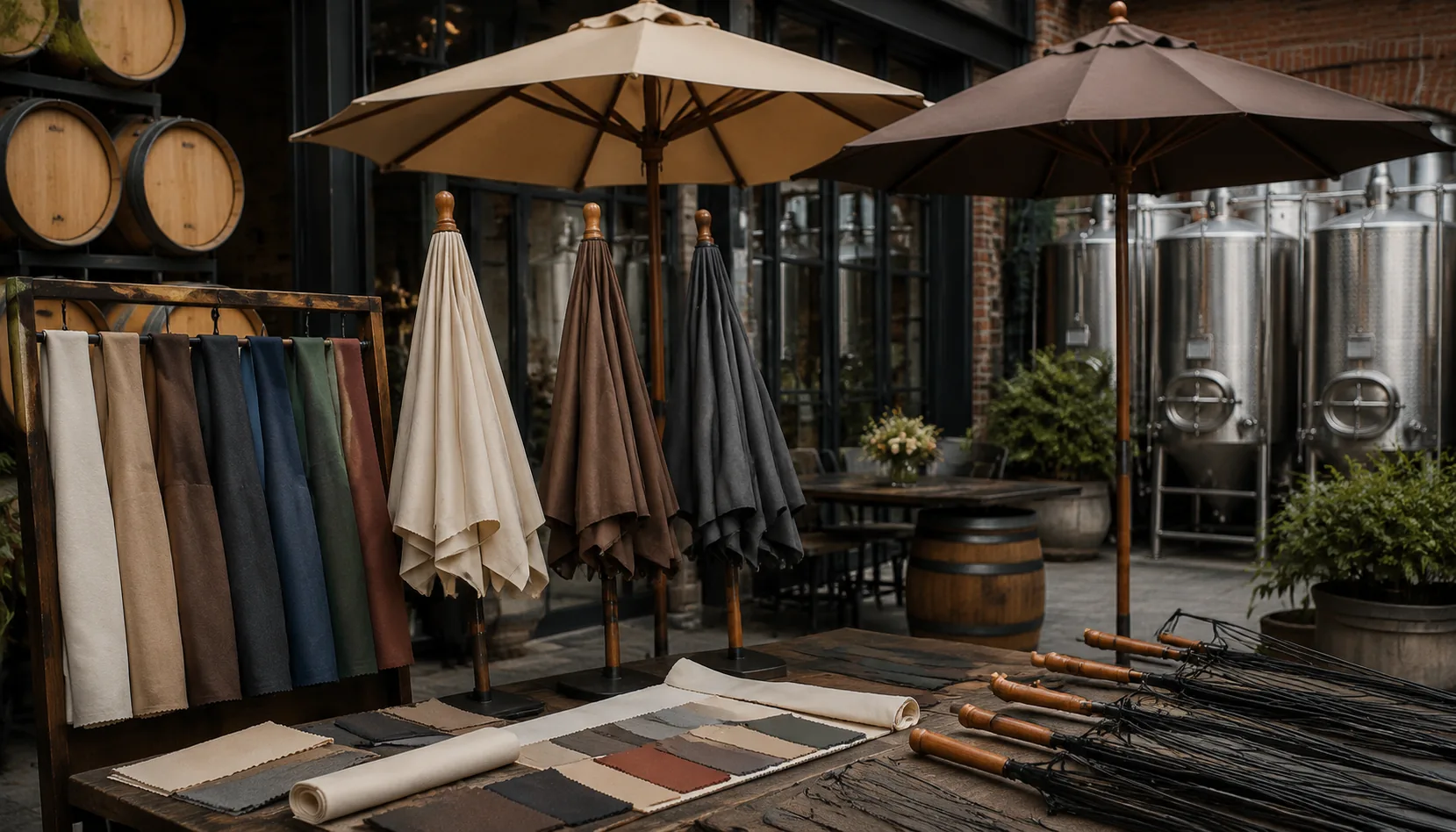
Branded Umbrellas for Wineries and Brewery Tasting Rooms
Build winery and brewery umbrella programs for patios, tasting rooms, and retail shelves with fabric, rib, UPF, packagin...
Read More »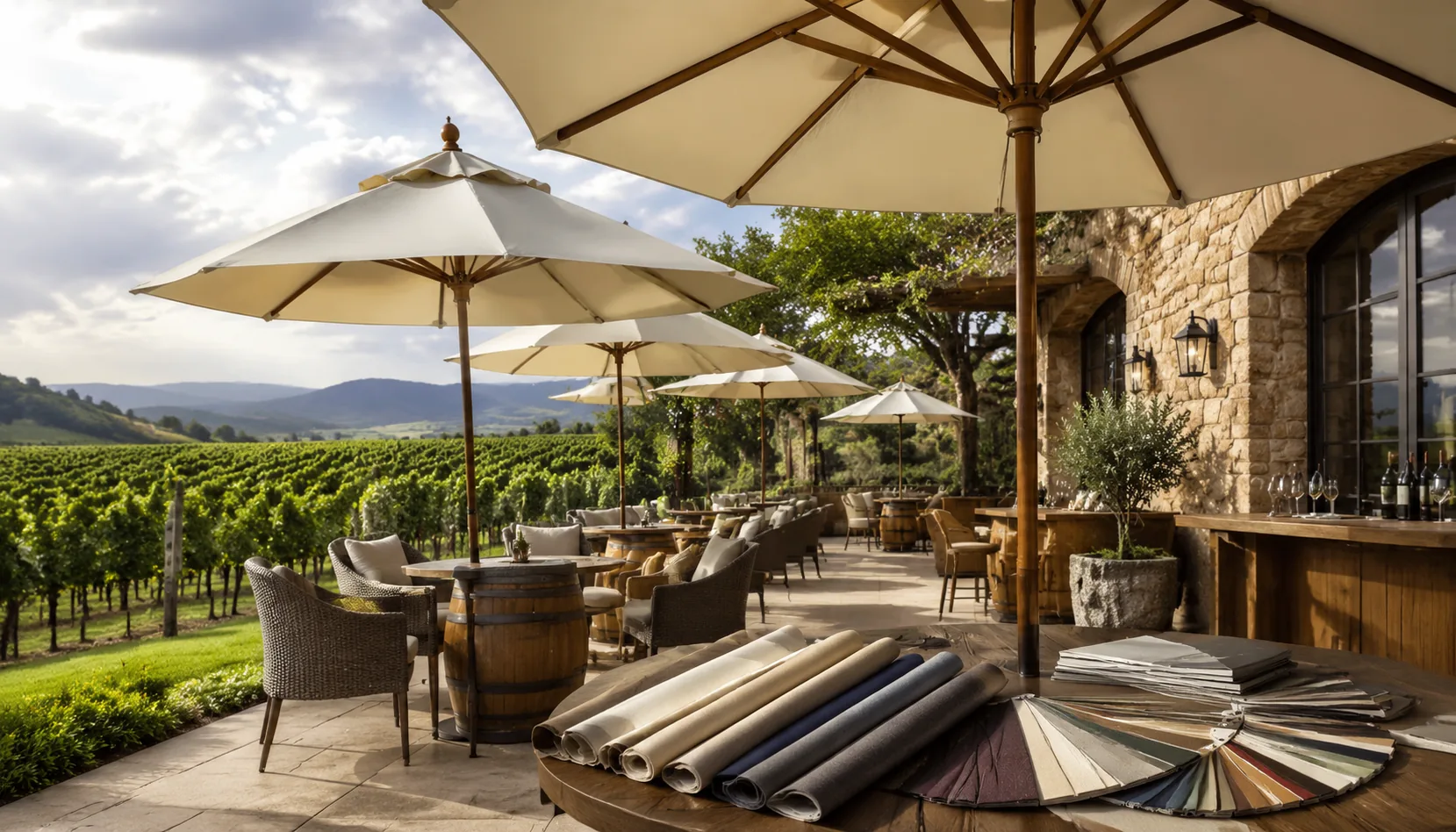
Custom Umbrella Programs for Wineries and Outdoor Tastings
Build winery umbrella programs for tasting rooms, wine clubs, and outdoor events with specs that balance shade, rain cov...
Read More »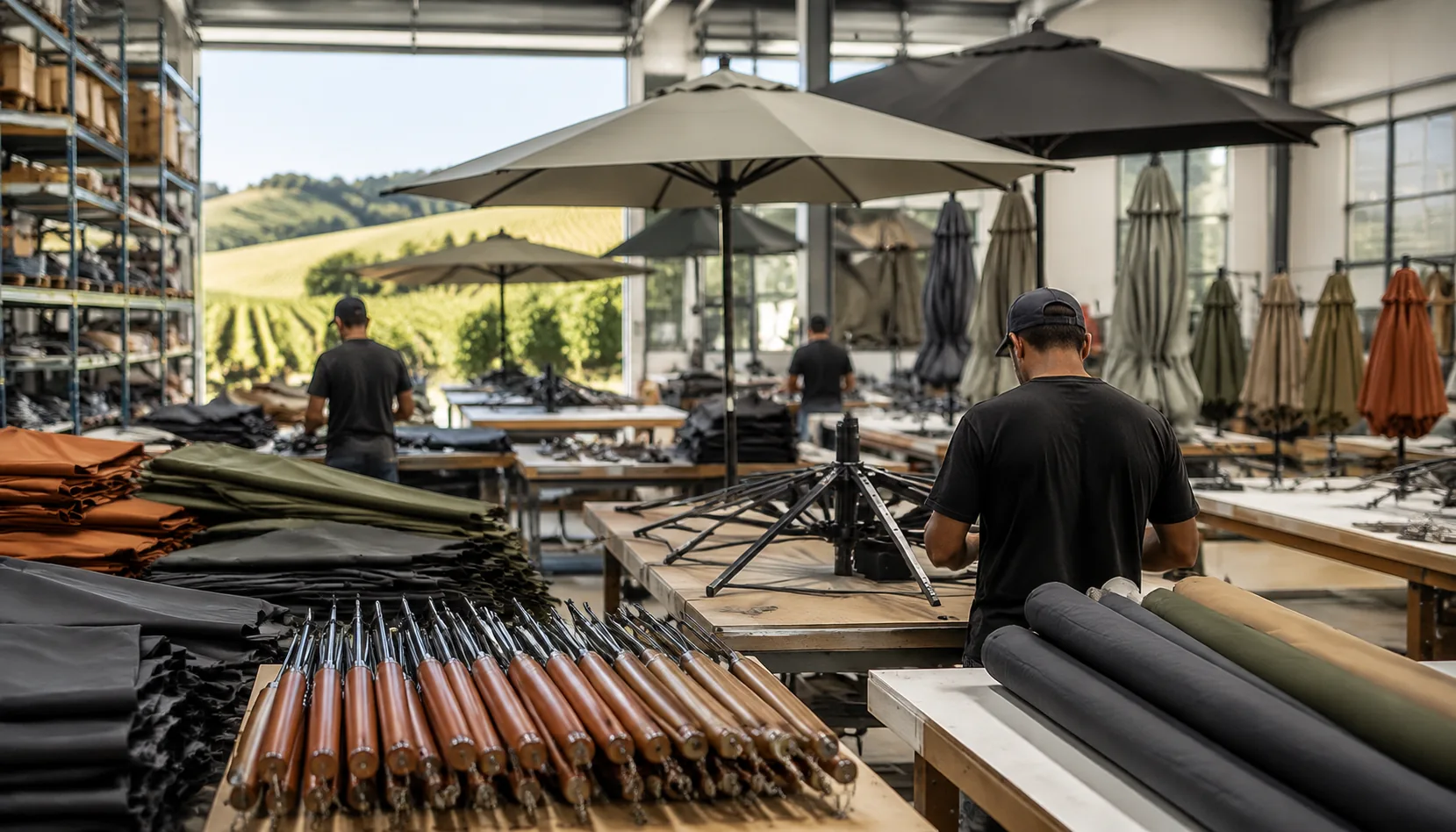
Branded Umbrellas for Outdoor Winery and Brewery Programs
Build winery and brewery umbrella programs for tasting rooms, patios, tours, and retail shelves with durable specs and p...
Read More »