Custom Umbrella Programs for Wineries and Outdoor Tastings
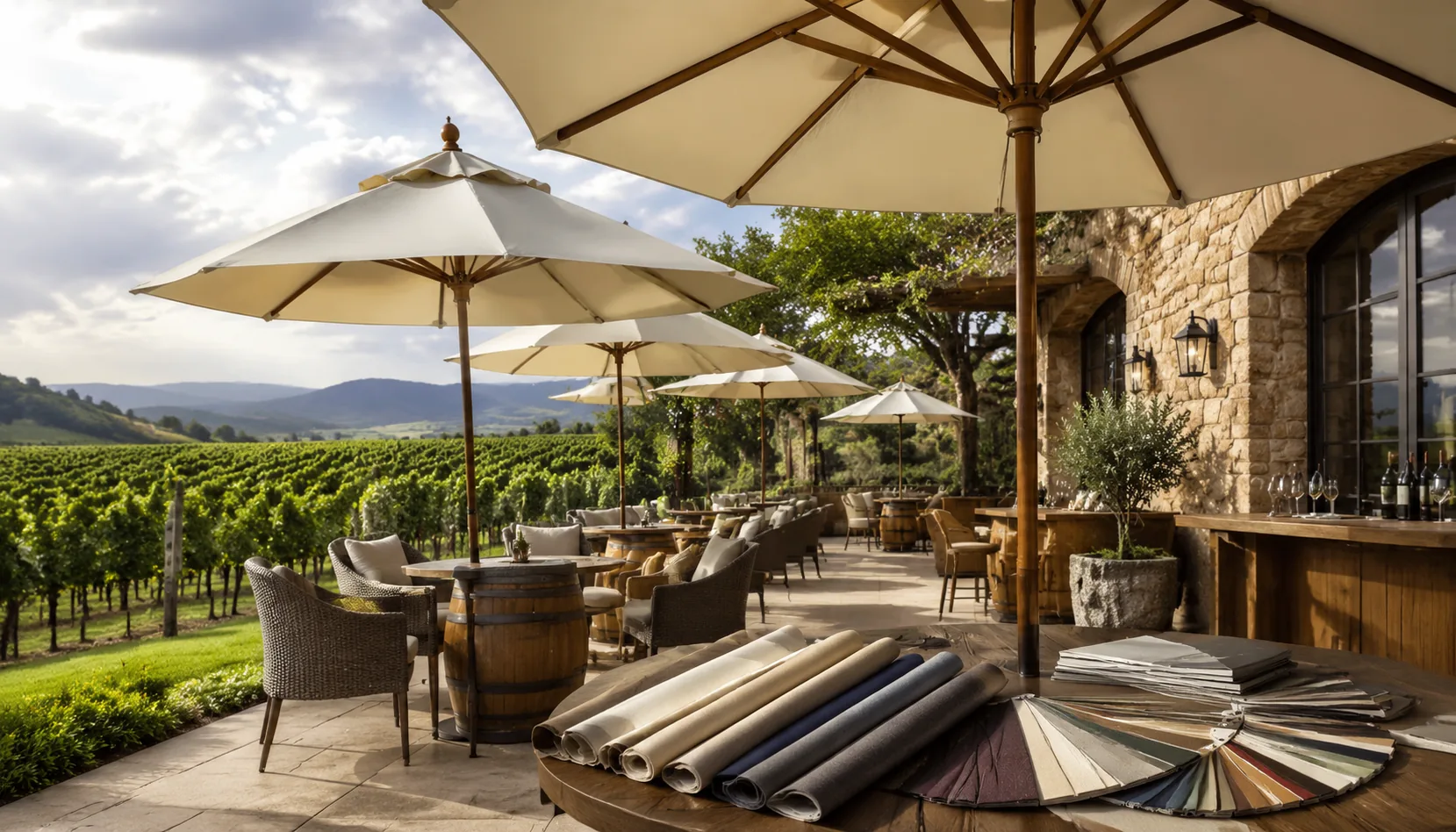
Outdoor tastings expose every weak point in an umbrella program: undersized canopies, frames that twist in vineyard gusts, prints that look dull beside premium labels, and packaging that does not fit retail shelves. When we build winery branded umbrellas on the factory floor in Songxia, we balance canopy diameter, rib strength, fabric coating, logo placement, and carton packing so the same program can serve tasting patios, wine club gifts, rainy event days, and high-margin shop displays.
Where Umbrellas Create Value for Wine Brands
The highest-value use for winery branded umbrellas is not emergency rain cover; it is controlled outdoor comfort that keeps guests on-site longer. A 7 ft or 9 ft patio umbrella over a tasting table, a 27" golf umbrella handed out for a vineyard walk, or a compact 21" auto-open umbrella sold near the register all solve different moments in the guest journey. For tasting room retail, I would avoid cheap 170T polyester and specify 190T or 210T pongee with clean panel sewing, because wine buyers notice hand feel the same way they notice label stock. Dark green, burgundy, cream, and black print better than bright novelty colors, especially with a one-color crest, estate map, or vintage-year graphic. A Teflon water-repellent finish and UV coating rated UPF 50+ make the product useful in both drizzle and strong afternoon sun, which matters in open terraces and hillside tastings.
Wine club gifts work best when the umbrella feels like part of the membership tier, not a leftover promotional item. For standard club shipments, a 23" auto-open umbrella with 8K fiberglass ribs is a practical balance of cost, pack size, and perceived value; for reserve or allocation members, a 27" double-canopy vented model with 10K fiberglass ribs can survive 50+ mph wind-tunnel testing when built correctly. Vineyard event umbrellas for harvest dinners, barrel weekends, and outdoor concerts should prioritize wind behavior over gimmicks: fiberglass ribs flex better than steel, vented canopies reduce inversion, and straight handles are easier for guests carrying glasses or picnic baskets. Logo placement should be disciplined. One large canopy panel, a woven label on the sleeve, or a printed tie wrap usually looks more premium than printing every panel like a trade-show giveaway.
Outdoor tasting merchandise has to pass two tests: it must look good in photos, and it must not fail in front of guests. At factory level, that means checking canopy tension, rib symmetry, runner lock strength, cap alignment, and print registration before shipment, not just counting cartons. Our standard practice at ZheBrella is to inspect custom umbrella orders under AQL 2.5, with special attention to color consistency across dyed fabric, screen print opacity, and heat-transfer edge adhesion. For wineries planning spring release weekends or harvest events, realistic production timing is usually 25–35 days after artwork approval for common 23" and 27" models, longer for custom PMS fabric, carved wooden handles, or retail packaging. MOQs often start around 300–500 pieces per design, and FOB Ningbo or Shanghai is usually cleaner for distributors, while DDP works better for tasting rooms without import experience.
Choose Specs for Shade, Rain, and Retail
For tasting room retail, the safest core SKU is usually a 23-inch stick umbrella: big enough for two guests walking from parking lot to patio, but not so bulky that it feels like golf merchandise. I would spec 8K fiberglass ribs, a steel or fiberglass shaft depending on target price, manual or auto-open, and 190T pongee for entry retail or 210T pongee when the handle and logo execution need to feel premium. For winery branded umbrellas sold near the register, straight handles in EVA, rubberized ABS, or stained wood all work, but the handle must match the wine brand’s price position. A cheap plastic crook handle under a reserve-label logo looks wrong. For sun-heavy patios, add a silver or black UV coating tested to UPF 50+; untreated pongee blocks some light but will not give buyers a credible sun-protection claim.
Compact travel umbrellas fit wine club gifts and shipment inserts better than daily patio use. A 21-inch 3-fold auto-open-close frame packs into a gift box, club member tote, or seasonal mailer without freight getting silly, but it has less canopy depth and less visual impact at events. I prefer 8K fiberglass-and-steel hybrid ribs for compacts; full steel is cheaper but bends after repeated gusts, while all-fiberglass can make the folded diameter too thick. Use 190T pongee if the budget is strict, 210T if the club gift is positioned above a basic promo item. Heat-transfer logos are clean for small canopies, while screen printing is more economical for one- or two-color crests. For outdoor tasting merchandise, ask for a real packed size and weight sample, not only an open-canopy rendering, because the gift experience happens when the customer first holds the sleeve.
Open vineyard sites need more frame, not just more fabric. A 30-inch golf umbrella, especially a 8K or 10K fiberglass frame with a double-canopy vent, is the right choice for vineyard event umbrellas, shuttle pickup points, wedding lawns, and staff use during harvest-weekend traffic. The vent lets wind bleed through the canopy instead of flipping it; in our standard practice at ZheBrella, a serious windproof golf model should survive 50+ mph wind-tunnel testing when the rib joints, runner, and tips are correctly matched. For winery branded umbrellas used as sponsor pieces at tastings, 210T pongee with Teflon water-repellent finishing gives better hand feel and faster dry-down than low-grade polyester. The downside is retail footprint: 30-inch umbrellas take more storage space, cost more to ship FOB or DDP, and are harder to display behind a small tasting bar, so reserve them for events, VIP gifts, and hospitality operations rather than broad counter sales.
Design Details That Match Premium Packaging
Premium wine buyers notice when the umbrella looks like a leftover promo item, so start the design from the bottle label, not from a generic template. For winery branded umbrellas, muted palettes usually work better than loud solids: charcoal, warm taupe, olive, deep burgundy, cream, navy, and washed black print cleanly on 190T or 210T pongee without fighting the label art. If the winery uses foil stamping, embossed crests, or textured paper on bottles, translate that into restrained canopy placement: one logo panel, a small estate mark on the opposite panel, or a border line that echoes the label frame. On 8K or 10K frames, I prefer keeping large artwork away from rib seams because registration tolerance across cut panels is never as perfect as a flat proof. For vineyard event umbrellas, seasonal collections can use subtle panel changes: rosé season in pale clay, harvest events in moss green, reserve tastings in matte black with a cream logo.
Hardware matters because guests hold the umbrella longer than they study the canopy. Wood-look EVA or coated plastic handles are common, but real wood handles give better weight and a more premium retail feel if the budget allows it. On 23-inch and 27-inch straight umbrellas, a curved wood-look J handle pairs well with tasting room retail displays, while compact 21-inch auto-open-close models need a shorter straight handle to avoid looking bulky. Woven labels are a useful upgrade when the brand wants texture: sew a small label into the sleeve seam or wrap it near the tie strap, then keep canopy printing quiet. Sleeve printing is often underused; a sleeve with the estate name, AVA, vintage-inspired pattern, or wine club tier mark makes the product feel packaged even before a gift box is added. Our standard practice at ZheBrella is to confirm handle color, sleeve print position, and label fold style before sampling because those details are expensive to correct later.
Gift presentation should be planned early, especially when umbrellas are used as wine club gifts or outdoor tasting merchandise. A kraft gift box with one-color printing fits rustic estates, while rigid black or cream boxes suit reserve clubs and corporate tasting events. If the umbrella is bundled with a bottle shipment, confirm carton dimensions and weight before approving a 27-inch model; freight surprises can erase the margin on a premium giveaway. Wine club tiers can be separated by construction as well as artwork: manual-open steel ribs for entry-level gifts, fiberglass 8K or 10K windproof frames for mid-tier members, and double-canopy vented models for top-tier allocations or outdoor terraces. For winery branded umbrellas, the cleanest programs usually use one shared frame and change canopy color, sleeve artwork, and box label by season. That keeps MOQ manageable, shortens lead time by several days, and still lets the buyer connect the umbrella to spring releases, harvest dinners, or holiday gift sets.
Quality Requirements for Outdoor Hospitality Use
For outdoor hospitality, the frame matters more than the logo. I would not put steel-only ribs into tasting patios unless the buyer accepts bent returns after one windy weekend; fiberglass ribs or fiberglass-reinforced ribs are the safer specification for winery branded umbrellas used around vineyard tables, lawn seating, and valet areas. A good hospitality build is usually 8K or 10K fiberglass on a 23" or 27" model, with a vented double canopy if the site sees open-field gusts. For larger vineyard event umbrellas, 30" golf sizes with fiberglass shaft, flexible ribs, and tested recovery after inversion are worth the extra cost. We normally check wind performance against practical targets, such as stable opening, rib recovery, and no runner failure after repeated gust simulation around 40–50 mph, rather than relying only on catalog claims.
Guest convenience is not cosmetic; it changes how staff handle the umbrellas during service. Auto-open mechanisms are preferred for tasting room retail and host stands because guests can open the umbrella one-handed while holding wine, a tote, or a reservation card. The spring, runner, and safety notch must be cycled before approval, because cheap auto-open systems feel fine for 20 tries and start sticking after 200. Reinforced tips are also non-negotiable for repeated event handling: metal or high-grade plastic tips should be securely bar-tacked or capped so they do not pull loose when staff bundle umbrellas into bins after an outdoor tasting. For wine club gifts, I would pair a 190T or 210T pongee canopy with Teflon water-repellent coating, because it dries faster, looks more premium than basic polyester, and takes screen or heat-transfer branding cleanly.
Inspection should be written into the purchase order, not discussed after defects appear. Use AQL 2.5 for major defects, with checks on rib alignment, runner locking, handle bonding, tip reinforcement, print registration, canopy stains, skipped stitches, and carton packing. Water-repellency should be tested on approved samples and again during production: spray testing should show beading without immediate wet-through, especially on darker wine-brand colors where staining is obvious. Before mass production, approve one pre-production sample with final fabric, frame, handle, logo size, and packaging; do not approve from a blank frame sample and a separate print swatch. For outdoor tasting merchandise, I also recommend carton drop checks and random open-close cycling from packed goods, because damage often comes from transport compression rather than sewing. This keeps winery branded umbrellas suitable for guest use, resale, and event inventory rotation.
Order Planning for Seasonal Winery Calendars
Seasonal winery calendars punish late umbrella orders because the demand spikes are predictable: spring release weekends, May–September patio tastings, fall harvest events, and November–December gifting. For winery branded umbrellas, I would lock artwork and structure 75–90 days before the first event if you need custom canopy colors, printed panels, or gift-box packing; 45–60 days can work for repeat orders using stock 190T pongee in black, navy, burgundy, or forest green. A normal production split is 20–25 days for sampling and approvals, 25–35 days for bulk production, then 3–6 days for China port handling under FOB Ningbo or Shanghai. Air freight can rescue a launch, but it turns a practical tasting room retail item into an expensive emergency. For summer programs, order by February or March; for harvest and holiday wine club gifts, confirm by late July so cartons are not competing with peak Q4 export congestion.
MOQ depends more on frame and print method than the word “custom.” A basic 23" auto-open stick umbrella with steel shaft, fiberglass ribs, 190T pongee canopy, and one- or two-panel screen print can usually be planned from 300–500 pieces per design. A premium 27" or 30" golf umbrella, double-canopy vented windproof, 8K fiberglass frame, Teflon coating, and UPF 50+ treatment should be treated as a 500–1,000 piece program if you want stable pricing and clean QC under AQL 2.5. Mixed-color assortments are smart for tasting rooms: for example, 40% burgundy, 30% black, 20% cream, 10% olive, all carrying the same logo screen. That keeps shelf presentation fresh without forcing four separate artwork setups. Vineyard event umbrellas should prioritize wind resistance over novelty; a cheap steel-rib stick umbrella may look fine indoors but fail fast on an exposed patio at 35–50 mph gusts.
Inventory allocation should be decided before production, not after cartons arrive. For a 1,000-piece run, a practical split might be 350 units for tasting room retail, 250 for outdoor tasting merchandise at spring and summer events, 300 reserved for wine club gifts, and 100 held back for breakage, VIP replacements, or late-season bundles. If member shipments are involved, specify barcode stickers, individual polybags, carton marks by allocation, and inner carton quantities such as 12 or 24 pieces so the 3PL does not waste labor repacking. FOB works when your team already consolidates wine accessories or retail goods; DDP is cleaner for smaller wineries that need landed cost certainty to Napa, Sonoma, Willamette Valley, or Finger Lakes warehouses. Our standard practice at ZheBrella is to quote both: FOB for buyers with freight leverage, DDP for teams that need one number covering duties, trucking, and delivery timing. For holiday drops, avoid mixed SKUs inside the same export carton unless your fulfillment center specifically asks for it.
Frequently Asked Questions
Should wineries choose UV umbrellas or standard rain umbrellas?
For outdoor tastings, UPF 50+ fabric adds value because guests need shade as much as rain protection. A 210T pongee canopy with UV coating gives a more premium retail feel.
What MOQ is practical for a winery umbrella program?
Many wineries start with one core design at factory MOQ, then split inventory between tasting room retail and wine club gifts. If multiple wine labels need separate artwork, consolidate specs to protect pricing.
What umbrella styles work best for winery tasting rooms and outdoor tastings?
Compact folding umbrellas are practical for tasting room retail, while 23-inch stick umbrellas or golf umbrellas work better for outdoor tastings and vineyard tours. For patios, larger branded market umbrellas are typically ordered separately because they use different frames, fabrics, and packing.
What MOQ should wineries expect for custom branded umbrellas?
Most custom handheld umbrella programs start around 500 pieces per design, with lower MOQs sometimes possible for simple logo printing on stock colors. Fully custom fabric colors, edge printing, or retail packaging usually require higher quantities and longer sampling time.
How long does production take for winery umbrella programs before event season?
Allow about 25–45 days for bulk production after artwork and pre-production sample approval. For spring or harvest-season events, importers should add ocean freight time and confirm final specs at least 8–12 weeks before the target delivery date.
Looking to Launch Your Custom Umbrella Line?
ZheBrella is a Zhejiang-based OEM/ODM umbrella manufacturer with 17 years of export experience. Free design, low MOQ from 100 pieces, windproof construction, full-color print.
Get Free Quote Now »People Also Search For
Related Articles
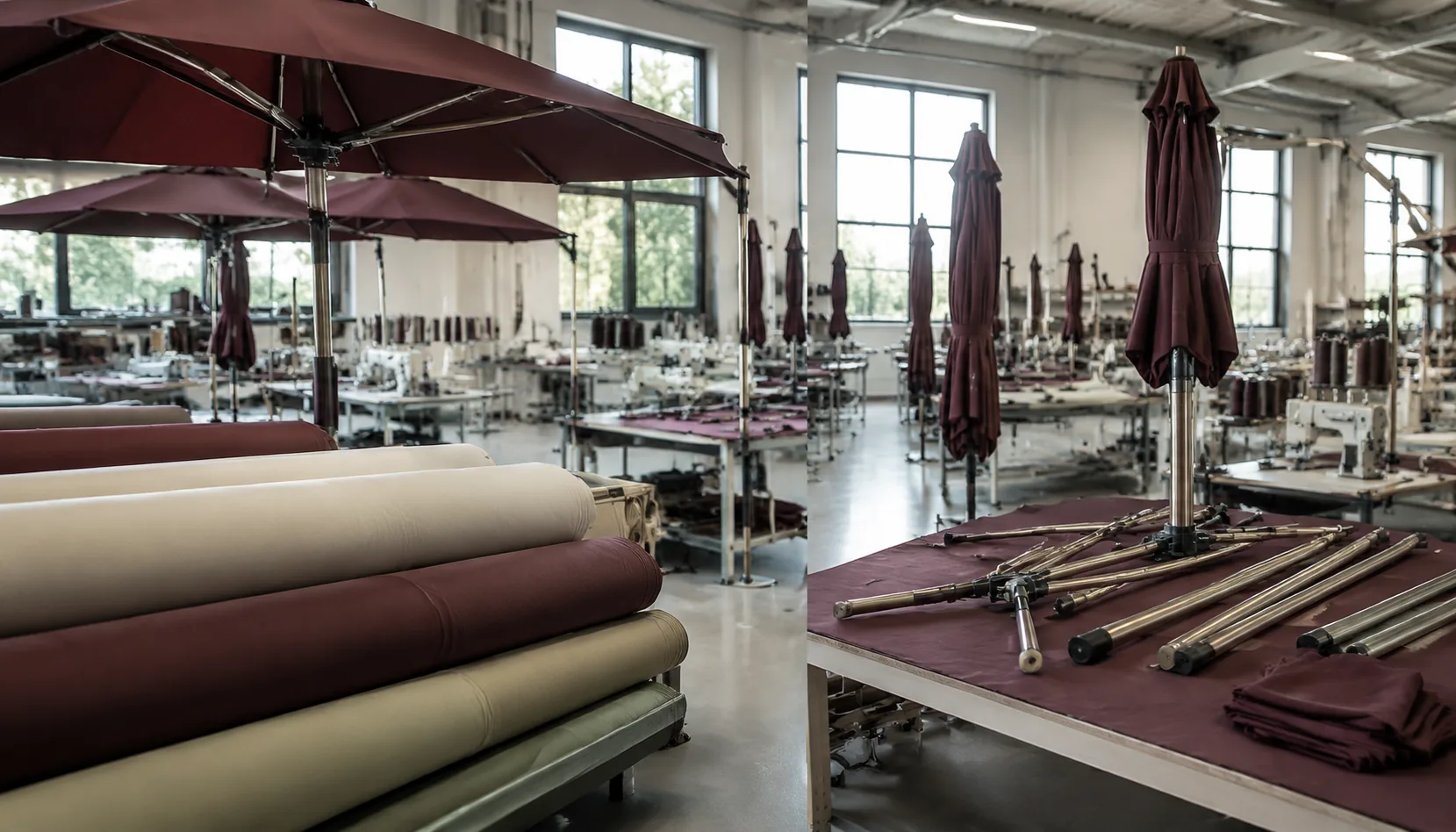
Custom Umbrellas for Wineries and Vineyard Hospitality
Build winery umbrella programs for tasting rooms, wine clubs, and vineyard tours with durable specs, premium branding, a...
Read More »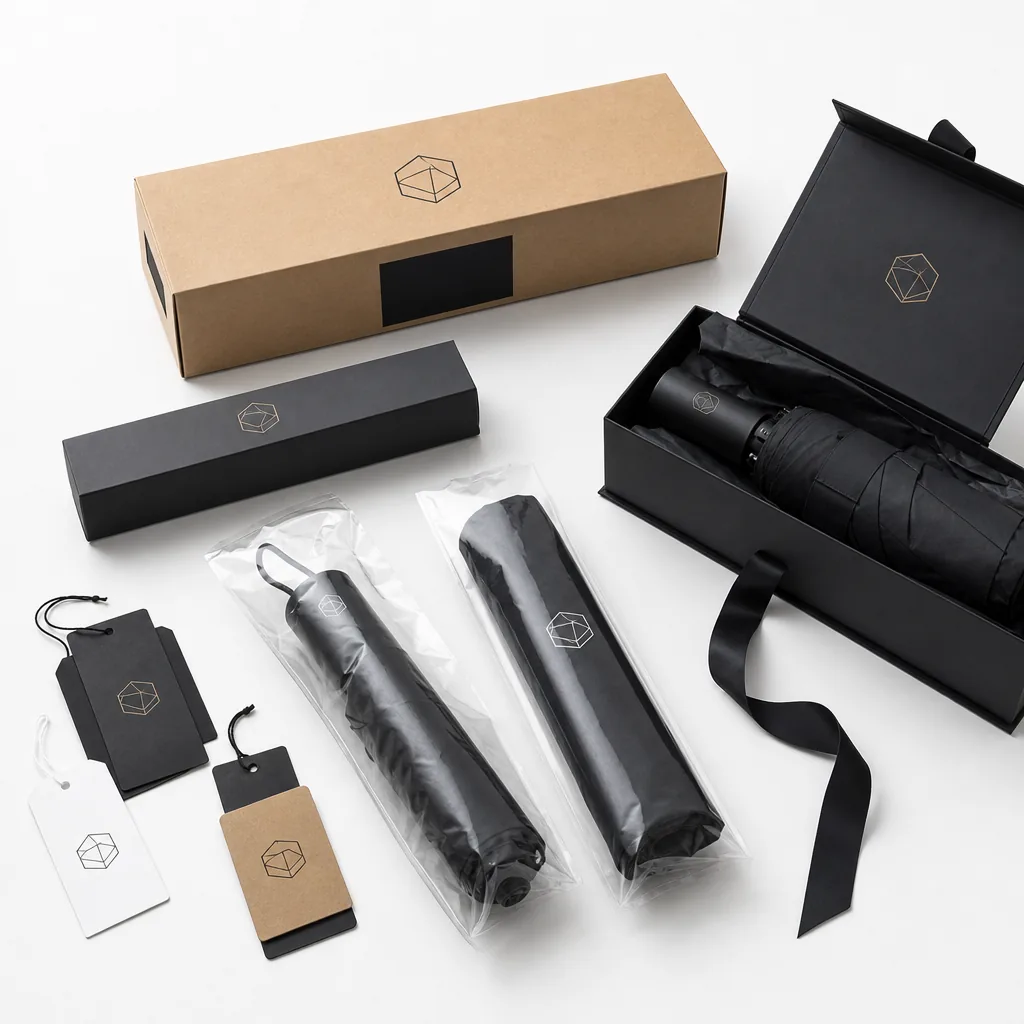
Umbrella Programs for Wineries, Breweries, and Outdoor Tastings
Build winery and brewery umbrella programs with canopy specs, wind resistance, UPF options, MOQs, and packaging for tast...
Read More »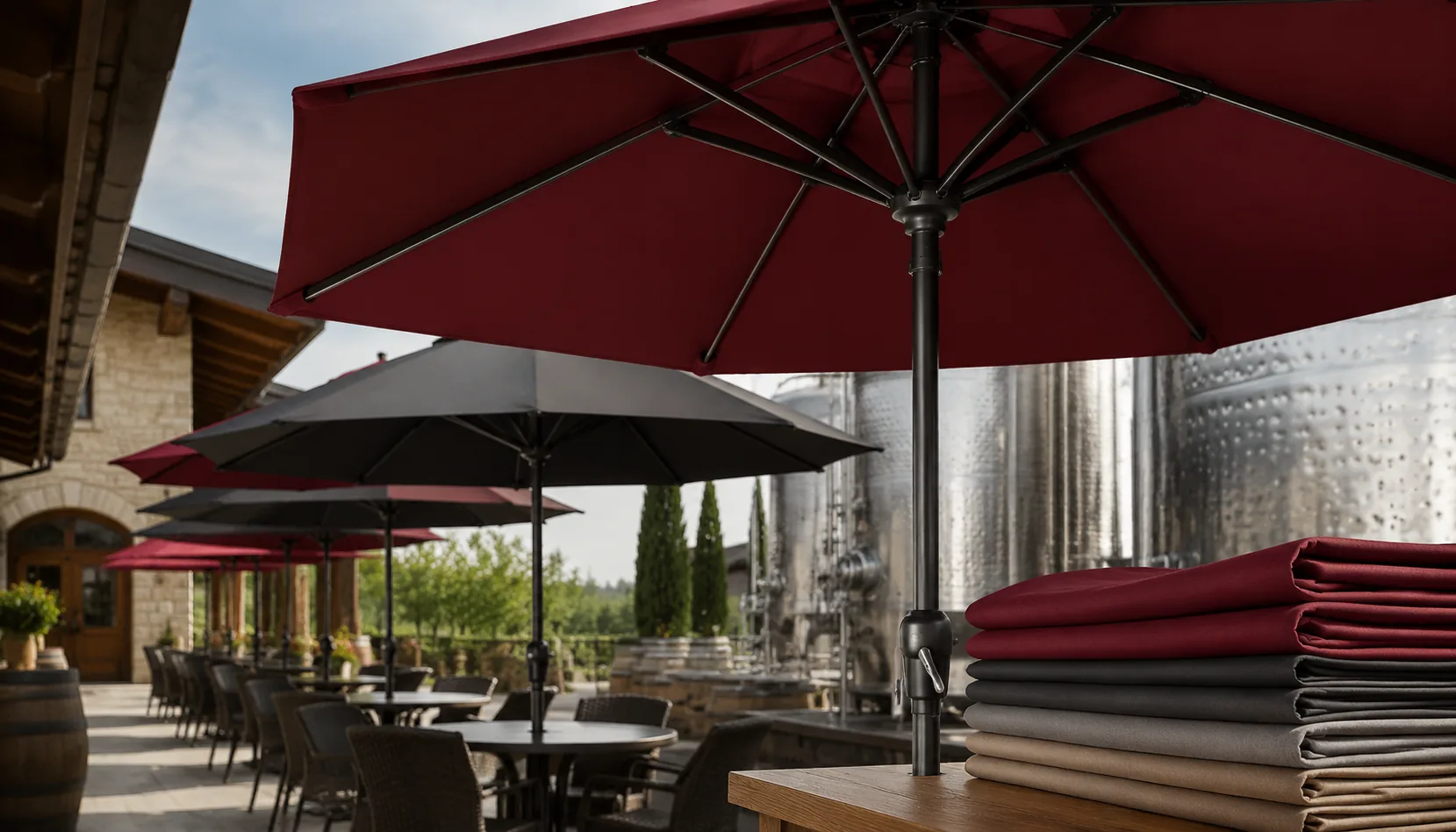
Custom Umbrellas for Wineries, Breweries, and Tasting Rooms
Build umbrella programs for wineries and breweries, covering tasting room retail, vineyard tours, patio shade, specs, MO...
Read More »