Hotel Guest-Room Umbrellas: Spec Guide for Bulk Programs
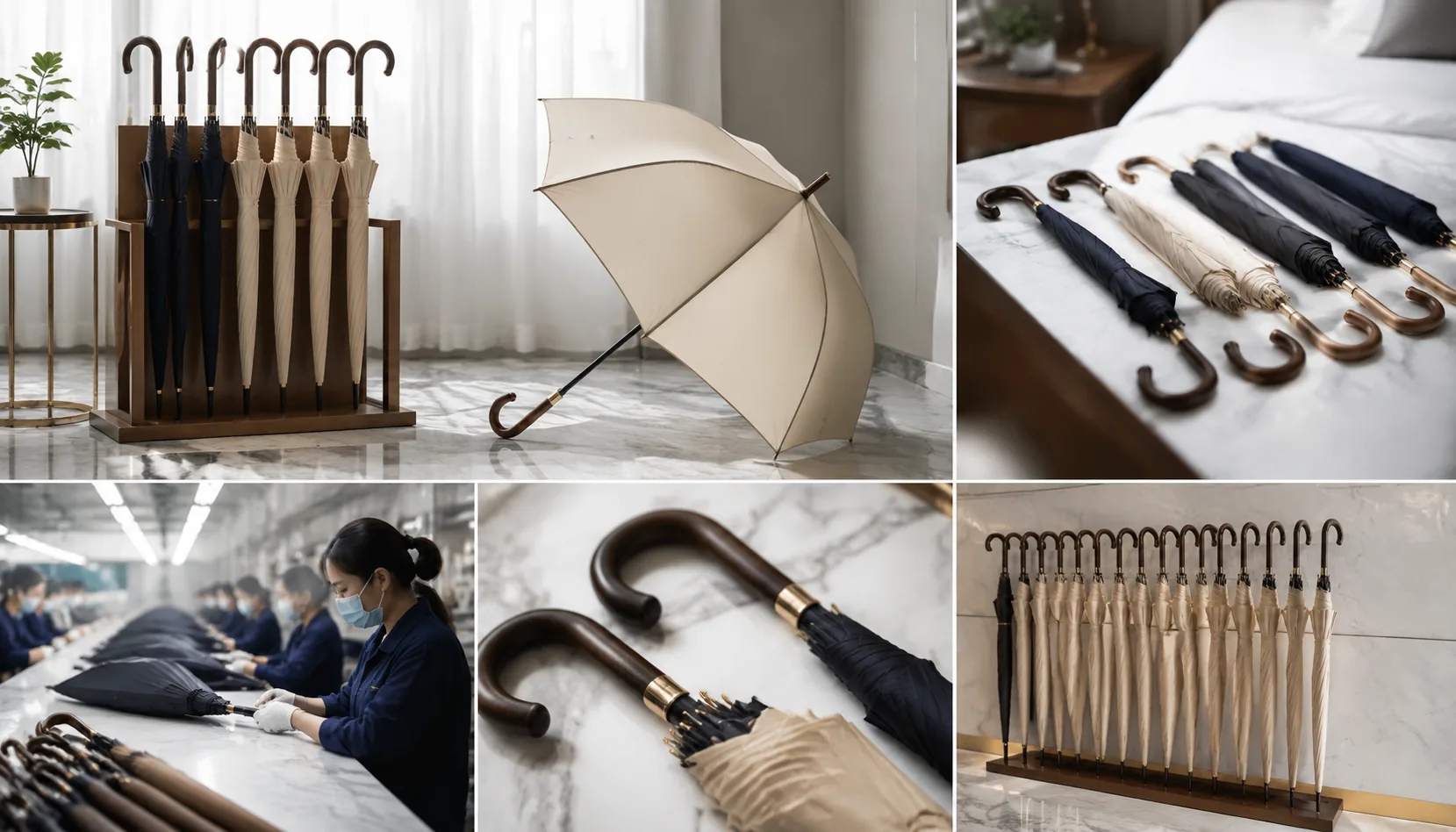
For hotel buyers, umbrellas look simple until guest complaints, bent ribs, color drift, or late replenishment expose weak specs. On our Songxia production floor, the best bulk programs for hotel guest room umbrellas usually start with a 23–25 inch frame, fiberglass ribs, 190T pongee, controlled logo placement, realistic MOQ planning, and QC checks that match how housekeeping actually issues and recovers each unit.
Define the Hotel Use Case Before Choosing a Frame
Start by separating the program into three buckets: guest-room placement, lobby-loan stock, and concierge or doorman use. For in-room hotel guest room umbrellas, I usually recommend a 23" or 25" straight umbrella with 8K fiberglass ribs, a steel or fiberglass shaft, and 190T pongee canopy. That size fits a closet hook, luggage bench, or branded sleeve without feeling like a golf umbrella. Manual open is cheaper and more durable in rooms because guests are less likely to snap the runner by pressing buttons halfway. If the property wants a higher-touch feel, auto-open is fine, but insist on a reinforced runner and test at least 500 open-close cycles before approving bulk hotel umbrellas.
Lobby-loan umbrellas take more abuse because they move through wet floors, bell carts, and impatient guests. A 27" straight umbrella with 8K or 10K fiberglass ribs is the safer choice, especially with a double-canopy vented windproof build if the hotel sits near a waterfront or open plaza. For shared use, I prefer 210T pongee with Teflon water-repellent coating over budget polyester; it dries faster and looks less tired after repeated use. Put the hotel logo umbrellas on one or two panels by screen print if the artwork is solid color, or heat transfer if the crest has gradients. Our standard practice at ZheBrella is to pack lobby umbrellas with numbered sleeves so housekeeping can track returns by floor or front desk station.
Concierge and doorman umbrellas are a different tool: visibility and coverage matter more than storage size. A 27" is usually the minimum, while 30" is appropriate for escorting guests to cars, but the frame should move to 10K fiberglass or 16K reinforced ribs if the umbrella is used daily in wind and rain. MOQ changes sharply by model and color: stock black or navy straight umbrellas can start around 300–500 pieces with logo printing, while custom canopy colors, dyed handles, or matched sleeves often push MOQ to 1,000 pieces per color. A serious guest umbrella supplier should quote MOQ by exact frame, fabric, Pantone canopy, and print method, not just say “hospitality umbrellas wholesale” and give one blanket number. For export planning, allow 25–35 days after sample approval, plus inspection under AQL 2.5 before FOB Ningbo or DDP delivery.
Specify Frame Strength Without Overspending
Frame strength should be specified around guest behavior, not catalog adjectives. For most hotel guest room umbrellas, the best cost-performance build is a steel shaft with fiberglass ribs: the steel center shaft keeps the umbrella straight after repeated lobby stand use, while fiberglass ribs absorb gusts better than painted steel ribs. An 8K frame is the practical standard for 21" to 23" guest umbrellas because it opens smoothly, packs efficiently, and passes normal AQL 2.5 checks without pushing the unit price into retail-grade territory. If your property is ordering bulk hotel umbrellas for coastal, mountain, or high-wind locations, ask for rib diameter, runner material, and wind test targets instead of accepting the word “windproof.” A 23" 8K steel-shaft/fiberglass-rib umbrella with 190T or 210T pongee should survive daily guest handling and moderate wind if the spring, notch, and tips are properly fitted.
All-fiberglass frames are worth considering when damage claims are expensive or brand perception matters more than first cost. A fiberglass shaft plus fiberglass ribs reduces permanent bending and improves rebound, especially on 27" golf-style umbrellas placed at concierge desks, resort villas, or valet stations. The tradeoff is price and feel: all-fiberglass builds are lighter and more flexible, but they can feel less rigid to guests used to a steel center shaft. For premium hotel logo umbrellas, 16K ribs create a fuller canopy shape, better load distribution, and a more substantial hand feel, but they add material, sewing time, and inspection points. I would not specify 16K just for a standard city hotel room; I would use it for five-star suites, wedding venues, golf resorts, and properties where umbrellas leave the room often and become walking brand media.
Auto-open is worth the extra unit cost when the umbrella is used at entrances, valet desks, or in rooms where guests may be carrying luggage, children, or phones. For hospitality umbrellas wholesale programs, a manual-open frame is cheaper and has fewer failure points, but it also feels lower grade if the runner is stiff or the guest is rushing in rain. Auto-open on a 23" 8K model usually makes sense; auto-open-close is better reserved for compact 21" retail-style models because the mechanism adds stress and returns can rise if guests force-close it incorrectly. As a guest umbrella supplier, our standard practice at ZheBrella is to test the open/close cycle before packing, then inspect shaft straightness, rib symmetry, spring lock, and canopy tension under AQL 2.5 before FOB or DDP shipment. That keeps the frame spec tied to actual hotel use rather than overspending on unnecessary parts.
Choose Canopy Fabric, Coating, and Brand Color
For hotel guest room umbrellas, 190T pongee is the practical baseline because it balances water shedding, weight, drying speed, and cost. It is a plain-weave polyester fabric with enough density for daily lobby-to-taxi rain use, especially on 23" or 27" stick umbrellas with 8K fiberglass ribs. I would avoid cheap 170T polyester for guest rooms; it looks thin under corridor lighting, absorbs more water at the seams, and makes a printed logo look fuzzy after repeated wet-dry cycles. For hospitality umbrellas wholesale programs where loss rate matters, 190T pongee with a clean water-repellent finish is usually the right specification: good hand feel, stable cutting, and predictable sewing shrinkage across 500 to 5,000 pieces.
210T pongee is the better choice when the umbrella is part of the room experience, not just a utility item. The tighter fabric gives a smoother hand, hangs better on 30" golf umbrellas, and accepts denser screen printing or heat-transfer artwork with cleaner edges. If you are ordering hotel logo umbrellas in navy, charcoal, burgundy, or cream, 210T also reduces light show-through and makes brand colors look more solid outdoors. Our standard practice at ZheBrella is to confirm fabric weight, coating, and print method together, because a heavy logo on low-density fabric can distort panels during curing or make the canopy pull unevenly at the rib tips.
Coating should be specified, not assumed. A standard water-repellent treatment is enough for most city hotels, but beach resorts, golf properties, and poolside villas should consider UPF 50+ coating, especially on lighter Pantone colors where sunlight penetration is higher. Pantone matching is realistic, but buyers should approve a lab dip or pre-production canopy panel, not just a digital mockup; 190T and 210T absorb dye slightly differently, and coated fabric can shift one-half shade under daylight. A serious guest umbrella supplier should also control panel-to-panel color variation before sewing, because bulk hotel umbrellas displayed together in a lobby stand will expose even small dye-lot differences.
Plan Logo Placement and Packaging for Operations
Logo placement should be chosen for housekeeping durability first, not just catalog appearance. For hotel guest room umbrellas, the cleanest option is usually a one-panel screen print on 190T or 210T pongee, sized around 120–180 mm wide so the mark reads well when the canopy is open but does not distort across the rib seam. Heat transfer works for gradients, small PMS details, or metallic effects, but I avoid oversized transfers on 8K steel frames because repeated folding can crack thick ink at the crease lines. Sublimation is better for full-panel artwork on light fabric, especially resort patterns, but it requires white or light-colored canopy cloth. For higher-end hotel logo umbrellas, a woven label sewn into one canopy seam is quieter and more premium than a large print, while handle branding can be done by laser engraving on wooden crook handles, pad printing on EVA grips, or a debossed plate on straight rubberized handles.
Sleeve branding is often more useful operationally than canopy branding because staff see the sleeve when resetting rooms. A one-color sleeve print keeps cost down, while a woven label on the sleeve gives better abrasion resistance after guests slide it in and out dozens of times. For hospitality umbrellas wholesale programs, I recommend matching the sleeve color to the canopy and adding a small “Please return to room” line on the reverse side; it reduces loss without making the item feel cheap. Packaging should be simple: individual polybag for dust control, branded sleeve already installed, and a small room-card insert if the hotel wants return instructions, QR lost-item policy, or retail replacement pricing. For wet climates, use a thicker 0.04–0.05 mm polybag or skip individual bags and use bulk inner cartons to reduce housekeeping waste.
Carton marks matter when bulk hotel umbrellas ship to several properties under one ownership group. Each master carton should show item code, canopy color, logo version, property name, PO number, carton count, and quantity, such as 24 or 36 pcs per carton depending on 21", 23", or 27" size and handle type. A mixed rollout can easily include black 23" auto-open guest umbrellas for city hotels, 27" fiberglass golf umbrellas for valet desks, and compact 21" auto-open-close models for suites, so carton coding prevents the wrong logo from landing at the wrong address. As a guest umbrella supplier, our standard practice is to inspect print position, sleeve fit, barcode or carton label accuracy, and packing count under AQL 2.5 before shipment. DDP delivery simplifies multi-property rollout because duties, customs clearance, and last-mile delivery are bundled into one landed cost, making bulk hotel umbrellas easier for procurement to allocate across locations.
Set QC, Lead Time, and Reorder Controls
Lock the quality standard before cutting bulk fabric, not after cartons are packed. For hotel guest room umbrellas, I would require one signed pre-production sample for every SKU: canopy color, handle finish, rib count, sleeve, printed logo position, and packing method all confirmed in writing. A 23" auto-open straight umbrella with 8K fiberglass ribs should not be inspected against the same feel standard as a 21" compact auto-open-close model with steel-and-fiberglass mixed ribs. For hotel logo umbrellas, print approval must include Pantone target, logo size tolerance, and placement tolerance, usually within ±3 mm on the panel or sleeve. Our standard practice at ZheBrella is to keep one sealed sample in the QC room and one with the sewing line leader, because many bulk problems start when operators copy from memory instead of a physical reference.
Use AQL 2.5 for major defects and define the functional tests clearly in the purchase order. Open-close testing should cover at least 20–30 cycles per inspected unit for manual, auto-open, and auto-open-close mechanisms, checking runner lock, spring force, shaft wobble, tip alignment, and whether the canopy catches on the ribs. For hospitality umbrellas wholesale programs, I also like a simple water-spray check on 190T or 210T pongee, plus print adhesion checks using 3M tape after the ink is fully cured. Screen print, heat-transfer, and sublimation each fail differently: screen print can crack on folded seams, heat-transfer can lift at the edges, and sublimation can shift color if the white base fabric is not controlled. Carton drop checks should be done on export-packed cartons, not empty cartons, especially for bulk hotel umbrellas shipped DDP where cartons may be handled six or seven times before reaching the property group.
Lead time should be controlled by sample approval date, not deposit date. Typical production is 25–45 days after approved sample, with 25–30 days realistic for repeat 23" straight umbrellas in standard black, navy, or burgundy pongee, and 35–45 days more common for multiple hotel logo umbrellas, custom handles, special PMS dyeing, UPF 50+ coating, or large rollouts above 5,000–10,000 pieces. A serious guest umbrella supplier should also set reorder controls: keep approved artwork, fabric card, frame BOM, carton marks, and AQL records under one program file so the second order matches the first. For hotel guest room umbrellas, consistency matters more than novelty; guests notice when one room has a smooth auto-open umbrella and the next room has a loose runner or faded logo. Reorders should reference the previous lot number, and buyers should ask for updated pre-production photos if any component changes because rib thickness, handle coating, and sleeve fabric often shift when factories substitute materials silently.
Frequently Asked Questions
What umbrella size is most practical for hotel guest rooms?
Most hotels choose 23–25 inch straight umbrellas because they fit closets and luggage racks while still covering one adult. Larger 27 inch umbrellas are better for lobby-loan or concierge use.
Should hotel umbrellas use fiberglass or steel ribs?
Fiberglass ribs are better for repeated guest use because they flex in wind and reduce breakage. A steel shaft with fiberglass ribs is a cost-effective hotel specification.
What umbrella size is best for hotel guest rooms?
Most hotels use 23–25 inch straight umbrellas because they cover one guest comfortably while still fitting lobby stands, closets, and housekeeping carts. For luxury hotels or resorts, 25 inch models feel more premium but cost more per unit.
Where should a hotel logo be placed on guest-room umbrellas?
Common placements are one or two canopy panels, the sleeve, or the handle tag. For a subtle upscale look, many hotels choose a 1-color logo on one panel plus a matching sleeve print.
What MOQ and lead time should buyers expect for custom hotel umbrellas?
A practical MOQ is usually 500–1,000 pieces per design, depending on fabric color, frame, and logo method. Typical production lead time is about 25–40 days after artwork approval and deposit, excluding sea or air freight.
Looking to Launch Your Custom Umbrella Line?
ZheBrella is a Zhejiang-based OEM/ODM umbrella manufacturer with 17 years of export experience. Free design, low MOQ from 100 pieces, windproof construction, full-color print.
Get Free Quote Now »People Also Search For
Related Articles
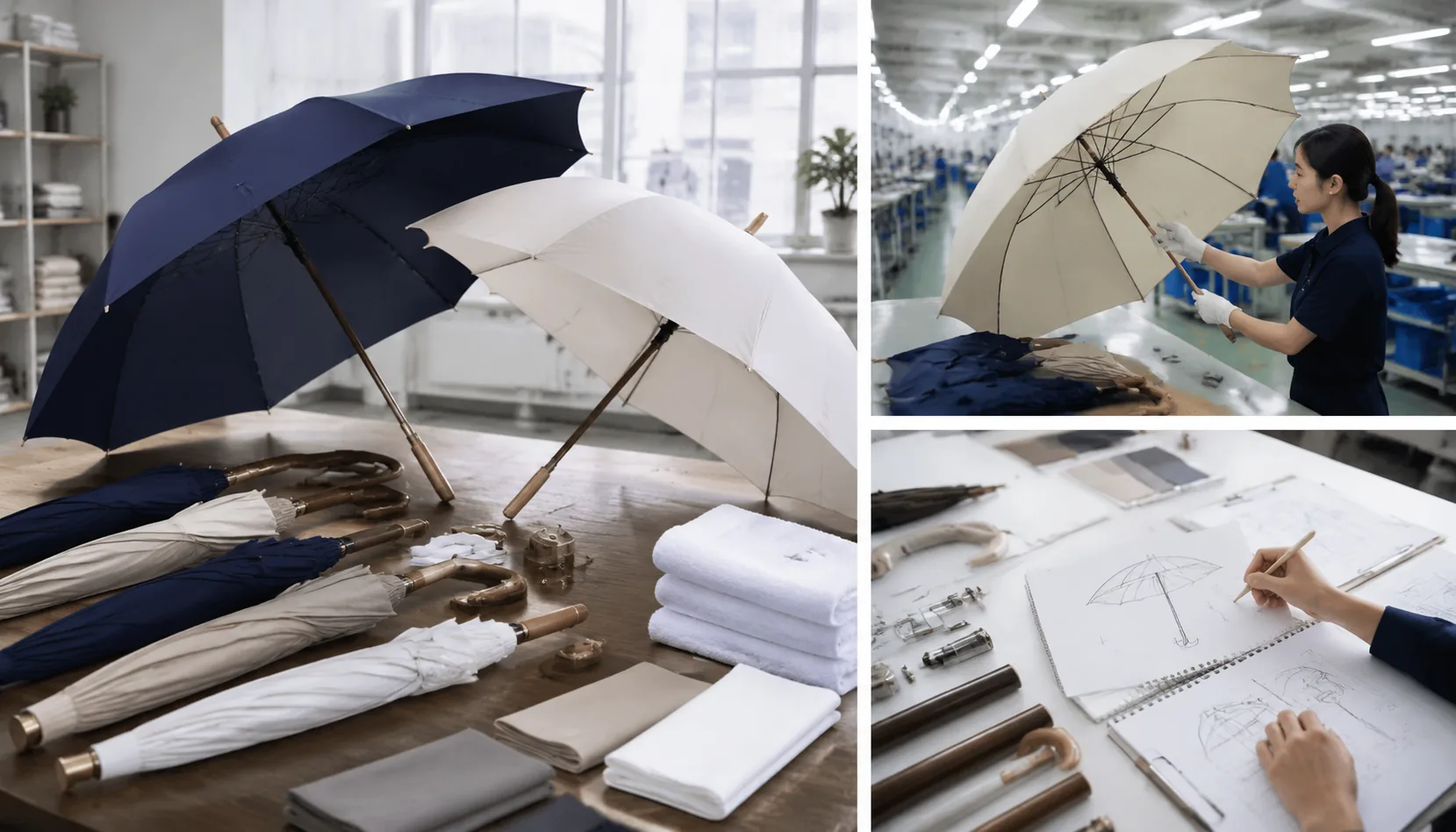
Hotel Guest-Room Umbrellas: Buyer Spec Guide for OEM Orders
Build durable hotel umbrellas with the right straight or folding frame, handle, canopy fabric, branding, packaging, MOQ,...
Read More »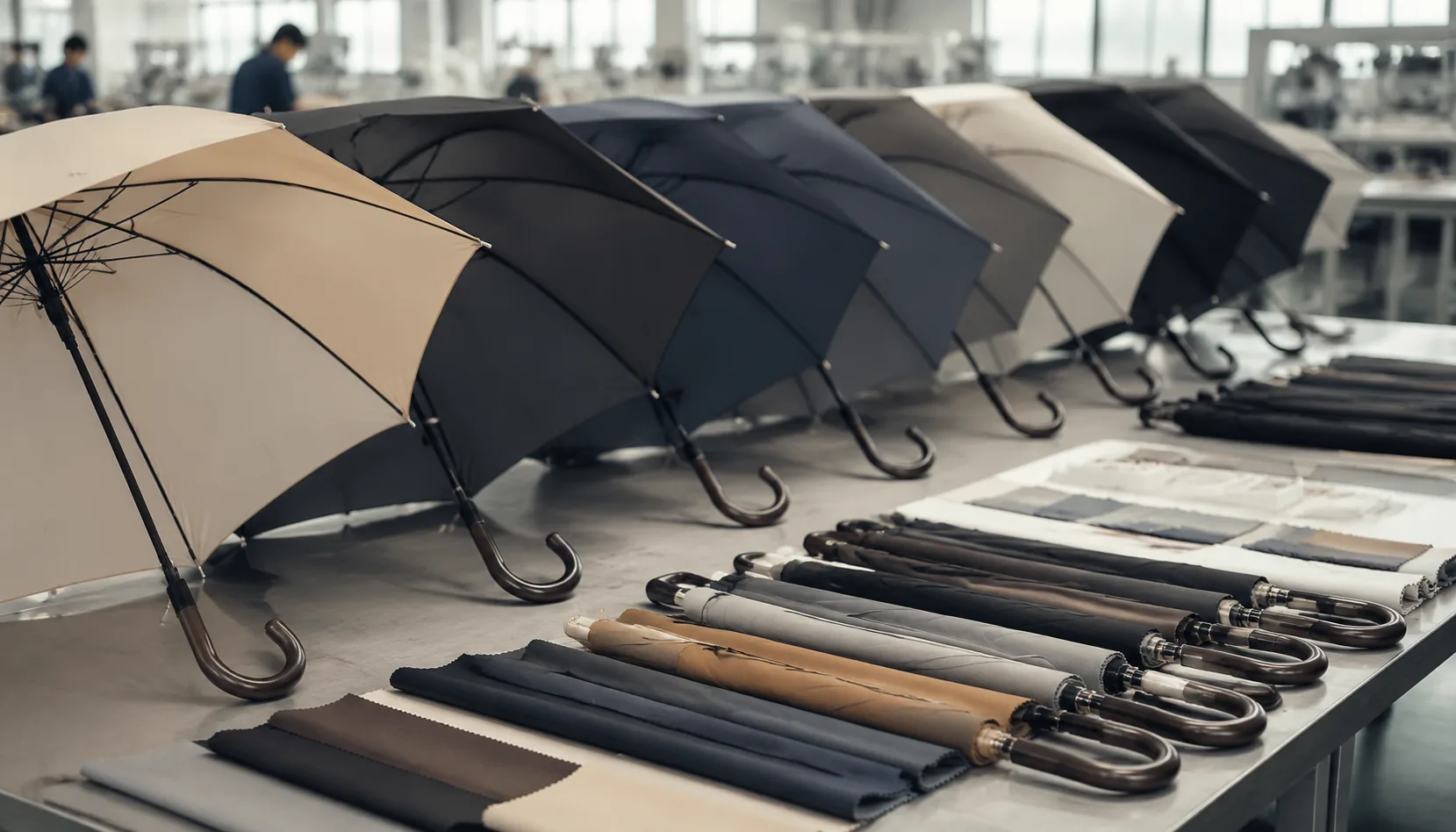
Hotel Guest-Room Umbrellas: Buyer Specs for Bulk Orders
Plan hotel guest-room umbrella orders with the right size, frame, fabric, branding, packaging, MOQ, and inspection specs...
Read More »
Hotel Guest Room Umbrellas: Buyer Spec Guide for Brands
Plan hotel guest umbrellas with durable frames, branded canopies, room-ready packaging, AQL 2.5 inspection, MOQ planning...
Read More »