Hotel Guest Room Umbrellas: Buyer Spec Guide for Brands
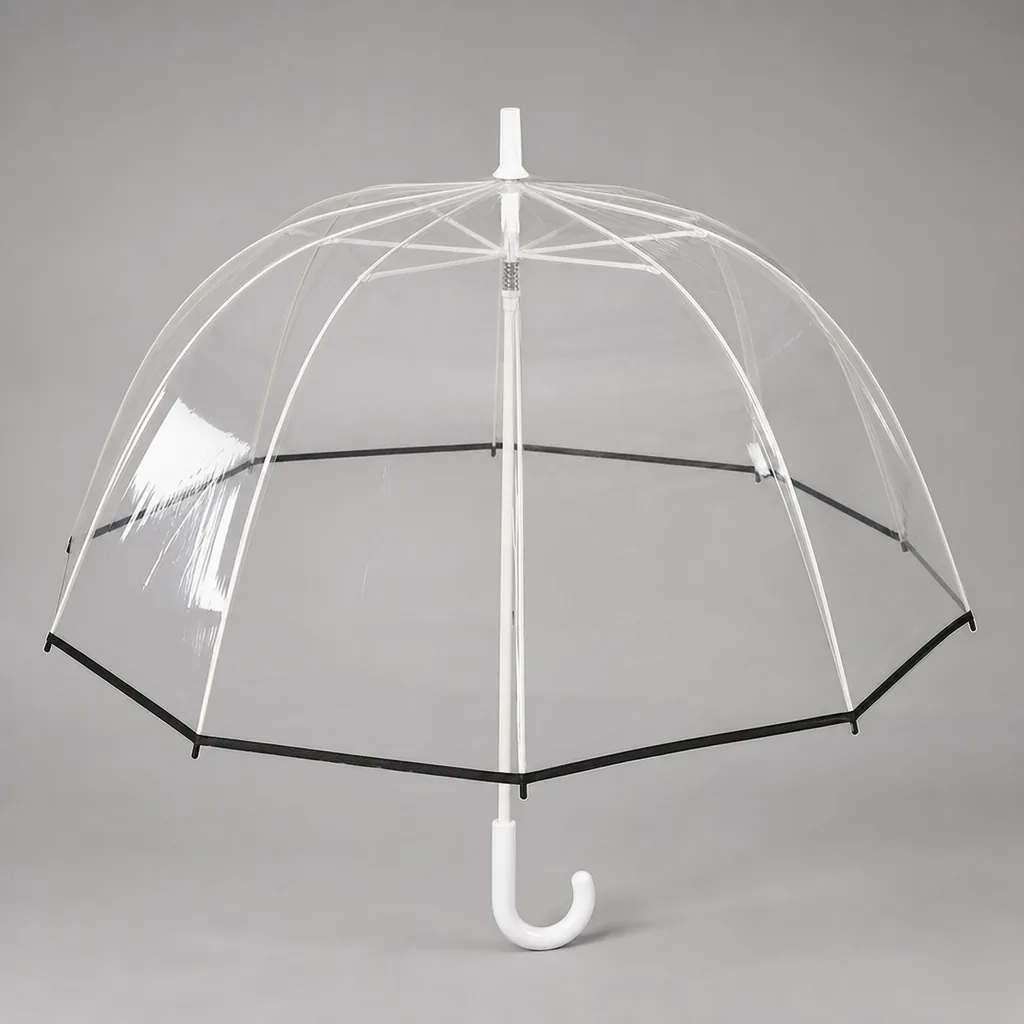
For hotel brands, hotel guest room umbrellas look simple until bent ribs, loose tips, weak sleeve stitching, or color drift show up across hundreds of rooms. On our Songxia factory floor, the spec has to connect frame strength, canopy branding, room-ready packaging, AQL 2.5 inspection, MOQ planning, and FOB or DDP delivery into one controllable order. Getting those details right upfront protects both the guest experience and the purchasing budget.
Hotel Umbrella Formats and Guest Scenarios
The safest default for hotel guest room umbrellas is a 23 inch stick umbrella placed in the closet or near the luggage rack, because it feels substantial without being awkward in elevators or taxis. I usually specify 8K fiberglass ribs, a steel or aluminum shaft depending on budget, 190T or 210T pongee canopy, and a straight EVA or rubber-coated J-handle that will not chip like painted wood after repeated guest use. Manual open is cheaper, but auto-open reduces complaints when a guest is standing at the entrance with one hand full of bags. For branded hotel umbrellas, keep the logo controlled: one-panel screen print or a woven label on the tie strap looks more premium than oversized canopy printing. A good hotel umbrella supplier should also quote replacement parts and mixed-carton replenishment, because loan umbrellas disappear, bend, or get left in taxis more often than buyers expect.
Lobby umbrellas are a different animal: they need to look good in a stand, survive bell staff handling, and cover two people walking to a car. A 27 inch golf umbrella with 8K or 10K fiberglass frame, double-canopy vented construction, and 210T pongee with Teflon coating is the practical workhorse; it can be built to survive 50+ mph wind-tunnel testing if the runner, rib joints, and tips are properly specified. For resorts, casinos, and city hotels with frequent rain, I would not use thin steel ribs on lobby stock unless the budget is extremely tight. A hospitality umbrella OEM should also ask how umbrellas are controlled: deposit card, room-number tag, QR label, or concierge checkout. That decision affects handle color, shaft finish, and whether the canopy needs a large hotel mark for easy recovery.
Retail-sale and VIP gift umbrellas should be separated from loan inventory, even if they share the same visual identity. Retail umbrellas need packaging, barcode labels, hang tags, and a margin-friendly spec such as a compact 21 inch auto-open or auto-open-close model with 8K fiberglass ribs, black metal shaft, and 190T pongee; guests buy these because they fit a tote or carry-on. VIP gift umbrellas can justify higher-touch details: 23 inch wooden-stick models, 16K rib counts for a denser luxury look, leatherette sleeves, UV UPF 50+ coating for resort properties, or heat-transfer printing for sharp crest details. For custom umbrellas for hotels, I prefer keeping retail and VIP colors slightly different from in-room loan stock so front-desk teams can identify what is complimentary, what is borrowed, and what is merchandise.
Durability Specs for Frequent Guest Use
The first durability decision for hotel guest room umbrellas is rib material, and I would not chase the lightest frame unless the property is positioning around premium travel gear. Hotels need umbrellas that survive careless closing, wet storage, luggage carts, and guests using them as walking sticks. Fiberglass ribs bend back better in wind and reduce permanent deformation after a 35–45 mph gust, while steel ribs are cheaper and feel rigid but can kink once overloaded. For most 23" or 27" guest-room stick umbrellas, I prefer fiberglass ribs with a steel or fiberglass straight shaft, because straight shafts tolerate repeated rack storage better than compact telescopic tubes. Reinforced rib tips matter more than many buyers realize: double-stitched pockets, metal end caps, or thicker plastic tips prevent the canopy from tearing loose after 50–100 open-close cycles in real use.
Rib count should match the hotel’s replacement-cost target, not just the visual spec sheet. An 8K frame is standard for custom umbrellas for hotels because it balances weight, price, and acceptable wind resistance; a well-built 8K fiberglass frame is usually better than a weak 16K steel frame with thin ribs. A 16K design gives a fuller round canopy and more support points, useful for branded hotel umbrellas where the logo must sit smoothly on 190T or 210T pongee panels, but it adds labor, parts, and failure points if the runner and stretchers are not upgraded. For city hotels with frequent rainy-season lending, I would specify 8K fiberglass for standard rooms and 16K reinforced fiberglass for suites, VIP floors, or front-desk loaner inventory where appearance and lower breakage justify the higher unit cost.
Handles and opening systems are where many hospitality umbrella OEM projects fail in daily operations. EVA handles are practical: they resist dents, dry quickly, and hide scratches better than painted plastic. Wooden crook or straight handles look better in upscale rooms, but they need a decent varnish layer and tighter moisture control, especially if umbrellas are returned wet and stored near air-conditioning vents. Auto-open mechanisms are worth specifying for hotel guest room umbrellas because guests expect one-hand use at the lobby door; however, the spring, runner lock, and button housing must be tested beyond a showroom click. A hotel umbrella supplier should run cycle testing, check button alignment after drop tests, and inspect with AQL 2.5 for loose tips, runner jams, bent shafts, and handle pull strength before shipment.
Canopy Fabric, Branding, and Color Control
For hotel guest room umbrellas, 190T pongee is the practical baseline and 210T pongee is the upgrade I recommend when the umbrella will sit in a visible wardrobe, lobby stand, or suite amenity set. Both are polyester pongee with a tight weave and soft hand, but 210T has a denser yarn count, slightly smoother touch, and better drape over 8K or 10K frames, especially on 23" and 27" stick umbrellas. Water repellency depends more on the finish than the count: a good Teflon or silicone-based coating should bead water cleanly after 3 to 5 spray tests, while cheap PU finishing feels sticky and loses performance quickly. For print quality, 210T holds sharper logo edges and finer serif text because the surface is flatter; 190T is still acceptable for one-color screen printing, but small gold, gray, or tone-on-tone marks can look fuzzy if the mesh, ink viscosity, or curing temperature is not controlled.
Logo size should be decided from viewing distance, not from a catalog template. On a 23" hotel umbrella, a front-panel logo around 90 to 130 mm wide usually reads well without turning the product into a billboard; on a 27" golf-style guest umbrella, 140 to 180 mm is enough for driveway and concierge use. Luxury properties normally get better results with one-panel or two-panel placement near the lower outside edge, plus a small handle medallion or woven sleeve label, rather than printing all 8 panels. For branded hotel umbrellas, we set panel artwork with a safe margin of at least 25 mm from seam lines and 35 mm from the canopy tip, because sewing tension and rib pocket alignment can shift the visual center. Large circular crests or repeating patterns need registration checks after sewing, not just on flat cut panels.
Pantone matching must be handled with fabric, coating, and light source in mind. A Pantone C reference printed on paper will not look identical on black, navy, beige, or champagne 210T pongee, so a hospitality umbrella OEM should provide a strike-off on the actual canopy fabric before bulk cutting. Metallic gold and silver are especially risky: screen printing gives a cleaner luxury effect than heat transfer, but the ink must pass tape adhesion and wet-rub tests or it will scuff inside the sleeve. For custom umbrellas for hotels, I prefer restrained color systems: canopy matched to the room palette, logo one shade darker or lighter, and hardware in matte black, wood-grain, or brushed silver. A serious hotel umbrella supplier should record approved Pantone codes, ink formulas, print position, and AQL 2.5 appearance standards so reorders match the first delivery.
Packaging, Tracking, and Operational Details
Packaging is where hotel guest room umbrellas either become an orderly amenity program or a daily housekeeping headache. For in-room placement, I usually specify one polybag or fabric sleeve per umbrella with a sewn-in size label, care label, and property code, not just a loose hangtag that disappears after the first rainy weekend. A 23" auto-open umbrella with 190T pongee canopy normally packs well in a 5 x 90 cm sleeve; a 27" golf model needs a wider sleeve and stronger bottom seam because wet tips cut cheap polyester fast. Room cards should state “For guest use during stay” or the hotel’s sale/replacement policy in plain language. If the brand wants retail recovery, add a barcode sticker on the sleeve plus a small QR code linking to replacement purchase or front-desk return rules.
Loss control needs to be designed before production, not improvised after umbrellas start walking out of the lobby. For branded hotel umbrellas, we can add a discreet woven label with room number field, a serialized barcode sticker under the handle, or a small RFID/loss-control tag if the property already uses linen or asset tracking. Avoid oversized anti-theft tags on premium hotels; guests read that as distrust. Umbrella stands should match the operating model: lobby loaner programs need 20–40 slot metal stands with drip trays, while suite-only placements can use 1-piece wall hooks or closet sleeves. Replacement packing should be ordered at the same time as the main PO, typically 5–10% extra sleeves, labels, and cartons, because re-packing loose returns into random boxes creates mismatched inventory within one season.
Consistent carton marks matter most when a hotel umbrella supplier is shipping to multiple properties under one brand rollout. Cartons should show PO number, property name or code, SKU, canopy color, logo version, quantity, gross/net weight, carton dimensions, and destination sequence such as “Shanghai Hotel A, carton 1/18.” For custom umbrellas for hotels, our standard practice is to print carton marks on two adjacent sides and match them to the packing list, barcode file, and master carton label. A 1,000-piece order split across 12 properties can otherwise turn into expensive DDP re-sorting at the warehouse. Keep master cartons practical: 24 pieces per carton for 23" stick umbrellas, 12 pieces for 27" golf umbrellas, and moisture-resistant export cartons with inner poly lining for rainy-season shipping. Clean carton discipline also speeds AQL 2.5 inspection because inspectors can pull samples by SKU and property without opening the wrong cartons.
MOQ, Inspection, Lead Time, and Delivery Terms
MOQ should be tied to the frame and handle, not quoted as one lazy number. For hotel guest room umbrellas, a straight 23" steel shaft with 8K steel ribs and a molded EVA J-handle can usually start around 500–1,000 pcs per color because the components are common in Songxia. Move to a fiberglass shaft, 10K ribs, rubber-coated straight handle, or real wood crook handle, and practical MOQ often rises to 1,000–3,000 pcs because the frame, handle color, and end cap need separate scheduling. Branded hotel umbrellas with 190T pongee, one-color screen logo, and standard black frame are the safest spec for boutique hotels. If you need PMS-matched handles, custom woven labels, or a debossed metal plate, treat it as a hospitality umbrella OEM project and lock artwork before sampling, not during bulk production.
Sample timing is normally 5–7 days for a stock-frame umbrella with screen printing, 7–12 days for heat-transfer or full-panel artwork, and 12–18 days if a new handle mold, custom runner, or special canopy color is involved. Bulk lead time is usually 25–35 days after deposit and sample approval for 1,000–5,000 pcs, but April through August is peak umbrella season, and capacity can stretch to 40–55 days if the order uses fiberglass ribs, double-canopy vented construction, or several logo positions. A serious hotel umbrella supplier should ask for forecast quantities before rainy-season replenishment, because rib assembly and canopy sewing are the bottlenecks, not final packing. Our standard practice at ZheBrella is to reserve frame inventory only after the deposit is received, especially for custom umbrellas for hotels with nonstandard handle colors or UPF 50+ coated fabric.
Inspection should be written into the PO, not negotiated after defects appear. For hotel guest room umbrellas, AQL 2.5 final inspection should include 100% carton count verification and sampled checks for auto-open or manual open/close function, runner lock strength, rib alignment, tip stitching, panel symmetry, fabric stains, pinholes, loose threads, and logo position tolerance. I also like a practical shake test and three open-close cycles per inspected unit because many weak springs or mis-riveted stretchers fail before they ever reach the guest room. Carton packing needs equal attention: inner polybag, moisture warning if required, master carton burst strength, barcode or room-item label, and drop-test condition for DDP shipments. FOB Ningbo or Shanghai works for experienced importers; DDP is cleaner for hotel groups shipping to multiple properties, but cartons must be marked by destination to avoid costly resort-level sorting.
Frequently Asked Questions
What umbrella size works best for hotel guest rooms?
A 23 inch stick umbrella is a common balance of coverage, durability, and storage convenience. Resorts and luxury hotels may choose 27 inch golf umbrellas for stronger visual branding.
Should hotels choose FOB or DDP shipping for umbrella orders?
FOB is suitable for hotel groups with their own freight forwarder. DDP is easier for single-property or regional programs because landed cost and delivery are handled upfront.
What frame specs should a hotel guest room umbrella use for daily guest handling?
For guest rooms, buyers usually specify a fiberglass or fiberglass-reinforced metal frame with 8 ribs for standard size or 10 ribs for wind resistance. A shaft thickness around 8 mm to 10 mm and reinforced tips help reduce breakage in repeat-use environments.
What packaging is most practical for room-ready hotel umbrellas?
Most B2B buyers choose an individual polybag with a printed sleeve or hangtag, then carton packing by room set or case pack. If the umbrellas are placed directly in guestrooms, many importers request a simple open-close card or branded paper band to cut unpacking time.
How should inspection be handled for branded hotel umbrella orders?
AQL 2.5 is a common general inspection level for canopy print, opening performance, and cosmetic defects, with tighter checks on handle finish and rib alignment. For first orders, many buyers also ask for pre-shipment photo approval and a carton drop test.
Looking to Launch Your Custom Umbrella Line?
ZheBrella is a Zhejiang-based OEM/ODM umbrella manufacturer with 17 years of export experience. Free design, low MOQ from 100 pieces, windproof construction, full-color print.
Get Free Quote Now »People Also Search For
Related Articles
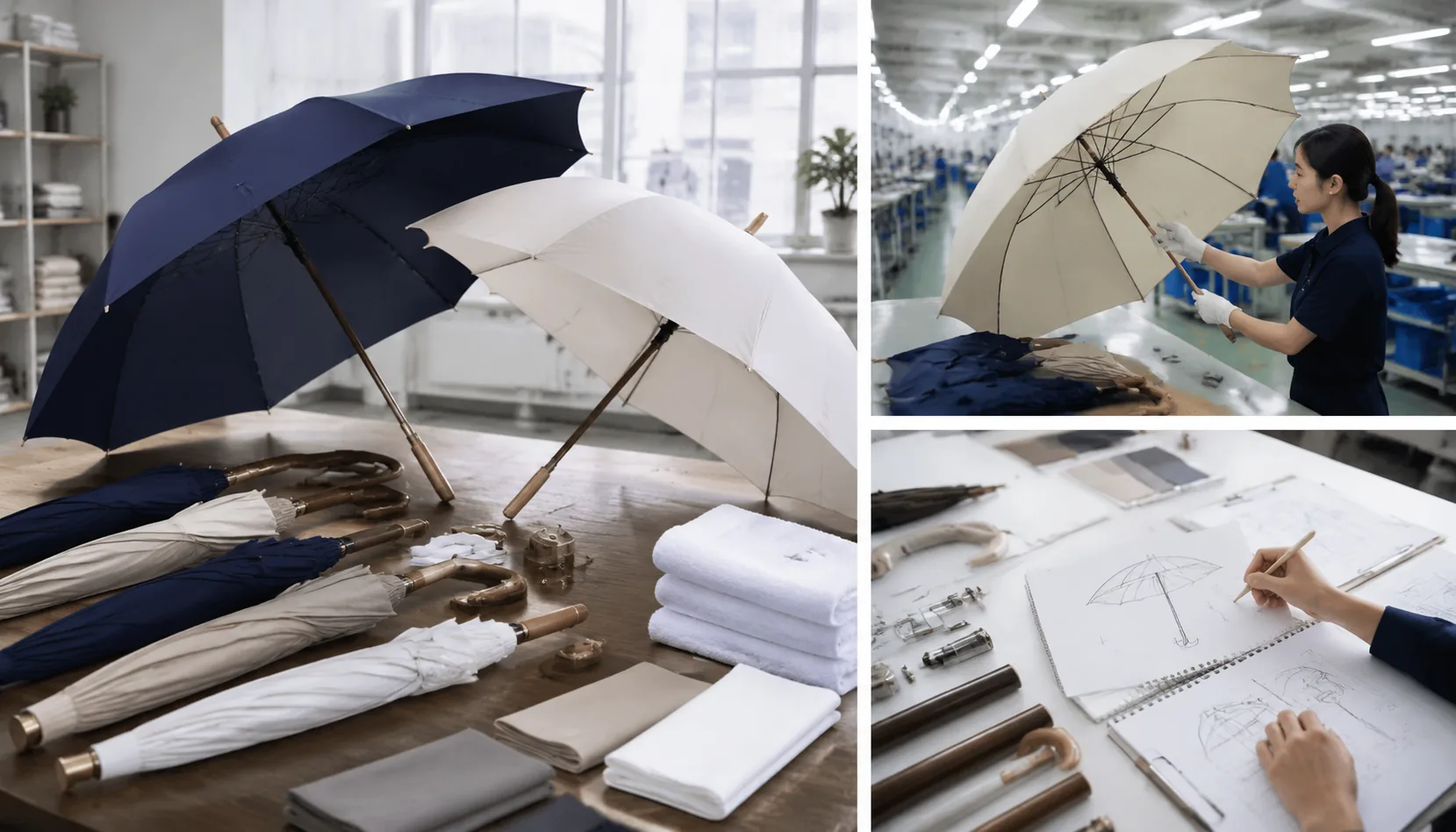
Hotel Guest-Room Umbrellas: Buyer Spec Guide for OEM Orders
Build durable hotel umbrellas with the right straight or folding frame, handle, canopy fabric, branding, packaging, MOQ,...
Read More »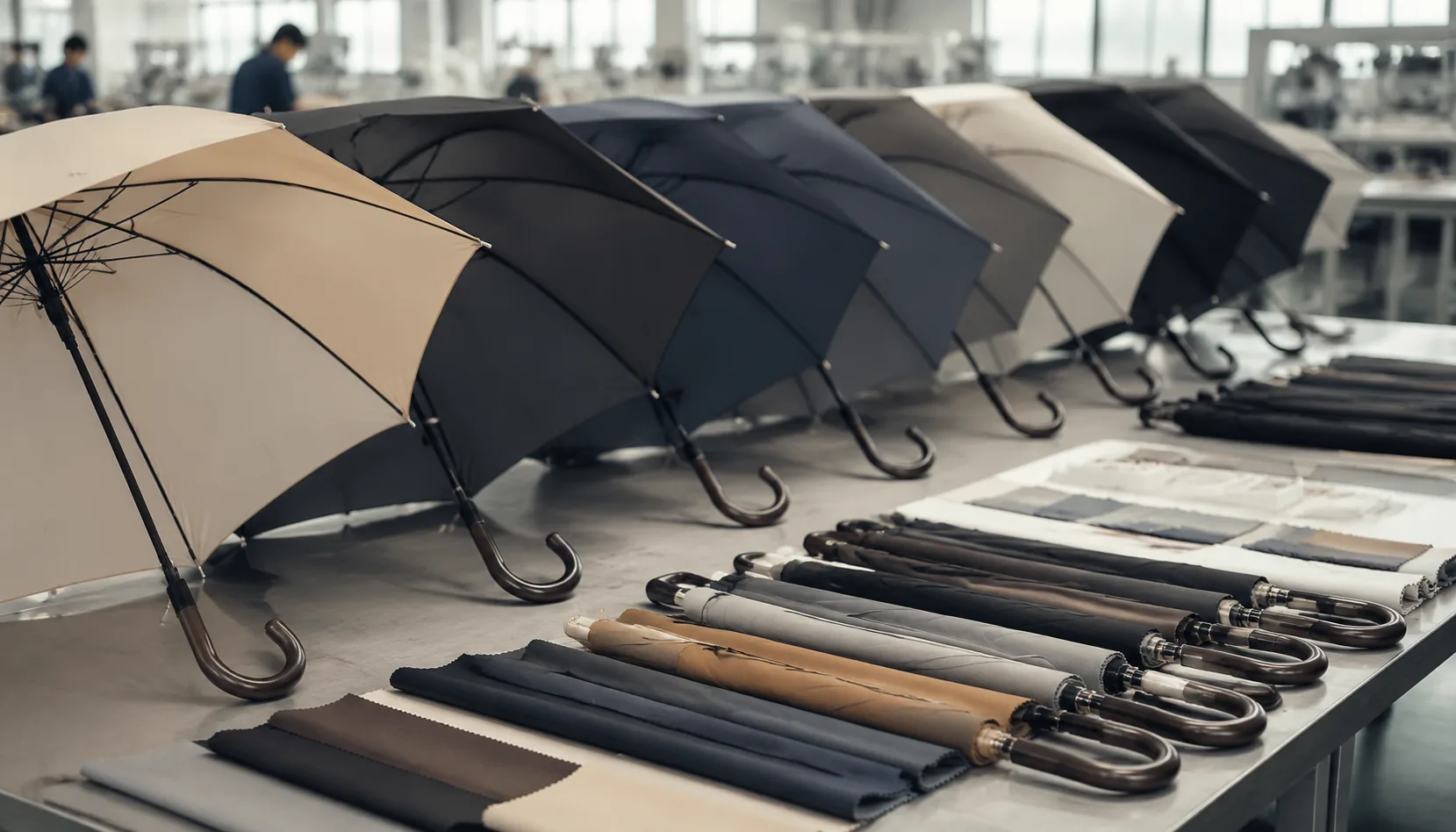
Hotel Guest-Room Umbrellas: Buyer Specs for Bulk Orders
Plan hotel guest-room umbrella orders with the right size, frame, fabric, branding, packaging, MOQ, and inspection specs...
Read More »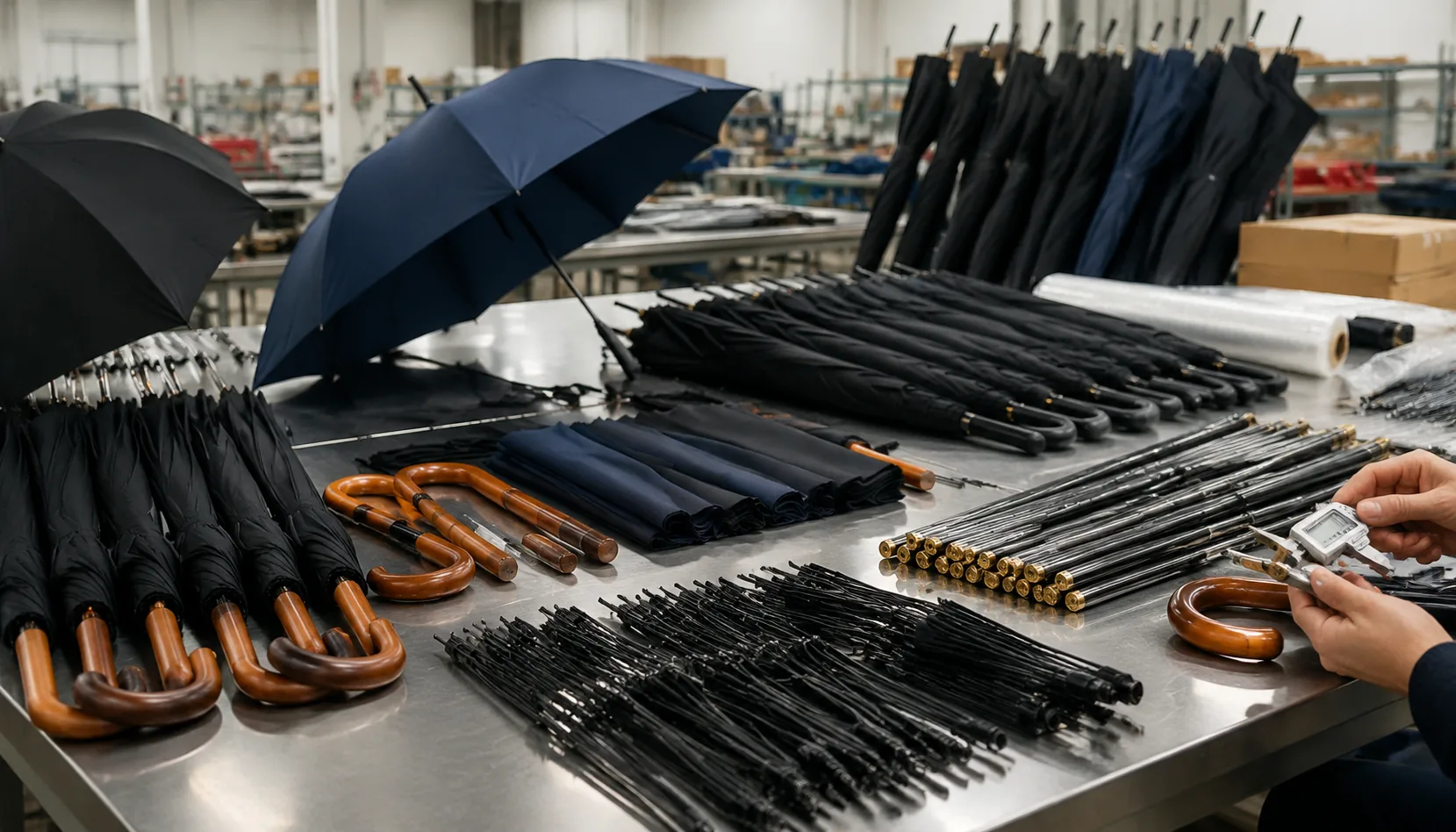
Hotel Guest Umbrellas: Product Specs for Bulk Sourcing
Compare 23-25 inch hotel guest umbrellas by frame, canopy, handle, packaging, MOQ, and inspection points before placing ...
Read More »