Sourcing Branded Umbrellas for Hotels and Resorts
Hospitality buyers need more than a logo on a canopy; they need a branded umbrella program that holds up across guest rooms, doorman stands, and poolside service without drift in color, size, or hardware. As a hotel umbrella supplier, we see the real failure points on the factory floor: weak frames, inconsistent printing, and packaging that breaks down before delivery. The right program starts with specifications that protect the guest experience and make replenishment predictable across every property.
Three umbrella programs every property needs
The first umbrella program is the in-room loaner, and this is where most hotels under-specify and then pay for replacements. A guest room umbrella manufacturer should be building these for low weight, compact storage, and simple serviceability: 21" to 23" foldables, manual or auto-open, fiberglass ribs for corrosion resistance, and a 190T or 210T pongee canopy that dries quickly after a walk in the rain. For a hotel umbrella supplier, the real decision is not logo placement, it is whether the stick, runner, and handle survive repeated guest use without jamming. We usually see better results with EVA or straight rubber grips than polished wood, because rooms see humidity, housekeeping handling, and occasional loss. For branding, one-color screen print is usually cleaner and cheaper than full-panel decoration, especially when the umbrella sits in a wardrobe and only comes out in bad weather.
Lobby and doorman umbrellas should be built like utility tools, not giveaways. These need more canopy coverage, usually 27" or 30" straight umbrellas with auto-open or auto-open-close mechanisms, steel or reinforced fiberglass frames, and reinforced tips that can take daily opening cycles at the entrance. A good hotel umbrella supplier should specify higher wind tolerance here, because a lobby umbrella gets used in stronger gusts while guests are entering taxis, and a bent rib at the front door looks bad immediately. If the property wants a resort branded umbrella, the handle, shaft finish, and canopy edge binding matter more than people think; they need to match the building's visual standard and still survive wet floors, brass stands, and constant handling. ZheBrella's standard practice is to keep this program separate from guest-room stock, because the wear pattern and replacement rate are completely different.
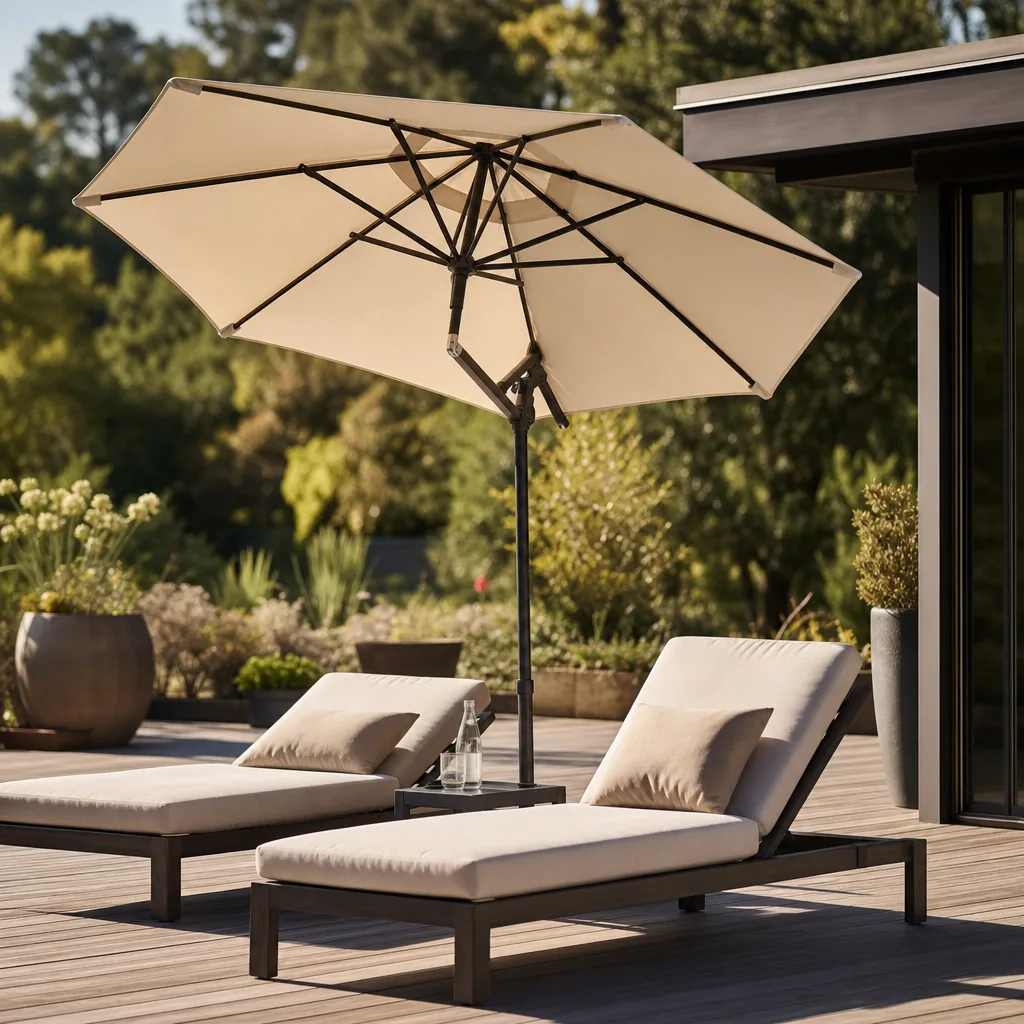
Pool and patio shade umbrellas solve a different problem altogether: they are furniture, not carry items. These should be oversized 8K, 10K, or 16K structures with double-canopy vented windproof tops, thick aluminum or powder-coated steel poles, and solution-dyed polyester or coated pongee when UV resistance matters. For resorts, a hospitality umbrella in this category often needs UPF 50+ coating, drainage-friendly venting, and a base system sized for real wind load, not just a catalog photo. If the property wants day-use shade over loungers or dining tables, the canopy diameter, tilt function, and replacement fabric availability are more important than a printed logo. A serious hotel umbrella supplier will also talk about FOB and DDP options, AQL 2.5 inspection, and lead times around 25 to 35 days depending on customization, because pool umbrellas are usually ordered in batches and replacements need to match the original run exactly.
Branding consistently across formats
Branding falls apart fast when a hotel orders three umbrella formats and treats them as separate projects. A hotel umbrella supplier should lock the logo treatment first: one Pantone reference, one approved vector file, one placement rule, then carry that across a 21" compact guest room umbrella, a 23" auto-open lobby umbrella, and a 27" or 30" resort branded umbrella used at entrances or pool areas. If the logo sits 45 mm from the panel seam on the guest room model, keep the same visual hierarchy on the larger canopy instead of scaling it randomly. For hospitality buyers, the goal is not just printing a logo; it is making sure the mark reads the same in a dim room, under direct sun, and at a valet stand. That means specifying ink limits, outline thickness, and minimum text size before sampling starts.
Color control matters more than most buyers expect because umbrellas are made from different substrates that do not hold color identically. 190T pongee, 210T pongee, POE, and EVA all shift tone differently under the same dye lot, so a resort branded umbrella needs a controlled color standard, not a verbal match like “dark navy.” We usually approve a physical lab dip or PMS reference against the actual canopy material, then confirm it under indoor and daylight conditions. The same applies to trims: shaft finish, handle color, sleeve fabric, and strap stitching should stay within the same visual system so the umbrella does not look like four unrelated items. A guest room umbrella manufacturer that handles this properly will test each SKU separately, because a black lacquer shaft and a matte fiberglass shaft reflect light differently and change the perceived logo contrast.
Consistency across formats is mostly an operations problem, not a design problem. Once the logo artwork, panel color, and trim palette are fixed, the factory has to keep registration, print method, and sewing tolerances aligned across the range. Screen print gives the cleanest repeatability for simple logos; heat transfer or sublimation is better for gradients or full-panel graphics, but it must be proofed on each canopy size. ZheBrella’s standard practice is to run one master color approval, then duplicate it across manual, auto-open, and auto-open-close models so the branding does not drift between front-desk stock and in-room stock. For hotels that want a uniform look, I would keep one primary canopy color, one secondary accent, and one logo placement rule, then apply them to every umbrella type in the program instead of redesigning each SKU separately.
Durability for high-turnover guest use
A serious hotel umbrella supplier should start with the frame, not the print. For guest-room and lobby use, I would spec fiberglass ribs over plain steel because fiberglass flexes under wind and repeated opening cycles instead of staying bent. For high-turnover properties, 8K or 10K constructions are usually the practical floor; 16K looks premium, but the extra rib count only matters if the spreader joints and runner are reinforced. For a hospitality umbrella, the shaft should be plated steel or thick fiberglass with a rust-resistant finish, and the handle should be TPR, EVA, or lacquered wood only if it can take constant wet hands and room-service abuse. Our standard practice at ZheBrella is to treat 190T pongee as the minimum for a guest room umbrella manufacturer, with 210T pongee or coated polyester when the property wants better tear resistance and faster drying after rain.
The canopy construction matters as much as the frame because hotel umbrellas fail at the seams long before they fail at the tip. Double-stitching at the panels, bar-tacked stress points, and a reinforced canopy tip reduce the chance of split seams when guests force the umbrella closed with wet fabric inside. For a resort branded umbrella, I would use 190T or 210T pongee with a Teflon water-repellent finish; that keeps water beading off and prevents the canopy from soaking into the bag or closet lining. If the property needs UV protection for pool decks or golf carts, specify UPF 50+ coating rather than assuming dark fabric will block sunlight. Auto-open is fine for convenience, but auto-open-close mechanisms need stronger springs and a better latch tolerance, otherwise the button assembly becomes the first point of failure after repeated guest use.
For durability in a hotel setting, the details that get ignored are usually the ones that create complaints. Ferrules, tips, and runners should be impact-resistant ABS or reinforced nylon, not brittle plastic that cracks when housekeeping packs umbrellas into carts. Sleeve storage also matters: a wet umbrella in a closet will rust a cheap steel shaft and stain the floor, so a simple vented cover or drip-resistant sheath is worth specifying. If the property is buying at scale, ask for AQL 2.5 inspection on size, color, opening force, seam strength, and logo registration, because a batch with slightly loose tips or mismatched canopy panels looks cheap in a guest room. For chain hotels and resorts, the useful procurement questions are MOQ, FOB or DDP terms, and lead time in days, not just the printed artwork.
Reorder consistency and stock planning
The biggest mistake hotels make is treating umbrellas as a one-off amenity instead of a controlled replenishment item. If you want consistency, lock the spec: one canopy size, one rib count, one handle, one printing method, and one closure style across all properties. For guest rooms, a 23" or 27" auto-open stick umbrella with fiberglass ribs, 190T or 210T pongee, and a simple straight EVA handle is easier to replace than a mixed basket of models. A hotel umbrella supplier should be able to hold exact repeat orders against a fixed BOM, not keep changing fabric shade, shaft thickness, or logo placement every season. At ZheBrella, our standard practice is to freeze the production spec first, then sample only color and branding so the resort branded umbrella stays visually consistent from batch to batch.
Stock planning should be based on failure rate, not wishful thinking. In hospitality, a 3% to 8% annual loss rate is normal once you factor in guest removal, housekeeping damage, and accidental breakage at the entrance. That means a 300-room property should keep a real buffer, not a symbolic one: at least 10% to 15% of active inventory in reserve, with another carton per 100 units for emergency replacement during peak rainy months. If you run multiple buildings, split stock by location and model so the front desk can swap in the exact same hospitality umbrella instead of handing out a mismatch. A guest room umbrella manufacturer that understands hotel operations should also label cartons by color code, size, and PO number so replacements can be pulled in minutes, not searched for in a warehouse.
Reorder discipline matters more than low unit price. Standardize SKU names by size and configuration, such as 23" auto-open, 27" vented windproof, or 30" golf-style welcome umbrella, then tie each SKU to a reorder point based on lead time and consumption history. If production takes 25 to 35 days and ocean freight adds another two to four weeks, you should trigger replenishment when on-hand stock drops below eight to ten weeks of demand. That is the difference between controlled buying and emergency airfreight. For branded programs, keep artwork files, Pantone references, and handle color codes in the same record as the purchase history so reorders match exactly. A hotel umbrella supplier that cannot repeat the same canopy print, rib package, and carton mark on the second order will create more labor for your housekeeping team than the umbrella is worth.
Outdoor shade: patio and pool considerations
For patios and pool decks, the canopy fabric matters more than the logo. A hotel umbrella supplier should be specifying 190T or 210T pongee for better hand feel and tighter weave, or solution-dyed polyester when the property wants more color retention under constant sun and chlorinated splash. For higher-end resorts, UV-rated coatings with UPF 50+ are worth paying for because cheap dye will fade fast and start looking tired in one season. Around pools, I prefer water-repellent finishes and seam construction that does not wick. If the brief calls for a resort branded umbrella, the print method also matters: screen print is usually cleaner for solid logos, while heat transfer or sublimation works better for full-color graphics. The fabric should be selected for cleaning and replacement cycles, not just for the first photo shoot.
Wind behavior is where many hospitality umbrella projects fail. Open-air pool decks create turbulence, so a vented double-canopy design is usually the right call for a hospitality umbrella manufacturer to recommend, especially on 8K, 10K, or 16K frames with fiberglass ribs instead of brittle steel. Fiberglass flexes under load and reduces the chance of rib fracture when gusts hit a tall 10 ft or 11 ft umbrella. For exposed properties, I would insist on a manual or auto-open mechanism that staff can operate quickly, because a frozen crank or weak hub turns into downtime. The goal is not just surviving one storm, but staying usable after repeated opening, closing, and wet-dry cycles. A well-built frame should hold alignment, keep tension in the canopy, and not chatter in the wind after a few months of service.
Base systems need to be sized for the actual site, not guessed from catalog photos. A hotel umbrella supplier should ask about deck material, wind exposure, and whether the umbrella is freestanding, table-mounted, or permanently sleeved into the slab. On concrete patios, 50 kg to 80 kg bases are common for 8 to 10 ft poles, but larger commercial units often need cross-bases with weighted plates or in-ground sockets. At poolside, drainage and rust resistance matter as much as mass, so powder-coated steel, cast iron with protective sleeves, or aluminum bases are safer choices than bare metal. For a guest room umbrella manufacturer serving resorts, the practical standard is simple: easy staff handling, AQL 2.5 inspection on hardware, clear replacement parts, and lead times that match renovation schedules. ZheBrella’s standard approach is to build around serviceability first, because a pretty umbrella that cannot be moved, weighted, or repaired efficiently is a liability on property.
Frequently Asked Questions
What umbrellas do hotels usually brand?
Three programs are typical: compact in-room loaner umbrellas for guests, large doorman/golf umbrellas at entrances, and pool or patio shade umbrellas. Keeping logo and color consistent across all three reinforces the brand.
How durable should hotel guest umbrellas be?
Very - they are handled by many guests and often returned wet and folded carelessly. Specify fiberglass ribs and a reliable mechanism so loaner umbrellas survive heavy, repeated use.
What umbrella types are usually included in a hospitality branding program?
Most hotel and resort programs include three SKUs: compact guest-room umbrellas, large golf umbrellas for doorman or valet use, and patio or pool umbrellas for outdoor shade. Buyers often specify one style per use case to keep replacement inventory simple and consistent.
What is a practical MOQ for a branded umbrella order for hotels?
For OEM hospitality umbrellas, MOQ is often 300 to 500 pieces per style and color, depending on the frame, canopy fabric, and logo method. Larger programs can mix sizes after the first order, but factories usually price best at 1,000 pieces or more.
How long does a custom hotel umbrella program usually take to produce?
Typical lead time is 35 to 50 days after artwork approval and deposit, with simpler stock-frame orders sometimes faster. If the order includes custom handles, special canopy colors, or UV-coated fabric, plan for extra sampling and production time.
Looking to Launch Your Custom Umbrella Line?
ZheBrella is a Zhejiang-based OEM/ODM umbrella manufacturer with 17 years of export experience. Free design, low MOQ from 100 pieces, windproof construction, full-color print.
Get Free Quote Now »People Also Search For
Related Articles

Branded Umbrellas for Resorts and Destination Hospitality
See how resorts and destination brands source guest-ready umbrellas with durable materials, refined branding, and delive...
Read More »
Branded Umbrellas for Hotels, Resorts, and Guest Transport
A practical guide to branded umbrellas for hotels and resorts, covering guest flow, frame durability, branding, MOQ, and...
Read More »
Umbrella Programs for Hotels, Resorts, and Spas
Plan umbrella programs for hotels, resorts, and spas with specs, MOQ, lead times, and finishing options that fit guest s...
Read More »