Hotel Guest Umbrellas: Product Specs for Bulk Sourcing
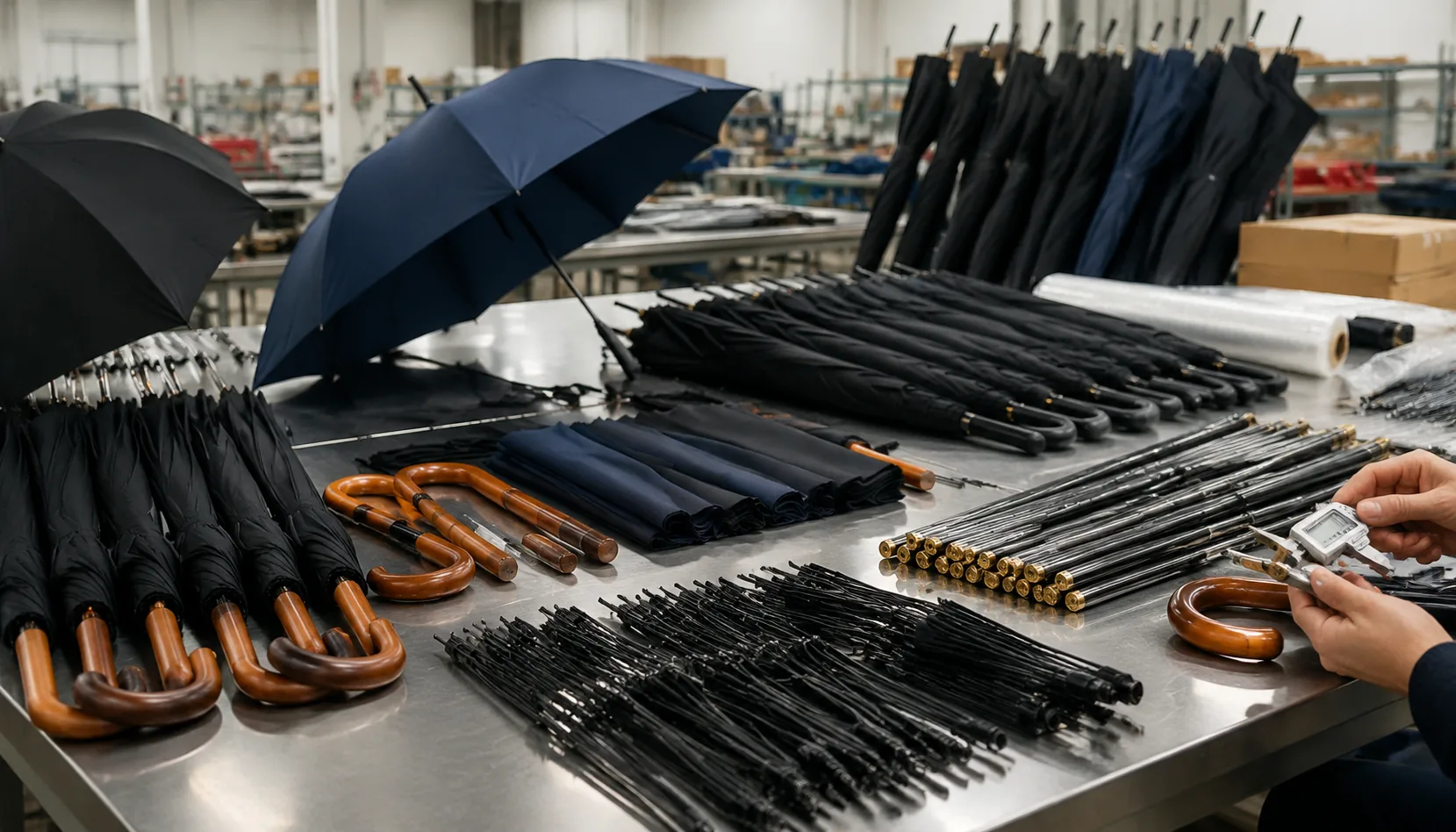
For hotel procurement teams, a 23–25 inch guest umbrella looks simple until bulk orders expose weak ribs, loose tips, dye migration, or packaging that fails in storage. On our Songxia factory floor, hotel guest umbrellas are judged by frame tolerance, canopy tension, handle fit, carton strength, and AQL checks long before a logo is printed. Getting these specs clear upfront keeps OEM pricing comparable and prevents rework after production starts.
Define the Hotel Use Case Before Choosing a Build
The build should start with how the umbrella will be used, not with the logo position. Lobby loaners take the most abuse: guests grab them wet, lean them against marble floors, and return them half-open to a stand. For this use case, I usually specify 23" or 25" straight umbrellas for hotels, 8K steel shaft with fiberglass ribs, auto-open runner, and 190T or 210T pongee canopy with a black electroplated frame. A 23" canopy is easier to store in a lobby rack, while 25" gives better shoulder coverage for two people walking from the hotel entrance to a car. Black and navy are the safest color programs because replacement batches from different dye lots still look acceptable under warm lobby lighting. For hotel guest umbrellas, avoid cheap chrome-plated ribs; after 20–30 wet cycles, corrosion around the rivets becomes visible and the product starts looking like a cost cut.
In-room retail umbrellas need a different balance. The guest may pay $15–$35 at the minibar or front desk, so the hand feel matters more than pure survival. A straight 23" auto-open umbrella with a wooden crook handle, matte black shaft, 210T pongee, and a woven label sleeve feels more “hotel” than a compact folding model, even if the compact saves space. For OEM hotel umbrellas, I would keep the exterior color black, navy, charcoal, or deep green, then put the brand on the sleeve, handle badge, or one canopy panel in a restrained 1-color screen print. Heat-transfer logos look sharp on dark pongee, but they must be tested for edge lifting after wet folding. If the hotel wants UV positioning for resort retail, add UPF 50+ coating, but confirm whether the canopy must remain soft enough for daily folding by housekeeping.
VIP giveaway umbrellas are closer to brand merchandise, but they still need hospitality-grade durability. For bulk hotel umbrellas used at conferences, weddings, golf weekends, or suite-level arrivals, a 25" or 27" 8K frame is more impressive, while a 10K fiberglass frame gives better wind recovery if guests are walking coastal or mountain properties. I would not overspec a double-canopy vented build unless the property has real wind exposure; it adds cost, weight, and sewing variation. Our standard practice at ZheBrella is to separate lobby loaner, retail, and VIP specs into different BOMs before quoting, because one “universal” umbrella usually fails on either cost, storage, or perceived value. A serious hospitality umbrella supplier should confirm MOQ by color, AQL 2.5 inspection points, logo method, sleeve construction, and whether pricing is FOB Ningbo/Shanghai or DDP to the hotel group’s distribution center.
Select Frame Materials for Durability and Cost
For hotel guest umbrellas, the frame choice usually comes down to abuse tolerance versus unit cost. Fiberglass ribs flex when a guest twists the canopy getting in and out of a taxi, so they spring back instead of staying bent; that matters on straight umbrellas for hotels that live in lobbies, bell desks, and valet stands. Steel ribs cost less on paper and can be fine for low-frequency use, but once the umbrella is carried in wind or shoved into a wet stand, steel shows its weakness: it dents and stays deformed. In bulk hotel umbrellas, I usually steer buyers toward fiberglass in the main rib set and a steel stretcher only if the price target is very tight. For canopy size, 23" and 27" are the practical hotel standards; 30" is often overkill for daily guest pickup because it becomes awkward in crowded entrances.
Shaft and handle selection matter more than most buyers expect. A steel shaft is the cheapest option, but a fiberglass shaft reduces cold feel in winter and lowers the chance of corrosion from wet storage; that is why many hospitality umbrella supplier specs split the difference with a fiberglass rib set and steel shaft. For grip, a J-handle is easier for hanging on counters and cart hooks, while an EVA straight grip is better when you want a cleaner retail-like look and less snagging on luggage. Do not pay for 16K ribs unless you are buying a larger frame and expect strong wind exposure; for hotel lobby use, 8K or 10K is usually enough, and 16K just adds parts and sewing complexity without real value. Our standard practice is to match rib count to the opening diameter and the hotel’s handling pattern, not to chase the highest number on the spec sheet.
If the program is OEM hotel umbrellas for a branded property, keep the frame spec simple so replacement stock stays consistent across reorders. A 21" compact model with fiberglass ribs and a straight EVA grip works well for room delivery, while a 23" or 27" unit with a J-handle suits front-desk issue and guest checkout. Steel ribs can still fit the budget on promotional drops, but once the umbrella is expected to survive repeated handoffs, door strikes, and damp storage, the savings are usually false economy. The better sourcing question is not ‘steel or fiberglass’ in isolation; it is whether the frame can survive daily hotel handling without bent tips, loose joints, or handle failures after a few hundred open-close cycles.
Specify Canopy Fabric, Coating, and Branding
For hotel guest umbrellas, the canopy fabric choice is where most sourcing mistakes start. I would default to 190T pongee for standard guest use because it gives a clean hand feel, dries fast, and keeps weight down for lobby racks and room closets. Move to 210T pongee when the property wants a denser canopy with better shape retention and less light bleed; that matters on dark colors, where thin cloth can look cheap or uneven under indoor lighting. A proper water-repellent coating should be specified separately from the base fabric, because the weave alone does not tell you how the umbrella will shed rain after repeated use. On bulk hotel umbrellas, I also pay attention to color depth: navy, black, and charcoal hide frame shadows and logos better than pale shades, which show pinholes and panel stitching more easily. As a hospitality umbrella supplier, our standard practice for OEM hotel umbrellas is to confirm fabric GSM, coating type, and color swatch under factory light before production starts.
Branding should be planned around panel geometry, not just logo size. One-panel placement is cleaner for most straight umbrellas for hotels, especially when the canopy is dark and the logo needs to stay readable from a distance without fighting seams, vents, or rib lines. Two-panel placement works when the artwork is wider or when the hotel wants stronger visibility on the street, but it increases the risk of misalignment if the print file is not centered to the panel pattern. For hotel guest umbrellas sold only for rain, I would not push UPF 50+ coating; it adds cost and usually does nothing for the buyer. Only specify UPF 50+ when the property also sells the umbrella for sun use, such as pool decks, golf, or resort transfers. ZheBrella normally confirms logo position by panel count, print method, and canopy color proof before sampling, because those three details determine whether the finished piece looks premium or sloppy.
Plan Packaging, MOQ, and Delivery Terms
Packaging decisions should be locked before sampling, because hotel groups usually need more than a plain polybag. For hotel guest umbrellas, the common setup is a matching fabric sleeve with the same 190T or 210T pongee as the canopy, a woven size label, and a simple care tag sewn inside the sleeve seam. Retail-style hangtags are less common for in-room use, but useful when umbrellas are sold at the front desk or spa shop; we normally specify 300–350 gsm coated paper, matte lamination, cotton string, and hotel brand PMS colors. Barcode stickers can go on the sleeve polybag, inner box, or master carton depending on the receiving system. For U.S. hotel groups, GS1 UPC or property-specific SKU labels are typical; for EU programs, EAN-13 and recycling marks may be requested. Master cartons usually need item code, color, quantity, gross/net weight, carton size, PO number, country of origin, and scannable carton labels on two adjacent sides.
MOQ depends more on customization than umbrella size. For standard straight umbrellas for hotels using stock black, navy, or charcoal 190T pongee, a realistic MOQ is 300–500 pieces per color with one-position screen printing. If the buyer wants OEM hotel umbrellas with custom canopy color, custom molded EVA or rubberized handle, jacquard sleeve, engraved metal plate, or PMS-dyed fabric, 1,000–3,000 pieces is more practical because fabric dyeing and handle tooling create fixed setup costs. Pre-production samples usually take 5–7 days for print approval if materials are in stock, and 10–15 days for custom fabric or special handles. Bulk production is commonly 25–35 days after deposit and artwork approval for 23 inch or 27 inch straight models, and 35–45 days when the order includes multiple rib counts, double-canopy vented construction, or mixed-property logo versions.
FOB works best when the hotel group or distributor already controls freight, consolidation, and customs clearance. For bulk hotel umbrellas shipped from Ningbo or Shanghai, FOB pricing keeps the unit cost clean and lets the buyer combine umbrellas with linens, amenities, or FF&E shipments. DDP is better for multi-property rollouts where 20, 50, or 100 cartons must land at separate hotels without the purchasing team managing import paperwork. The tradeoff is that DDP quotes need exact delivery addresses, carton counts, HS code confirmation, and a clear split between air, courier, LCL, and full-container options. A good hospitality umbrella supplier should also help build the allocation sheet: property name, SKU, logo version, carton label, quantity, and delivery window. Our standard practice at ZheBrella is to run AQL 2.5 final inspection before release, then photograph carton marks and packed pallets so the receiving teams know what is arriving before the truck reaches the loading dock.
Set Inspection Standards for Reorder Consistency
Reorder consistency starts with a written inspection standard, not a polite note saying “same as last order.” For hotel guest umbrellas, I recommend AQL 2.5 for major defects and AQL 4.0 for minor cosmetic issues, with clear defect photos attached to the QC file. Major defects should include failed auto-open function, bent shaft, broken rib, loose runner, unsafe ferrule, wrong canopy fabric, and logo position outside tolerance. Minor defects can include small thread ends, light handle scuffs, or slight color variation within the approved shade band. For bulk hotel umbrellas, we normally inspect by carton lot, not only by finished display sample, because mixed defects often appear after packing when different sewing lines, frame batches, or print operators feed the same PO.
Functional checks need hard numbers. On auto-open models, pull random units from the AQL sample and cycle each umbrella at least 20 times; for premium OEM hotel umbrellas, specify 50 cycles on the approved pre-shipment sample. The runner should lock cleanly, the spring should not feel weak, and the release button should not jam after repeated opening. Rib alignment is checked with the canopy fully open: all 8K, 10K, or 16K ribs should sit evenly without one panel sagging or twisting. On straight umbrellas for hotels, pay attention to steel rib symmetry and center shaft straightness, because guests notice wobble immediately when walking from lobby to car in rain.
Cosmetic standards should be just as measurable. Fabric stains on 190T or 210T pongee, oil marks from frame assembly, pinholes, and uneven Teflon or UV coating should be rejected if visible at arm’s length under normal factory light. Logo registration needs a tolerance, usually within 2 mm for screen print and 3 mm for heat transfer on curved panels; Pantone color, print size, and panel placement must match the signed sample. Carton drop requirements should be written into the PO: one corner, three edges, and six faces from about 76 cm for export cartons under 15 kg is a practical standard. A serious hospitality umbrella supplier should retain one approved sample and one sealed production sample for every reorder, so the next batch is compared against physical goods, not memory or a low-resolution PDF.
Frequently Asked Questions
What size umbrella is best for hotel guest use?
Most hotels choose 23-25 inch straight umbrellas because they feel substantial without becoming hard to store at the front desk. A 25 inch model gives better coverage for premium properties.
Should hotel umbrellas use fiberglass or steel ribs?
Fiberglass ribs are better for repeated guest use because they flex in wind and reduce breakage. Steel ribs can work for budget programs if the umbrella is mainly for short loan periods.
What frame specs should I check for 23–25 inch hotel guest umbrellas in a bulk order?
Confirm shaft diameter, rib material, open/close mechanism, and wind resistance before approving samples. For hotel use, many buyers request fiberglass ribs with a metal shaft and a simple manual open system to keep replacement costs low.
What packaging is most practical for hotel guest umbrellas?
Most B2B buyers choose a hangtag with a polybag or a simple sleeve carton to reduce damage in transit and speed up room placement. If the umbrellas are for guest rooms, ask for barcode labeling and carton counts that match your housekeeping workflow.
What is a typical MOQ for OEM hotel umbrellas?
For custom hotel umbrellas, MOQ often starts around 500 to 1,000 pieces per color or design, depending on canopy print and handle customization. Lead times are commonly 30 to 45 days after sample approval and deposit, but complex branding can take longer.
Looking to Launch Your Custom Umbrella Line?
ZheBrella is a Zhejiang-based OEM/ODM umbrella manufacturer with 17 years of export experience. Free design, low MOQ from 100 pieces, windproof construction, full-color print.
Get Free Quote Now »People Also Search For
Related Articles
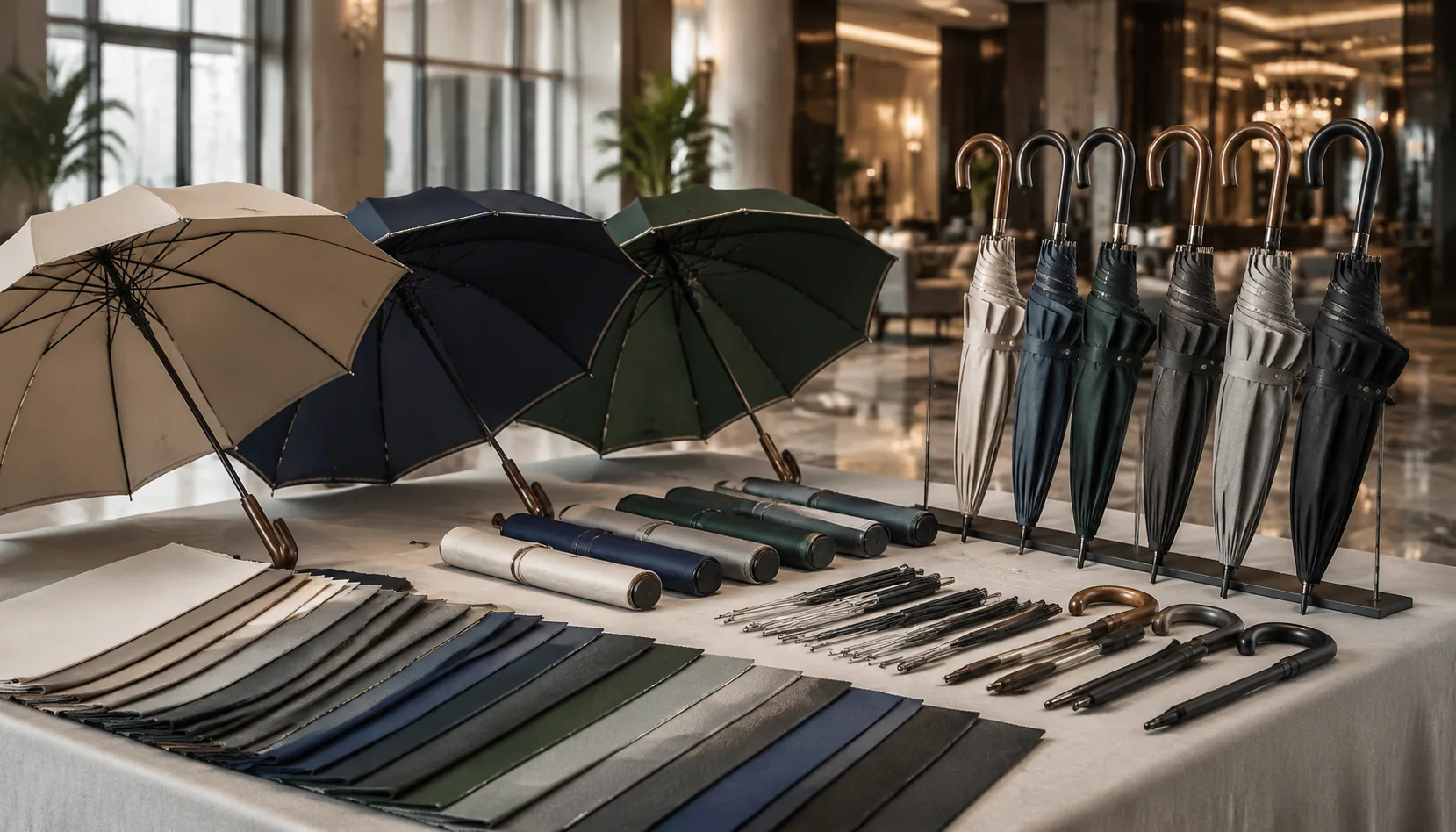
Hotel Guest Umbrellas: Bulk Product Specs for Buyers
Specify hotel guest umbrellas with the right size, ribs, fabric, handle, logo method, MOQ, AQL checks, and delivery term...
Read More »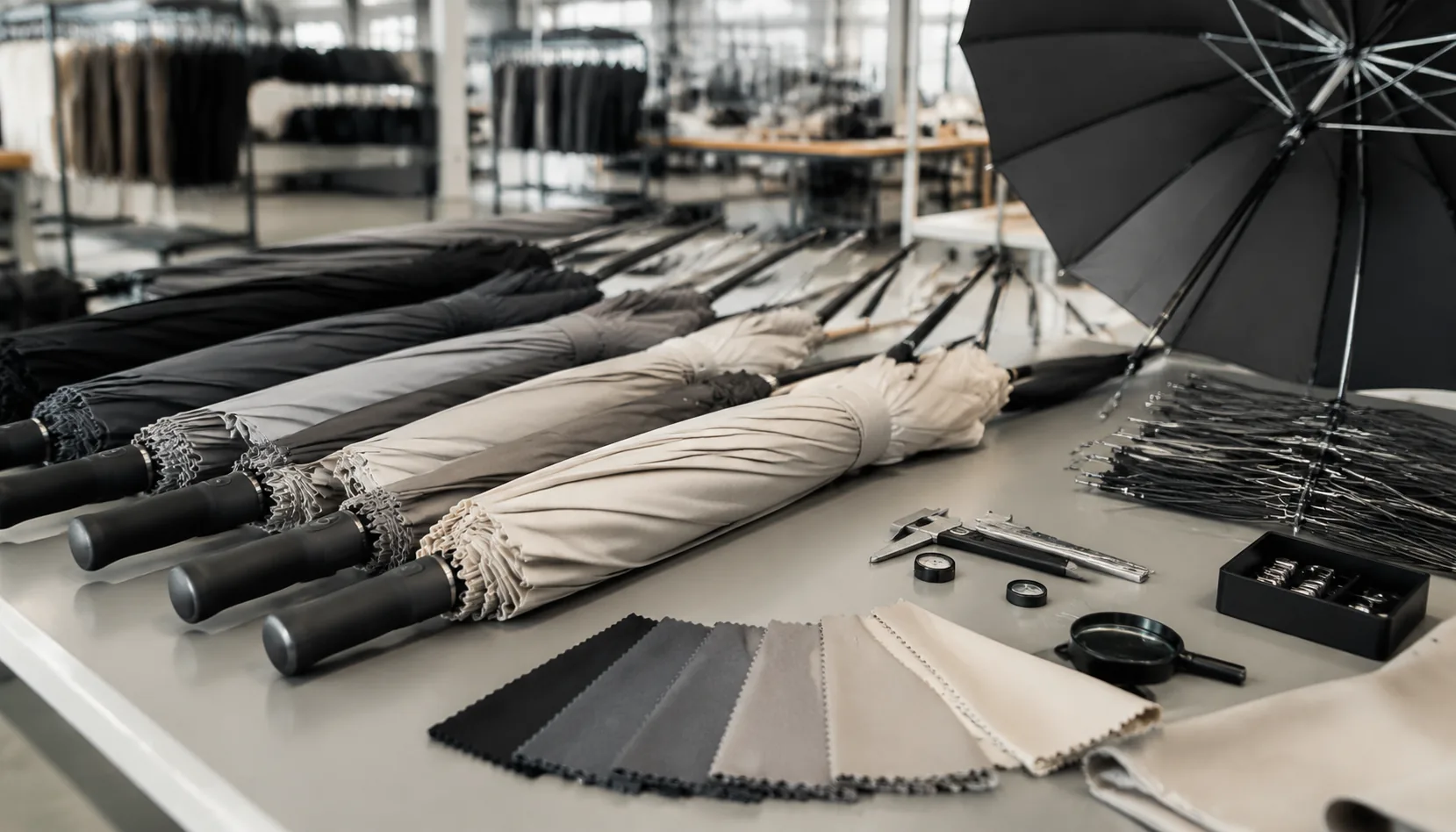
Hotel Loaner Umbrellas: Durable Specs for Guest Programs
Build hotel loaner umbrellas with durable ribs, 190T or 210T pongee, practical branding, MOQ planning, and QC specs for ...
Read More »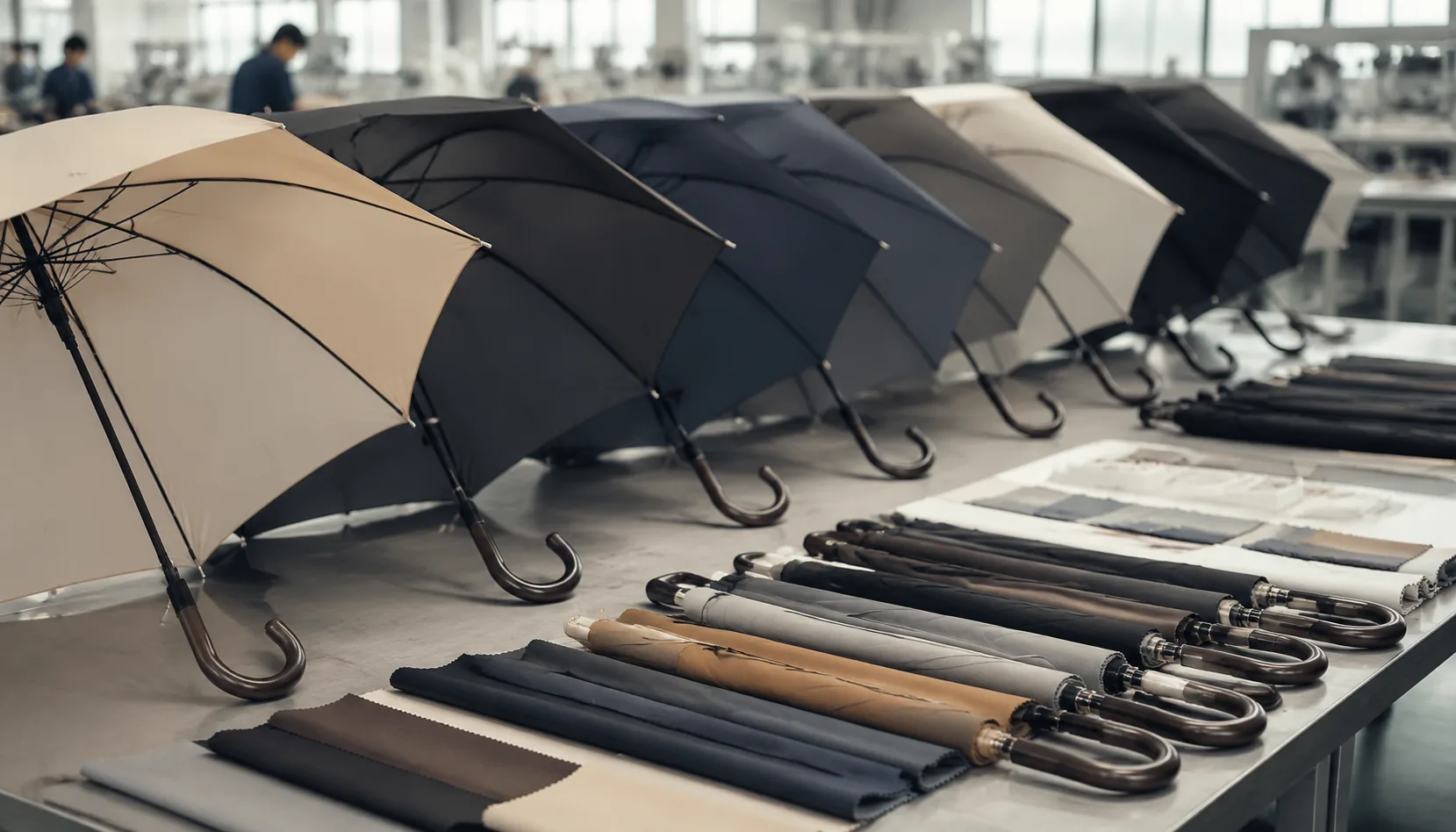
Hotel Guest-Room Umbrellas: Buyer Specs for Bulk Orders
Plan hotel guest-room umbrella orders with the right size, frame, fabric, branding, packaging, MOQ, and inspection specs...
Read More »