Kids' Umbrella Safety Standards Every Buyer Should Demand
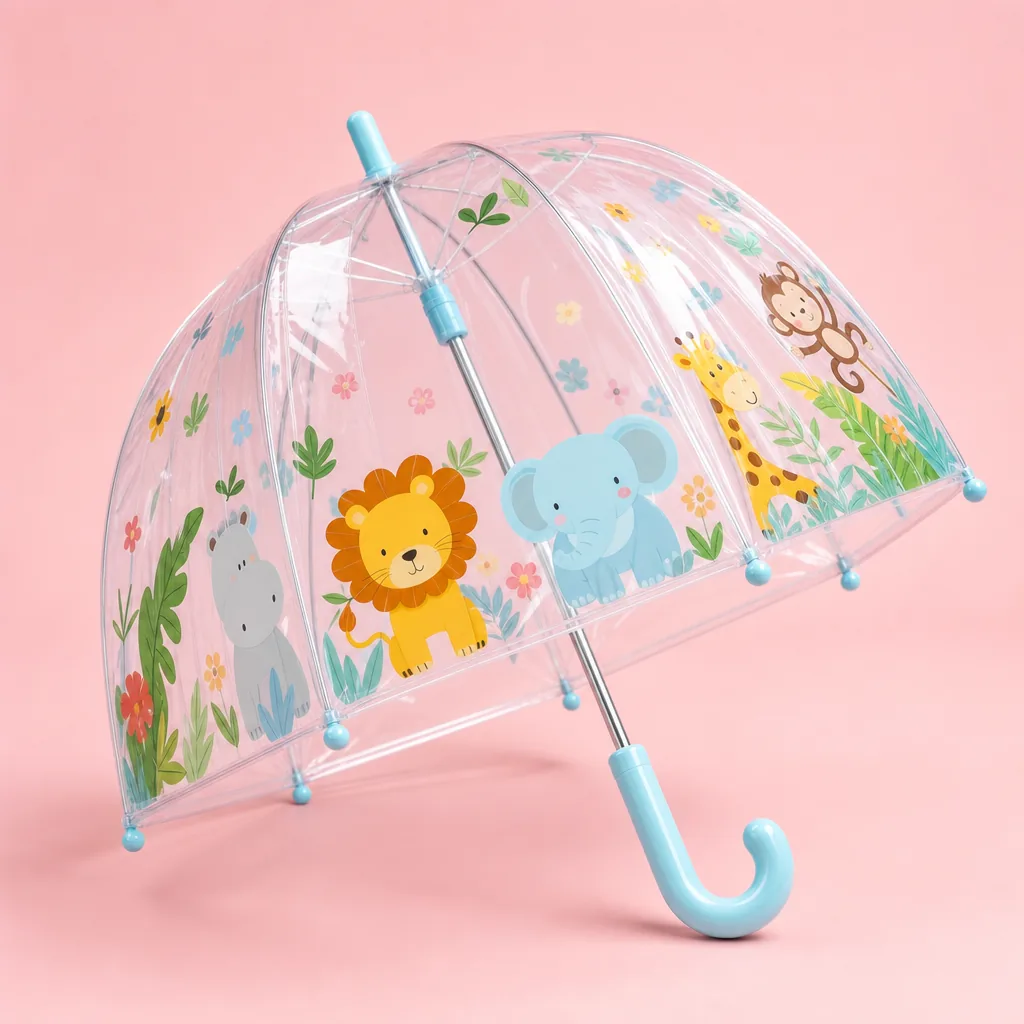
Buying children’s umbrellas is not just a design decision; it is a safety decision that starts on the factory floor. A qualified kids umbrella manufacturer knows that rounded tips, pinch-proof runners, and controlled opening force are not optional details, because a small failure can become a real injury in schoolyards, buses, and curbside storms. Buyers need clear standards, traceable materials, and the right certificates before they place an order.
Why children's umbrellas need a separate spec
A kids umbrella manufacturer cannot use the same spec as an adult program and call it safe. Children grip the handle differently, swing the shaft around in crowds, and drop umbrellas on hard floors, so the failure modes are not cosmetic, they are injury risks. The higher bar starts with rounded tips, no exposed wire ends, lower opening force, and rib geometry that reduces pinch points at the runner and stretchers. For children umbrella safety, I prefer a shaft and rib package that stays stable under repeated opening cycles, with 190T or 210T pongee canopy, fiberglass ribs for flexibility, and a smooth plastic or EVA handle that is sized for small hands. A child umbrella supplier should also test for tip pull-out, seam burst, and sharp-edge exposure after impact and bending, not just one clean sample off the line.
Regulatory scrutiny is tighter because the buyer is not only judging rain performance but also small-parts risk, labeling accuracy, and age grading. In practice, that means verifying whether trims, ferrules, caps, and decorative parts can detach under torque, bite, or drop testing, and whether the design avoids choke-hazard components for the intended age band. A serious kids umbrella manufacturer should document small-parts compliance, use non-toxic inks and coatings, and keep lead, phthalates, and restricted substances under control across fabric, handle, and print. ZheBrella’s standard practice is to separate children's specs from adult SKUs so the bill of materials, QC checkpoints, and carton labeling match the target market, because a promo umbrella for a 6-year-old should not share the same acceptance criteria as a 23-inch commuter model.
Small-parts risk is not theoretical. Loose eyelets, broken tip protectors, detachable character figures, and weak spring assemblies create the kind of failure that shows up after a few weeks in school bags, not during factory inspection. That is why I push for a separate children umbrella safety checklist that includes rib-end coverage, anti-pinch runners, rounded crown caps, and a closing force that a child can manage without yanking the canopy sideways. A child umbrella supplier should also spec packaging that keeps spare parts out of the box, print clear age guidance, and run AQL 2.5 with extra focus on sharp point, drop damage, and pull-off tests. The right safe umbrella tips are simple: fewer loose accessories, stronger but lighter fiberglass parts, shorter lead times only after the sample passes abuse testing, and no assumption that a good-looking umbrella is a safe umbrella.
Safety tips, runners, and pinch protection
A serious kids umbrella manufacturer should treat the rib tip as a safety part, not a decoration. Oversized rounded rib tips reduce the chance of punctures, scratches, and fabric wear when a child drags the canopy against a backpack, car seat, or another child in a crowd. I prefer molded tips with enough diameter to cover the wire end completely, plus a smooth transition so there is no sharp edge hidden under the cap. For children umbrella safety, the tip design matters as much as the frame material: fiberglass ribs flex better than brittle steel, but only if the ends are properly capped and tested after repeated opening and closing. On the factory floor, we check that the tips stay seated after pull tests and that they do not crack when the umbrella is dropped onto concrete from normal carrying height.
Pinch-resistant runners are the part many buyers miss, and it is where cheap product gets kids hurt. A proper runner should have an enclosed track or a shielded housing so fingers cannot enter the scissor point when the umbrella opens or closes. The best child umbrella supplier will also control spring force, because a runner that snaps too fast is harder for small hands to manage and increases pinch risk around knuckles. ZheBrella’s standard practice is to verify that the runner moves smoothly under repeated cycles without exposing the locking tooth or hinge area. For safe umbrella tips, I also look for a visible stop position and a handle size that lets a child hold the umbrella without reaching near the sliding parts.
The ferrule at the top should be rounded, low-profile, and firmly bonded so it cannot become a hard point if the umbrella is bumped against a wall or another child. A rounded ferrule spreads impact better than a sharp crown, and it also reduces fabric abrasion around the apex during windy use. In a real kids umbrella manufacturer spec, I would pair that with soft canopy corners, no exposed wire ends, and a final inspection that checks every touch point by hand. The practical standard for children umbrella safety is simple: no sharp transitions, no loose caps, and no mechanism that demands a child put fingers near a moving joint. If a supplier cannot explain how the runner, rib tips, and ferrule work together, they are not serious about safe umbrella tips.
Materials and non-toxic compliance
For a kids umbrella manufacturer, material compliance starts with the canopy ink, the handle, and every soft-touch part that a child can mouth or rub against skin. EN71 and ASTM F963 are not box-ticking exercises; they are the minimum proof that coatings, prints, tips, and trim have been checked for mechanical and chemical hazards. On the chemical side, buyers should ask for phthalate-free PVC or EVA, because the plasticizer risk is in the grip, ferrule cover, and any decorative components, not just the canopy. For printed panels, AZO-free inks matter because they reduce the risk of releasing restricted aromatic amines. ZheBrella’s standard practice is to keep full material declarations ready for canopy fabric, ink system, and handle compound, because a child umbrella supplier should be able to show where each raw material came from, not just say it passed inspection.
Lead limits are where weak suppliers usually get exposed. In the US, the practical benchmark is 90 ppm lead in paint and surface coatings and 100 ppm in accessible substrate for children’s products; that is the level procurement teams should ask labs to test against, not a vague “lead free” claim. For umbrellas, the highest-risk points are the printed canopy, metal rivets, metal tips, and any painted frame parts, especially if the design uses bright colors or metallic effects. Good safe umbrella tips are simple: demand test reports for EN71 and ASTM F963, require phthalate-free declarations for soft components, and confirm AZO-free ink on every printed panel, not just the main art file. A serious child umbrella supplier will also keep the compliance file tied to the exact SKU, because changing ink, handle resin, or coating can invalidate the prior report even if the umbrella looks identical on the shelf.
Sizing, weight, and ease of operation
For kids, diameter matters more than buyers think. A 21-inch umbrella is usually the right starting point for younger children because it keeps the canopy compact enough to control in crowded sidewalks, school gates, and bus stops. Once you move into older age groups, 23-inch can work, but anything larger starts to behave like an adult umbrella in wind and becomes harder for small hands to manage. A serious kids umbrella manufacturer should match the frame size to the child’s reach, not just shrink an adult pattern. In practice, that means checking overall open span, closed length, and handle diameter together, because a canopy that is technically “small” can still be awkward if the shaft is too long or the grip is too thick. Good children umbrella safety starts with proportion, not decoration.
Weight is the next failure point. A child-friendly model should stay light enough for one-hand carrying without tiring the wrist, which is why fiberglass ribs and a slim steel shaft or full fiberglass frame are usually preferred over heavy steel construction. On the factory floor, we watch total weight, balance point, and how much force the child needs to lift the frame from closed to open. If the umbrella is nose-heavy or the runner feels sticky, it will get slammed shut or dropped. A reliable child umbrella supplier will also avoid oversized handle hardware, thick metal tips, and bulky ferrules that add weight without adding real safety. For safe umbrella tips, I tell buyers to test the product in the smallest hand size in the target age band, not just with an adult reviewer.
Low opening force is essential because children will not use a product that fights back. Manual-open umbrellas with a smooth runner are often safer than aggressive auto-open-close systems for younger users, because the spring load can surprise them and pinch fingers if the mechanism is poorly tuned. For school-age designs, the release force should be light, consistent, and easy to understand, with no sharp rebound at the end of travel. A good kids umbrella manufacturer will also round off edge points, use a soft-tension canopy, and keep the rib ends covered so the frame does not punish rough handling. In a proper sample check, we look for easy grip, controlled opening, and stable closing motion under repeated use, because children umbrella safety is not just about what happens on day one but how the umbrella behaves after a month of daily use.
Testing and certification we provide
Before you place a kids umbrella manufacturer order, require the core compliance reports for your target market, not a generic “passed” sheet from an old shipment. For the U.S., that usually means CPSIA third-party testing for lead in substrate and coatings, plus phthalates if any soft PVC or EVA parts are used on handles, tips, or straps. If the product is aimed at children under 12, ask for ASTM F963 mechanical and physical hazard data covering sharp points, small parts, and accessible edges. For the EU and UK, the minimum package is EN 71-1, EN 71-2, and EN 71-3, because children umbrella safety is not just about the canopy print; it is about breakage, flammability, and migration limits. A serious child umbrella supplier should also provide the test method, sample photos, date code, and the exact SKU tested, not a family of similar models.
Do not stop at chemical compliance. Buyers should demand mechanical test reports that show the umbrella survives repeated open-close cycles, rib flexing, wind exposure, and tip impact without creating loose parts. For a kids umbrella manufacturer, I would want document-backed results for rib fatigue, stretch and tear on the canopy, pinch-point checks on the runner and ferrule, and coating adhesion if the canopy uses heat-transfer, sublimation, or screen print. If the frame uses fiberglass ribs, ask for fracture behavior data; if it uses steel, ask for corrosion resistance and edge finishing. If the handle has soft-touch TPR or EVA, require the relevant migration and heavy-metal reports for those materials too. Safe umbrella tips are not a slogan; they mean a blunt tip, secure cap, and no exposed metal after abuse testing.
For import control, ask for a full lab pack, not just one certificate. The pack should include the test report, scope of accreditation for the lab, product photos, bill of materials, and a declaration that the report matches the exact production version. If your market needs it, add REACH SVHC screening, RoHS where electronic add-ons are present, and formaldehyde or azo dye testing for textile components with printing or trims. ZheBrella’s standard practice is to keep these reports tied to each style and revision so buyers can see whether a 21-inch manual model and a 23-inch auto-open version were tested separately. That is the practical way to reduce border holds, complaint risk, and re-test costs. A proper children umbrella safety file should also include packing tests and carton labeling, because import problems often start with missing warnings, not failed materials.
Frequently Asked Questions
What safety certifications should kids' umbrellas have?
For the EU, EN71 toy-safety testing; for the US, ASTM F963 and CPSIA compliance (lead and phthalate limits). Reputable factories provide third-party lab reports for the exact materials used.
What design features make a children's umbrella safe?
Oversized rounded rib tips, a pinch-resistant runner, a blunt top ferrule, low opening force, and non-toxic inks. Transparent dome (bubble) styles also improve a child's visibility while walking.
Which safety documents should I request before placing a kids umbrella order?
For a B2B order, ask for material test reports, a finished-goods inspection report, and any applicable compliance documents such as EN 71, REACH, or CPSIA depending on your market. If the umbrella has plastic parts, request checks for phthalates, lead, and sharp-edge testing on the frame and tip.
How many samples should I approve before mass production?
Plan on at least 2 to 3 samples: one for structure and safety review, one for print and color approval, and one final pre-production sample. For custom kids umbrellas, sample lead time is often 7 to 14 days, while bulk production is commonly 25 to 40 days after approval.
What safety features add the most value for retail buyers?
Rounded tips, a pinch-proof runner, and a soft, non-slip handle are the most important features because they reduce injury risk during daily use. Buyers also often specify fiberglass ribs or reinforced tips to improve durability without adding much weight.
Looking to Launch Your Custom Umbrella Line?
ZheBrella is a Zhejiang-based OEM/ODM umbrella manufacturer with 17 years of export experience. Free design, low MOQ from 100 pieces, windproof construction, full-color print.
Get Free Quote Now »People Also Search For
Related Articles
Reflective Umbrellas for Commuter Safety: Buyer Spec Guide
Learn how to specify reflective umbrellas with safe trim placement, 190T/210T canopies, windproof frames, print areas, a...
Read More »Reflective Umbrellas for Commuters: OEM Buyer Spec Guide
Specify reflective commuter umbrellas with the right trim, canopy fabric, frame, MOQ, and QC checks for retail, transit,...
Read More »Reflective Umbrellas for Commuter Safety: OEM Buyer Guide
Source reflective umbrellas for commuters with guidance on trim placement, canopy fabric, frames, testing, MOQ, and deli...
Read More »