Multichannel Umbrella Retail: Wholesale, DTC, and Marketplace Mix
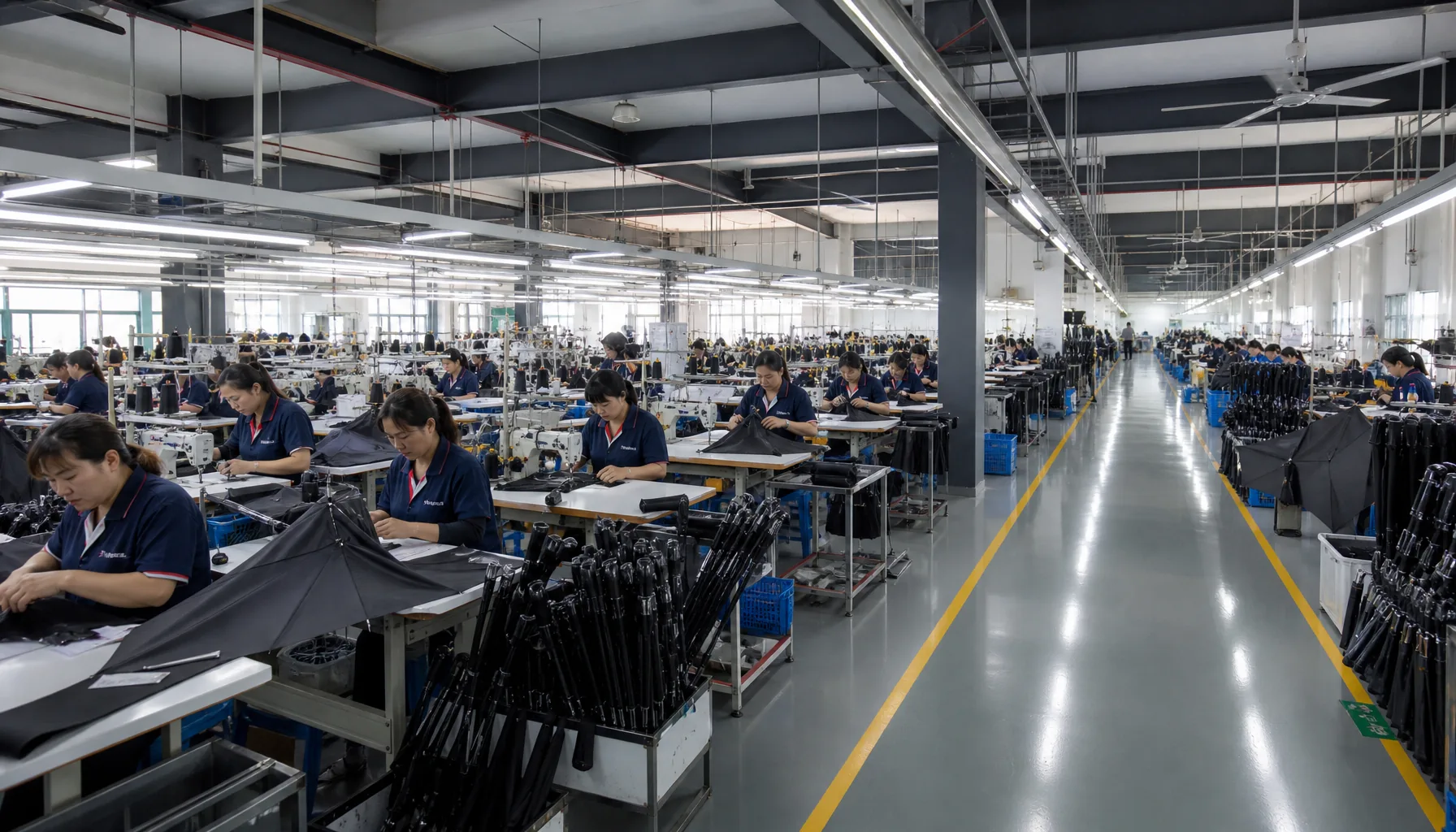
Managing multichannel umbrella sales means balancing three different demands at once: wholesale buyers want dependable lead times and spec stability, direct-to-consumer channels need margin and brand control, and marketplaces punish sloppy inventory planning fast. On the factory floor, those choices show up in frame allocation, fabric purchasing, packaging standards, and how much finished stock you can actually afford to hold. The brands that scale well are the ones that treat each channel as a different operating model, not just a different sales outlet.
The three routes to market
For multichannel umbrella sales, wholesale is still the cleanest route when the goal is volume and predictable factory loading. You move cartons by case pack, not by single-piece picking, so 10K and 16K frames, 21" and 23" compact styles, and 27" or 30" golf umbrellas can be scheduled efficiently with fewer packing changes. The tradeoff is obvious: margin is thinner because the buyer expects distributor pricing, freight discipline, and usually some form of private label or logo control. You also give up direct customer data, because the retailer owns the end buyer relationship and the reorder signal often comes back late. If your production plan depends on stable MOQs, AQL 2.5 inspection, and decent forecasting, wholesale is usually the most reliable channel.
DTC e-commerce gives the highest control over pricing, photography, product story, and post-sale service, but it is not free margin. Between platform fees, paid traffic, returns, and customer service, the gross margin on an umbrella can look good on paper and still shrink fast in practice. The upside is better customer data: you learn which canopy materials sell, whether buyers prefer pongee 190T or 210T, and whether an auto-open-close mechanism or a double-canopy vented windproof design actually converts. For umbrella wholesale vs DTC, the key difference is not just margin; it is feedback speed. DTC tells you fast what colors, UV coatings, Teflon treatments, or UPF 50+ claims are working, which is useful if you are refining an omnichannel umbrella line rather than just pushing stock.
Marketplaces sit between those two models, and that is why an umbrella marketplace strategy is usually the most operationally messy. You get reach and fast demand capture without building traffic from zero, but you also accept fee pressure, price transparency, and weak control over brand presentation. In practice, marketplaces are good for testing SKUs, clearing inventory, and finding repeatable winners across umbrella distribution channels, especially if your listing content is tight and your packaging is standardized for fulfillment. They are poor if you need strict channel separation, because your competitors can often see your price moves immediately. The smartest multichannel umbrella sales setup uses wholesale for scale, DTC for margin and data, and marketplaces for discovery and liquidation, but each channel needs its own SKU logic, inventory allocation, and pricing rules or the whole stack turns into margin leakage.
Margin vs volume tradeoffs
Wholesale is the volume engine in multichannel umbrella sales. A retailer or corporate buyer will take 500 to 5,000 units at a time, usually by colorway and size, because they want predictable stock and low per-unit landed cost. That means you give up margin to earn scale: the factory price gets pushed down, packaging is simplified, and the buyer expects FOB terms, AQL 2.5, and 30 to 45 day lead times on repeat programs. For umbrella wholesale vs DTC, the trade is straightforward. Wholesale moves more units with less customer acquisition work, but it also strips out control over presentation, bundling, and post-sale data. You are selling an 8K or 16K frame, a 190T pongee canopy, and a margin structure that works for the middle of the channel, not the end consumer.
DTC is the opposite. You keep the retail margin, but you pay for every click, every return, every broken promise on shipping or color accuracy, and you need to manage product pages, UGC, email flows, and customer service. An omnichannel umbrella brand uses that control to learn which canopy coatings, handle styles, and vented double-canopy constructions actually convert, then feeds the winning spec back into larger runs. The data matters because it shows whether a 21-inch automatic compact or a 23-inch auto-open-close model has better repeat purchase behavior, and whether a UPF 50+ or Teflon finish justifies the higher price. DTC is not just a sales channel; it is the measurement layer for the whole program.
Marketplace sits between those two models and is usually the hardest umbrella marketplace strategy to run well. You get reach and search traffic fast, but the platform controls ranking, fees, and price pressure, so the economics can look good on paper while net contribution shrinks after ads and fulfillment. The right use of umbrella distribution channels is not to force one model to do everything. Wholesale covers base load and production efficiency, DTC captures pricing power and first-party data, and marketplaces clear excess capacity or expand into new regions without building a full retail stack. That mix works only if you keep SKU discipline tight, because too many frame types, canopy fabrics, and packaging variants will destroy margin faster than any single channel can create it.
Avoiding channel conflict
The cleanest way to manage multichannel umbrella sales is to stop pretending every channel should sell the same offer at the same price. Wholesale needs margin for the distributor, DTC needs room for ad spend and returns, and marketplaces need a price that survives fees without triggering a race to the bottom. Our standard practice at ZheBrella is to set a clear pricing ladder before launch: landed wholesale cost, minimum advertised price, and a floor for promo periods. If those numbers are not written down, someone will discount a 21-inch automatic umbrella on a marketplace, and every other partner will see the screenshot within a day. For umbrella wholesale vs DTC, the real issue is not just gross margin; it is protecting the perceived value of the product so retail buyers do not feel punished for supporting the brand.
MAP only works if it is enforced consistently and paired with channel-specific SKUs. A single umbrella sold everywhere with the same canopy color, handle, and hangtag invites direct comparison and undercutting. Better practice is to change one variable that makes the offer non-identical: a different panel print, a unique handle finish, a sleeve bundle, or a three-pack set for marketplace buyers. In an omnichannel umbrella program, that gives you the same core frame and fabric while keeping pricing separable by channel. It also helps when dealing with umbrella distribution channels that have different economics. A promo distributor may need a plain 10K fiberglass model in bulk cartons, while DTC needs a gift box and stronger presentation. If the product architecture is different enough, partners stop comparing screenshots and start selling their own version.
The umbrella marketplace strategy should be defensive, not reactive. Marketplaces are good for reach and review volume, but they punish sloppy assortment planning because every seller can see every other seller’s price. Keep marketplace listings tied to SKUs that are either exclusive or bundled with add-ons the wholesale channel does not carry, such as a matching cover, replacement tips, or a two-pack family offer. That way you preserve margin without making the wholesale line look overpriced. The same logic applies to promotions: discount by bundle value, not by stripping base price, because base-price erosion is hard to recover from once retailers train customers to expect it. In multichannel umbrella sales, discipline matters more than volume. The brands that hold price usually do so because they treat channel conflict as a product-design problem, not just a sales problem.
Inventory and fulfillment across channels
Pooled inventory usually works better for multichannel umbrella sales than fully dedicated stock, but only if you set hard rules on reserve levels by channel. Umbrellas do not behave like steady replenishment items. Demand spikes when a forecast turns rainy, when a retailer runs a promotion, or when a marketplace listing starts ranking. If you lock too much stock into separate DTC, wholesale, and marketplace buckets, you end up with dead inventory in one lane and stockouts in another. The cleaner approach is a shared base pool for core SKUs like 21" and 23" auto-open models, with a small protected reserve for accounts that require guaranteed fill rates. That is the practical difference in umbrella wholesale vs DTC: wholesale buyers want case-packed reliability, while DTC needs a fast response to sudden traffic and paid media swings. For an omnichannel umbrella program, the allocation logic has to be dynamic, not calendar-based.
Seasonality makes umbrella distribution channels harder to manage than most seasonal accessories because the selling window can compress into a few stormy weeks. If you run an umbrella marketplace strategy with the same stock logic you use for wholesale, you will usually overcommit. Marketplaces punish late delivery, so inventory has to sit closer to the fulfillment node, but that same proximity can starve wholesale orders if you do not ring-fence forecasted volume. The fix is to segment by velocity and margin: high-turn black or navy pongee 190T auto-open styles stay in pooled inventory, while custom-print or gift-boxed SKUs sit in dedicated stock with longer lead times. That lets you keep fill rates stable without tying up every carton in one channel. It also reduces the common mistake of treating all channels as equal when their service levels are not.
Fulfillment should follow channel economics, not a single warehouse rule. DTC orders tolerate more split SKUs and parcel handling, while wholesale prefers palletized or case-packed shipments with fewer touches and lower damage risk. If you are pushing multichannel umbrella sales, you need a forecast that accounts for seasonality, minimum order quantities, and return exposure before you decide whether a SKU belongs in shared inventory or a dedicated allocation. A practical setup is weekly inventory rebalancing: move fast-selling colorways into the DTC and marketplace pool, keep branded program stock isolated, and trigger replenishment before the next weather event, not after it. In our standard practice, the best results come from pairing conservative safety stock with short production lead times, because once a rain cycle starts, the losing move is waiting for a perfect allocation model instead of shipping what is available.
Sequencing channels as you grow
Start with one channel that gives you control over pricing and product feedback before you add complexity. For most new umbrella brands, that means direct-to-consumer first if you have a clear design angle and can support small-batch inventory, or wholesale first if you already have a sales team and a few credible account targets. The mistake in multichannel umbrella sales is trying to launch wholesale, DTC, and marketplace all at once. Umbrellas are not a low-involvement product once you get into customization, freight damage, color matching, and seasonality. You need one clean assortment, one margin model, and one fulfillment process you can actually execute. In practice, a simple 21" or 23" auto-open style with 190T pongee, fiberglass ribs, and a standard print position is easier to test than a full line of compact, golf, and promotional SKUs at the same time.
Once the product and packaging are stable, add the second channel based on what the first channel tells you. If DTC is working, then selective umbrella wholesale vs DTC expansion makes sense through boutiques, corporate gift distributors, or regional retailers that can move repeatable styles. If wholesale is working first, use DTC to capture higher-margin variants, custom colors, or bundled accessories that your accounts will not stock. This is where an omnichannel umbrella approach starts to matter: the same core frame and canopy spec should not be sold under inconsistent names or with different performance claims. Keep pricing discipline tight, because channel conflict kills momentum faster than slow sell-through. A brand that is clean on one platform and messy on another usually has weak inventory planning, not a demand problem.
Marketplace should usually come last, and only after you know which SKUs deserve scale. The best umbrella marketplace strategy is narrow: use it to clear evergreen colors, test search demand, and build reviews on a few winners, not to dump every slow-moving style. Marketplaces punish weak detail pages, so you need honest specs on canopy fabric, wind performance, opening mechanism, and shipping dimensions. They also compress margins, so by the time you go live there, you should already understand your landed cost, return rate, and acceptable ad spend. In umbrella distribution channels, sequencing matters more than channel count. Our standard practice is to validate one core style, widen the assortment in controlled steps, then only push multichannel umbrella sales when inventory turns and QC data are stable enough to absorb the added complexity.
Frequently Asked Questions
Should a new umbrella brand start with wholesale or DTC?
Many brands start DTC or on a single marketplace to control pricing, capture margin, and learn which SKUs sell, then add wholesale once they have proven products and repeatable supply. Launching every channel at once tends to create pricing conflict and inventory strain.
How do I avoid channel conflict between retailers and my own site?
Use disciplined pricing (a MAP policy), differentiate assortments or bundles by channel, and avoid undercutting your wholesale partners on your DTC site. Channel-specific SKUs and clear pricing tiers keep partners loyal.
What is a practical MOQ for testing multichannel umbrella sales without overcommitting inventory?
For a new style, many buyers start with 300-500 pieces per color or 500-1,000 pieces total across 2-3 SKUs. That is usually enough to supply a wholesale account, a small DTC launch, and limited marketplace testing without tying up too much cash.
How should umbrella pricing differ between wholesale, DTC, and marketplaces?
Wholesale pricing is usually built for a 2.0x to 2.5x retail markup, while DTC can support 3.0x or higher if the brand controls the customer relationship. Marketplaces often sit in between because referral fees and ads can take 15%-30% of gross sales, so pricing needs enough room to protect margin.
How long does it usually take to launch one umbrella program across multiple channels?
If artwork and specifications are finalized, sample development usually takes 7-15 days and production for OEM umbrellas is often 30-45 days. Marketplace and DTC listings can go live faster than wholesale onboarding, but channel-specific packaging and compliance files should be prepared before first shipment.
Looking to Launch Your Custom Umbrella Line?
ZheBrella is a Zhejiang-based OEM/ODM umbrella manufacturer with 17 years of export experience. Free design, low MOQ from 100 pieces, windproof construction, full-color print.
Get Free Quote Now »People Also Search For
Related Articles
Branded Umbrellas for Retail Merchandising and Storefront Sales
Plan a retail-ready umbrella line with the right sizes, materials, and display mix to improve sell-through, margins, and...
Read More »
Branded Umbrellas for Beverage Brands and Field Sales
Build umbrella programs for beverage reps, distributor teams, and retail activations with durable specs, compliant brand...
Read More »Custom Umbrellas for Retail Mall Operations and Tenant Programs
Build umbrella programs for malls, valet teams, and tenant campaigns with durable specs, practical SKU tiers, QC control...
Read More »