Private-Label Umbrellas for Subscription Boxes and DTC Kits
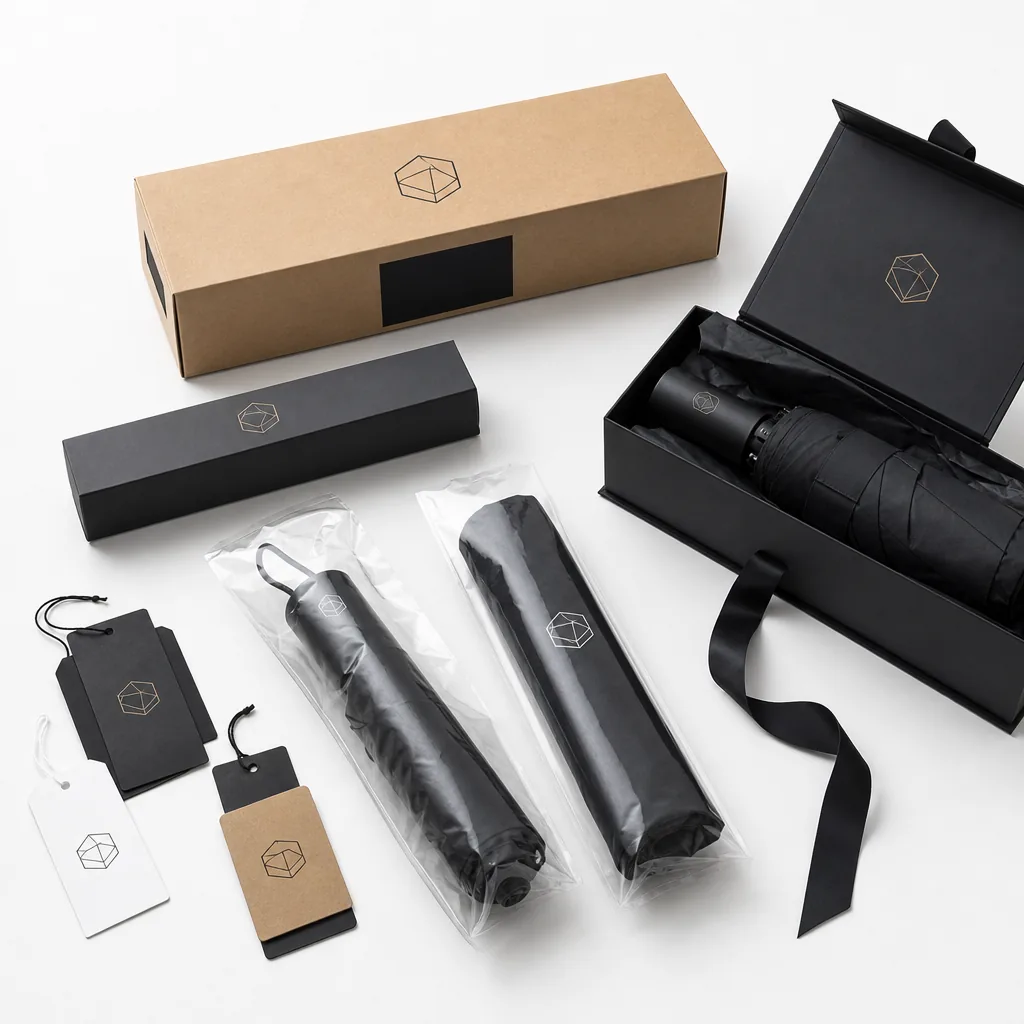
Buyers building private label umbrellas for subscription boxes need more than a logo print; they need a compact spec that survives carton drop, dimensional-weight pricing, and the unboxing moment without driving claims or margin loss. On our Songxia production floor, the real work is balancing canopy size, folded length, handle fit, packaging method, and export pack-out so each unit lands gift-ready, consistent, and practical at subscription-scale MOQs.
- 1. Where Umbrellas Fit in Subscription and DTC Product Strategy
- 2. Spec Selection for Box Size, Freight, and Customer Experience
- 3. Branding and Packaging Options for Private-Label Programs
- 4. MOQ Planning for Limited Drops, Tests, and Repeatable SKUs
- 5. Cost Control, QC, and Shipping Terms for Margin Protection
Where Umbrellas Fit in Subscription and DTC Product Strategy
For subscription and DTC programs, the first filter is packability. In seasonal lifestyle boxes, commuter or travel edits, back-to-school drops, and employee welcome kits, 21-inch or 23-inch tri-fold umbrellas usually make the most sense because the closed length stays around 32 cm or less. That fits common compact umbrella packaging and standard gift cartons, which helps avoid avoidable dimensional-weight charges on recurring shipments. A 27-inch stick umbrella can look more premium on arrival, but it usually breaks the freight model for monthly boxes unless the entire offer is built around one oversized hero SKU. Private label umbrellas for subscription boxes work best when the item solves an immediate need, especially for spring launches and onboarding kits where recipients are likely to carry it the same week instead of leaving it at home.
Use the umbrella as the hero item only when the campaign can absorb the extra carton space, higher unit cost, and upgraded frame spec. Influencer mailers, rain-themed capsule drops, and limited retail collaborations can justify 8K fiberglass ribs, auto-open-close, 190T or 210T pongee, and a custom sleeve because unboxing, photography, and social sharing are part of the ROI. In broader DTC umbrella kits and recurring boxes, umbrellas usually perform better as add-on private label rain accessories: a 21-inch compact manual or auto-open model with a basic handle and a one- or two-color screen print keeps cost and packing volume under control. Portability is the conversion driver in this channel. A 3-fold or 5-fold frame that fits a tote, backpack, laptop bag, or car door pocket is more likely to be kept and reused, which is why low MOQ umbrella production often starts at 500 to 1,000 pieces in foldable formats. A practical everyday-carry build is an aluminum multi-section shaft with fiberglass end ribs at about 280 to 360 grams total weight: light enough to travel daily, solid enough that it does not feel disposable.
Spec Selection for Box Size, Freight, and Customer Experience
For subscription programs, box dimensions usually set the umbrella spec before branding does. A 5-fold compact typically closes to 6.5-7.5 inches, while a standard 3-fold closes to about 9.5-11 inches; that difference determines whether the unit fits a letterbox mailer, shallow insert, or standard parcel carton without forcing a larger pack-out. Coverage drops as the umbrella gets shorter. Most 5-fold models open to roughly a 35-38 inch canopy arc and use a smaller handle and shorter shaft, while 3-fold compacts commonly run on 21 inch or 23 inch frames with a 38-42 inch arc that feels more substantial in rain. For private label umbrellas for subscription boxes, start with packed dimensions and parcel cost. Once packed unit weight moves from roughly 280-320 g into the 360-430 g range, freight and last-mile charges usually increase faster than any savings or upgrade in canopy fabric. That is why many DTC umbrella kits choose the smallest spec that still feels adequate in hand, not the largest canopy that can technically fit the box.
Fabric and mechanism decide both carton efficiency and customer perception. 190T pongee is the baseline for compact umbrella packaging because it folds flatter, dries faster after a light shake, and keeps packed diameter tighter in a pouch or molded tray. 210T pongee gives a denser hand and better opacity for dark flood colors or interior print, but it adds noticeable bulk and some weight; buyers usually see the difference only when they compare packed samples side by side. If the umbrella is positioned as a premium private label rain accessory, 210T pongee can justify the extra cost; if the priority is low MOQ umbrella production and parcel efficiency, 190T is usually the better balance. Mechanism and frame spec matter just as much. Manual 3-fold umbrellas are usually the lowest-risk choice for cost control because they have fewer moving parts, lower handle bulk, and lower packed weight than auto-open compacts. On frame material, black steel stays cheapest but often feels bottom-heavy and commodity-grade. An aluminum shaft with fiberglass ribs costs more, yet it reduces carry weight and improves flex under gusts, especially on 8K compact frames where entry-level all-steel builds can feel harsh and less durable after repeated parcel handling and customer use.
Branding and Packaging Options for Private-Label Programs
For private label umbrellas for subscription boxes, spend branding budget on the parts the customer sees before the canopy opens: woven sleeve labels, handle badges, sleeve printing, and hangtags. A woven label sewn into the sleeve seam gives an apparel-style cue, but artwork needs approval before cutting because a 3 mm fold tolerance can make small logos look off-center. For low MOQ umbrella production, one-color sleeve printing on 190T or 210T pongee is usually the lowest-risk choice; it avoids badge tooling, shortens prepress, and keeps unit cost below a metal or epoxy badge program. Handle badges still matter when the brief is premium gifting, especially on straight-handle styles, because epoxy domes or stamped metal read better than pad print in close-up photography. Hangtags also carry real operational value in DTC umbrella kits: UPC, barcode, care copy, QR activation, and brief brand messaging without overcrowding canopy art. For lifestyle, travel, and wellness brands, a valid UPF 50+ claim can lift perceived value more than another decoration step, but only when the canopy fabric and coating support it; darker 190T or 210T pongee and coated fabrics are a safer starting point than thin, light-color canopies.
Packaging decides freight cost, damage rate, and whether the item survives parcel handling without looking cheap. Compact umbrella packaging for e-commerce should use mailer-safe cartons sized closely to 21 inch or 23 inch 3-fold umbrellas so the frame does not batter carton corners in transit. For most subscription shipments, a printed E-flute carton with a sleeve or spot-color exterior is the better cost-to-protection balance than a rigid gift box, which often adds dimensional weight before it adds much customer value. Retail-ready gift boxes fit better on higher-AOV programs such as influencer mailers, holiday bundles, and private label rain accessories packed with a poncho, pouch, or tumbler. Before mass production, require fit checks and carton drop tests; a dieline that looks correct on sample can still fail once a wet umbrella moves through courier networks. Frame spec also changes the premium signal: 8K is the standard, cost-efficient look for auto-open and auto-open-close models, while 16K creates a denser, more boutique appearance that photographs better in unboxing content. The tradeoff is cost and flexibility: 16K uses more components, slows assembly, and offers fewer size and mechanism options than common 8K frames used for private label umbrellas for subscription boxes.
MOQ Planning for Limited Drops, Tests, and Repeatable SKUs
Keep the first drop narrow if you want manageable MOQs. For private label umbrellas for subscription boxes, the easiest way to stay in the 300 to 500 piece range is to standardize the full build: one 21 inch or 23 inch tri-fold compact frame, one handle, one canopy fabric such as 190T or 210T pongee, and one pack-out format. Complexity is what pushes the factory minimum up. Mixed canopy colors, inside-and-outside printing, custom woven labels, belly bands, and separate insert cards typically move the practical MOQ closer to 1,000 pieces because each variation adds setup time, color matching, and hand-packing steps. For subscription shipments, carton fit and damage risk matter as much as decoration. A slim tri-fold with fiberglass ribs and auto-open usually packs more consistently than an auto-open-close frame with a thick ABS handle. For DTC umbrella kits, spend on one visible brand cue, such as a 1-color screen print on one panel or a sewn neck label, and keep the rest of the spec stock.
Set the test-order rules before sampling. If the goal is demand validation, approve one repeatable build and vary only the artwork or one hero color so the winning version can be replenished without changing frame, sleeve, or carton dimensions. A first run of 300 to 600 units is enough to expose real problems in compact umbrella packaging, drop performance, drying time, opening feel, and complaint rates. On the first order, skip custom EVA or PVC gift boxes unless presentation is the product; a standard polybag with a printed sleeve or kraft mailer protects margin while you learn. Lock the build with a signed pre-production sample and inspect to AQL 2.5 so repeat POs match the launch run. Lead time should set the launch calendar: stocked frames with dyed pongee can usually ship about 25 to 35 days after deposit, while custom Pantone dyeing, woven labels, retail cartons, or DDP delivery to a U.S. 3PL can stretch the cycle to roughly 40 to 55 days door to door. Once sell-through data shows the winners, rationalize fast. One proven SKU at 600 units is easier to forecast, replenish, barcode, and warehouse than three weak variants at 200 each. For low MOQ umbrella production, the most repeatable model is one evergreen umbrella with seasonal changes limited to artwork, insert copy, or outer packaging.
Cost Control, QC, and Shipping Terms for Margin Protection
For private label umbrellas for subscription boxes, margin usually leaks through cubic volume before it leaks through ex-factory price. A 21-inch 3-fold manual or auto-open frame is typically the most efficient DTC format because the closed length stays around 10.5-12 inches, making compact umbrella packaging easier without pushing parcels into a higher dimensional-weight tier. By contrast, a 23-inch auto-open-close umbrella with heavier fiberglass ribs may add only $0.60-$1.20 per unit ex-factory, but the wider packed diameter and higher shipping weight can cut units per master carton, increase pallet height, and raise final-mile charges enough to erase the apparent savings. The common mistake is approving retail-style inner boxes for DTC umbrella kits with inserts, pouches, or gift sleeves that consume 15%-25% of carton cube. Engineer from the master carton backward: lock carton dimensions for pallet efficiency, keep gross weight below standard handling thresholds, and remove dead space so you are not paying freight on air. That matters even more in low MOQ umbrella production, where smaller runs leave little room to absorb preventable logistics cost.
Defect prevention is cheaper than rework once goods reach a 3PL. Use staged approvals: first fabric handfeel and color dip, then a logo strike-off for screen print, heat transfer, or sublimation, then a sealed pre-production sample that confirms frame spec, rib material, handle, strap, and final pack-out. On folding private label rain accessories, the repeat failure points are known: logo drift on 190T or 210T pongee, loose top notches on 8K or 10K frames, handle scuffing from the wrong polybag, and carton crush from under-spec corrugate. Final inspection at AQL 2.5 should check open-close function, stitch consistency across canopy panels, water-repellent coating coverage, barcode scan accuracy, and packed-unit drop resistance; add an in-line packaging inspection to catch insert mix-ups and wrong labels before mass packing. Typical timing is 7-10 days for samples after artwork and material approval, then 30-45 days for repeat bulk production, with longer lead times for custom-mold handles, EVA or POE components, or peak-season print queues. FOB is usually the better term when the buyer already controls forwarding into a U.S. or EU 3PL. DDP makes more sense for brands shipping private label umbrellas for subscription boxes into multiple direct-fulfillment nodes, but only when carton specs, HS codes, and receiving rules are fixed early, because accessorials and relabeling can wipe out the margin gain.
Frequently Asked Questions
What umbrella style works best for subscription boxes?
Compact 3-fold umbrellas are usually the best balance of size, perceived value, and parcel efficiency. A 5-fold style can reduce box dimensions further, but it may trade off canopy size and sturdiness.
Can private-label umbrella programs work with lower MOQs?
Yes, especially if the brand limits custom elements to canopy printing, sleeves, and standard handles or frames. Fully custom packaging, unique molds, and multiple colorways usually push MOQ and lead times higher.
What umbrella dimensions work best for subscription boxes and DTC kits?
For most box programs, a 3-fold compact umbrella in the 21 to 22 inch range is the easiest fit. Closed length is typically 10 to 12 inches, which works better for standard subscription cartons and keeps dimensional weight under control.
Can private-label umbrellas ship with pre-packed retail or influencer kit components?
Yes. Buyers commonly request belly bands, barcode stickers, hangtags, thank-you cards, or polybagged inserts packed at the factory. This reduces third-party kitting labor, but final pack-out requirements should be confirmed before sampling because it affects carton counts and lead time.
What MOQ and lead time are realistic for a low-volume umbrella kit launch?
For many private-label compact styles, a practical starting MOQ is around 300 to 500 pieces per color or design, depending on fabric color and packaging complexity. Production usually runs about 25 to 40 days after sample approval, with extra time needed for custom boxes, labels, or mixed SKU assortment packing.
Looking to Launch Your Custom Umbrella Line?
ZheBrella is a Zhejiang-based OEM/ODM umbrella manufacturer with 17 years of export experience. Free design, low MOQ from 100 pieces, windproof construction, full-color print.
Get Free Quote Now »People Also Search For
Related Articles

Private-Label Umbrellas for Beauty Retail and Cosmetics GWP
Build umbrella gift-with-purchase and retail programs for beauty brands with premium materials, packaging specs, MOQ pla...
Read More »
Eco-Minded Umbrella Packaging for Private-Label Brands
Plan recyclable umbrella packaging with FSC paper, kraft boxes, reduced plastic, and factory specs that support brand go...
Read More »Neck Tags and Wrap Bands for Branded Umbrella Presentation
Compare neck tags and wrap bands for cleaner branding, easier SKU sorting, and lower packaging cost across retail, gifti...
Read More »