RPET Umbrellas: Sourcing Guide for Sustainable Programs
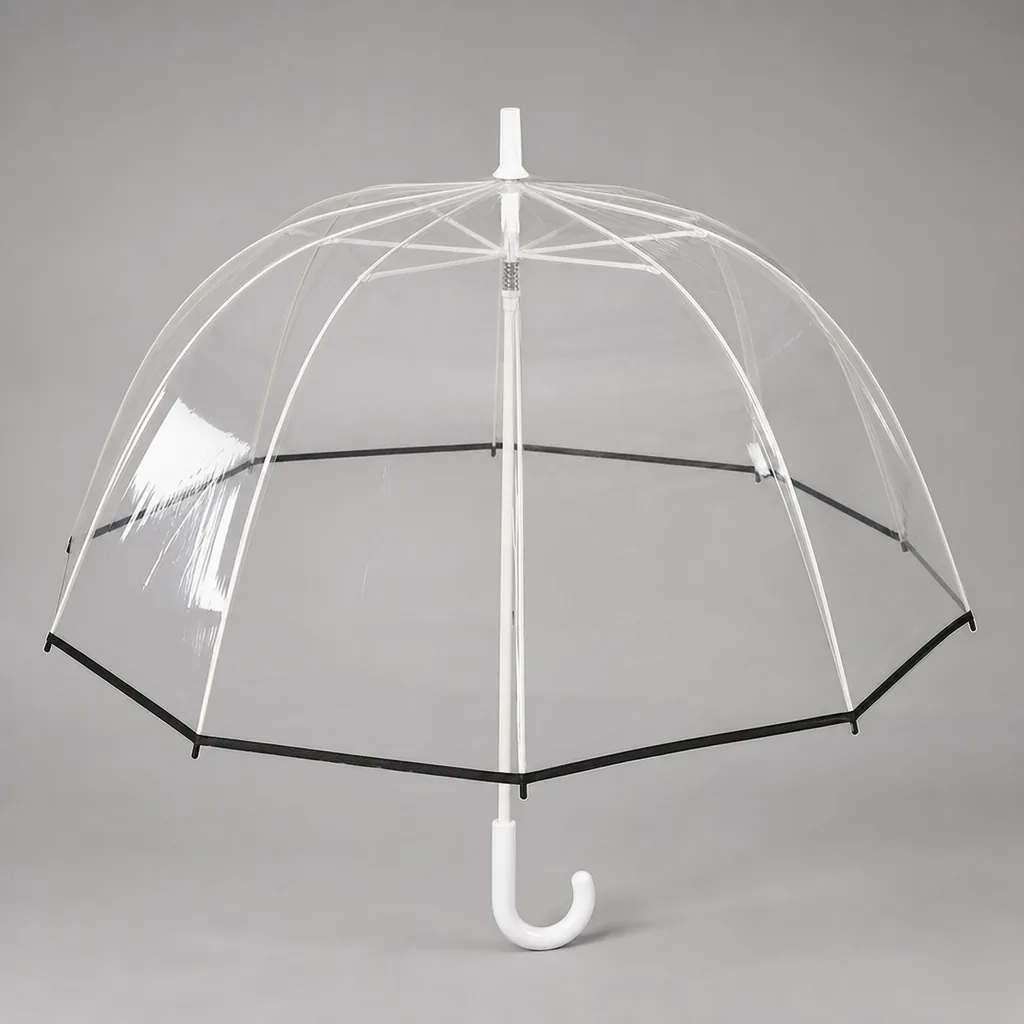
For many brand and gift programs, the hard part of RPET umbrellas sourcing is not finding a supplier that says “recycled,” but proving the fabric claim while still getting a durable umbrella that prints cleanly and ships on schedule. On our factory floor in Songxia, we see how recycled canopy fabric, frame selection, panel tension, coating, and logo process all affect the final product. A good sourcing plan connects sustainability documents with real production and inspection checkpoints.
What RPET Means in Umbrella Manufacturing
RPET in umbrella manufacturing means recycled polyester yarn made from post-consumer PET bottles, not virgin polyester chips. The bottle stream is sorted, washed, flaked, melted, and extruded into filament, then woven into canopy cloth such as 190T or 210T pongee. A factory spec should name the material precisely, for example “RPET 190T pongee canopy with water-repellent finish and heat-transfer logo,” rather than using a loose “eco fabric” claim. After weaving, the recycled fabric umbrella follows normal umbrella production: dyeing, coating, panel cutting, sewing, printing, and final assembly. Buyers still need to verify functional performance on the finished canopy, including colorfastness, hydrostatic pressure, print adhesion after coating, smooth opening, drying behavior, and basic rain durability.
The main risk in RPET umbrellas sourcing is overstating what is recycled. On a typical 23 inch auto-open umbrella, the canopy may be RPET 190T pongee while the shaft is steel, the ribs are fiberglass or metal, the runner is plastic or zinc alloy, and the tips, handle, sleeve, hangtag, polybag, and export carton use conventional materials. That distinction matters for retail copy, ESG reporting, and promotional tenders. “100% recycled umbrella” is only defensible when every claimed component is documented. A stronger specification separates recycled content by component: canopy fabric, sleeve fabric, handle, packaging, and carton. It should also identify non-recycled parts and any functional finish, such as Teflon-style water repellency or UPF 50+ treatment, so the claim holds up during sampling, AQL 2.5 inspection, and shipment review.
For serious RPET umbrellas sourcing, ask the eco umbrella supplier for fabric documentation tied to the yarn or fabric batch used on the purchase order, not a generic catalog icon. GRS or RCS paperwork is commonly requested, but the scope must cover the actual mill or fabric supplier. RPET pongee usually runs close to virgin polyester in production, although dye lots can shift on dark navy, black, red, and PMS-matched corporate colors. Heat-transfer printing is generally stable; screen printing should be tested after water-repellent coating for ink compatibility. MOQ is often higher than ordinary pongee because certified RPET fabric is booked in planned lots, commonly 1,000 to 3,000 pieces per color depending on 21 inch folding, 23 inch straight, or 27 inch golf construction. Build the schedule around fabric booking, lab dips, pre-production sample approval, final inspection, and the shipping term, whether FOB Ningbo or Shanghai or DDP for distributor programs.
Fabric Specs Buyers Should Compare
For RPET umbrellas sourcing, compare canopy construction before the recycled-content claim. Most retail and promotional programs use RPET pongee equivalents to 190T or 210T polyester pongee, often about 170-190 gsm after coating depending on yarn, weave density, and finish. A 190T recycled fabric umbrella is usually the cost-efficient choice for 21" and 23" compact or straight models where folded weight, carton volume, and landed cost drive the buy. Move to 210T for 27" golf umbrellas, 30" event umbrellas, double-canopy windproof styles, and 8K, 10K, or 16K frames because the tighter weave holds panel tension more consistently. Confirm whether the RPET yarn is GRS-certified, whether the shade is dope-dyed or piece-dyed, and how the factory controls panel-to-panel shade variation before bulk fabric approval.
Coating determines water performance more than many buyers budget for. PU or acrylic back coating gives basic water resistance; a Teflon-type water-repellent finish improves beading and drying speed on both 190T and 210T pongee. For sustainable promotional umbrellas, specify spray-rating targets, hydrostatic pressure testing for retail-grade orders, and seam-leakage checks after sewing, because needle holes and stretched panels can reduce protection even when the base fabric passes. Optional UPF 50+ treatment is worth specifying for beach, golf, school, and outdoor event programs, but black fabric is not a UV specification. Light colors, sublimation prints, and thin coatings may need a UV additive or silver/blackout backing. Lock coating type, water-repellency target, colorfastness to rubbing, and colorfastness to light before the pre-production sample.
Approve lab dips and fabric hand-feel before bulk booking, while the fabric, frame, and handle can still be adjusted without delaying production. RPET yarn can feel drier or stiffer than virgin polyester if finishing is poorly controlled, which affects folding, panel lay, sewing tension, strap closure, and the user’s first impression. A soft 210T RPET pongee umbrella can justify a higher-spec 23" auto-open-close model; an over-coated compact manual umbrella can feel bulky and resist tight rolling. For RPET umbrellas sourcing, review lab dips under D65 light, compare wet and dry rubbing results, and keep a signed swatch with the counter sample. A disciplined eco umbrella supplier locks shade, coating, hand-feel, logo print method, and AQL 2.5 inspection criteria before bulk cutting, because color or finish corrections are rarely practical after 5,000 panels are cut.
Frame and Component Choices for Sustainable Orders
Start with the frame, because durability decides whether a recycled claim holds up in actual use. For most RPET umbrellas sourcing programs, fiberglass ribs are the better default than all-steel ribs: they flex under gusts, recover shape, and avoid the rust risk that shows up during humid transit and daily carry. Paired with an aluminum shaft, they also cut carry weight versus painted steel frames and usually perform better at the rib joint and runner, where low-cost steel frames tend to take a permanent bend. Steel still has a place in price-led giveaway orders because FOB cost is lower, but the tradeoff is straightforward: more weight, more corrosion exposure, and a shorter service life. If the budget is tight, put the extra cents into fiberglass ribs before decorative trim. A stronger frame does more for a recycled fabric umbrella program than cosmetic upgrades on a weak structure.
Component choices should reinforce both service life and the sustainability story. Aluminum shafts suit a recycled fabric umbrella because they resist oxidation better than low-grade steel, but buyers should reject thin-wall tube specs that dent in handling. For handles, bamboo fits straight umbrellas when a natural look matters, with the known tradeoffs of color variation and moisture control; recycled-plastic handles, often molded in recycled PP, are usually more practical on compact styles, though buyers should confirm whether the resin is post-consumer or post-industrial and expect some speckling. Mechanism matters too: manual-open is usually the lowest-risk build for sustainable promotional umbrellas because it removes springs, inner tubes, and other failure points found in auto-open and auto-open-close frames. On rib count, 8K is the best value on most 23-inch and 27-inch RPET pongee umbrella programs, balancing cost, weight, and wind performance when built with fiberglass. A 16K frame creates a rounder, more premium profile through narrower panels, but it adds material, sewing time, and weight; it is not automatically stronger unless the geometry is engineered well. A disciplined eco umbrella supplier will standardize 8K for broad-volume programs and use 16K only when appearance justifies the added cost.
Certifications, Traceability, and Claim Control
Start RPET umbrellas sourcing by separating a verified recycled fabric claim from a whole-product recycled claim. A factory may source 190T or 210T RPET pongee for the canopy, but that does not verify the ribs, shaft, runner, handle, tips, ferrule, strap, thread, sleeve, or retail packaging. Review any GRS scope certificate by process and legal entity: trader, yarn supplier, weaving mill, dye house, sewing factory, or finished-goods assembler. For formal recycled-content programs, ask whether transaction certificates can be issued for the exact fabric lot used in your PO, not only an annual certificate from an upstream yarn supplier. Treat the canopy as the claim boundary unless the supplier can document every other claimed component. This is where risk enters: verified RPET fabric can sit on a standard steel, fiberglass, ABS, and EVA build with virgin labels and packaging.
Traceability depends on batch control, not sales language. For a recycled fabric umbrella, require a shipment file that links RPET yarn or greige-fabric purchase records to dye lot, cutting order, sewing line, packing list, and invoice. If transaction certificates are used, the selling entity should match the invoicing entity, and the product description, quantity, and shipment dates should align with the PO. Supplier declarations are useful for unverified components, but they should support the file, not replace third-party documentation. A credible eco umbrella supplier should state exactly what sits outside the recycled claim, such as fiberglass ribs, steel shafts, ABS runners, plastic tips, or EVA wrist loops. For sustainable promotional umbrellas, a narrow claim that survives a retailer or brand audit is worth more than a high recycled-content percentage with weak backup.
Control packaging claims separately from the umbrella claim. A GRS or recycled-content document for an RPET pongee umbrella canopy does not prove that the polybag, paper wrap, export carton, hangtag, insert card, or sleeve is recycled, FSC-certified, plastic-free, or biodegradable. Ask for separate documentation before approving packaging artwork or carton marks. Avoid language such as “100% recycled umbrella” unless every claimed component is verified; if only the canopy is documented, write the claim as “canopy made with recycled PET fabric” or “recycled content applies to canopy fabric only.” This wording reduces compliance risk, keeps retail reviews cleaner, and prevents chargebacks or relabeling when an auditor finds a standard frame, handle, thread, or package component outside the recycled claim. In RPET umbrellas sourcing, precise claim control protects cost, lead time, and customer trust.
MOQ, Cost, Lead Time, and QC Checklist
For RPET umbrellas sourcing, MOQ is usually set by fabric control, not the frame. Stock 190T or 210T RPET pongee in black, navy, red, or white often starts at 500-1,000 pcs per color for a 21" folding umbrella or 23" straight umbrella. Custom-dyed RPET typically rises to 2,000-3,000 pcs per color because recycled yarn dye lots are harder to divide than virgin polyester. Before approving an order, require transaction certificate support, fabric composition documents, and a written recycled-content scope covering whether RPET applies only to the canopy or also to the sleeve, strap, and label. A recycled fabric umbrella quote should list RPET percentage, denier, coating, and color tolerance; “eco fabric” is not enough for compliance or repeat-order control. For corporate colors, Delta E 1.5-2.0 is a practical approval range, while bright orange, teal, and fluorescent shades need lab dips before bulk weaving or dyeing.
Sampling takes 5-7 days when an RPET pongee umbrella uses stock cloth and an existing 8K steel or fiberglass frame. Add 3-5 days for screen print, heat-transfer, or sublimation strike-offs, and 10-15 days for custom-dyed RPET fabric or a new handle color. Bulk production is commonly 25-35 days after deposit and artwork approval for standard manual or auto-open models. Plan 40-50 days for auto-open-close constructions, double-canopy vented windproof models, or 27" and 30" golf umbrellas with fiberglass ribs. Compare FOB Ningbo or Shanghai first because it separates unit cost, inner carton, master carton, and export handling. DDP is useful for landed budgeting, but freight, duty, VAT handling, and last-mile delivery can hide weak unit economics. A credible eco umbrella supplier should quote both FOB and DDP when buyers compare sustainable promotional umbrellas with retail programs.
QC for RPET umbrellas sourcing should keep the same mechanical controls used for conventional umbrellas, then add tighter checks for fabric claims and logo durability. Use AQL 2.5 for major defects and inspect canopy weight, RPET labeling, color consistency, opening force, runner lock, rib alignment, tip security, and handle pull strength before packing. For print adhesion, run a 3M tape pull test and rub test after curing; heat-transfer logos can fail on RPET if excess temperature damages the coating. Check seam leakage with spray or short water exposure at the top notch, panel seams, and strap stitch area, especially on 210T pongee with water-repellent or Teflon finish. Test rib strength through repeated open-close cycling and basic wind checks; a 23" 8K steel frame is not equivalent to a 10K fiberglass windproof frame rated through 50+ mph tunnel testing. Carton labels must match PO number, SKU, color, quantity, gross weight, carton size, country of origin, and required recycling or retail marks.
Frequently Asked Questions
Is RPET umbrella fabric as waterproof as standard pongee?
Yes, if the fabric construction and coating are properly specified. Buyers should confirm water repellency test results, seam quality, and coating type rather than relying only on the RPET label.
Does RPET increase umbrella MOQ?
It can, especially for custom colors or certified recycled-content documentation. Stock RPET colors may allow lower MOQs, while custom-dyed fabric often requires larger fabric minimums.
What certificates should buyers request for RPET umbrella fabric?
Ask for a valid GRS or RCS transaction certificate for the fabric lot, plus a supplier declaration linking the certificate to your order. For brand programs, also request fabric composition test reports and keep certificates matched to PO, color, and production batch.
What is a realistic MOQ for custom RPET umbrellas?
For standard RPET pongee umbrellas with logo printing, MOQ is commonly 500-1,000 pieces per color. Custom fabric colors, special handles, or private-label packaging may raise MOQ to 1,500-3,000 pieces depending on material availability.
Can RPET umbrellas use the same printing methods as regular pongee umbrellas?
Yes. Screen printing, heat transfer, and digital printing are commonly used on RPET pongee, but buyers should approve a printed pre-production sample because recycled polyester can vary slightly in coating, hand feel, and color absorption.
Looking to Launch Your Custom Umbrella Line?
ZheBrella is a Zhejiang-based OEM/ODM umbrella manufacturer with 17 years of export experience. Free design, low MOQ from 100 pieces, windproof construction, full-color print.
Get Free Quote Now »People Also Search For
Related Articles
RPET Umbrellas for Custom Programs: What Buyers Should Spec
Source RPET umbrellas with clear specs on recycled canopy fabric, frame options, testing, MOQ, and lead times to avoid v...
Read More »
RPET Pongee Umbrellas: Buyer Guide for Eco Programs
Learn how to source RPET pongee umbrellas with verified fabric claims, durable frames, practical MOQs, and retail-ready ...
Read More »
Recycled rPET Umbrellas: Buyer Guide for Sustainable Programs
Specify recycled rPET umbrellas with verified yarn, 190T/210T canopy options, print limits, MOQ, lead times, and QC chec...
Read More »