RPET Pongee Umbrellas: Buyer Guide for Eco Programs
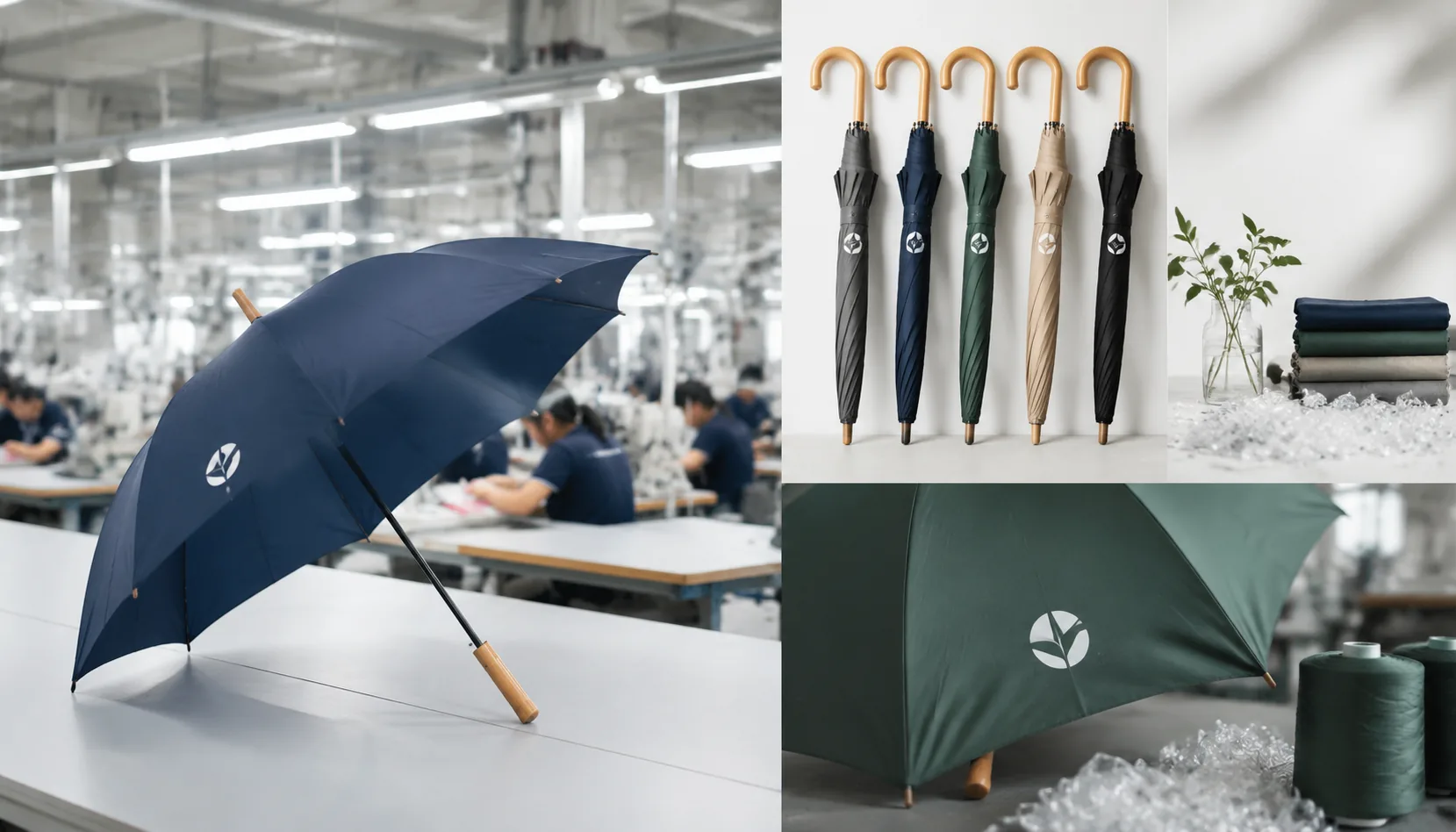
Eco umbrella programs fail when the fabric claim is vague, the frame is underbuilt, or the packed goods look different from the approval sample. On our Songxia production floor, RPET pongee umbrellas have to pass through yarn certificate checks, fabric inspection, cutting control, frame pairing, and final AQL before they are ready for a retail or corporate buyer. The right sourcing plan ties sustainability proof to repeatable build quality, not just a green label.
What RPET Pongee Means in Umbrella Sourcing
RPET pongee starts as post-consumer PET bottles that are washed, chipped, melted, and extruded into recycled polyester filament; after texturing and dyeing, that yarn is woven into umbrella-grade pongee. In sourcing terms, the important point is that RPET is the yarn origin, while pongee describes the fabric construction and hand feel. For most custom umbrellas, buyers should specify 190T RPET pongee for standard promotional 21" or 23" auto-open models, and 210T RPET pongee for retail-grade 27" golf umbrellas, windproof double-canopy builds, or programs needing a tighter weave and better drape. If a supplier only says “recycled fabric umbrellas” without denier, thread density, and coating details, the quotation is not complete enough to compare.
The coating decision matters as much as the recycled yarn. Standard RPET pongee umbrellas often use a water-repellent PU or acrylic coating, while higher-end orders may request Teflon treatment for faster water shedding or black UV coating for UPF 50+ sun protection. Color should be defined by Pantone TCX/TPX or lab-dip approval, because recycled polyester can show slightly different dye uptake than virgin polyester, especially on navy, red, and fluorescent shades. For printed eco promotional umbrellas, I also recommend confirming whether the logo will be screen printed, heat transferred, or sublimated; sublimation works best on white or light RPET panels, while screen printing is more stable for dark canopy colors.
For RPET umbrella sourcing, documentation is where serious buyers separate factory claims from usable compliance. Ask for GRS or RCS transaction certificates where applicable, fabric test reports, and a material declaration showing the recycled polyester percentage in the canopy. For sustainable umbrella OEM projects, our standard practice at ZheBrella is to lock the bill of materials before sampling: rib count such as 8K or 10K, frame material such as fiberglass or steel, canopy spec such as 190T RPET pongee with PU coating, handle material, logo method, MOQ, and AQL 2.5 inspection level. That prevents the common problem where the sample uses certified RPET fabric but bulk production quietly switches to ordinary 190T pongee to meet a lower FOB target.
Choosing 190T or 210T RPET for the Program
190T RPET is the practical choice when the program is driven by unit cost, event volume, or distributor margin. On a standard 23" auto-open stick umbrella with 8K steel ribs, 190T RPET pongee umbrellas can usually hit tighter FOB targets than 210T because the yarn count is lower, the fabric is lighter, and cutting loss is easier to control in bulk. For giveaways, insurance campaigns, school programs, and eco promotional umbrellas, I would rather spend the saved budget on a stable frame, clean screen print, and a decent waterproof coating than over-spec the canopy. A proper PU or acrylic waterproof finish should bead water after a basic spray test; if the fabric wets out too quickly, the buyer will blame the “recycled” material even when the real problem is coating quality.
210T RPET is better when the umbrella needs to feel like a retail product, not a throwaway premium. The denser weave gives a smoother hand-feel, better drape over the ribs, and cleaner panel tension on 23", 27", and 30" models, especially after logo printing. For sustainable umbrella OEM projects sold through boutiques, outdoor gift sets, hotel retail, or corporate executive programs, 210T usually justifies the extra cost because the canopy looks less transparent under light and has fewer wrinkle marks after packing. Our standard practice at ZheBrella is to confirm fabric weight, colorfastness, and coating adhesion before bulk cutting, because RPET yarn can vary by supplier even when both lots are labeled 210T.
For UV programs, do not treat color and backing as decoration only. A silver or black UPF 50+ backing can lift sun protection significantly, but it also changes hand-feel, folding thickness, and price; on compact auto-open-close umbrellas, too much coating can make the canopy bulky and stress the runner. Darker colors such as navy, black, and forest green generally block more visible light and may support stronger UV performance, but they also absorb more heat, so a black canopy can feel hotter in summer events than a light gray or white canopy with UV backing. In RPET umbrella sourcing, I recommend approving lab dips and one pre-production sample with the final waterproof coating, UPF backing if required, and printed logo before signing off on AQL 2.5 inspection criteria.
Frame and Mechanism Pairings for RPET Canopies
The safest pairing for RPET pongee umbrellas is not the fanciest frame; it is the frame that keeps the recycled canopy stable after 500 open-close cycles and a few bad-weather events. For a standard 23" stick umbrella, I usually specify a black-coated steel shaft with fiberglass ribs and stretchers: steel gives straight-line strength at the center pole, while fiberglass absorbs gust load at the rib ends where failures normally start. An 8K frame is enough for most eco promotional umbrellas because it balances cost, print area, and packing weight. Move to 10K only when the buyer wants a rounder canopy profile, and use 16K when the umbrella is positioned as retail or executive grade, not as a low-cost giveaway.
For folding models, aluminum shafts make sense when weight matters, especially on 21" and 23" 3-fold umbrellas shipped in volume by air or DDP courier. I do not recommend thin all-aluminum rib sets for recycled fabric umbrellas unless the order is purely for indoor commuting use; they deform too easily in side wind. A better construction is aluminum shaft plus fiberglass ribs, with a manual or auto-open runner depending on the price tier. Auto-open is reliable on 3-fold models if the spring force is matched to 190T or 210T RPET pongee, but auto-open-close requires tighter QC on the shaft tube, runner lock, and top notch because the closing shock is much higher.
Full fiberglass frames are the right choice for premium RPET pongee umbrellas, especially 27" golf umbrellas and double-canopy vented windproof builds. A 16K full-fiberglass frame with a 210T RPET pongee canopy can survive 50+ mph wind-tunnel tests when the tips, runner, and ferrule are properly riveted, but the same canopy on a cheap 8K steel frame will invert sooner and make the sustainable story look fake. For RPET umbrella sourcing, ask the factory to confirm rib material, rib count, shaft diameter, opening type, and AQL 2.5 inspection points in the quotation. Sustainable umbrella OEM work still depends on mechanical discipline: recycled cloth does not compensate for weak ribs, loose rivets, or an underpowered auto-open spring.
Claims, Certifications, and Packaging Alignment
The first document I ask for in RPET umbrella sourcing is not a glossy certificate PDF; it is the transaction certificate or equivalent recycled-content traceability record tied to the actual yarn, fabric lot, and purchase order. For RPET pongee umbrellas, the chain normally starts with recycled PET flake or chip, then filament yarn, then 190T or 210T pongee weaving, dyeing, coating, cutting, sewing, and final assembly. If a supplier only shows a generic GRS or RCS scope certificate, that proves the mill or trader is approved to handle recycled material, not that your 23" auto-open umbrella canopy contains recycled polyester. Buyers should request lot-level fabric invoices, TC numbers where applicable, dye-house records, and a packing list that matches the finished quantity. At ZheBrella, our standard practice is to keep the fabric roll labels and cutting records against the production order, because claims become difficult to defend once rolls are mixed on the cutting table.
Hangtags and care labels must say exactly what the document chain can support. “Canopy made with recycled polyester” is usually safer than “100% recycled umbrella,” because the ribs, shaft, runner, tips, handle, spring, and sleeve may be steel, fiberglass, ABS, EVA, PU, or virgin polyester components. For recycled fabric umbrellas, I prefer a care label that states the canopy fiber content, coating if relevant, country of origin, importer details, and basic care instructions such as “air dry open” and “do not machine wash.” Hangtags can include a QR code linking to recycled-content documentation, but do not print bottle-count claims unless the yarn supplier provides a defensible conversion method. Eco promotional umbrellas often fail inspection not because the frame is weak, but because marketing copy overreaches: “carbon neutral,” “ocean plastic,” “biodegradable,” and “zero waste” are high-risk terms unless a separate audit, material origin record, or lifecycle calculation supports them.
Packaging should align with the same discipline as the canopy claim. Recycled kraft cartons, FSC-style certified paper sleeves, soy-ink hangtags, paper belly bands, and recycled polybags are all workable, but each option changes cost, appearance, and moisture control during export. For FOB Ningbo or Shanghai shipments, I still recommend a master carton with enough burst strength for stacking, especially on 27" and 30" golf umbrellas where carton weight can exceed 18–22 kg. If the program requires plastic-free packaging, confirm whether the buyer accepts paper sleeves in humid transit; umbrellas packed before the canopy is fully dry can develop odor or coating marks. Sustainable umbrella OEM projects should lock packaging specifications before pre-production sample approval, including FSC claim wording, recycling marks, carton print, polybag thickness, desiccant use, and retail barcode placement. The rule is simple: do not print a sustainability claim on the umbrella, sleeve, hangtag, or carton unless the supporting document chain can survive buyer, customs, or retailer review.
MOQ, Lead Time, and QC for Eco Orders
MOQ changes fast once you move from “eco” as a label to real RPET umbrella sourcing. For stock RPET pongee umbrellas, we usually quote from 500–1,000 pieces per color because the 190T or 210T recycled pongee is already greige-dyed and sitting in the fabric market near Keqiao or in our mill partner’s warehouse. That works well for eco promotional umbrellas with one-position screen print, heat-transfer logo, or a standard sleeve card. Dyed-to-order RPET fabric is different: expect 2,000–3,000 pieces per color as a practical floor, sometimes 5,000 pieces if the buyer wants a Pantone-sensitive canopy, Teflon water-repellent finish, UPF 50+ coating, or a matching recycled sleeve. The reason is not factory stubbornness; dye vats, lab dips, colorfastness testing, and coating setup all need enough meters to avoid waste and price distortion.
Sampling is normally 5–7 days if we use stock RPET pongee and a standard 23-inch or 27-inch frame, whether manual, auto-open, or auto-open-close. Add 3–5 days for a custom handle mold, special rubber coating, FSC wood handle, or double-canopy vented windproof construction. Lab dip approval for dyed-to-order recycled fabric umbrellas usually takes 7–10 days, and bulk fabric can add another 10–14 days before cutting. For production, stock-color orders are commonly 25–35 days after deposit and artwork approval; dyed RPET canopy orders run 35–50 days depending on printing method and rib count. A simple 8K steel frame umbrella moves faster than a 10K fiberglass windproof model, because fiberglass rib assembly and runner alignment need tighter jigs and more in-line checks.
QC for RPET pongee umbrellas should be written into the purchase order, not negotiated after cargo is packed. Our standard practice at ZheBrella is final random inspection under AQL 2.5 for major defects and tighter internal sorting before carton sealing. Inspectors check canopy fabric for broken yarns, oil stains, weaving slubs, pinholes, shade variation between panels, and obvious recycled-yarn streaks. Color consistency is checked against approved lab dip or production standard under D65 light, especially when two production lots are mixed. Coating adhesion is tested by rub, water-spray, and tape-pull checks where applicable; cheap coating failure shows up as patchy beading after one fold cycle. Frame function checks include open-close smoothness, runner lock strength, rib symmetry, shaft straightness, tip stitching, and windproof recovery after inversion. Packaging accuracy covers logo position, hangtag claims, polybag warnings, carton marks, mixed-color ratios, and barcodes for DDP retail deliveries.
Frequently Asked Questions
Is RPET pongee as durable as standard pongee?
It can be, if the yarn, weave density, and coating are specified correctly. Buyers should compare 190T or 210T RPET samples against standard pongee for tear strength, color, and water repellency.
Does RPET fabric automatically make an umbrella sustainable?
No. The claim depends on verified recycled content, responsible packaging, product lifespan, and accurate labeling. Ask the factory for documentation before approving eco claims for retail or promotional use.
What certifications should buyers request for RPET pongee umbrellas?
Ask for GRS or RCS transaction documents for the RPET fabric, plus fabric test reports showing recycled polyester content. For retail programs, buyers often also request REACH, AZO-free dye testing, and colorfastness reports.
What MOQ is realistic for custom RPET pongee umbrellas?
For OEM orders, a practical MOQ is usually 1,000–3,000 pieces per style depending on frame type, fabric color, and logo method. Custom-dyed RPET pongee or fully customized packaging may require higher fabric and production minimums.
How long does RPET umbrella production usually take after sample approval?
Standard lead time is typically 35–55 days after sample approval and deposit. Add 7–15 days if the order needs custom-dyed RPET fabric, special handle tooling, or third-party inspection before shipment.
Looking to Launch Your Custom Umbrella Line?
ZheBrella is a Zhejiang-based OEM/ODM umbrella manufacturer with 17 years of export experience. Free design, low MOQ from 100 pieces, windproof construction, full-color print.
Get Free Quote Now »People Also Search For
Related Articles
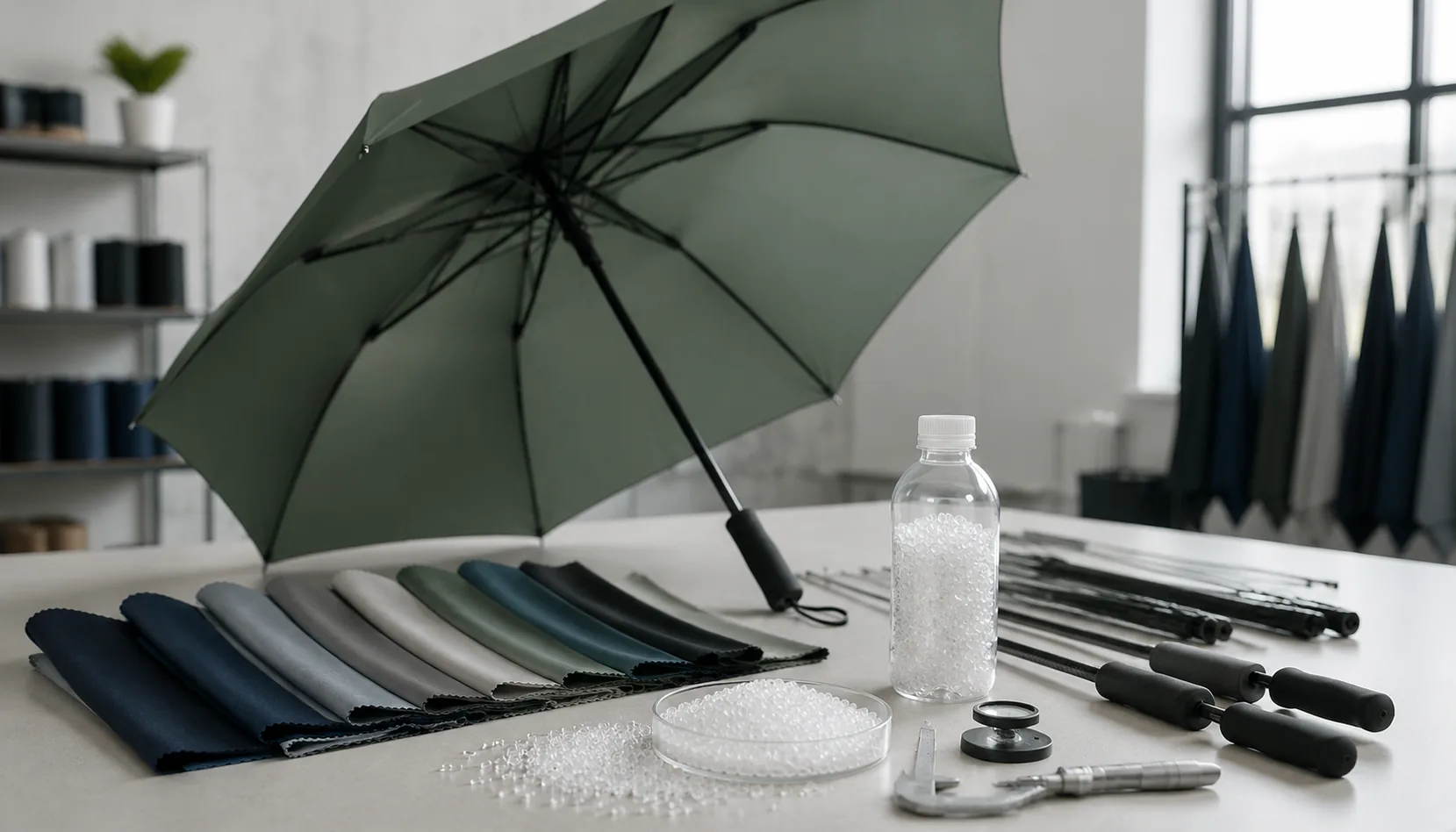
Recycled PET Pongee Umbrellas: Buyer Spec Guide
Source rPET pongee umbrellas with the right fabric weight, certification documents, frame specs, MOQ, lead time, and AQL...
Read More »
RPET Recycled Fabric Umbrellas: OEM Buyer Guide
Learn how to specify RPET umbrella fabric, coatings, frames, labels, MOQ, and QC requirements for sustainable retail and...
Read More »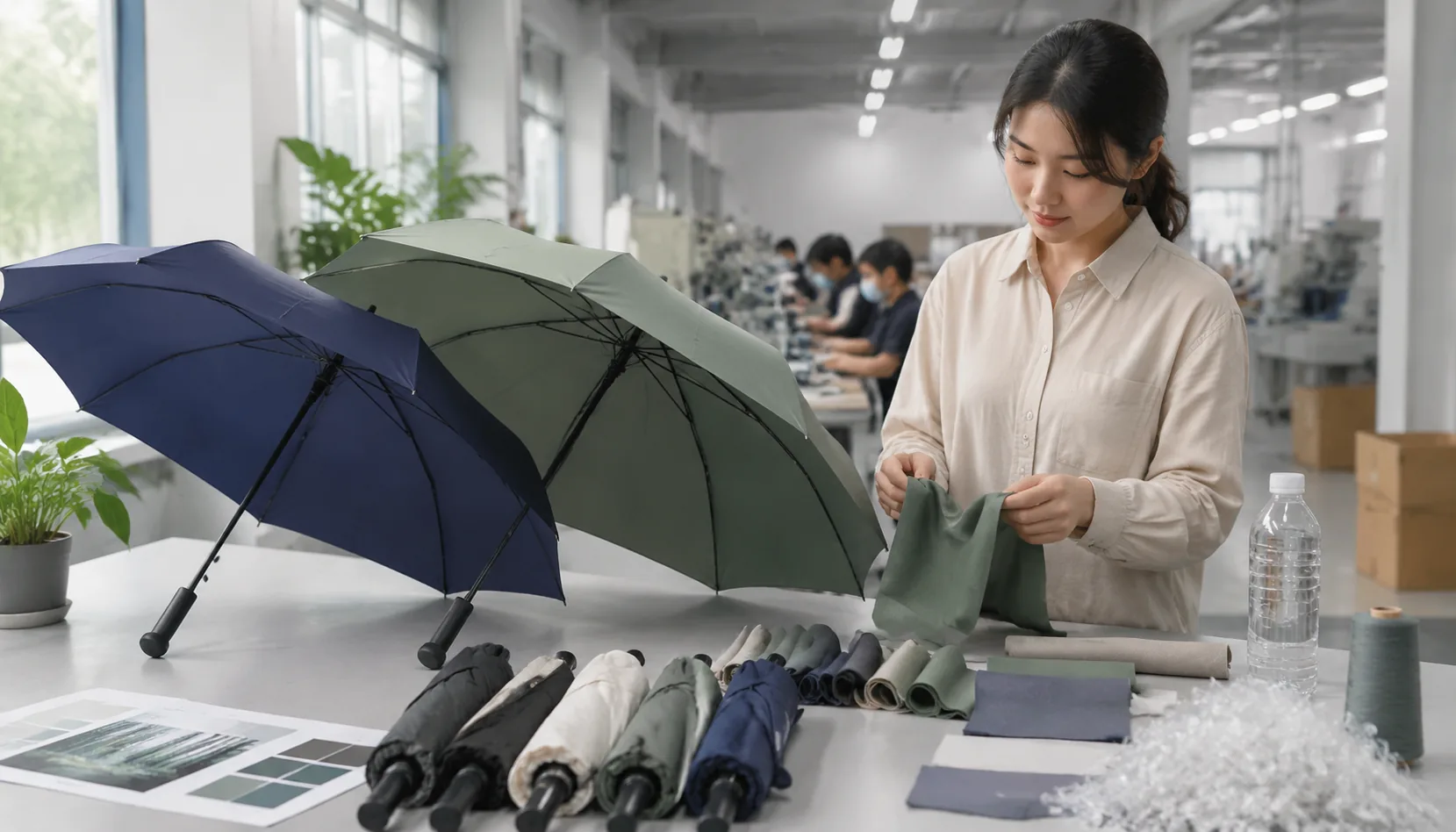
RPET Pongee Umbrellas: Buyer Guide for Sustainable Orders
Source RPET pongee umbrellas with verified recycled fabric, 190T or 210T specs, GRS documents, print options, MOQ planni...
Read More »