Recycled PET Pongee Umbrellas: Buyer Spec Guide
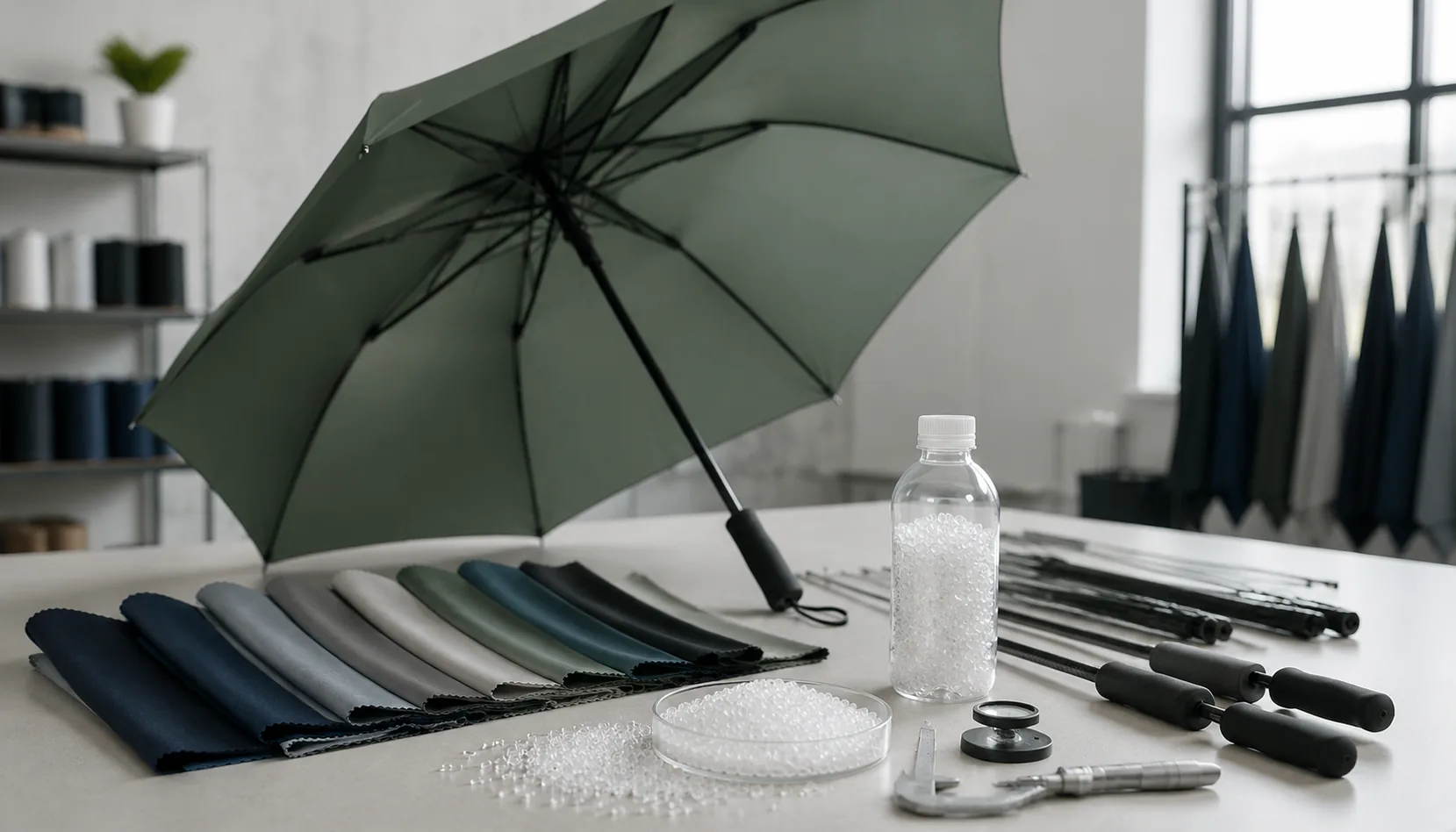
For buyers, recycled PET pongee umbrellas are easy to request but harder to specify correctly: the same brief can produce big differences in fabric handfeel, print sharpness, frame strength, and compliance paperwork. On our Songxia production floor, the trouble usually starts when rPET fabric weight, GRS/TC documents, rib material, MOQ, lead time, and AQL checkpoints are not locked before sampling. A clear spec sheet prevents surprises before bulk cutting, sewing, and final inspection.
What rPET Pongee Means in Umbrella Sourcing
rPET pongee starts as post-consumer PET bottles or approved PET waste that is washed, flaked, melted, extruded into filament, then woven into umbrella cloth. In our sourcing specs, the useful question is not “is it recycled?” but “what yarn, density, and finishing are being supplied?” A 190T rPET pongee is normally used on 21" and 23" compact or stick umbrellas where cost and hand feel matter; 210T gives a tighter weave, smoother print surface, and better perceived retail quality on 23", 27", and 30" models. The “T” count refers to thread density, not coating performance, so buyers still need to specify water-repellent treatment, colorfastness, and whether the canopy needs PU, silver UV, black glue, or Teflon-type finishing. Good recycled PET pongee umbrellas should feel very close to virgin polyester pongee, but weak yarn, loose weaving, or poor heat setting will show up as seam puckering, print bleeding, and panels that twist after wet-dry cycling.
The biggest sourcing mistake is confusing rPET umbrella fabric with recycled packaging language. A carton printed with a green claim does not make the canopy recycled, and a bamboo handle does not prove the fabric content. For serious eco umbrella sourcing, the recycled claim should be tied to the canopy fabric itself, supported by a transaction certificate or material declaration from the yarn or fabric supplier, preferably GRS or RCS when the buyer’s compliance team requires chain-of-custody paperwork. As a recycled umbrella OEM, our standard practice is to separate the bill of materials: canopy fabric, frame, handle, sleeve, hangtag, polybag, and master carton each need their own claim boundary. If the canopy is 100% rPET pongee but the sleeve is virgin 190T polyester, the product description should say so. This avoids problems with retailers, customs documents, and brand audits that reject vague terms like “made from recycled materials” without a percentage and component name.
Retail brands usually choose recycled PET pongee umbrellas for private-label compact auto-open-close models, 23" straight umbrellas, and vented golf umbrellas where sustainability is visible but the product still needs normal performance: smooth opening, straight ribs, dry-touch canopy, and acceptable AQL 2.5 inspection results. Promotional buyers use sustainable promotional umbrellas for conferences, campus programs, hotel gifting, bank campaigns, and outdoor events because 190T or 210T rPET pongee prints well by screen print, heat transfer, or digital print when the artwork is tested before bulk cutting. For logos with fine lines, 210T rPET is safer because the tighter surface reduces ink spread. For mass giveaways, 190T keeps the FOB cost under control, especially on manual 21" models with steel ribs. The buyer should lock fabric weight, recycled percentage, coating, print method, and packaging claim before sampling; changing any of these after approval can shift shade, hand feel, MOQ, and lead time by 7 to 15 days.
Choosing 190T or 210T rPET Fabric
For most recycled PET pongee umbrellas, 190T is the practical baseline: light, flexible, and cost-controlled, with enough density for daily rain use and standard promotional printing. The “T” count is yarn density, not fabric weight, but on the cutting table you can feel the difference immediately. 190T rPET pongee has a softer drape and packs well on 21" and 23" folding umbrellas, especially auto-open-close models where canopy bulk affects closing force. Opacity is acceptable in dark navy, black, bottle green, and burgundy, but lighter colors can show rib shadow under strong sun. For simple 1-color screen printing, 190T holds logos cleanly if the artwork avoids tiny reverse text below 1.5 mm. With normal WR treatment or Teflon-style water repellency, it beads rain well, but the face is slightly more open than 210T, so coating uniformity matters. If the buyer’s target is sustainable promotional umbrellas under tight budget pressure, 190T usually wins by about $0.08–$0.18 per piece depending on size and order quantity.
210T rPET umbrella fabric is the better choice when the umbrella is positioned as retail, corporate gift, or brand merchandise rather than a throwaway giveaway. It feels denser in the hand, hangs smoother between 8K or 10K ribs, and gives better opacity on white, yellow, sky blue, and other low-cover colors. Print sharpness is also stronger: screen print edges stay cleaner, heat-transfer films sit flatter, and sublimation gradients look less grainy because the weave is tighter. On 27" golf umbrellas and 30" two-person models, I prefer 210T because the larger canopy panels magnify any fabric looseness or color variation. Water repellency is not automatically better just because it is 210T, but in production it accepts PU, WR, and fluorine-free repellency more evenly, which improves roll-off after repeated opening tests. For recycled umbrella OEM programs, the cost increase is normally justified when the buyer asks for AQL 2.5 cosmetic standards, retail hangtags, and color consistency across repeat POs.
UV positioning needs a separate coating decision; neither 190T nor 210T plain pongee should be sold as serious sun protection without proof. Black glue gives the best UPF 50+ performance and deeper shade, but it adds stiffness, increases canopy memory marks, and can make pinholes or coating scratches more visible during inspection. Silver coating is cheaper and common for event umbrellas, but it looks more promotional, can oxidize or rub if handled badly, and is less suitable for premium eco umbrella sourcing unless the buyer accepts the look. For light-colored recycled PET pongee umbrellas, black glue also solves opacity problems that fabric density alone cannot fix. Our standard practice at ZheBrella is to quote UV versions separately, listing fabric as 190T or 210T rPET pongee plus coating type, because mixing “eco fabric” and “UV coating” into one vague line item causes disputes later. Ask for UPF test reports on the finished coated fabric, not only the raw yarn certificate.
Frame and Mechanism Specs That Match rPET Programs
Sustainability claims should sit on top of durability, not replace it. Eco umbrella sourcing goes wrong when a buyer approves recycled fabric, kraft tags, and FSC-style packaging but accepts a weak frame that fails after three storms; the carbon benefit is questionable if the product is discarded early. For recycled umbrella OEM projects, I recommend locking the mechanical bill of materials together with the fabric spec: 190T or 210T rPET pongee, water-repellent coating, UPF 50+ if sun protection is part of the brief, and rib count matched to size. An 8K frame is normal for daily rain umbrellas, 10K gives smoother canopy tension, and 16K is mostly for premium visual positioning unless the rib material is also upgraded. For sustainable promotional umbrellas, ask the supplier to quote two versions side by side: budget steel frame and fiberglass-reinforced frame. The price gap is usually easier to defend than a warranty problem after delivery.
Documentation, Traceability, and QC Requirements
Canopy performance should be tested before shipment, not argued about after the umbrellas reach the event date. Leakage testing normally includes a spray or simulated-rain test over stitched seams, top notch, cap area, and panel joins, especially on Teflon-coated or UV UPF 50+ coated pongee where needle holes can wick water if thread tension is wrong. For windproof models, specify double-canopy vent construction and a realistic wind-tunnel target, such as surviving 50+ mph without rib fracture or shaft deformation, rather than a loose “stormproof” phrase. A recycled umbrella OEM order should also include carton drop testing, barcode scans, polybag warnings, country-of-origin marking, and final inspection photos tied to PO number, SKU, color, and print file revision. For FOB Ningbo or Shanghai shipments, finish inspection 3 to 5 days before loading; for DDP orders, add time for customs documents and compliance files before dispatch.
MOQ, Sampling, and Import Planning
MOQ changes sharply depending on whether the buyer accepts stock rPET colors or insists on custom-dyed fabric. For recycled PET pongee umbrellas, stock 190T or 210T rPET umbrella fabric in black, navy, royal blue, red, forest green, and white can usually start at 500 to 1,000 pcs per SKU when the frame is standard: 23" auto-open straight, 21" 3-fold auto-open-close, or 27" golf umbrella. Custom-dyed rPET is a different conversation because the fabric mill needs a dye lot, usually 3,000 to 5,000 meters, which often translates to 2,500 to 5,000 pcs depending on canopy size and panel count. If the order has Pantone-matched canopy, matching pouch, FSC paper hangtag, and individual kraft box, the practical MOQ is normally closer to 3,000 pcs. I do not recommend forcing a low MOQ custom dye job; shade variation between panels becomes the hidden cost, especially on light gray, beige, and pastel green.
Sampling should prove three things before bulk production: fabric certificate, print behavior, and umbrella mechanics. A pre-production sample for sustainable promotional umbrellas usually takes 7 to 10 days if using stock rPET fabric and an existing frame; add 5 to 7 days for heat-transfer logo film or screen-print plate adjustment. Custom-dyed lab dips take about 5 days, but bulk fabric approval can add 10 to 15 days before cutting starts. For recycled umbrella OEM orders, we check canopy shrinkage after water-repellent finishing, logo adhesion after wet rub, and frame function for manual, auto-open, or auto-open-close systems. Bulk lead time is commonly 25 to 35 days after sample approval for stock fabric, and 40 to 55 days for custom-dyed rPET. Our standard practice at ZheBrella is to lock the approved sample, BOM, packaging file, and AQL 2.5 inspection checklist before fabric cutting, not after the first-line output appears.
FOB Ningbo or Shanghai is cleanest when the buyer already has a freight forwarder and wants to compare recycled PET pongee umbrellas against standard 190T pongee umbrellas on product cost alone. The FOB premium for rPET fabric is often modest per unit, but buyers should not ignore testing, certification, and packaging upgrades; GRS transaction documentation, recycled-content claims, and kraft retail packaging can move the final cost more than the fabric itself. DDP is useful for eco umbrella sourcing when the buyer needs a landed cost for Amazon, retail distribution, or event delivery, but it must specify carton dimensions, HS code, duty assumptions, and whether delivery is to a commercial warehouse or multiple addresses. Standard pongee umbrellas may look cheaper on the PI, yet rPET can be competitive after brand value, compliance requirements, and promotional bid scoring are included. For planning, approve samples before the rainy-season rush; May to August production slots fill quickly in Shangyu, and late artwork approval is the most common reason air freight replaces sea freight.
Frequently Asked Questions
Is rPET pongee available in both 190T and 210T?
Yes. Many factories can source rPET yarn in 190T and 210T pongee, but available colors and MOQ may differ from standard polyester pongee.
Can rPET umbrellas still use fiberglass ribs and auto-open frames?
Yes. The recycled content is usually in the canopy fabric, while ribs, shafts, handles, and mechanisms can follow normal OEM specifications such as fiberglass ribs or auto-open systems.
What fabric weight should I specify for rPET pongee umbrellas?
For most promotional and retail umbrellas, 190T rPET pongee is the standard balance of cost, print quality, and water resistance. Premium orders may use 210T rPET pongee for a denser hand feel and improved durability.
What certification documents should a buyer request for recycled umbrella fabric?
Ask for a valid GRS transaction certificate or scope certificate from the fabric mill, plus material composition reports if required by your retailer. The supplier should be able to match the certificate details to the fabric batch used in production.
What is a typical MOQ and lead time for custom rPET pongee umbrellas?
A practical MOQ is usually 500 to 1,000 pieces per design for OEM orders, depending on frame type and logo method. Standard production lead time is about 30 to 45 days after sample approval and deposit, with extra time needed for custom dyeing or retail packaging.
Looking to Launch Your Custom Umbrella Line?
ZheBrella is a Zhejiang-based OEM/ODM umbrella manufacturer with 17 years of export experience. Free design, low MOQ from 100 pieces, windproof construction, full-color print.
Get Free Quote Now »People Also Search For
Related Articles
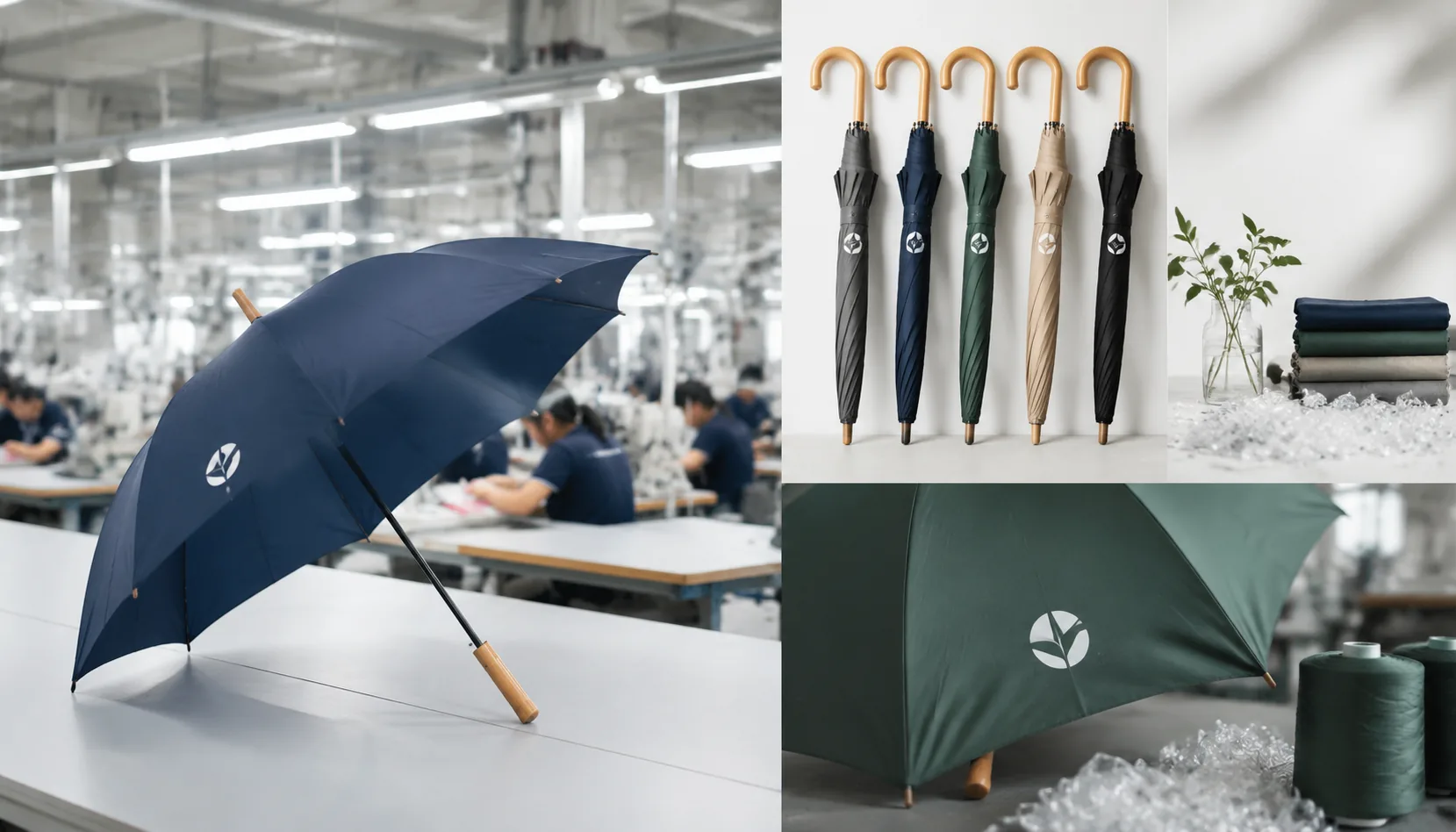
RPET Pongee Umbrellas: Buyer Guide for Eco Programs
Learn how to source RPET pongee umbrellas with verified fabric claims, durable frames, practical MOQs, and retail-ready ...
Read More »
RPET Recycled Fabric Umbrellas: OEM Buyer Guide
Learn how to specify RPET umbrella fabric, coatings, frames, labels, MOQ, and QC requirements for sustainable retail and...
Read More »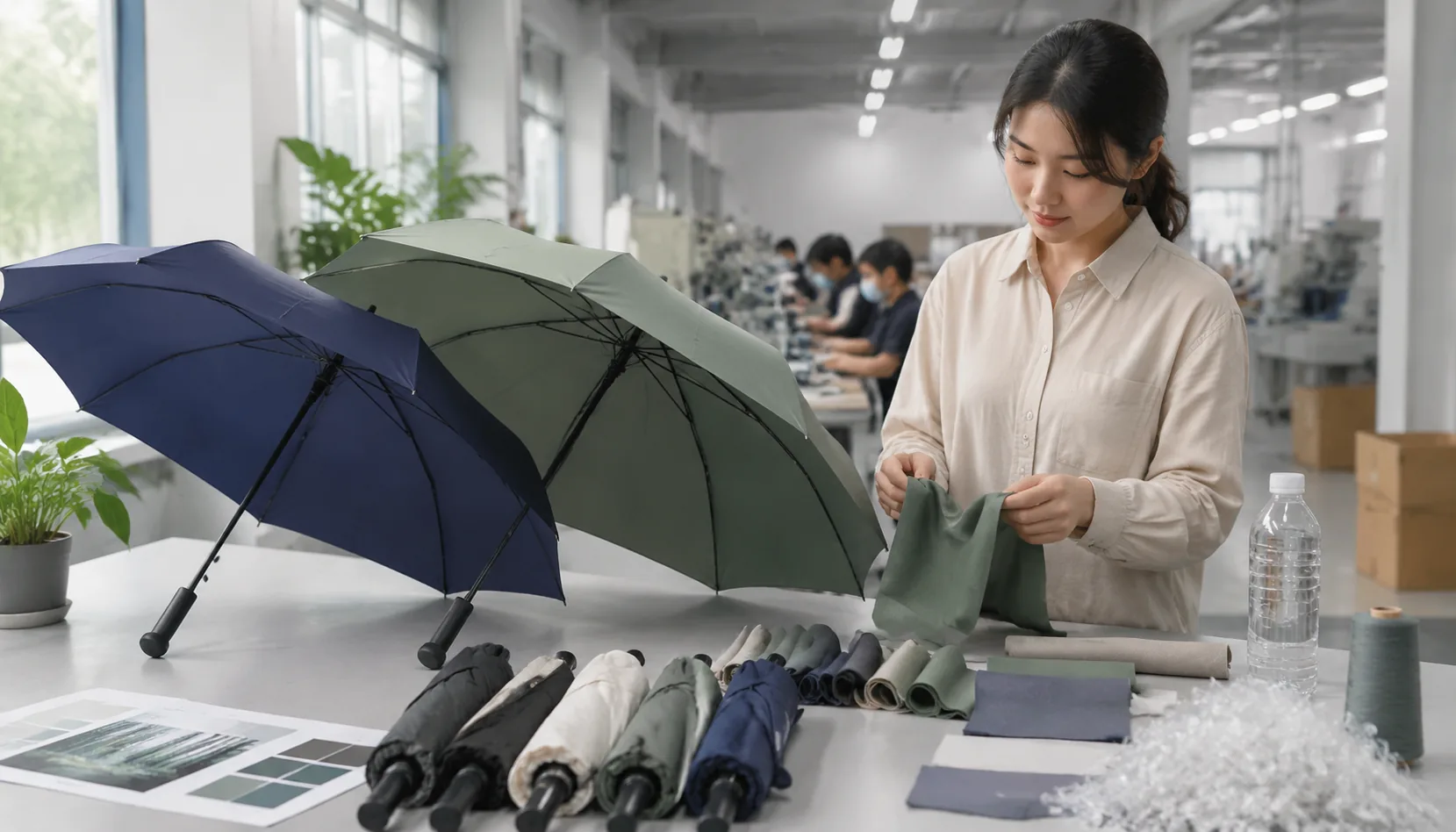
RPET Pongee Umbrellas: Buyer Guide for Sustainable Orders
Source RPET pongee umbrellas with verified recycled fabric, 190T or 210T specs, GRS documents, print options, MOQ planni...
Read More »