Umbrella Components Explained: Tips, Ferrules, Runners, and Notches

When an umbrella feels flimsy, the problem is usually not the canopy fabric but the small umbrella parts that control movement, strength, and fit. In the factory, we see how tips, ferrules, runners, notches, and spreaders determine whether a frame opens smoothly, holds alignment, and survives repeated use. Buyers who understand these details can specify better quality and avoid costly failures after production.
The anatomy of an umbrella
The frame starts at the top with the ferrule, the small cap at the very tip of the crown that closes the end of the shaft and gives the canopy a clean anchor point. On a straight umbrella, the shaft runs down the center from the ferrule to the handle; on a folding umbrella, that shaft is split into sections but the top section still carries the same load path. The canopy attaches to the stretchers and ribs, which fan out from the top runner and support the fabric panels. If you are mapping umbrella parts for sourcing or inspection, this is the first distinction that matters: the ferrule and shaft are structural, while the canopy hardware is what controls opening, tension, and wind behavior. A weak ferrule fit or a bent top section will throw the whole frame off center, even if the rest of the build looks fine.
The runner is the moving collar that slides up and down the shaft. It is the part a user pushes manually or pulls with the spring mechanism in auto-open and auto-open-close models, and it locks the ribs in the open position when the frame reaches full extension. Around the runner, the rib ends and stretcher ends are pinned into small joints, so any slop there shows up as wobble, uneven canopy tension, or a frame that will not lock cleanly. In practical terms, the runner is where opening force, release action, and everyday wear all concentrate. Good umbrella components are not just about metal thickness; the hole tolerances, rivets, and plastic or metal runner body have to match the shaft diameter and the number of ribs, whether the frame is a simple 8K build or a denser 16K vented design.
At the outer edge of each rib, the tips hold the canopy fabric in place and prevent the panel corners from tearing under load. These umbrella tips can be molded plastic, metal, or wrapped styles, depending on the price point and the intended use, but their job is the same: keep fabric tension distributed at the perimeter and protect the rib ends from direct impact. The notch area sits closer to the center of the frame, where the main rib and stretcher connect and fold against each other; that joint is what controls the geometry when the umbrella closes. When people talk about umbrella parts without separating these locations, confusion follows fast. A ferrule is at the top, a runner moves on the shaft, tips sit at the edge, and notches are the hinge points that let the whole frame open, lock, and collapse in a controlled sequence.
Tips and the top ferrule
At the top of an umbrella, the ferrule and the umbrella tips do more than finish the silhouette. They take abuse every day, so material choice matters for both safety and appearance. For the umbrella ferrule, we usually see plastic, aluminum, and wood-look finishes. Plastic is common on low-cost promotional umbrellas because it is light and easy to color-match, but a brittle grade can crack if the umbrella is dropped. Aluminum gives a cleaner, more technical look and holds up better in rain and heat, while a wrapped wood-look ferrule is mainly about presentation on higher-end styles. On the tips, rounded molded plastic is the safer choice for school, travel, and crowded event use because it reduces the risk of scratching people, vehicle paint, or store fixtures. These small umbrella components also affect how the product feels in hand, which is why buyers should look at them as part of the overall build, not as afterthoughts.
Material also changes how the top of the umbrella ages in real use. Metal tips can look premium at first, but if the plating is poor, they can chip, discolor, or leave sharp edges after repeated impact. A well-molded umbrella tip in ABS or PP keeps the profile smooth and is easier to keep consistent across a large order, which matters when you are buying umbrella parts for retail or promotion. The same logic applies to the umbrella ferrule: a glossy finish may look sharp in samples, but if the coating cannot handle UV exposure, it will fade or haze faster than the canopy. Our standard practice is to match the ferrule and tips to the umbrella’s intended use, not just the price point. For windier markets or premium retail programs, that usually means stronger materials, tighter tolerances, and a cleaner transition between the ferrule, shaft, and canopy so the umbrella parts look deliberate rather than assembled from leftovers.
The runner and spring system
The runner is the part that decides whether an umbrella feels precise or sloppy. It slides up and down the shaft, compresses the main spring, and locks into the notches that hold the frame open. On good umbrella parts, the runner movement is tight but not gritty, with enough clearance to avoid binding after repeated wet-dry cycles. The opening feel comes from the balance between spring force, shaft finish, and the shape of the lock point inside the runner. If that balance is wrong, the umbrella opens with a harsh snap or feels weak and incomplete. In production, we check this early because a runner that drags or catches usually means the umbrella components around it are out of tolerance, not just the runner itself.
The spring system is simple in theory and easy to get wrong in practice. A manual umbrella typically depends on a compressed main spring, while auto-open and auto-open-close models add a secondary spring or trigger mechanism inside the handle and shaft stack. The spring rate has to match the canopy size, because a 21-inch compact frame should not feel like a 30-inch golf umbrella. Too much force can overstress the ferrule, strain the ribs at the locking point, and make the umbrella tips and stretchers pop unevenly; too little force gives a lazy open and weak lock engagement. For large windproof frames, we usually specify a stronger runner interface and smoother notch geometry so the opening stroke feels controlled instead of abrupt.
On the factory floor, we look at the runner as part of the whole opening system, not an isolated plastic or metal piece. Our standard practice is to test it with the shaft, spring, stretcher ends, and ferrule alignment assembled, because a slight offset at one point can change the whole feel. A clean runner should seat firmly in each notch, release without excessive thumb pressure, and return without scraping the shaft plating. That matters for the end user, but it also matters for durability: repeated misalignment wears the locking edges and eventually loosens the umbrella parts that depend on a consistent open position. If the runner is right, the umbrella feels controlled, quiet, and predictable; if it is wrong, every other umbrella component gets blamed first.
Ribs, stretchers, and notches
The canopy is not held up by one tube or one hinge; it is a geometry problem. In a normal umbrella, the shaft carries the load, the ribs define the outer frame, and the stretchers push those ribs outward from the center. When the umbrella runner slides up the shaft, it locks the stretchers into an open triangle, and that triangle is what keeps the fabric under tension. If the angles are wrong, the canopy sags, the panels wrinkle, and wind starts to work the frame loose. Good umbrella parts are built so the load moves cleanly from the canopy seams into the ribs, then back into the shaft through the center hub and runner.
The ribs do the main radial work, but the stretchers control how the frame opens and closes. A rib needs enough stiffness to hold shape, while a stretcher needs controlled flex so the umbrella can collapse without bending permanently. The notches at the rib ends and on the stretcher joints are small details that matter a lot: they set the opening angle, limit over-travel, and keep the canopy from twisting as the runner comes down. The umbrella ferrule at the top caps the shaft and gives the upper hub a stable point, while the umbrella tips at the rib ends prevent fabric wear and spread the edge load so the canopy does not tear at a single puncture point.
On a factory line, the difference between a solid frame and a weak one is usually in these connections, not in the fabric. A well-made set of umbrella components keeps each panel evenly tensioned, which is why rib count matters on larger canopies like 23-inch or 27-inch golf umbrellas. More ribs and stretchers distribute force better, but only if the notches, rivets, and hub clearances are consistent. Our standard practice is to check that the open frame sits symmetrical, the runner locks without binding, and the edge of each panel lands evenly on the umbrella tips. That is the support geometry that makes the canopy stable in use instead of just looking open on the bench.
Where cheap umbrellas cut corners
Cheap factories rarely fail on the headline spec first; they fail on the umbrella components nobody measures until the sample breaks. The first downgrade is usually the shaft and ferrule pairing: thinner steel tubing, poorly swaged joints, and an umbrella ferrule molded from brittle plastic instead of a properly seated metal cap. That matters because the ferrule takes the impact when the umbrella hits pavement or gets tossed into a cart. The runner is another common shortcut. A decent umbrella runner should slide smoothly on the shaft, lock cleanly, and not wobble after repeated cycles. On budget umbrellas, the runner holes are loose, the spring clip is weak, and the button mechanism wears out before the canopy fabric does. Once that happens, the whole frame feels cheap even if the print looks fine.
The next place factories cut cost is in the tips and rib ends, which is where many umbrella parts failures start in use. Cheap umbrella tips are often thin PP or low-grade ABS with poor UV resistance, so they crack in cold weather or split after a few drops. Rib end tips may be undersized, which creates slack at the canopy edge and causes fabric pullout around the pockets. A better build uses properly sized tips matched to fiberglass or steel ribs, with clean crimping and enough material thickness to survive repeated opening and closing. I also watch the notch and pivot area closely. If the stamping is rough or the rivet is loose, the rib geometry shifts under load, and the umbrella loses its wind shape long before the canopy itself tears. That is where cheap umbrellas usually show their real cost.
Canopy fabric is another obvious downgrade, but the bigger issue is how the fabric is attached to the frame. Low-cost umbrella components often use light 170T polyester, weak thread, and sparse stitching instead of 190T or 210T pongee with tighter seam control. The result is pinholes at the seams, crooked panel alignment, and fabric that starts to creep at the corners. Cheap factories also save money on the frame finish: thin plating, poor anti-rust treatment, and no proper QC on the runner, tips, or ferrules. A buyer can miss these problems if they only check color and logo placement. The right way to judge an umbrella is to open and close it 20 to 30 times, inspect the runner for side play, and bend the ribs by hand. If the parts feel loose in the sample room, they will fail faster in the field.
Frequently Asked Questions
What is the runner on an umbrella?
The runner is the sliding piece on the shaft that you push up to open the umbrella; it connects to the stretchers that push the ribs out. A smooth, well-fitted runner is a strong signal of build quality.
Why do umbrella tips matter?
Tips cap the rib ends, protecting both the canopy and people nearby. Rounded, securely fixed tips improve safety and durability, while loose or sharp tips are a common failure and safety complaint on cheap umbrellas.
How do ferrule material and finish affect umbrella durability in commercial production?
Ferrules made from aluminum, brass, or stainless steel each have different wear and corrosion performance. For import programs, a plated metal ferrule usually lasts longer than painted parts, especially in humid or coastal markets.
What fit tolerance should buyers check for the runner and shaft during sampling?
The runner should slide smoothly without visible wobble or binding. In practice, OEM factories often target a tight fit around the shaft profile, with dimensional control typically within about 0.1 to 0.2 mm for critical mating parts.
Can umbrella tips, runners, and spreaders be mixed across different frame sizes?
Not safely without a fit check. These parts must match rib length, shaft diameter, and opening force, so a 21-inch frame and a 23-inch frame can require different hardware even if they look similar.
Looking to Launch Your Custom Umbrella Line?
ZheBrella is a Zhejiang-based OEM/ODM umbrella manufacturer with 17 years of export experience. Free design, low MOQ from 100 pieces, windproof construction, full-color print.
Get Free Quote Now »People Also Search For
Related Articles
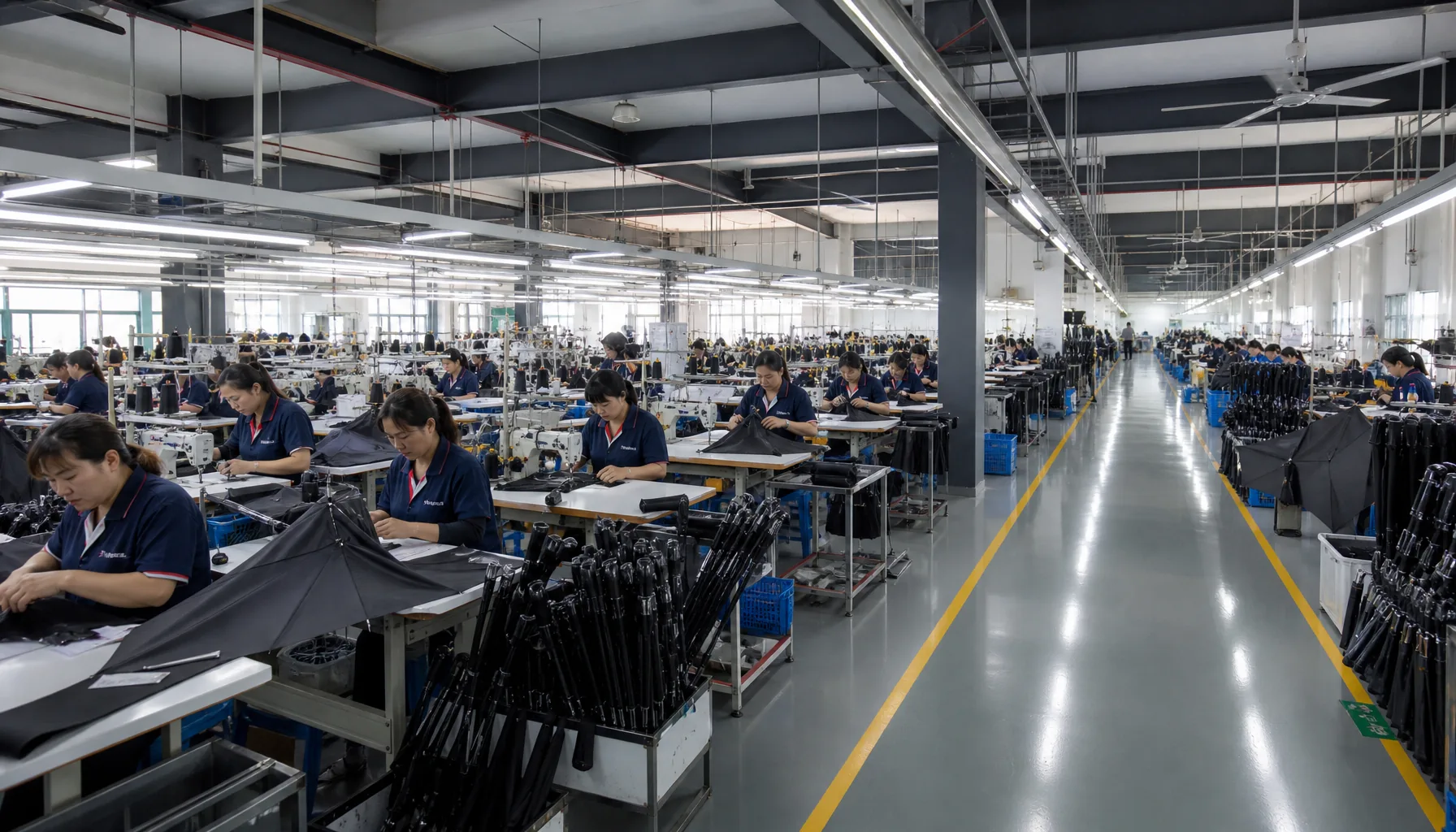
Injection-Molded Umbrella Parts: Runners, Tips, and Caps
Understand how injection-molded runners, tips, caps, and buttons are specified, tooled, and checked to reduce defects in...
Read More »
Umbrella Metal Parts Manufacturing: Stamping, Rivets, and Tolerances
Learn how stamped parts, rivet specs, and assembly tolerances affect umbrella durability, opening feel, defect rates, an...
Read More »
How Umbrella Ferrule and Tip Materials Affect Factory Quality
Compare ferrule and tip material choices that affect breakage, corrosion, and pack-out damage in OEM umbrella production...
Read More »