Umbrella Frame Corrosion Testing for Salt-Air Markets and Resorts
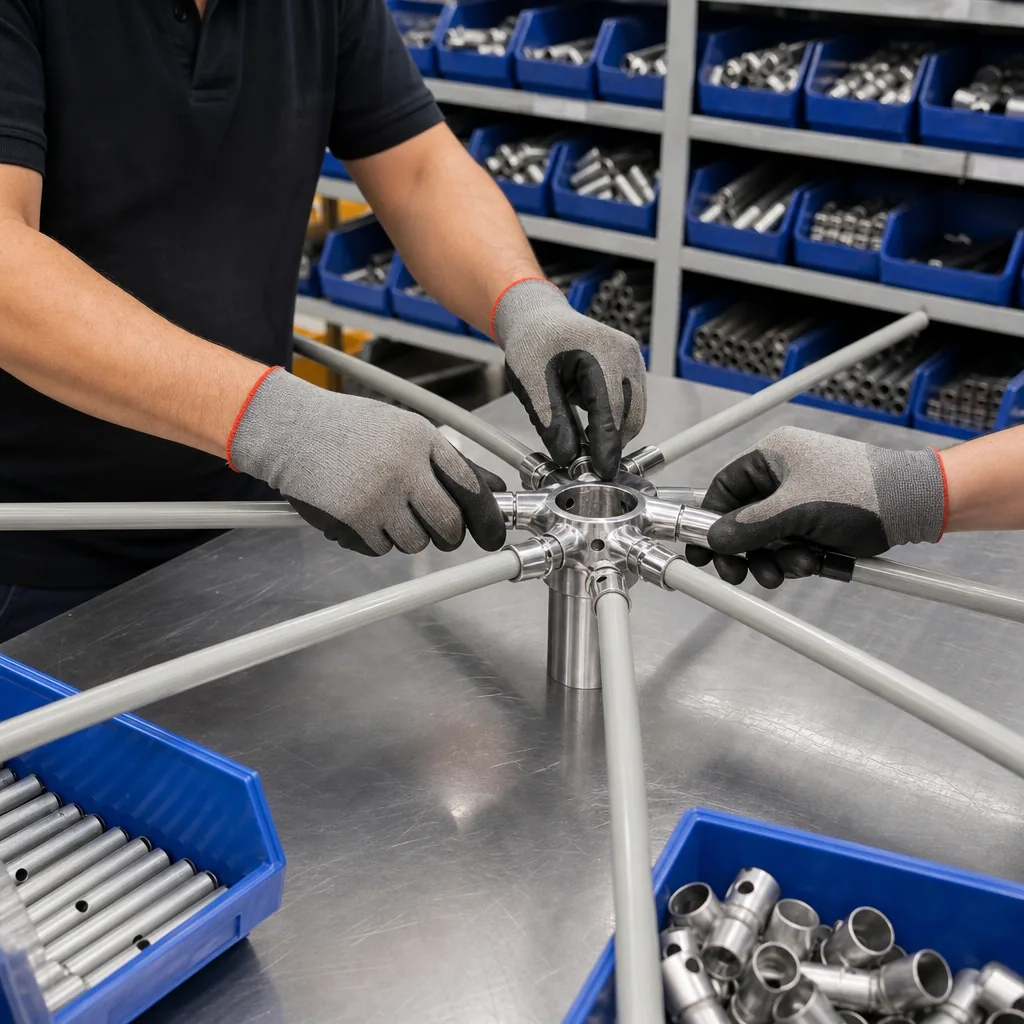
In salt-air markets, an umbrella frame can look fine on arrival and still start rusting after a few weeks of real use. Buyers need more than a generic spec sheet; umbrella corrosion testing has to tie salt spray results, plating thickness, and hardware choices to how the frame will actually hold up on a beach, at a resort, or in a coastal cafe. At the factory level, the details that matter are the ones you can measure and repeat.
Where corrosion starts in an umbrella frame
Corrosion almost always starts at the places that move, clamp, or trap moisture: shaft joints, rivets, the runner channel, tips, and the ferrule area. On a live umbrella frame, those spots see rubbing and micro-scratches every time the stick opens and closes, which breaks thin plating and exposes base steel. Once the finish is compromised, sweat from hands, rainwater, and salt air sit in crevices and push rust forward faster than most buyers expect. In umbrella corrosion testing, these are the first failure points I look at because they tell you more than a clean outer shaft ever will. A frame can look fine on the showroom floor and still fail at a rivet head or a telescoping joint after a few weeks in a humid coastal environment.
Low-grade plated parts fail differently from properly treated coastal umbrella frames. Thin nickel or chrome layers may hold up indoors, but in salt air they blister, pit, and flake at the cut edges, around rivet holes, and where the runner contacts the shaft. That is why plated umbrella hardware needs real substrate control, not just a shiny surface finish. If the steel underneath is not prepped correctly, a salt spray test umbrella will show orange bleed at the first exposed edge, then spread under the coating. The problem is worse on umbrellas with sharp stamping burrs or poor deburring, because those edges become rust initiation points. For resort or beachfront programs, I would rather see thicker plated parts with better sealing than decorative finish alone, because cosmetic chrome does not stop chloride attack.
The ferrule and tip assembly are easy to ignore, but they often decide how long the whole frame lasts. The ferrule sits near the canopy edge, so it catches condensed moisture, wind-driven rain, and sand, while tips are exposed to repeated wet-dry cycling that accelerates corrosion in the threads and inserts. On an outdoor order, a resort umbrella supplier should treat these as wear parts and specify coating thickness, material grade, and inspection limits up front. In practice, umbrella corrosion testing should cover both visual rusting and functional damage such as seized sliders, cracked plating, and loosened tips after salt exposure. If the frame uses steel instead of fiberglass in the wrong locations, corrosion can migrate fast once the finish breaks, especially under the runner where water gets trapped and never fully drains.
Plating systems and coating thickness buyers should ask for
For coastal umbrella frames, the finish matters as much as the base metal. In umbrella corrosion testing, I ask buyers to separate decorative appearance from real protection: nickel plating is usually the most balanced choice at about 8 to 12 microns total over a proper copper/nickel stack, black nickel is mainly cosmetic unless it sits on a solid nickel base, chrome is hard and bright but can be unforgiving if the underlayer is thin, and zinc-based finishes are the cheapest sacrificial layer for plated umbrella hardware. On a salt spray test umbrella, anything below roughly 6 microns on exposed steel parts is asking for early edge rust once the wet-dry cycle starts. A resort umbrella supplier should be able to state thickness by part, not just by “finish type,” because ribs, tips, runners, and hubs do not see the same wear or moisture load.
The weak points are usually not the visible tube surface. Spring pins, rivet heads, ferrules, runners, shaft joints, and cut edges need extra protection because plating pulls back there first, then salt gets under the coating and starts blistering. For coastal umbrella frames, I prefer double coverage: a zinc-rich base or phosphate pretreatment, then nickel or chrome topcoat where appearance matters. Black nickel should never be specified as the only barrier on carbon steel; it is too thin and too easy to damage during assembly. If the canopy is removed and the frame is stored wet, repeated wet-dry cycles will expose pinholes fast, especially around drilled holes and weld heat zones. That is why umbrella corrosion testing should include assembled hardware, not just flat coupons from the plater.
The practical spec I would give a factory is simple: ask for thickness targets in microns by component, salt spray hours, and post-test rust criteria. For plated umbrella hardware, 10 to 15 microns of nickel-based protection on high-contact parts is a safer target than a thin decorative flash, while chrome can sit on top of nickel for abrasion resistance but should not be treated as the main corrosion barrier. Zinc-based finishes are acceptable for low-visibility structural parts if the buyer understands they may dull faster and need sealing wax or topcoat support. ZheBrella’s standard practice on export programs is to separate the frame into zones and test the worst-case parts first, because a polished shaft can look fine while the rivet line is already failing. That is the difference between a frame that survives a season and one that survives a coastal contract.
Salt spray testing and what the results mean
For coastal programs, umbrella corrosion testing is only useful when the test length matches the real exposure. A 24-hour salt spray test is usually a quick screen for weak plating or bad prep, not proof of long service life. Forty-eight hours starts to separate decent plated parts from the cheap stuff that flashes rust at cut edges, screw heads, and weld points. Ninety-six hours is where we expect to see whether the coating system, base metal, and forming quality are working together, especially on coastal umbrella frames sold into beach resorts, marina gift shops, and outdoor hospitality. A salt spray test umbrella report should always name the standard used, the exposure time, and whether the frame passed as a whole assembly or only as a stripped part. If the seller cannot explain that, the result is mostly marketing, not engineering.
When buyers read results, they should look past the headline and inspect where failure starts. Rust bloom means the coating has broken down and corrosion has begun; on plated umbrella hardware, that often shows up first on sharp bends, rivet points, and the inside of ferrules. Pitting is worse because it means the base metal has already been attacked, which is why light surface discoloration and true substrate damage are not the same outcome. Edge failure is a common miss in catalog claims: a sample can look fine on flat faces while the trimmed edges, punched holes, and crimped tips are already corroding. For umbrella corrosion testing, I care more about consistent edge protection and fastening points than a clean-looking center tube, because that is where a frame actually fails in use.
The test conditions should match the end market, not the cheapest possible pass. A resort umbrella supplier selling to Hawaii, Florida, the Caribbean, or Mediterranean coastlines needs a harsher target than a product destined for inland promotional use. That means choosing the right plating thickness, sealant, and hardware geometry before testing, not after the first failed report. In our standard practice, we separate decorative plated parts from structural steel and specify what is allowed to corrode, because not every finish is built for the same life cycle. If the buyer wants real coastal durability, the question is not whether the frame survived 24 hours in a chamber, but whether the exact canopy size, rib material, runner, and fasteners can hold up after months of humid salt exposure, handling, and rinse cycles.
Frame material choices for coastal orders
For coastal orders, fiberglass is usually the safest default for the frame because it does not rust and it tolerates cyclic flexing better than plain steel. On beach and pool programs, that matters more than theoretical stiffness: a fiberglass rib can take repeated wind loading and salt exposure without the red-brown corrosion you see on cheap plated parts. Stainless steel is the next step up when buyers want a cleaner metal look and better long-term resistance on hubs, shafts, and ferrules, but it is still heavier and usually more expensive to fabricate. A proper salt spray test umbrella spec should start with the frame bill of materials, not the canopy fabric, because the frame is where corrosion kills the product first.
Coated steel makes sense when the program is price-sensitive and the exposure window is limited, such as seasonal hotel patios, inland golf outings that still see humidity, or resort inventory that gets replaced on a fixed cycle. The key is the coating system: thin decorative plating fails fast in salt air, while powder coat over pretreated steel gives better life if the coating stays intact. That said, plated umbrella hardware is rarely the right choice for beach-front use because chips at the joints become rust points within weeks. Aluminum sits between coated steel and stainless on cost, and it stays corrosion-resistant if the anodizing or powder coat is sound, but it is softer and can deform at the runner and rivet points under repeated abuse.
For coastal umbrella frames, I would specify fiberglass ribs with stainless or anodized aluminum hardware for beach and marina accounts, then move to stainless reinforcements only where the load path needs it. For hotel and resort terrace programs, a resort umbrella supplier should separate guest-facing appearance from service life: stainless or coated aluminum can be acceptable for lighter duty, but only if the maintenance team can inspect for coating damage and rinse salt regularly. ZheBrella uses umbrella corrosion testing to match material to use case, not to oversell one alloy for every market. For golf umbrellas, fiberglass shafts and ribs usually give the best balance of wind flex and corrosion resistance; for fixed seaside installations, heavier stainless or coated steel may be justified only when the budget allows periodic replacement and strict maintenance.
Specifying corrosion requirements in an OEM order
For salt-air markets, the PO has to spell out exactly which metal parts are being protected, because “rust resistant” is too vague for coastal umbrella frames. List every plated part by name: runner, shaft, stretcher tips, rivet heads, springs, ferrules, and any plated umbrella hardware used in the opening mechanism. If the frame is for a resort umbrella supplier program, I would separate the requirement by component instead of treating the whole umbrella as one finish. That lets you specify zinc plating, nickel-chrome plating, powder-coated steel, or stainless substitution where needed. For umbrella corrosion testing, the order should also name the test standard, usually ASTM B117 or ISO 9227 salt spray test umbrella protocol, plus the exact hours required and the failure mode being measured, such as white rust, red rust, blistering, or functional seizure. Don’t leave acceptance open to interpretation. If the buyer wants coastal umbrella frames to survive real resort handling, the finish spec should tie to the component function, not just appearance.
The acceptance criteria need to be written before production starts, not negotiated after the first failed sample. A good PO states the minimum salt spray hours by part category, the allowable percentage of surface corrosion, and whether cosmetic staining is acceptable on non-visible hardware. For example, you can require no red rust on load-bearing hardware after 72 or 96 hours, with only minor white oxidation on non-critical plated umbrella hardware if it does not affect operation. The QC plan should match that spec: incoming material check, pre-production sample approval, in-line inspection, and final inspection at AQL 2.5 for appearance and function. If the test result is part of the contract, define who pays for retest, who chooses the lab, and what happens if a lot fails. That is where many OEM deals get messy. At ZheBrella, we usually lock the corrosion clause before cutting fabric so there is no argument when the sample comes back from test.
Carton storage conditions belong in the PO because corrosion often starts in the warehouse, not in the rain. Specify dry storage, carton stack height, humidity limit if the buyer has one, and that umbrellas must not sit directly on concrete floors or in containers with visible condensation. For export to resort climates, I also write in polybag sealing, desiccant use, and a maximum storage period before shipment if the plated parts are exposed. If the buyer wants umbrella corrosion testing backed by replacement terms, the contract should state whether failed units are replaced, credited, or reworked, and whether the remedy applies to the full batch or only the confirmed defective percentage. That needs to be aligned with AQL 2.5 and the inspection method, otherwise the supplier can argue that a cosmetic issue is outside scope. The clean way is to attach the test report template, the inspection checklist, and the replacement trigger to the purchase order so both sides are working from the same standard.
Frequently Asked Questions
Is stainless steel always the best choice for coastal umbrellas?
Not always. Stainless improves corrosion resistance, but it raises cost and may not be necessary if the buyer uses coated steel with verified salt spray performance and proper packaging.
What should a buyer request if the umbrellas will be used in beach resorts?
Ask for salt spray test results, plating thickness, and clear photos of the frame after testing. Also specify storage and carton moisture protection, because corrosion often starts before the product reaches the customer.
What salt spray test duration is typical for coastal umbrella frames?
For resort and seaside use, buyers often ask for 72 to 240 hours of neutral salt spray testing depending on the hardware grade. Higher-spec frames may require less than 1% red rust after testing, with clear pass criteria written into the purchase order.
What plating thickness should I request for plated umbrella hardware in salt-air markets?
A common target is 8 to 15 microns for zinc or nickel-zinc plating on exposed steel parts, but the right spec depends on the frame design and corrosion target. For beachfront resorts, it is better to specify both plating thickness and post-plating passivation rather than thickness alone.
Do coastal umbrella frames need stainless steel throughout?
Not always. Many buyers use stainless steel only for high-exposure parts such as springs, screws, and pins, while keeping the main frame in plated or coated steel to control cost. The key is matching material choice to the actual exposure level and replacement cycle.
Looking to Launch Your Custom Umbrella Line?
ZheBrella is a Zhejiang-based OEM/ODM umbrella manufacturer with 17 years of export experience. Free design, low MOQ from 100 pieces, windproof construction, full-color print.
Get Free Quote Now »People Also Search For
Related Articles

How Umbrella Salt Spray Testing Supports Coastal Use Programs
Learn how salt spray testing helps buyers specify corrosion-resistant umbrellas for resorts, marine retail, and humid ma...
Read More »Umbrella Salt Spray Testing for Coastal and Marine Programs
Learn how salt spray testing, plating choices, and frame specs help buyers source umbrellas that resist rust in coastal,...
Read More »Umbrella Hardware Plating and Salt-Air Corrosion Control
Compare plating and coating choices for umbrella hardware, with salt-air testing methods, corrosion failure points, and ...
Read More »