Umbrella Repairability, Spare Parts, and Warranty: A Buyer's Guide
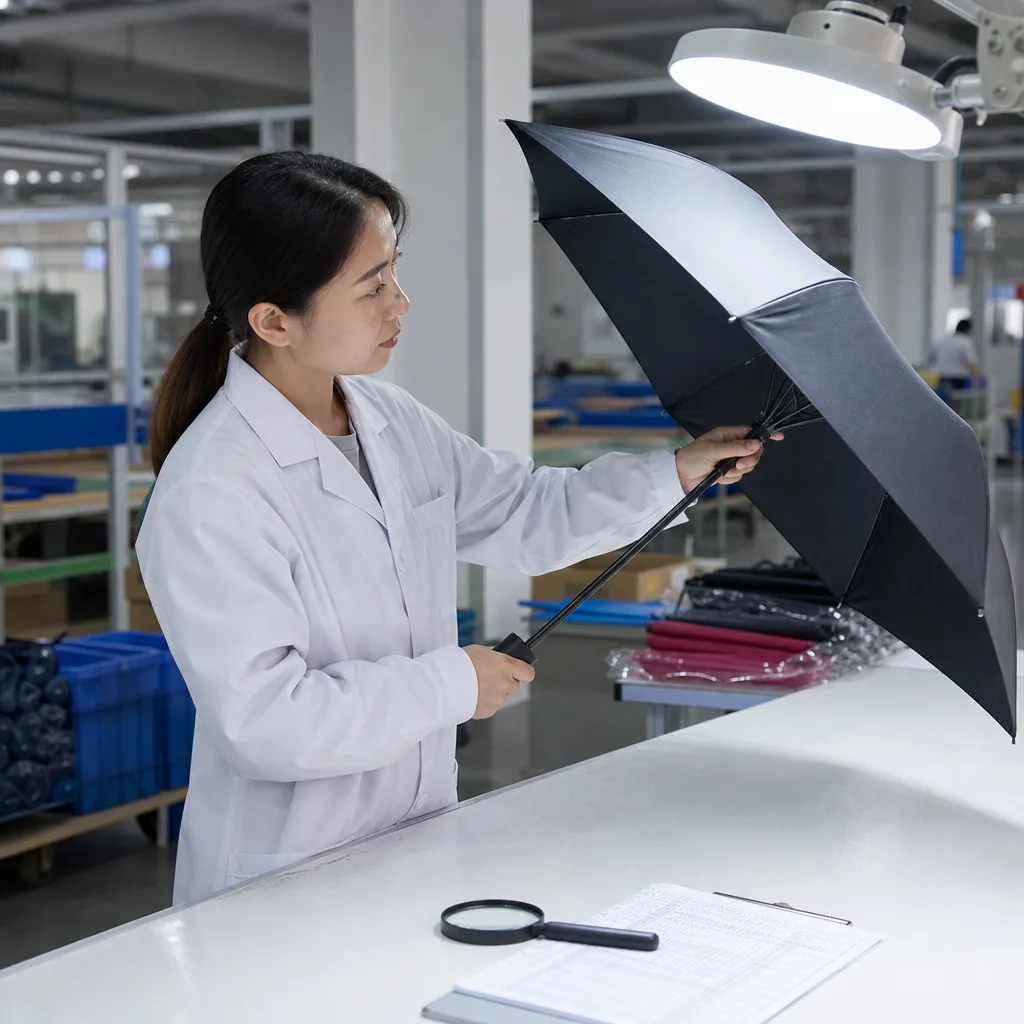
Custom umbrella programs rarely fail because of the canopy alone; they fail when ribs bend, tips loosen, runners crack, or handles separate after a few months in real use. Buyers who plan for repairability, spare parts, and a clear umbrella warranty protect margins, reduce complaints, and keep product in service longer. From the factory floor, the difference is usually in how the frame is built, what parts are standardized, and whether replacements are actually available when needed.
Why repairability is a sourcing decision
A repairable umbrella is a sourcing decision, not a nice-to-have. If the shaft, runner, stretcher, tip, or spring cannot be replaced, every minor failure becomes a full replacement or a refund, which is expensive for the buyer and ugly for the brand. The practical way to judge an umbrella warranty is to ask whether the factory can supply umbrella spare parts in the same production system: ribs that match the original geometry, replacement ferrules, push-button mechanisms, canopy panels, and end caps. When those umbrella replacement parts are standard and documented, field repairs are realistic instead of theoretical. That reduces return rates, shortens complaint resolution time, and keeps distributors from eating freight on items that should have been fixed with a $0.20 part instead of scrapped.
The lifetime value argument is simple. A retail umbrella that lasts one season creates one transaction; a repairable umbrella creates repeat trust, fewer chargebacks, and less dead inventory. For corporate programs and promotional orders, the economics are even clearer because the user often keeps the umbrella in a car or office for years, and a broken rib or torn panel does not always justify a full replacement. Our standard practice at ZheBrella is to treat serviceability as part of the spec, not after-sales theater: we document mechanism type, rib count, shaft diameter, and fasteners so buyers can stock umbrella spare parts with a predictable MOQ. That matters when a chain store, event planner, or distributor wants to support 5,000 units without building a separate repair operation.
Warranty terms should match the build. A weak umbrella warranty that excludes common wear points, offers no spare parts, or requires the buyer to ship back every unit is really just a short return window with better wording. Stronger programs define what is replaceable, how long critical umbrella replacement parts are available, and whether the factory can supply them in matching colors and materials after the initial order ships. The best sourcing approach is to specify service parts up front: canopy panels, ribs, tips, springs, and handle components, plus a clear lead time for replenishment. That keeps the umbrella warranty credible, lowers total cost of ownership, and turns failures into controlled maintenance instead of full product loss.
The parts most likely to fail
The parts most likely to fail are predictable: ribs, the runner, the spring set, and the tips. Ribs take the load when a canopy catches wind, so aluminum and thin steel bend first, while fiberglass flexes better but can still crack at the ferrule or joint after repeated stress. The runner is the other weak point because it carries friction every time the umbrella opens and closes; once the track wears, the canopy starts sticking or collapsing unevenly. Springs fail from metal fatigue, especially in auto-open and auto-open-close mechanisms where the compression cycle is constant. Tips are small, but they matter because a broken tip lets the canopy fabric tear out at the end of a rib. A serious umbrella warranty should name these failure points clearly instead of hiding behind vague language, because they are the parts that separate normal wear from a real defect.
If you want a repairable umbrella, ask whether the umbrella spare parts are standard sizes or proprietary. Good umbrella replacement parts usually include matching ribs, stretcher bars, runners, top springs, bottom springs, tips, ferrules, and the little clips or screws that hold the frame together. In practice, repairability depends on whether the frame was built for service or just cheap assembly. A 10K or 16K frame with replaceable fiberglass ribs is much easier to keep in service than a sealed low-cost frame with rivets everywhere. On the factory floor, we look for whether the shaft diameter, rib length, and runner geometry are documented, because without those numbers a repair shop cannot source the right part. That is where an umbrella warranty becomes useful: it should tell the buyer what gets replaced, what counts as abuse, and whether parts are stocked for the expected life of the product.
Stocking spares and replacement frames
If you are buying umbrellas in bulk, order umbrella spare parts at the same time. The cheapest mistake is assuming a repairable umbrella stays repairable without the small hardware that actually fails first: ribs, stretchers, runners, tips, springs, screws, ferrules, and handle inserts. In practice, a replacement frame is more useful than a pile of decorative extras because broken ferrules or bent ribs are what trigger claims under an umbrella warranty. For commercial programs, I would treat a 3% to 5% spare-parts allowance as normal, and go higher on auto-open-close models because the mechanism sees more abuse than a manual stick. If the canopy is 190T or 210T pongee and the frame is fiberglass, keep matching umbrella replacement parts in the same spec; mixed components are where repairs become slow and unreliable.
A good umbrella warranty is only credible if you can replace the failure point quickly, not ship a full unit back for every defect. Our standard practice at ZheBrella is to separate umbrella spare parts into two buckets: consumables that should be stocked with every PO, and frame assemblies that are worth holding for larger accounts or recurring retail programs. That usually means extra lower shafts, full replacement frames, canopy sets for printed SKUs, and a small bag of field-repair hardware. For importers, this is also a logistics question: ordering spares with the main production run avoids a second freight cost and keeps color, finish, and rib geometry consistent across the lot. If you want a true repairable umbrella program, define the parts list up front, confirm MOQ for each part family, and write the spare-parts coverage into the umbrella warranty terms so there is no argument later about what counts as serviceable inventory.
Setting warranty terms with the factory
The warranty discussion should start with a defect definition, not a promise. In factory terms, that means separating material defects, assembly defects, print defects, and transit damage before you talk about an umbrella warranty. A normal production target is built around AQL 2.5 for major defects and a tighter internal check on critical failures like broken ribs, failed runners, or canopies that tear at the stitch line. If the buyer wants a repairable umbrella program, the factory has to agree on what can be fixed with umbrella spare parts versus what triggers full replacement. On a 10,000-piece order, even a 1% field failure rate is 100 claims, so the terms need to define acceptable defect buckets, inspection method, and claim window in days after receipt or retail launch.
Replacement agreements work only when the spare parts list is specific. A vague promise to supply umbrella replacement parts is not useful unless it names the rib size, shaft diameter, runner type, top cap, spring, handle, and canopy panel spec. For example, a 23-inch auto-open-close model with fiberglass ribs uses different parts than a 30-inch golf umbrella with steel ribs and a double-canopy vent. Our standard practice at ZheBrella is to tie the umbrella warranty to a documented BOM and keep 1-3% extra components or finished units for agreed claims, depending on MOQ and lead time. That makes replacements faster and avoids arguments about whether a repair is practical or whether the whole unit should be swapped.
The contract should also state who pays freight, how samples are verified, and whether the factory will ship spare kits separately from the main order. For export buyers, a repairable umbrella program usually works best when the first shipment includes extra canopy panels, ferrules, and tips, because those are the most common wear points. If the buyer wants replacement coverage beyond obvious manufacturing defects, the umbrella warranty has to spell out service life expectations, especially for UV coatings, Teflon water repellency, and wind damage. In practice, a clean replacement agreement is better than a broad promise: it should define claim photos, batch traceability, turnaround time, and whether replacement parts or finished goods are credited against the next PO or reshipped under FOB/DDP terms.
Repair vs replace economics
Repair makes sense when the frame and canopy are still structurally sound and the failure is limited to a single replaceable component. On a premium 23" or 27" umbrella with fiberglass ribs, a broken stretcher, a worn runner, or a torn canopy panel is usually cheaper to fix than to replace, especially if the original build used standard umbrella replacement parts rather than riveted one-offs. A repairable umbrella earns its keep when the canopy fabric is 190T or 210T pongee, the shaft is straight, and the mechanism is still smooth. If the damage is isolated and the service life is otherwise intact, you are buying back most of the product for a small fraction of the original landed cost. That is exactly where an umbrella warranty matters: it should cover defects in materials and workmanship, but it should not be used as a substitute for normal wear-and-tear planning.
The economics change fast once the failure is in the core structure. If the shaft is bent, the hub is cracked, or the auto-open-close system has failed in a way that requires re-riveting and full disassembly, labor can exceed the value of the item unless it is a higher-end model with UV coating, double-canopy venting, or custom printing. For mass-market 21" models, repair often loses on time alone because the shop has to source umbrella spare parts, match tolerances, and recheck opening force after assembly. In factory terms, we look at the total stack: parts cost, labor minutes, and rework risk. If a replacement can be built faster than a proper repair, replacement is the rational choice. That is why buyers should not assume every broken umbrella is worth saving; the breakpoint is usually whether the repair stays under 30 to 40 percent of replacement cost.
For premium programs, the right strategy is to design for serviceability from the start. Keep the canopy panel count standard, use stocked ferrules, tips, runners, and end caps, and avoid proprietary molded parts that make umbrella replacement parts hard to source later. A good umbrella warranty should be paired with a documented spare-parts list and a realistic repair policy, not vague promises. In practice, the best repair economics show up on higher-spec products: 8K or 10K windproof frames, Teflon-coated pongee canopies, and corporate gifts where the branding cost is higher than the hardware. If the umbrella is meant to last through multiple event cycles or retail seasons, spare parts extend the useful life and reduce waste. If it is a low-cost giveaway, replacement is usually cheaper and cleaner than repair, and pretending otherwise only creates service headaches later.
Frequently Asked Questions
Do custom umbrellas come with a warranty?
Reputable factories stand behind workmanship and agree a defect threshold tied to AQL inspection. Negotiate the warranty terms, acceptable defect rate, and replacement process up front, and put them in the order agreement rather than assuming coverage.
Can broken umbrellas be repaired?
Premium umbrellas with replaceable ribs, runners, and tips can be serviced, which is worthwhile for higher-value products. For cheap promotional umbrellas, repair usually costs more than replacement, so durability at purchase matters most.
How many spare parts should I budget for a 5,000-unit umbrella order?
A practical starting point is 2%-3% extra for high-failure components such as tips, ferrules, runners, and canopy panels. For a 5,000-unit program, that usually means 100-150 sets of critical spares, plus a few full units if you expect retail returns or field replacements.
Which umbrella parts should be specified in the warranty instead of the whole product?
For most B2B programs, it is better to define coverage by component type: frame failure, seam failure, handle cracking, and canopy defects. Cosmetic wear, wind damage, and misuse are usually excluded, while legitimate manufacturing defects are repaired or replaced under the agreed term.
What lead time should I expect for replacement parts on a custom umbrella order?
If the factory keeps material records and component patterns on file, simple parts like tips, straps, and canopy panels can often be remade in 7-15 days after approval. Frame-related parts usually take longer, especially if tooling or special finishes are involved.
Looking to Launch Your Custom Umbrella Line?
ZheBrella is a Zhejiang-based OEM/ODM umbrella manufacturer with 17 years of export experience. Free design, low MOQ from 100 pieces, windproof construction, full-color print.
Get Free Quote Now »People Also Search For
Related Articles

Building a Private Label Umbrella Assortment for Retail
Plan a profitable private label umbrella line with SKU mix, rib counts, fabric grades, MOQ strategy, packaging, and FOB/...
Read More »How to Source Custom Umbrellas for Amazon and Retail Compliance
Build umbrella programs that fit Amazon and retail requirements, from labels and packaging to QC, carton specs, and comp...
Read More »
Private Label Umbrella MOQ and Cost Planning for Buyers
Learn how MOQ, unit cost, and lead times interact when sourcing private label umbrellas, with practical numbers for bett...
Read More »