8K vs 10K vs 16K Umbrellas: Rib Count Guide
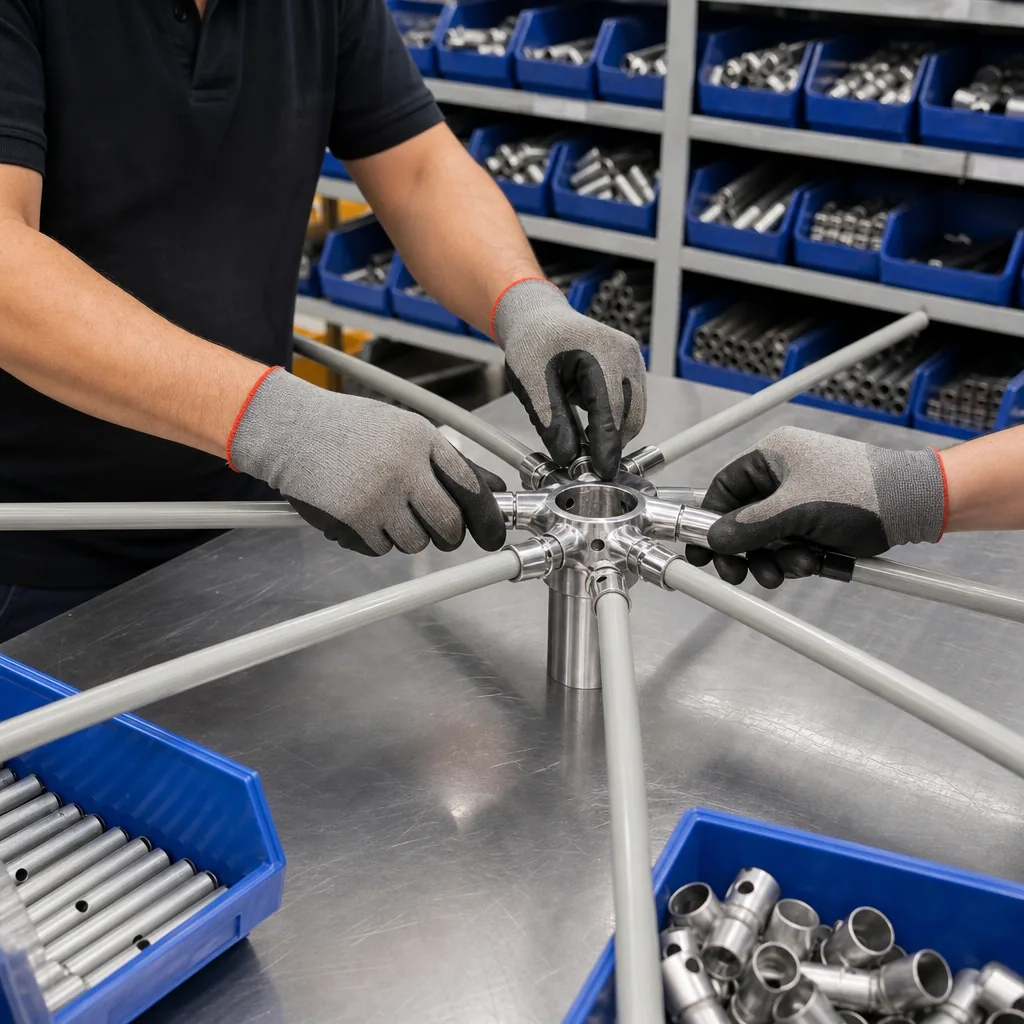
Choose 8K for standard compact and promotional umbrellas where weight and cost matter most; choose 10K when a retail frame needs more canopy support without the bulk of a high-rib design; choose 16K for a rounder premium canopy and a firmer feel. Rib material, thickness, stretcher geometry, and shaft strength still matter more than rib count alone, so do not treat a higher K number as an automatic windproof rating.
Decoding the K: ribs and frame geometry
The K in 8K, 10K, or 16K is the rib count, not some vague quality grade. It tells you how many umbrella frame ribs run from the center hub to the tip ring, and that number directly changes the canopy geometry. More ribs usually mean the canopy is divided into narrower panels, which gives a smoother round profile and better support against flutter. An 8k umbrella typically has wider panel spacing, so each section of fabric has to span more distance between support points. A 16 rib umbrella has many smaller segments, so the shape looks fuller and the load is spread out more evenly across the frame ribs.
The number of umbrella ribs also affects how the umbrella opens, folds, and handles wind. With fewer ribs, the frame is simpler and lighter, which can help on compact manual or auto-open models, but the canopy can deform more when gusts push between the ribs. With more ribs, the arc is closer to a true circle and the canopy edge stays more uniform, especially on larger sizes like 23 inch or 27 inch models. That is why umbrella rib count matters more than people expect: it changes not just appearance, but stress distribution, fabric tension, and how stable the canopy feels in use. In production, we look at the rib count together with rib material, ferrule design, and the canopy pattern, because the wrong combination creates wrinkling or weak points even if the fabric is good.
A higher rib count does not automatically mean a stronger umbrella frame. The real question is how the umbrella frame ribs are built: fiberglass versus steel, rib thickness, stretcher design, and whether the canopy is vented or double-canopy. A 10K or 16K frame with thin wire ribs can still fail early, while a well-made 8k umbrella with proper fiberglass ribs and a tight pongee 190T canopy can perform better in real use. For buyers, the useful comparison is not just the K number, but how the geometry matches the intended market. Promotional umbrellas often prioritize weight and cost, while retail and storm models need better symmetry, tighter panel cutting, and a rib layout that actually supports the canopy under wind load.
8K: the standard for everyday umbrellas
For an everyday umbrella, 8 ribs is the practical default because it gives you enough canopy support without adding unnecessary weight, parts, or cost. In the factory, an 8K frame usually means four main ribs and four stretcher assemblies doing the real work, which is enough for a 21" or 23" folding umbrella and most compact stick umbrellas sold as office, travel, or promotion stock. A well-built 8k umbrella with fiberglass ribs and a steel shaft will handle normal city wind, daily carry, and repeated opening cycles better than the cheapest 6-rib builds, while still staying light enough for commuters. That is why the umbrella rib count matters: once you go past 8, you often pay for extra rigidity you do not need in a basic retail program.
The number of umbrella ribs also affects sewing tolerance, panel shape, and how the canopy looks when open. With 8 ribs, a pongee 190T or 210T canopy can be cut and tensioned cleanly, which keeps printing stable for logos and avoids the loose, baggy look that cheap umbrellas get after a few uses. For most buyers, 8 ribs is the sweet spot between material cost, assembly time, and acceptable wind resistance, especially on manual open or auto-open models. In our standard practice at ZheBrella, 8K is the baseline unless the buyer specifically wants a stronger 10K or 16 rib umbrella for higher wind performance. If the use case is everyday commuting, event giveaways, or general retail, 8 umbrella frame ribs are usually the right call because they keep the product affordable without making it feel flimsy.
10K and 16K: rounder canopy, more stability
A higher umbrella rib count does two practical things: it spreads wind load across more points and it pulls the canopy into a flatter, more even dome. An 8K umbrella has fewer umbrella frame ribs, so each rib carries more stress when a gust hits. Move up to 10K or 16K and the load is divided more evenly, which is why these builds feel steadier in real use, especially on 23" and 27" stick umbrellas. The shape also changes. More ribs reduce the panel span between attachment points, so the canopy looks rounder and holds a cleaner profile instead of sagging into broad flats. In factory terms, the number of umbrella ribs is not just a visual spec; it changes how the runner, stretcher, and ferrule work together under tension.
A 16 rib umbrella is usually chosen when the buyer wants a more premium, structured look or better performance in repeated wind exposure, not because it is automatically stronger in every part. More umbrella frame ribs can improve shape retention, but they also add weight, cost, and more assembly points that need consistent riveting and sewing tolerance. On our standard practice at ZheBrella, we match rib count with shaft material and canopy fabric, because a 16K layout makes more sense with fiberglass ribs and pongee 190T or 210T than with a thin steel frame that will just feel heavy. For procurement, the tradeoff is simple: 8k umbrella builds are cheaper and lighter, while 10K and 16K give a flatter shade, better load sharing, and a more refined opening profile when the mechanism is used repeatedly.
Tradeoffs: weight, cost, and failure points
Higher umbrella rib count usually means a stiffer canopy shape, but it also means more metal, more resin, and more labor in the frame. An 8k umbrella is lighter and cheaper because it has fewer umbrella frame ribs, fewer ferrules, and fewer stitch points at the canopy tips. Once you move to 10K or 16K construction, the frame carries more load evenly, which helps the canopy hold a rounder profile in wind, but the added hardware can raise finished weight enough that a compact travel model feels bulky in the hand. In real production, the umbrella rib count affects not just the bill of materials but also packing density, carton weight, and the cost of the handle, shaft, and runner assembly needed to support the extra parts.
The failure points shift as the number of umbrella ribs goes up. With a 16 rib umbrella, the canopy edge is supported more often, so each panel spans a shorter distance and can look smoother, but you also introduce more joints, more crimp points, and more opportunities for tolerance stack-up. If one ferrule is slightly loose or one rib is over-bent, the problem multiplies across the frame. On the line, that means more inspection pressure at the spoke tips, stretcher pivots, and tip caps. Our standard practice is to watch AQL 2.5 closely on high-rib-count orders because one weak joint can show up as uneven opening, canopy distortion, or a rib that snaps during repeated cycling.
Cost is not linear with the umbrella rib count. Going from 8K to 10K or 16K adds metal, but it also adds slower assembly time, more rejection risk, and heavier freight because the packed umbrella frame ribs take more space and use more material. For buyers, the right choice depends on use case: promotional giveaways usually do better with an 8k umbrella or simple 10K frame, while premium golf and storm models justify higher rib counts when paired with fiberglass ribs, double-canopy venting, and pongee 190T or 210T fabric. ZheBrella generally treats 16K as a performance build, not a default, because the extra parts only make sense when the customer is paying for wind stability, not just for a higher number of ribs.
Choosing rib count by product and market
The umbrella rib count should be chosen from the job the umbrella has to do, not from the idea that more ribs always means better. For a low-cost promo item, an 8K umbrella is usually the right call: fewer umbrella frame ribs keep tooling, labor, and freight down, and the canopy still opens cleanly on a standard 21" or 23" stick umbrella. That makes sense for trade shows, political handouts, and mass giveaways where the real target is imprint space and unit price, not storm performance. If the canopy is 190T pongee or POE and the frame uses basic steel, 8 ribs are enough for normal city use. Push the number of umbrella ribs higher without upgrading the shaft, stretcher, and runner, and you often add cost faster than you add real durability.
Move to 10K when the product needs to feel like retail, corporate gifting, or a step above the throwaway segment. A 10-rib frame usually gives a better canopy shape than an 8k umbrella, especially on a 23" automatic stick umbrella or a compact folding model where panel tension matters. It is a good middle ground for distributors who want a noticeable upgrade without paying for a true premium build. In practice, the canopy fabric, rib material, and joint quality still matter more than the raw number of ribs, so a well-made 10K with fiberglass ribs can outperform a sloppy 12K with weak ferrules. For logos, this tier also prints better because the canopy sits flatter and the panel layout is more predictable.
A 16 rib umbrella belongs in premium or wind-prone use, but only if the whole frame is engineered for it. More umbrella frame ribs spread load across the canopy, reduce panel flutter, and help the umbrella hold its dome in gusty conditions, which is why a 16 rib umbrella is common in golf sizes, vented double-canopy builds, and higher-end promotions. That said, extra ribs do not magically solve bad geometry; if the stretcher angle, rib gauge, and hub tolerances are weak, the umbrella still fails at the first hard inversion. For markets that care about image and weather resistance, I would pair 16K with fiberglass ribs, 210T pongee, and a vented canopy rather than just adding metal. The number of umbrella ribs should match the product class: 8K for cheap volume, 10K for mainstream retail, and 16K for wind, size, and perceived quality.
Frequently Asked Questions
What does 8K or 16K mean on an umbrella?
The K figure is the number of ribs in the frame - 8K has 8 ribs, 16K has 16. More ribs give a rounder canopy and spread wind load across more support points, improving stability at the cost of extra weight and price.
Is a higher rib count always better?
Not always. 8 ribs is the cost-effective standard for most umbrellas. 16 ribs adds stability and a premium look but also weight, cost, and more joints to fail. Choose based on the product tier and wind exposure.
For a mid-range custom umbrella, should i choose 8k or 10k?
For most mid-range retail programs, 10K is the safer choice because it feels stiffer and usually holds the canopy shape better in gusts. 8K is lighter and can be fine for value-focused folding umbrellas, but it is more dependent on rib material and shaft size.
Does 16k always mean better wind resistance?
No. A 16K frame spreads load across more ribs, but wind resistance also depends on fiberglass quality, rib thickness, venting, and the hub design. A well-engineered 10K frame can outperform a poorly built 16K frame.
What should a buyer confirm before requesting a specific rib count?
Confirm the rib material, open diameter, shaft thickness, canopy fabric, and whether the umbrella is manual or automatic. For OEM orders, sample lead time is often 5-7 days, and bulk production is commonly 25-35 days after artwork and specs are approved.
Looking to Launch Your Custom Umbrella Line?
ZheBrella is a Zhejiang-based OEM/ODM umbrella manufacturer with 17 years of export experience. Free design, low MOQ from 100 pieces, windproof construction, full-color print.
Get Free Quote Now »People Also Search For
Related Articles
Umbrella Frame Assembly QC: From Ribs to Final Opening
Learn how factory line QC controls rib riveting, runner fit, frame tension, and opening cycles before AQL 2.5 final insp...
Read More »Umbrella Frame Riveting Quality: Controlling Joint Failure
Learn how rivet selection, hole tolerance, and pull testing reduce loose ribs, twisted stretchers, and frame failures in...
Read More »
Umbrella Frame Riveting Process for Strong Rib Joints
See how rib, stretcher, and notch riveting controls joint strength, smooth opening, and AQL 2.5 risks for 8K and 16K OEM...
Read More »