Woven Labels vs Printed Branding on Umbrellas
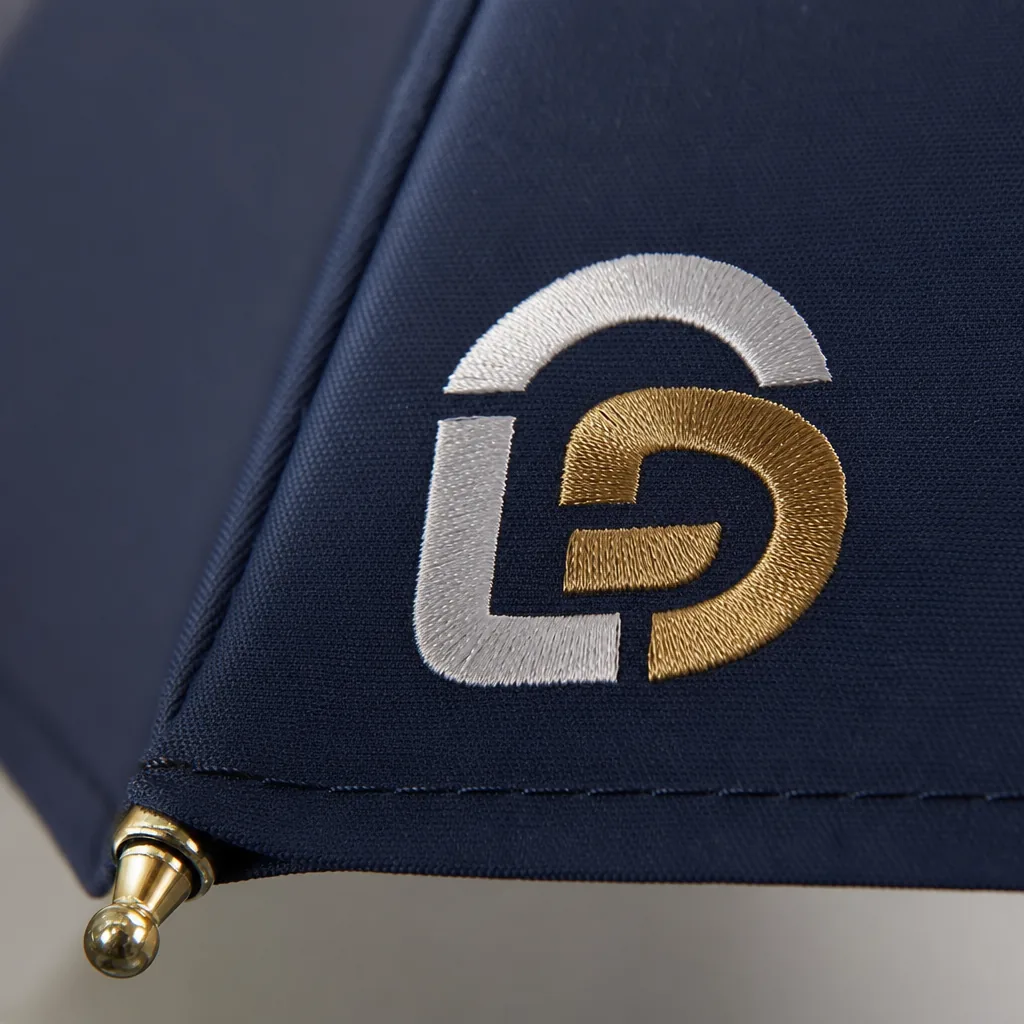
For umbrella buyers, the real decision is not whether branding looks good on a screen, but whether it survives folding, moisture, abrasion, and daily handling in the field. A woven label umbrella can outperform printing when the mark needs crisp detail, textile texture, and long wear on panels, straps, or sleeves, especially on premium programs. At the factory floor, the best results often come from choosing the right label placement and combining both methods for a cleaner, more durable finish.
Printed branding vs woven labels
If the goal is a premium, retail-ready finish, a woven label umbrella usually looks more deliberate than a printed mark. Woven labels hold small text, borders, and logo edges better because the design is built into the fabric, not sitting on top of it. That matters on a canopy edge, tie strap, or sleeve where the customer sees the branding up close. Printed branding is faster and cleaner for large graphics, one-color logos, or short campaign runs, but it can look flatter and more temporary, especially on textured pongee. In practice, the choice is less about style preference and more about how close the buyer expects people to inspect the umbrella. For corporate gifts, event stock, and retail programs, umbrella tag branding is often the difference between “generic promo item” and “finished product.”
On durability, woven labels usually win, but only in the right application. A woven label umbrella keeps its identity through rubbing, folding, and repeated wet-dry cycles because the brand mark is part of the label construction. Printed marks can crack, fade, or soften over time, especially on EVA sleeves, polyester bags, or areas that get constant flexing near the runner or strap. That said, print is perfectly fine when the brand area is large and the buyer needs speed, for example on a panel print or inside canopy branding. Our standard practice is to treat printed vs woven umbrella branding as a use-case decision: if the umbrella will be handled often and sold through retail, woven is the safer choice; if it is a short-lived promotion or a low-touch giveaway, printing is usually enough. The real failure point is not the logo itself but matching the branding method to the material and wear pattern.
Cost is where the difference becomes obvious. Printed branding is usually cheaper on setup and better for low MOQs because the tooling is simple and the labor is lighter. A woven label adds label production, cutting, folding, and stitching, so unit cost goes up, especially on small orders. For larger runs, the gap narrows, but printed branding still tends to be the lower-cost option when the artwork is straightforward. Buyers should also factor in perceived value, not just factory price: a woven label umbrella can support a higher selling price because the umbrella brand label reads as more permanent and more intentional. For private-label programs, I usually recommend woven labels for retail SKUs and printed branding for fast-turn promotions, then verify both under AQL 2.5 before shipment. The wrong choice is chasing the cheapest decoration method and then trying to fix the presentation later with packaging.
Where labels are applied
The sleeve is the cleanest place for an umbrella brand label because it gives you a flat surface, a clear retail-facing view, and the lowest risk of interfering with opening or closing. On a woven label umbrella, the sleeve label is usually stitched near the top fold or centered along the front panel, with a 20 to 40 mm woven tab or a printed polyester patch depending on the brand budget. This is where umbrella tag branding works best for retail packaging: the customer sees the name before the canopy is even opened, and the label stays visible in storage, on display hooks, and in distribution cartons. In factory terms, sleeve placement is also the easiest to standardize because the sewing tolerance is forgiving and the label does not need to survive constant flexing like a panel seam does.
The canopy hem is the most durable location when the goal is long-term identification rather than showroom visibility. A woven label umbrella can carry a small woven tab or printed patch at the hem edge, usually on one panel or opposite the main seam, where it is less exposed to abrasion than the canopy face. This placement is useful for premium private-label programs because it keeps the logo visible only when the umbrella is open, which is often the right answer in a printed vs woven umbrella decision: printing gives more image area, while woven construction gives a sharper brand mark on a small, permanent point. For promo work, the hem label also avoids the ink cracking that happens on coated pongee or POE canopies after repeated folding.
Handle strap placement is the most functional option because it ties the umbrella brand label to the part the user actually touches every day. A narrow woven tag or heat-transfer mark on the strap works well for compact and auto-open models, especially when the canopy is already crowded with art, safety text, or care instructions. On higher-volume programs, ZheBrella often treats the strap as the best balance between cost and retention: it is visible in hand, survives abrasion better than a canopy print, and does not require a large embroidery area. If the customer wants the most flexible umbrella tag branding, the strap can be paired with a sleeve label or hem tab so the outer packaging, the product body, and the carry loop all carry the same identity without overloading any single location.
Premium cues of a woven label
A woven label umbrella reads as a premium product because the label itself is built into the item, not printed onto the surface and hoped for the best. The weave gives the branding real edge definition, consistent color blocks, and better durability at stress points like the canopy seam, tie strap, or sleeve. On a factory floor, that matters: a woven label holds up better through folding, rubbing, and repeated handling than a simple print that can crack, fade, or peel after a few weeks of use. Buyers notice that difference immediately, even if they cannot explain it technically. When they compare printed vs woven umbrella options, the woven version usually signals tighter control over materials, stitching, and finishing. It says the supplier cared enough to add a separate branding component instead of rushing a one-pass decoration.
An umbrella brand label also helps the item feel more intentional as a retail or corporate gift. A good woven label has clean borders, accurate Pantone matching within the limits of yarn color, and enough stitch density that the logo does not blur at small sizes. That makes it useful for premium umbrellas with fiberglass ribs, pongee 190T or 210T canopies, and UV-coated or vented constructions where the customer expects the branding to match the build quality. In practice, the label becomes part of the product architecture, not an afterthought. ZheBrella’s standard practice is to place umbrella tag branding where it is visible but not exposed to constant abrasion, because a label that frays or curls defeats the point. For procurement teams, that visible restraint is often a better quality signal than oversized printing.
The strongest premium cue is consistency across the whole presentation. A woven label umbrella usually pairs with cleaner stitching, better thread control, aligned seam allowances, and packaging that does not cheapen the item with loose trims or misregistered graphics. That matters especially for promotional programs where the umbrella may be used as a retail substitute, a hospitality amenity, or a branded gift at a trade show. Woven labels also age better in storage and transit, which is useful for FOB and DDP shipments where cartons may sit in humid warehouses before distribution. Printed logos can still work on low-cost giveaways, but for customers trying to separate themselves from commodity imports, woven label details push the product into a different category. The signal is simple: the supplier invested in permanence, and the buyer is less likely to be dealing with a throwaway item.
Combining print and labels
Use print for the part people see from a distance and a woven label for the part they touch up close. That is the cleanest way to handle a woven label umbrella without making the canopy look crowded. A logo on the canopy gives you reach in photos, retail displays, and event floors, while an umbrella brand label on the tie, sleeve, or closure strap gives the product a finished, controlled look. In a printed vs woven umbrella decision, printing wins for scale and visibility, but woven construction wins when you want the buyer to feel a more deliberate brand standard. The two formats do different jobs, so forcing one to do both usually looks cheaper than it should.
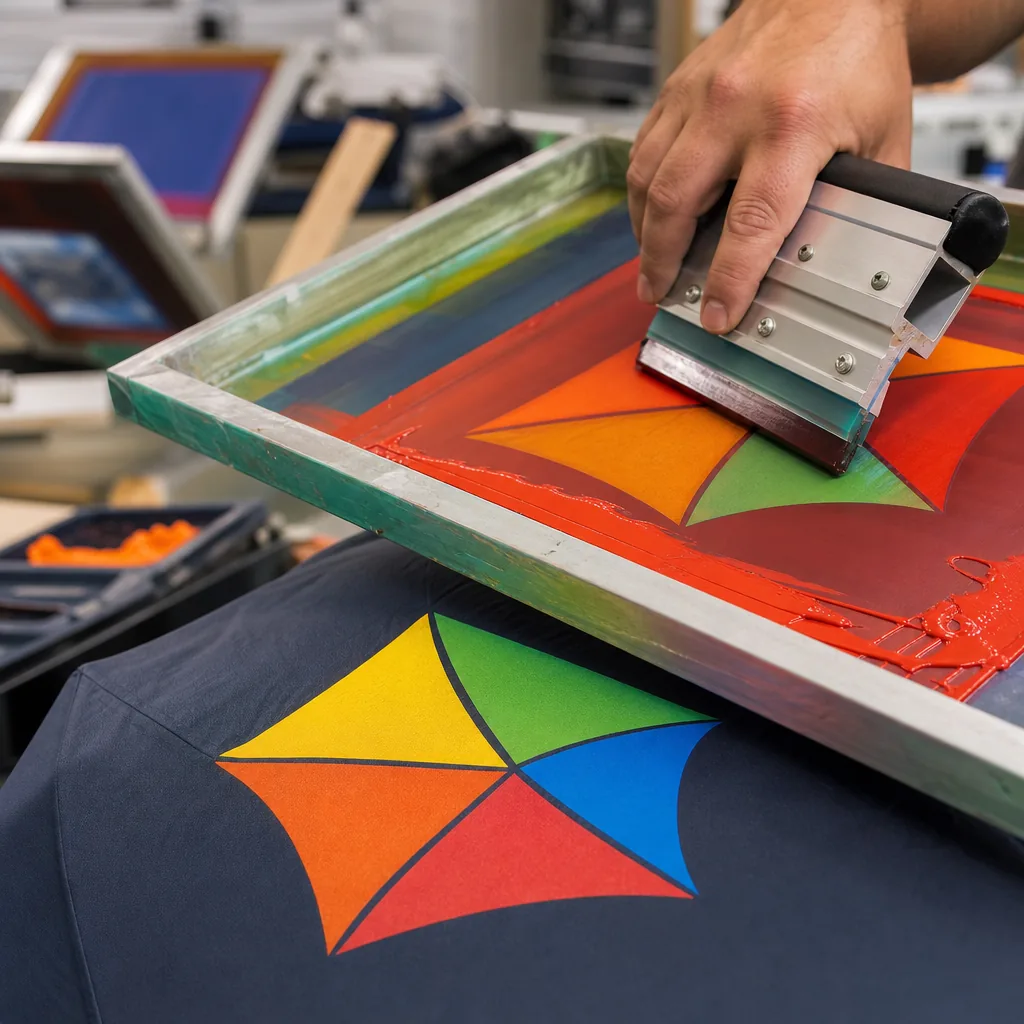
The best umbrella tag branding setups use print as the primary visual and the label as the quality mark. On pongee 190T or 210T canopies, a clean screen print or heat-transfer mark handles the big logo area, while a woven label on the sleeve, strap, or edge seam carries the brand name, website, or collection code. That combination works especially well for retail, corporate gifting, and promotional programs where the buyer wants the umbrella to look branded but not overloaded. Our standard practice is to match thread color, label size, and placement to the canopy panel layout so the sewn label does not fight the graphics. If the print is bold, keep the label small and precise; if the canopy art is minimal, the woven label can carry more of the premium signal without changing the umbrella’s core build.
Cost and MOQ implications
A woven label umbrella usually adds only a small premium compared with direct print, but that premium is easy to underestimate if you only look at the unit price. The label itself is cheap once the loom run is set up, yet the real cost sits in attachment labor, placement checks, and the extra inspection step to make sure the label is straight, readable, and not fraying at the edges. On a standard POE or pongee canopy, an umbrella brand label sewn into a seam or stitched near the closure strap typically costs more than a one-color screen print, but less than most buyers expect when the order is already in production. In practice, that small premium is often justified because woven label umbrella branding looks more deliberate than a simple printed mark and holds up better after repeated folding and rubbing in transit.
MOQ is where the difference becomes more visible. Printed branding can sometimes be added to a mixed canopy run with a lower commitment, especially if the artwork is simple and the printing method is already in the line. Woven label production usually needs a separate label run, even if the umbrella body is otherwise standard, so suppliers will often push for a higher MOQ or a slightly higher setup charge. That is not arbitrary. The woven tape needs to be programmed, cut, and matched to the umbrella tag branding spec before it can go into sewing bundles, and factories do not want to interrupt a 10K or 16K frame line for a tiny label lot. For buyers, the practical rule is simple: if the umbrella is a one-off promo campaign, printed vs woven umbrella branding may favor print; if the program repeats across seasons, labels pay back faster.
The better buying question is not whether a label is cheaper, but whether it reduces rework and improves perceived quality enough to matter. A woven label umbrella is harder to misread in retail or B2B distribution, and it survives abrasion better than ink on a soft canopy edge or strap. That matters when the product is packed in bulk, handled by multiple parties, and sold under a private label. From a factory perspective, the smallest total cost often comes from keeping the canopy decoration simple and using the umbrella brand label for identity, because it avoids print color matching, drying time, and rejected panels from registration drift. ZheBrella’s standard practice is to price labels as a separate line item so buyers can see the real delta instead of assuming the whole umbrella gets expensive. For MOQ planning, ask for label cost, attachment cost, and carton-level branding separately; otherwise the quote will look low until the sample stage exposes the true scope.
Frequently Asked Questions
Are woven labels better than printing on umbrellas?
They serve different roles. Printing covers large canopy areas cheaply; a woven label adds a small, durable, premium-feeling brand mark, usually on the sleeve or hem. Many quality umbrellas use both together.
Where can a brand label go on an umbrella?
Common spots are the carry sleeve, the canopy hem near a tip, and the handle strap. The sleeve is the most visible during carry, making it the highest-impact label location.
Where is the best place to apply a woven label on an umbrella?
For most retail umbrellas, the sleeve, tie strap, or inner seam is the cleanest placement because it stays visible without affecting the canopy artwork. If you want premium branding, many buyers add a small woven label on the sleeve and keep printing on the canopy for the main logo.
What MOQ is typical for custom woven labels on umbrellas?
A typical MOQ is 500 to 1,000 pieces per design, depending on label size, weave detail, and whether the labels are sewn onto finished umbrellas or added during production. If you need multiple label colors or a stitched logo patch, expect a slightly higher setup requirement.
Can woven labels and printed branding be used on the same umbrella?
Yes. A common premium setup is a printed canopy logo for visibility plus a woven label on the sleeve or strap for brand detail. This combination works well when you want a strong retail look without relying on print alone for all branding.
Looking to Launch Your Custom Umbrella Line?
ZheBrella is a Zhejiang-based OEM/ODM umbrella manufacturer with 17 years of export experience. Free design, low MOQ from 100 pieces, windproof construction, full-color print.
Get Free Quote Now »People Also Search For
Related Articles
Custom Umbrella Strap Printing for Stronger Brand Recall
Learn how strap printing, woven labels, and closure details add brand visibility, with practical guidance on fabric choi...
Read More »Hang Tags and Labels: Finishing Touches for Branded Umbrellas
How hang tags, care labels, and barcodes finish a branded umbrella for retail - compliance, storytelling, and the detail...
Read More »
Top 5 Retail Gift Tag Systems for Branded Umbrella Lines
Plan retail umbrella gift tags by price tier, barcode needs, material, attachment method, and QC so branded lines look c...
Read More »