Branded Umbrella Belly Bands for Retail Gift Presentation
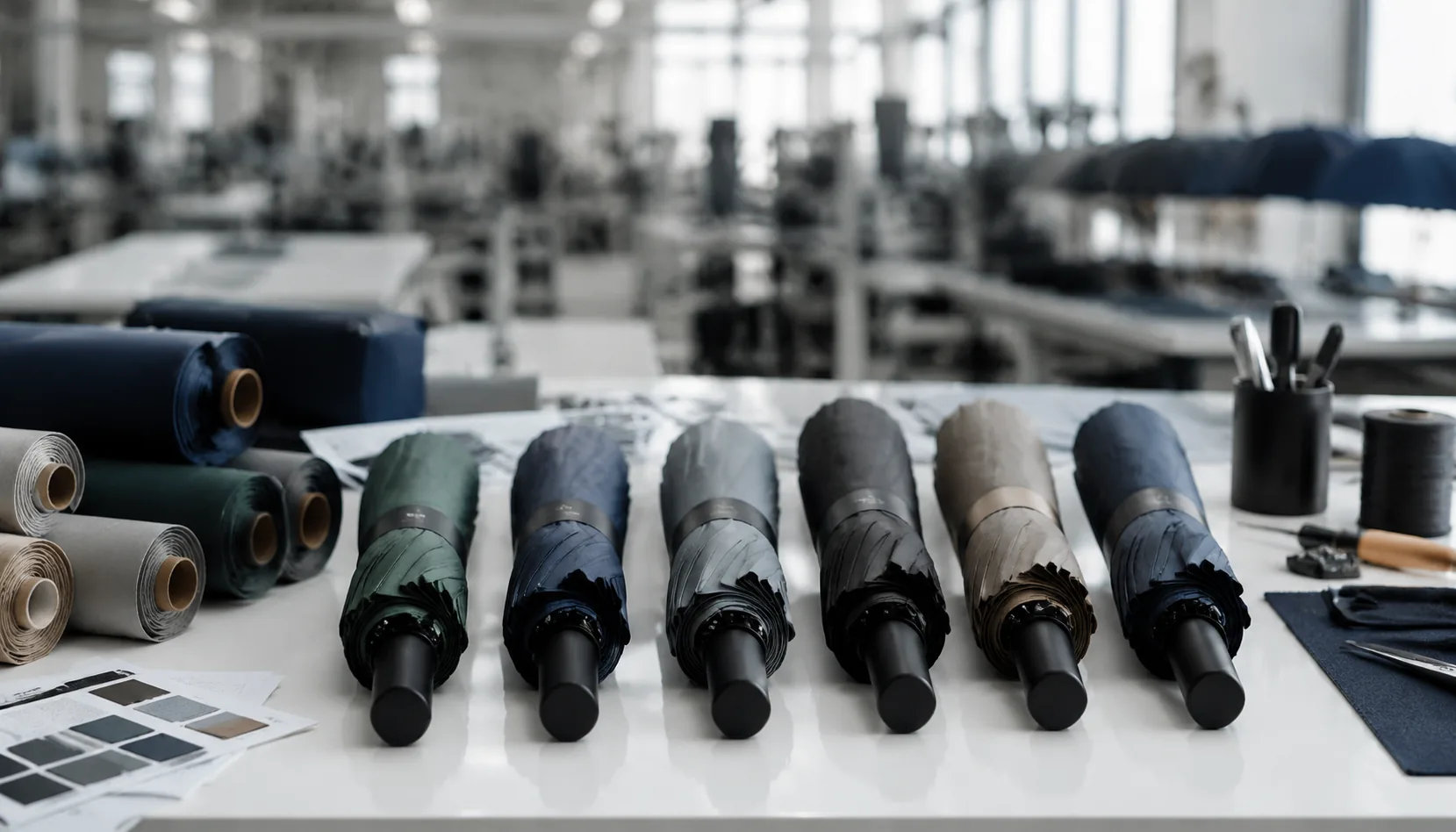
Retail buyers often want a gift-ready umbrella without hiding the canopy fabric, print alignment, or handle finish that sells the product on shelf. On our packing tables in Songxia, branded umbrella belly bands are planned alongside folding diameter, strap position, barcode placement, and carton load so the band looks clean but does not crush the canopy or slow final QC. The right paper stock, band width, MOQ, and SKU layout prevent a simple presentation detail from becoming a production bottleneck.
Belly Bands as a Branding Layer
Belly bands work best when the umbrella itself already has a good hand feel and you do not want packaging to hide it. On retail racks, a 40–60 mm paper band around a folded 21" compact or 23" stick umbrella lets the customer see the 190T or 210T pongee canopy color, touch the handle, and compare sizes without opening a box. For corporate gifts, branded umbrella belly bands are cleaner than a loose hang tag because they hold the canopy tight, present the logo flat, and leave room for event names, department codes, or campaign dates. For marketplace fulfillment, they add less volume than sleeves or cartons, which matters when shipping DDP and trying to avoid dimensional weight surprises.
The practical branding area is usually better than buyers expect. A standard compact umbrella band can carry a front logo panel of about 70 x 35 mm, plus side panels for product naming such as “Auto Open 21-inch Compact Umbrella” or “UPF 50+ Golf Umbrella.” Stick umbrellas and 27"/30" golf models give more wrap length, so we can place a UPC/EAN barcode, QR code, care icons, fiber content, country of origin, and multilingual copy without crowding the front face. Our standard practice at ZheBrella is to keep the barcode on a flat side panel, not across the overlap seam, because scanners fail more often when the band sits over rib tips or handle curves.
Belly bands are not a substitute for protection; they are a branding layer. If the umbrella has a plated handle, painted shaft, or premium gift finish, I still recommend a polybag, non-woven sleeve, EVA pouch, or inner carton depending on the channel. But for private label umbrellas going to retail hooks, conference giveaways, and Amazon-style fulfillment, bands are often the best balance of presentation, cost, and speed. Typical umbrella packaging MOQ for custom printed belly bands starts around 500–1,000 pieces per artwork, while rigid color boxes often need higher quantities and longer prepress time. For gift umbrella branding, the safest layout is a strong front logo, clear product name, barcode on one side, and short multilingual compliance copy on the reverse.
Paper Stock, Finish, and Band Dimensions
For branded umbrella belly bands, paper stiffness matters more than most buyers expect because the band has to hold a rolled canopy without cracking at the fold. I normally specify 250–300 gsm C1S or C2S art paper for compact 21" umbrellas and 300–350 gsm for 23" stick, 27" golf, and heavier 30" executive styles. Matte lamination hides handling marks better on dark private label umbrellas, while gloss lamination makes PMS reds, blues, and metallic-looking artwork pop under retail lighting. Soft-touch film feels premium, but it scuffs more easily during carton loading unless each umbrella is sleeved in OPP or packed with tissue separation. If the umbrella retail packaging will be handled by club shops, hotel gift counters, or event staff, I would choose matte film over unlaminated stock almost every time.
Die-cut windows are useful when the buyer wants shoppers to see the canopy color, printed logo, or handle finish without opening the roll. The window is usually a half-moon, oval, or narrow vertical slot, and it needs at least 8–10 mm clearance from fold lines or the paper tears during wrapping. For gift umbrella branding, we often add a small die-cut notch where the strap button sits, especially on auto-open stick umbrellas with thicker 190T or 210T pongee rolls. Foil stamping and spot UV can work on 300 gsm and above, but registration tolerance should be kept realistic at about ±1 mm. Our standard practice at ZheBrella is to confirm belly band fit on actual pre-production samples after canopy sewing, because a Teflon-coated 210T pongee umbrella rolls larger than a plain polyester umbrella even when the frame size is identical.
Folded length changes by umbrella type, rib count, canopy fabric, and how tightly the worker rolls the umbrella before banding. A 21" 3-fold compact umbrella usually needs a finished band length around 180–230 mm, while a 23" straight stick umbrella often falls around 260–320 mm. Golf umbrellas are much larger: a 27" 8K golf umbrella may need 340–420 mm, and a 30" double-canopy vented model with fiberglass ribs can push beyond 450 mm. Rib count also matters; a 16K umbrella forms a fuller cylinder than an 8K because there are more rib valleys and fabric layers inside the roll. For umbrella packaging MOQ planning, I advise buyers to separate belly band sizes by frame family instead of forcing one universal band across compact, stick, golf, 8K, and 16K lines. One-size bands save tooling cost, but they often look loose on compact umbrellas and strained on golf models.
Fit Around Different Umbrella Builds
Band fit has to start from the closed umbrella diameter, not from the canopy size printed on the spec sheet. A 21" manual compact with 190T pongee folds tight and may sit around 38–45 mm at the wrap point, while a 23" auto-open with 210T pongee, a larger runner, and a thicker center shaft can easily need 50–58 mm. Double-canopy windproof models add another layer of fabric and seam allowance near the ribs, so the band must allow controlled compression instead of forcing the folds flat. For branded umbrella belly bands, I normally ask buyers to confirm a wrapped sample circumference after final fabric, rib count, and handle are locked, because a switch from 8K steel to 10K fiberglass or a heavier Teflon-coated canopy changes the bundle shape more than people expect.
Width is just as important as circumference. A narrow 25–30 mm paper band can look clean on slim compact umbrellas, but it tends to tilt or bite into bulkier 27" and 30" golf umbrellas, especially with double-canopy vented windproof construction. For umbrella retail packaging, 40–55 mm is a safer working range when the umbrella has EVA foam handles, curved wood handles, or a large auto-open button that prevents the canopy from sitting perfectly round. If the band crosses over a raised handle collar or wrist-strap knot, the tension will concentrate in one point and the print panel will wrinkle. Our standard practice at ZheBrella is to test the band on five production pieces after final folding, not on a showroom sample that has been hand-dressed by a merchandiser.
Over-tight bands create a problem buyers usually notice too late: canopy creasing after carton compression. In export packing, 24 or 36 umbrellas per inner carton may sit under load for 25–40 days during FOB or DDP transit, and a tight belly band can press a hard line into 190T/210T pongee, POE, PVC, or EVA panels. That crease is worse on UV-coated UPF 50+ fabric and heat-transfer printed panels because the coating can show a pressure mark under retail lighting. For gift umbrella branding and private label umbrellas, the band should hold the folds neatly but still slide with moderate finger pressure. Before approving mass production, confirm the umbrella packaging MOQ for printed bands, then run a carton drop and compression check under the same folding method planned for production.
Print Approval and Quality Checks
Print approval should start with a real Pantone proof, not a phone photo of a CMYK printout. For branded umbrella belly bands, I prefer a signed color target under D65 lighting, especially when the band carries a retail logo, seasonal artwork, or gift umbrella branding message. Kraft paper, coated art paper, and matte-laminated card all absorb ink differently, so the same Pantone 186C can look dull on uncoated stock and too sharp on gloss stock. If the band includes a UPC, EAN-13, QR code, or retail price sticker area, run barcode scan tests before mass production using at least 10 samples from the first printed sheet. A pretty band that fails at checkout is a packaging failure, not a small defect. For private label umbrellas, we also check logo position against the dieline, bleed allowance, fold marks, and whether the belly band hides required hangtag or care-label information after the umbrella is strapped.
Quality checks must include the physical behavior of the band after the umbrella is folded, strapped, and packed into the inner carton. A flat artwork approval means very little if the band shifts 8 mm to the side once wrapped around a 21-inch folding umbrella or buckles around a 27-inch stick umbrella handle. Our standard practice at ZheBrella is to check band alignment on finished folded umbrellas, not loose bands on a table. Glue seam strength should be tested by pulling the overlap after 24 hours of curing; weak hot-melt or water-based glue can pop open during DDP transit when cartons sit in humid warehouses. Scratch resistance also matters for umbrella retail packaging, so rub the printed logo area with a dry cloth and a carton-edge contact test to catch poor varnish, lamination, or ink adhesion before shipment.
Final inspection should treat branded umbrella belly bands as part of the sellable unit, not as disposable paper. Under AQL 2.5, inspection points should include Pantone variance, barcode readability, glue seam opening, scuffed coating, misregistration, crushed edges, wrong SKU text, incorrect country-of-origin wording, and band position after the umbrella is strapped. For mixed-color assortments, inspectors should match band artwork to canopy color, handle style, and carton mark, because this is where private label umbrella orders often go wrong. Define the umbrella packaging MOQ clearly before sampling; low-volume runs may use digital printing or simplified dielines, while 3,000–5,000 pieces usually justify offset printing, custom tooling, and tighter color control. Keep two approved golden samples: one with the merchandiser and one sealed for final inspection, so the factory floor is comparing against the same standard the buyer signed.
MOQ, Packing, and Export Cost Impact
MOQ is usually driven less by the umbrella and more by the print setup on the band. For simple CMYK digital print on 250–350 gsm art paper, a practical umbrella packaging MOQ starts around 500–1,000 pieces per design, because the printer can gang-run sheets and cut bands afterward. Offset printing with spot colors, metallic ink, soft-touch lamination, or embossed logos is cleaner for retail shelves, but I normally quote it from 2,000–3,000 pieces because plate setup and waste sheets become meaningful below that level. Kraft paper bands with one-color flexo can sit in the middle, often 1,000–2,000 pieces if the artwork is stable. For branded umbrella belly bands, we confirm finished circumference from the folded umbrella diameter, not just canopy size; a 21 inch compact and a 23 inch stick umbrella need different band lengths even if the logo area looks similar on screen.
Flat delivery is the lowest-risk packing method: bands are printed, die-cut, bundled flat, then wrapped around umbrellas during final packing or by the buyer’s 3PL. Pre-glued belly bands save labor at retail packing, but they need tighter size control and usually add a gluing MOQ, often 2,000 pieces or more. On the factory floor, flat bands are also easier to inspect under AQL 2.5 because color, barcode, and crease position can be checked before they touch the umbrella. Carton count changes are small but real. A paper band may add only 3–8 grams per umbrella, while a rigid gift box can add 80–180 grams and increase carton volume by 15–35%, especially on 27 inch golf umbrellas. That difference affects both warehouse handling and ocean freight cube, so belly bands are a practical form of umbrella retail packaging when the buyer wants shelf appeal without paying for air inside a box.
For FOB Ningbo or Shanghai, the main cost impact is unit packaging cost plus any extra packing labor, usually a few cents to under 0.20 USD per umbrella depending on paper, finish, and quantity. For DDP shipments, carton dimensions matter more because courier, air, and LCL charges use volumetric weight; a rigid box can push a carton into a higher billing tier even when the gross weight stays modest. Our standard practice at ZheBrella is to quote belly bands as a separate line item from the umbrella, then show revised carton size, pieces per carton, gross weight, and CBM so procurement can compare options honestly. For private label umbrellas, this is often the sweet spot for gift umbrella branding: better presentation than a plain polybag, lower freight exposure than a box, and easier seasonal artwork changes without retooling the umbrella itself.
Frequently Asked Questions
Can belly bands replace individual umbrella sleeves?
Yes for some retail and gifting programs, but they do not protect the wet canopy after use. Many buyers pair a belly band with a basic pongee sleeve when the umbrella must remain reusable and gift-ready.
What artwork should be included on an umbrella belly band?
Include the brand logo, product name, key features such as UPF 50+ or auto-open, barcode, country of origin, and care icons. Keep the front panel simple and move compliance text to the back or side flap.
What information should a branded umbrella belly band include for retail use?
A practical belly band usually includes the brand logo, product name, SKU or style code, barcode, and a short gift message. For retail sets, many buyers also add colorway and size so store staff can identify the umbrella quickly without opening the pack.
What material and thickness work best for umbrella belly bands?
Most buyers choose coated paper or uncoated cardstock in the 250 to 350 gsm range for a clean retail look and enough stiffness to hold shape. If the band needs better moisture resistance during shipping, lamination or an aqueous coating is commonly added.
What is a typical MOQ for custom umbrella packaging bands?
For OEM umbrella packaging, many factories set the MOQ at 1,000 to 3,000 pieces per design, depending on print colors, finishing, and band size. If the band is packed with a specific umbrella model, the MOQ often follows the umbrella order quantity rather than a separate packaging minimum.
Looking to Launch Your Custom Umbrella Line?
ZheBrella is a Zhejiang-based OEM/ODM umbrella manufacturer with 17 years of export experience. Free design, low MOQ from 100 pieces, windproof construction, full-color print.
Get Free Quote Now »People Also Search For
Related Articles

Branded Umbrella Belly Bands for Gift and Retail Sets
Use belly bands to add logo impact, barcode space, and gift-ready presentation without changing umbrella structure or ra...
Read More »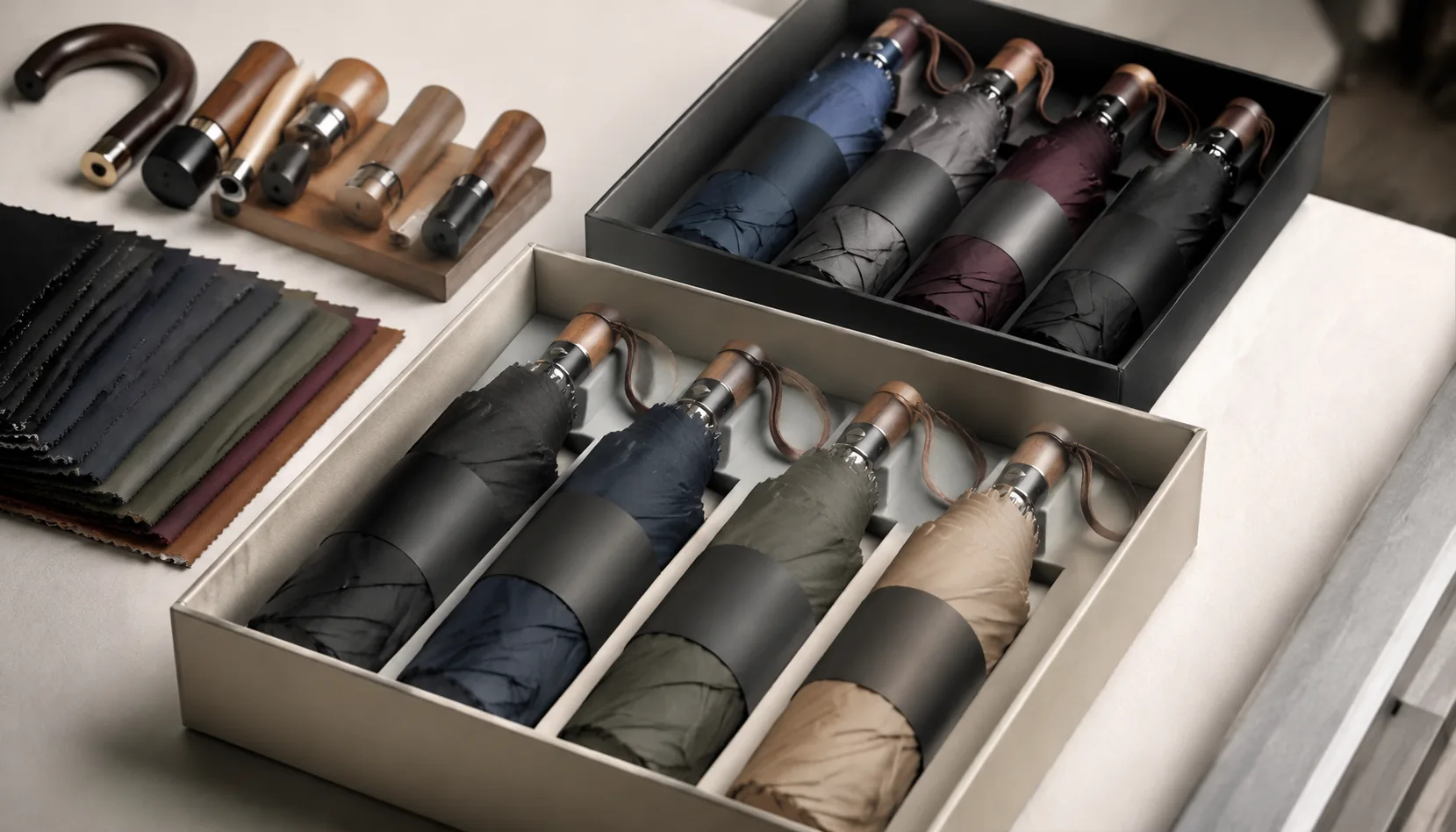
Branded Umbrella Belly Bands for Retail and Gift Sets
Plan belly bands that add brand messaging, barcode space, and gift appeal without slowing packing lines or raising freig...
Read More »
Umbrella Belly Bands and Wraps for Retail Brand Recall
Plan belly bands and wraps for branded umbrella retail lines, with substrate choices, barcode space, MOQ, packing flow, ...
Read More »