Branded Umbrella Handle Logo Options for OEM Programs
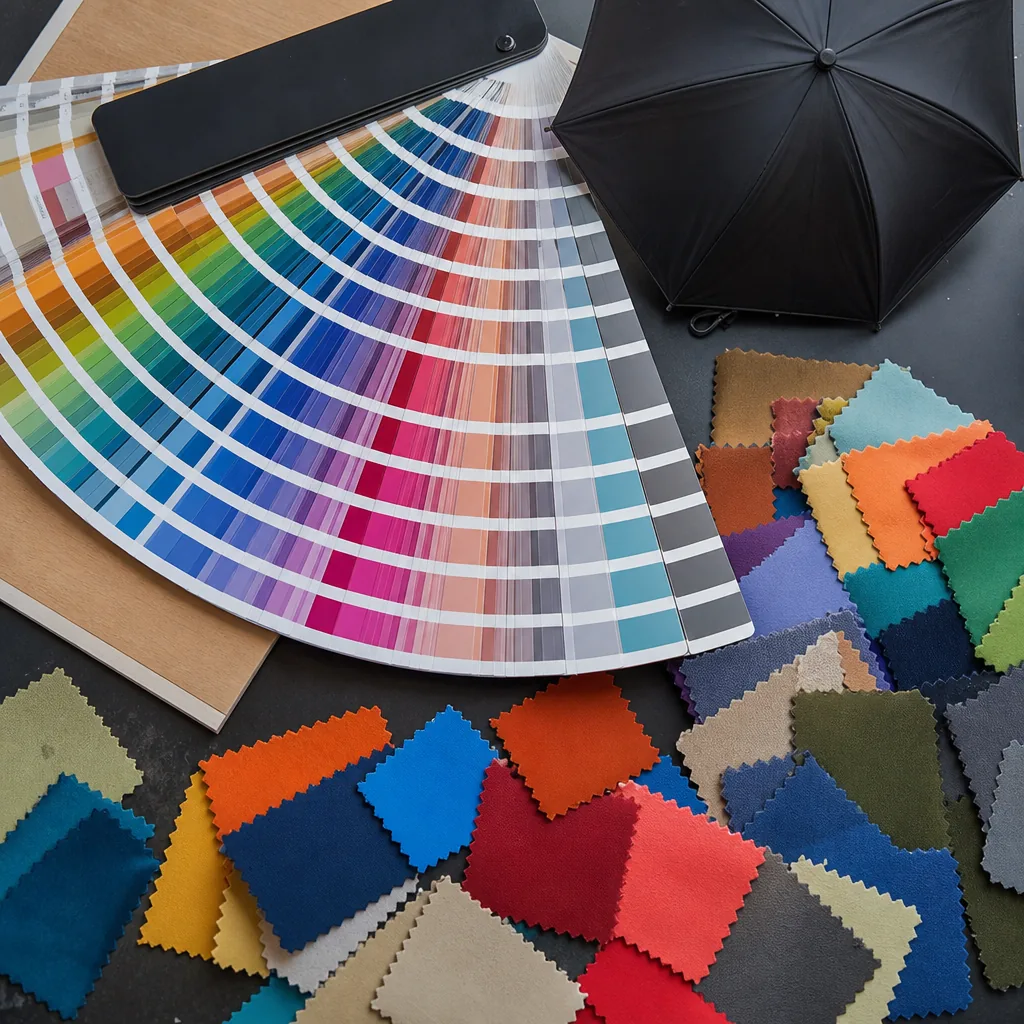
When an OEM umbrella program reaches handle branding, buyers usually have to balance logo appearance against tooling cost, MOQ, and how the mark holds up after thousands of open-close cycles. On our Songxia production lines, the practical differences between debossed, molded, and cap-logo options show up fast in mold setup, assembly speed, and rejection risk, so umbrella handle logo branding decisions need to be made with factory realities in mind.
Why Handle Branding Matters in B2B Umbrella Programs
umbrella handle logo branding delivers the most value when the umbrella is handled before it is opened. That is typical in retail fixtures, hotel lobby stands, and boxed gift programs, where a canopy print stays hidden until the frame is deployed. On 21-inch and 23-inch folding umbrellas, especially auto-open-close styles, the handle and end knob are often the only branded areas visible on shelf. A debossed handle logo on ABS or rubberized plastic, a molded logo cap on the end knob, or wooden handle branding on a crook handle puts the brand in view at first pickup, not first use. That matters in side-by-side retail comparison: buyers and end users judge grip feel, surface finish, and logo sharpness as cues for overall build quality, whether the umbrella uses 190T pongee, fiberglass ribs, or a basic steel frame. For programs competing in crowded displays, a clean handle mark can improve recall more efficiently than adding another canopy print color that the customer does not see until after purchase.
Handle branding also earns its keep because the handle gets repeated hand contact on every use cycle. The branding method has to match the substrate and expected volume: a debossed handle logo holds well on ABS or PU-coated plastic, laser engraving is the durable choice for wood, and a molded logo cap makes sense on high-volume injection parts once tooling is justified. In hospitality, branded handles help staff separate house umbrellas from unmarked replacements, reducing mix-ups and shrinkage. In gift programs, the handle reinforces a premium position more directly than canopy printing alone because it is the part closest to the user’s hand. Cost is usually manageable when the process fits the run size. Canopy screen printing still carries the lowest setup cost, but at roughly 3,000 to 5,000 pieces, handle branding often adds less to FOB unit cost than upgrading from steel ribs to fiberglass. A molded logo cap usually requires a higher MOQ umbrella factory threshold because of mold inserts, while debossing and laser marking are easier to justify on smaller OEM runs.
Common Handle Logo Methods and Material Fit
For umbrella handle logo branding, debossing is the highest-wear option when the handle material has enough thickness and a stable surface. EVA foam grips are the cleanest fit: on straight golf-style handles used on 23 inch to 30 inch promotional umbrellas, a compression mold can press a debossed handle logo about 0.5 to 1.2 mm deep without cracking the edge. Artwork still has limits—strokes should stay above 0.4 mm, and fine serif details or taglines tend to close up. On solid wood, including crook handles, debossing is possible after shaping and sanding, but output is slower and less uniform because grain direction affects edge sharpness; dark stains also make heat or burn marks around the recess easier to see. On PP or ABS, “debossing” usually means cutting the logo into the injection mold cavity rather than pressing it later, so the added tooling cost is hard to justify unless a MOQ umbrella factory is running several thousand units on one handle mold.
Pad printing is the most flexible method across EVA, PP, ABS, and lacquered wood because it avoids new handle tooling and works on both straight and crook handles. It performs best on flat or lightly radiused panels; tight hook curves reduce print consistency, especially on crook styles. That matters on 21 inch and 23 inch folding umbrellas with auto-open or auto-open-close handles, where the push button, spring housing, and finger grooves often consume the front face and leave branding space only on the back spine or top cap. Print resolution is better than debossing for small text, but wear resistance is lower: smooth ABS typically holds ink better than soft-touch EVA under sweat, sunscreen, and abrasion unless a clear topcoat is added. When sidewall space is too limited, a molded logo cap or metal badge insert is usually the cleaner OEM solution. Molded end caps in ABS, TPR, or zinc alloy fit straight plastic handles and some crook handles, particularly where internal auto-open parts block side decoration. For wooden handle branding, a metal badge can be inset into a milled flat or mounted near the collar above the hook, but it adds hand assembly time and needs tight fit control to pass AQL 2.5 inspection. In most OEM programs, molded logo caps are the lower-risk choice at roughly 3,000 to 5,000 units per handle style, while metal badges make more sense for higher-value retail projects that can absorb extra tooling and assembly cost.
Tooling, MOQ, and Lead-Time Impacts
For OEM buyers, the main cost driver in umbrella handle logo branding is usually tooling, not the print or marking step. If you place a logo on a stock PP, ABS, or wood handle, many factories can cut a small steel insert for a debossed handle logo instead of building a full mold. On common stock handle families, that insert typically runs about $120 to $350. A molded logo cap is usually about $180 to $500 when it fits a standard cap diameter already used on 21 inch, 23 inch, or 27 inch programs. A fully custom straight or crook plastic handle is a separate tooling budget: basic hard tooling is commonly $1,200 to $3,500, and $4,000 or more if the shape is non-standard, the part needs overmolding, or the surface texture tolerance is tight. The lowest-risk way to avoid new tooling is to stay with a stock handle platform and brand only the insert, badge, or cap area. That reduces upfront cash exposure, makes replacement sourcing easier, and preserves flexibility to spend budget on higher-value frame changes such as 8K steel ribs versus fiberglass ribs.
A MOQ umbrella factory quote only makes sense when tied to the handle plan. Standard canopy fabric does not usually drive the minimum; custom handle parts do. A stock handle with pad print, laser marking, or a debossed handle logo can often start at 300 to 500 pieces per colorway on common manual or auto-open umbrellas. If you move to a molded logo cap, metal badge, or wooden handle branding that needs a dedicated insert or jig, the practical MOQ usually rises to around 1,000 pieces and can reach 2,000 pieces when the supplier must buy handle components only for your run. A true custom handle shape is generally most economical at 2,000 to 5,000 pieces; lower offers often mean the tooling is buried in the unit price or the factory is planning shorter-life soft tooling. Lead time follows the same logic: stock-handle samples are commonly ready in 5 to 7 days, bulk production in about 25 to 35 days after approval, a new insert adds roughly 7 to 12 days, a molded logo cap adds 10 to 15 days for fit and shrinkage checks, and full custom handle tooling usually needs 15 to 25 days before the first usable sample, with mass production extending to about 35 to 50 days before final AQL 2.5 inspection.
Durability, QC, and Approval Standards
For umbrella handle logo branding, durability depends on matching the marking method to the handle material before production starts. On ABS or PP crook handles, a debossed handle logo typically wears better than pad printing because the artwork sits below the contact surface instead of on it. On rubberized straight handles, surface ink is more vulnerable, so approval should require wipe-rub and fingernail scratch checks on pre-production samples, not just a showroom sample. A molded logo cap shifts the risk from ink wear to attachment security: buyers should verify cap fit, rotation, and pull-out resistance after repeated open-close cycles and basic drop testing. Wooden handle branding needs even tighter review because grain density and moisture content can soften line edges or create uneven shade; laser engraving, hot stamping, and screen printing on a sealed surface each produce different edge clarity. The practical buying question is straightforward: ask the MOQ umbrella factory which branding method was validated on that exact handle substrate and finish, and request approval against the production sample, not a generic reference.
QC for handle branding should use simple pass-fail standards that catch the defects buyers actually reject: rub resistance, logo edge clarity, fill uniformity, Pantone color consistency, and correct logo orientation to the canopy panel and strap. During inline QC, the factory should confirm first-piece approval, then inspect handle logos at regular intervals during assembly—typically every 100 to 200 units—so feathered pad-print edges, uneven deboss depth, and ink shade drift are stopped before packing. Final inspection should add attachment security checks for inserted medallions, screwed caps, and glued nameplates, including hand pull checks, twist checks, tape adhesion checks where applicable, and visual review for cracks, flash, sink marks, and off-center placement. For shipment release, AQL 2.5 is a practical export standard: handle defects should be classified under visual appearance, and also under function if a loose molded logo cap or nameplate creates a failure risk. Confirm that the factory keeps a signed color swatch and sealed golden sample for the approved handle finish before mass production begins.
How to Specify Handle Branding on a PO
Lock the handle spec before issuing the PO because the same artwork performs differently on ABS, PP, rubberized plastic, EVA foam, straight wood, and curved wood crook handles. Tie the handle to the umbrella format and opening mechanism, such as 21-inch 3-fold auto-open-close with a black ABS handle or 23-inch straight manual with a natural wood hook handle. For umbrella handle logo branding, never write only "logo on handle." State the exact method: debossed handle logo, molded logo cap, laser engraving, or screen print. If the logo is debossed, include the target depth and tolerance; 0.3-0.6 mm is the usual range, but the final spec should reflect the mold texture and substrate hardness. If the handle uses a molded logo cap, list the cap diameter, base color, and decoration method, such as pad print, epoxy dome, or injected contrasting plastic. For wooden handle branding, specify laser engraving or screen print up front, since wood grain and varnish level directly affect legibility and batch consistency.
Define logo size and placement in millimeters and anchor the artwork to a fixed point on the handle. A usable PO line reads like this: logo 18 x 8 mm, front face, centered 12 mm below top curve, horizontal orientation. That level of detail matters because a 27-inch EVA grip or 10K golf umbrella handle offers more flat branding area than a 21-inch 8K folding umbrella handle. Where color matters, add Pantone Solid Coated references for printed caps or in-mold color parts, then lock the finish: matte, gloss, satin, rubber spray, wood stain, or clear varnish. Also specify the packing details that affect handle quality and claim risk: inner pack quantity where rub protection is required, carton marking layout, shipping mark wording, and Incoterms such as FOB Ningbo or DDP delivered address. If you are buying from a MOQ umbrella factory, separate the MOQ for a new handle mold or custom cap insert from the MOQ for canopy printing, since tooling thresholds often differ even when the frame stays standard. Before bulk production, approve one pre-production sample with the final handle, final artwork, and final carton mark; for OEM orders above 3,000-5,000 pieces, use a sealed sample signed against the PO so AQL 2.5 inspection has a physical reference.
Frequently Asked Questions
Does adding a custom logo to the umbrella handle always require new tooling?
No. Pad printing or a standard logo cap may use existing handle tooling, while molded logos, custom end caps, or fully bespoke handle shapes usually require new molds. Buyers should confirm whether the factory has stock handle platforms that fit the branding brief.
Which handle branding method lasts longest for high-use umbrellas?
Debossed logos on EVA or wood and molded logos in plastic generally outlast surface printing because they resist rubbing better. For commuter or hospitality use, ask for abrasion testing and approval samples before confirming production.
When does a debossed handle logo need new tooling instead of using an existing mold?
A new debossed handle logo usually needs a dedicated mold insert when the logo size, depth, or handle curvature changes. For OEM orders, buyers should expect a tooling charge on new shapes and about 7-15 days added before sample approval.
Which handle logo option is easiest to standardize across multiple umbrella models?
A molded logo cap is usually the easiest because the same cap artwork can often be used across straight umbrellas, folding umbrellas, and golf umbrellas if the handle cap diameter is shared. This helps reduce tooling duplication and keeps MOQ more manageable across SKUs.
How should buyers compare durability between wooden handle branding and plastic handle logo caps?
Wooden handle branding is typically more premium in appearance, but engraved or printed logos can vary with wood grain and clear-coat wear over time. Plastic logo caps are more consistent for color matching and usually perform better in repeated handling tests for mass retail programs.
Looking to Launch Your Custom Umbrella Line?
ZheBrella is a Zhejiang-based OEM/ODM umbrella manufacturer with 17 years of export experience. Free design, low MOQ from 100 pieces, windproof construction, full-color print.
Get Free Quote Now »People Also Search For
Related Articles
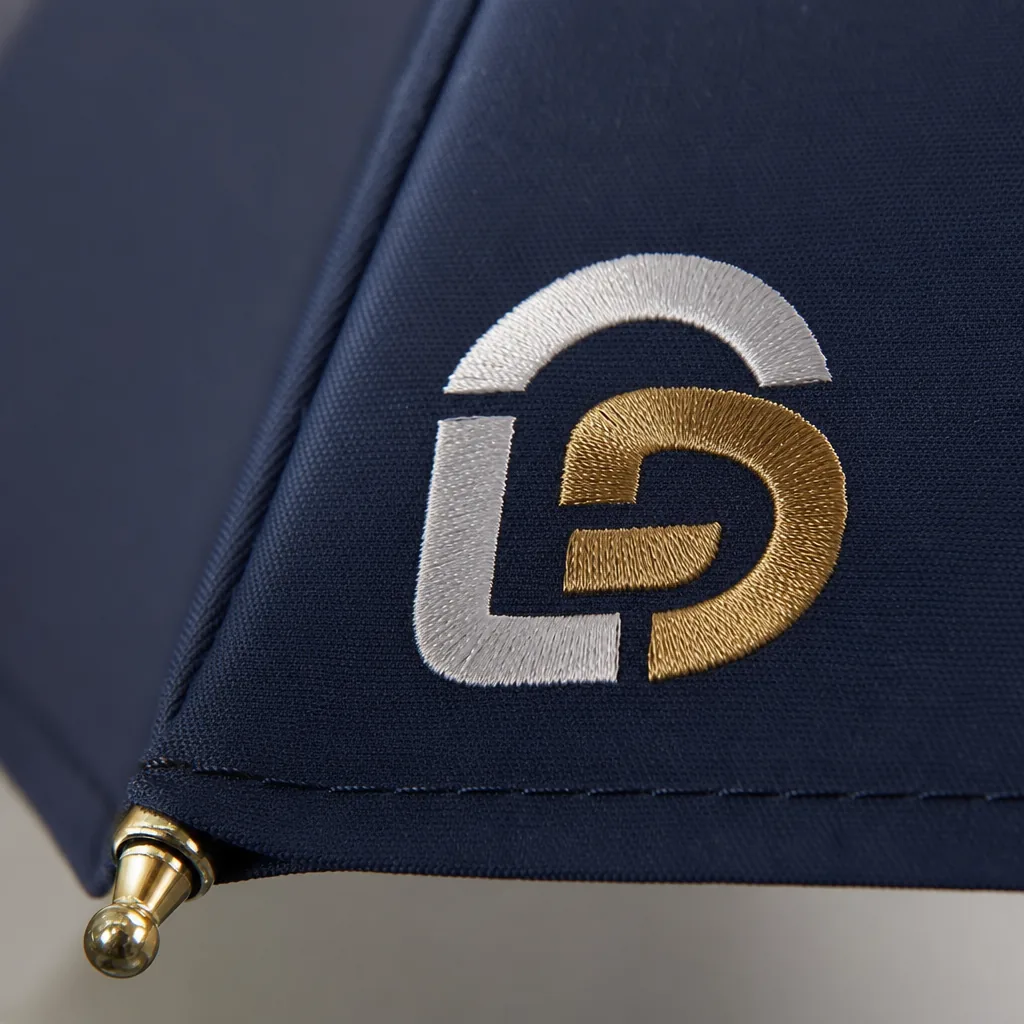
Embossed Handle Logos on Umbrellas: OEM Options and Limits
Compare embossed, debossed, and molded handle logo options by material, MOQ, tooling, and lead time to choose a workable...
Read More »
Debossed, Engraved, or Printed Handles for Umbrella Branding
Evaluate debossed, engraved, and printed handle branding by material, durability, MOQ, and cost to select a logo treatme...
Read More »Embossed, Debossed, and Molded Logo Options for Umbrellas
Compare embossed, debossed, and molded logo options on handles, buttons, and tips, with MOQ, tooling, lead time, and bra...
Read More »