Compact Travel Umbrella Buyer Guide: Build, Size, and Cost
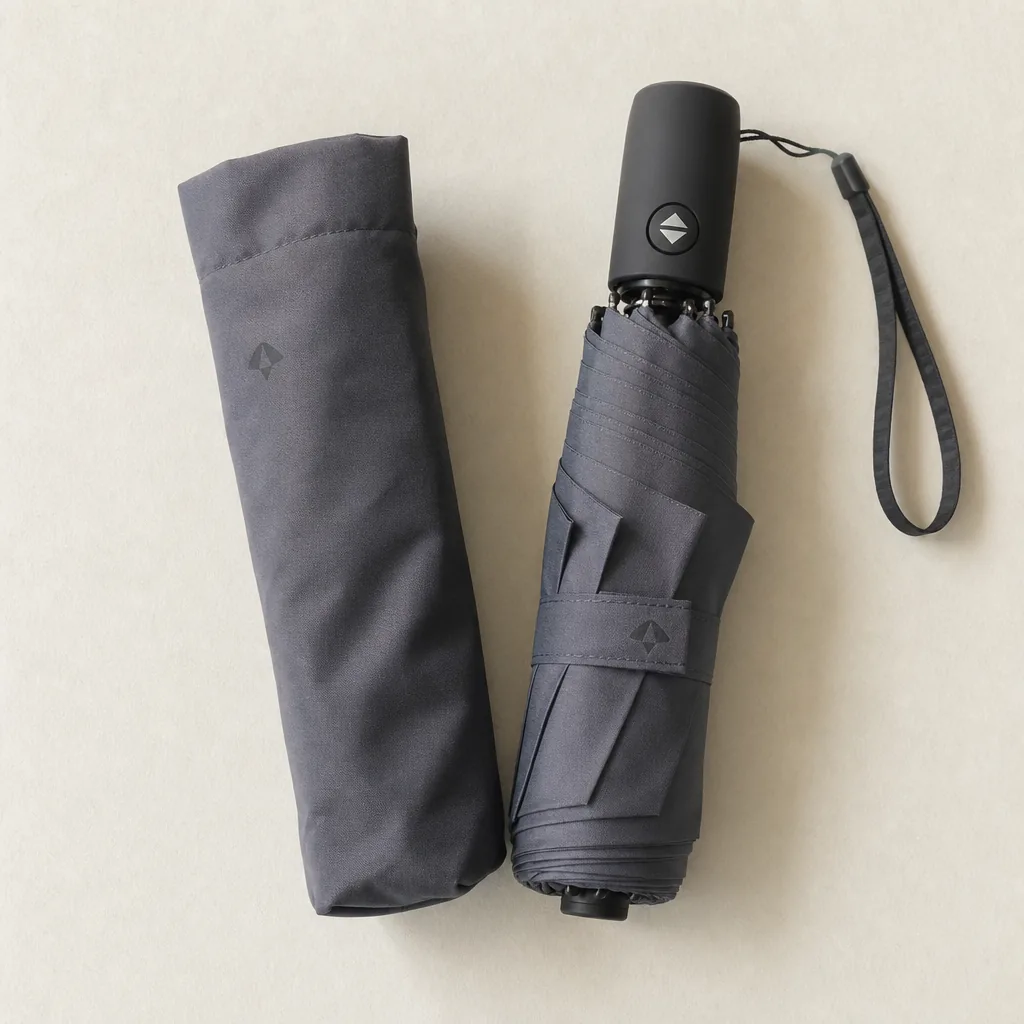
Choosing a compact travel umbrella is rarely about one spec; it is about balancing fold count, rib build, fabric weight, MOQ, lead time, and landed cost without ending up with a product that feels flimsy or prices itself out. At our Songxia factory in Shangyu, we see the same failure points every week: too many folds for the frame, underspecified ribs, or fabric that saves pennies but hurts durability and pack size. A practical compact travel umbrella buyer guide starts with what can be built consistently on the line, not just what looks good on a quote.
Which compact format fits your channel
A 2-fold frame is the practical choice when the buyer wants a shorter packed length without sacrificing too much canopy diameter. In real production, that usually means a closed length around 16 to 18 inches, with open coverage in the 21 to 23 inch class, often built with 8K ribs and a stronger shaft than the cheapest pocket models. For a compact travel umbrella buyer guide, this is the format I recommend when the channel cares about shelf presence and fewer returns: it feels closer to a normal umbrella, so the customer does not think they are buying a throwaway item. Retailers like it because the panel area is still usable for branding, and the product does not look too small next to better-priced gift umbrellas.
A 3-fold style is the standard mass-market answer when packed size matters more than coverage. Most folding umbrella specs land around 10 to 12 inches closed, with open diameters that often sit in the 38 to 42 inch range, depending on whether the frame is 6K, 8K ribs, or a lighter mini build. This is where an auto-open umbrella helps perceived value, because buyers associate the button with a more finished product even when the canopy is modest. For gifting programs and promo distributors, 3-fold models are easy to ship in cartons, fit in handbags and laptop sleeves, and keep freight down. The tradeoff is obvious on the factory floor: smaller tube sections and lighter tips mean more sensitivity to wind and abuse, so the spec sheet has to match the target use case.
Ultra-compact folding styles are the ones that win on pocketability and lose on user comfort. They can close to roughly 7 to 9 inches, which is great for hospitality amenity kits, airline retail, and some event giveaways, but the open canopy is usually the smallest in the category, often closer to a true personal-rain shield than a comfortable city umbrella. That is why the compact travel umbrella buyer guide should frame these as convenience products, not daily commuter tools. If the buyer needs a premium feel, a cleaner pouch, and a lower observed defect rate at reception desks or in hotel gift shops, the answer is usually a sturdier 3-fold or a better-built 2-fold with controlled MOQ lead time instead of the smallest possible format.
Structural specs that matter in small umbrellas
For a compact travel umbrella buyer guide, the first spec I look at is the rib package, not the canopy print. Fiberglass ribs are the safer choice for most folding models because they flex and recover under wind load; steel ribs are stiffer and cheaper, but once they take a set, the frame starts fighting the canopy and the umbrella feels rough in hand. On small umbrellas, 8K ribs are the common practical floor for basic folding umbrella specs, while 16K layouts usually mean more support points, a rounder canopy shape, and better stress distribution on the seams. The tradeoff is obvious on the line: more ribs add parts, assembly time, and cost, but fewer ribs can make the canopy flap and wear faster at the corners.
Shaft material changes the balance more than buyers expect. Aluminum is light and easy to carry, steel gives better dent resistance, and fiberglass shafts are useful when you want lower weight with some flex in the center section. In an auto-open umbrella, the shaft and runner finish matter because a tight telescoping stack can cause drag if the tube tolerances are sloppy or the internal spring is overcompressed. The tighter the folding package, the more important it becomes to keep the rib tips aligned and the ferrules clean; otherwise the opening feels sticky, the canopy snaps unevenly, and the user blames the mechanism instead of the geometry. A well-built compact frame should open smoothly one-handed without making the wrist work for it.
Manufacturing cost follows the same logic. An 8K frame with aluminum shaft and fiberglass ribs is usually the sweet spot for retail and promo programs because it keeps weight down and reduces breakage in transit, while 16K or mixed-material builds make sense when the buyer wants a more premium hand feel or better wind performance. ZheBrella treats MOQ lead time as part of the structural decision, because changing rib count, shaft alloy, or tip style can add tooling checks and slow the first run. If a buyer is comparing samples, I tell them to test the closed length, canopy tension, and rebound after repeated opening cycles; those three checks reveal more than a spec sheet. In practice, the best compact travel umbrella is the one that stays light, closes flat, and still opens cleanly after the frame has been compressed in a bag for weeks.
Canopy fabric, coating, and coverage tradeoffs
In a compact travel umbrella buyer guide, canopy fabric is where price differences actually show up in use. Pongee 190T is the standard for entry-level folding umbrella specs: it is light, packs well, and dries faster than cheap polyester, but it has a thinner hand and will show pinholes sooner if the weave or coating is sloppy. Pongee 210T costs more, but the tighter yarn count gives better opacity, cleaner print edges, and less distortion on logos. For buyers comparing 8K ribs and an auto-open umbrella mechanism, the canopy is often the bigger practical decision because the frame can feel identical while the fabric changes how the product looks and performs after a month of daily use.
Water repellency depends more on the coating process than the fiber count alone. A basic single-layer water-repellent finish sheds rain, but a proper DWR or Teflon-style treatment reduces wet cling and speeds drying, which matters for commuters who fold the umbrella into a bag right away. Thicker 210T pongee usually holds coating more evenly than 190T, so it tends to dry cleaner and wrinkle less after repeated use. That said, every added finish raises cost and often affects MOQ lead time because coating, curing, and inspection add extra production steps. If the budget is tight, 190T with a decent water-repellent finish is acceptable; if the umbrella is meant for retail or premium promotion, 210T is the safer spec.
UV protection is a separate decision from rain performance, and it is worth paying for only if the umbrella will be used in strong sun. Silver-coated or black-coated UV canopies can reach UPF 50+ when the base fabric and coating are both consistent, but the tradeoff is weight, hand feel, and sometimes slower drying. Darker UV backs also improve print clarity on the outside because they hide the frame better, while light-colored canopies usually look cleaner for branding but need tighter quality control to avoid show-through. For procurement, the right choice is usually: 190T for low-cost giveaways, 210T for sharper graphics and better durability, and UV-treated fabric only when the use case justifies the extra cost and longer MOQ lead time.
Mechanism options and user convenience
For a compact travel umbrella buyer guide, the mechanism matters more than the brochure copy. Manual open is the cheapest and simplest, but it is slower with one hand and usually lives longer because there is less spring hardware to wear out. An auto-open umbrella is the common middle ground for commuters: one button to deploy, quicker in rain, but the launcher spring, release pawl, and crown latch take the abuse. Auto-open/close adds convenience, yet it is the first place I look for fatigue after repeated cycles because the shaft lock, trigger button, and return spring are doing more work every time the user cycles it in a car door or at a curb.
In folding umbrella specs, I care about how the mechanism survives real use, not just the first open on a sample table. Cheap units start failing around the handle locking point, the runner that jams on the shaft, or a loose button cap that rattles out after packing and unpacking. On an 8K ribs frame, the canopy load is usually fine for day-to-day wind, but if the ferrule tolerances are sloppy the rib tips will twist and the auto-open feature feels sticky. For bulk programs, I usually ask buyers to confirm cycle testing, because MOQ lead time often hides weak mechanism QC if nobody pushes the sample through enough open-close repeats.
Everyday carry details matter because that is where returns happen. A good handle lock should click positively and not creep back when the umbrella is stuffed into a tote or backpack side pocket; otherwise the canopy opens in the bag and the frame gets bent. Wrist straps should be stitched through the handle core, not just glued to a decorative cap, and the sleeve should be roomy enough to slide on with wet hands without snagging the ribs. If a compact travel umbrella buyer guide ignores carry comfort, it misses the real use case: fast grab, wet return, and repeated stuffing into a sleeve until the next commute.
Sourcing plan: MOQ, QC, and delivery terms
For a compact travel umbrella buyer guide, MOQ is the first gate that changes everything downstream. A small order can move fast only if the factory already has matching frames, canopies, and handle molds in stock; once you need custom color, logo placement, or a specific auto-open umbrella mechanism, the MOQ lead time stretches because samples, layout confirmation, and pre-production parts all have to line up. On folding umbrella specs, I care less about brochure wording and more about the actual build: 8K ribs, shaft diameter, fabric weight, and whether the canopy uses 190T or 210T pongee, because those details decide both price and failure rate.
Sample approval is where many launches lose two to three weeks, sometimes more. A good sample is not just a visual check; it should confirm open/close force, rib symmetry, stitch quality, print alignment, and whether the canopy tension stays even after repeated cycling. If the buyer wants AQL 2.5 inspection on the production lot, that needs to be agreed before mass production starts, because the inspection plan affects carton sampling, rework allowance, and final packing release. In practice, the fastest launches are the ones where artwork is approved in one pass and the sample sign-off is done against the same materials that will be used in bulk.
For delivery terms, FOB is usually the cleaner choice if the buyer already has a freight forwarder and wants control over ocean or air routing, while DDP is simpler when the order is small, the destination is messy, or the buyer wants one landed price with fewer surprises. Peak-season capacity matters more than most first-time buyers expect: before rain season, holiday promotions, or trade-show deadlines, frame shops, sewing lines, and packing teams all get booked out. ZheBrella’s standard practice is to treat component sourcing, print approval, and carton specs as the real critical path; if any one of those slips, the shipment date slips with it, even when the sewing line is ready.
Frequently Asked Questions
What is a realistic minimum order for compact travel umbrellas?
MOQ depends on customization level, but compact models often allow lower quantities than oversized umbrellas because they use less material. Buyers should still confirm color, print, and packaging mix requirements before quoting.
Is auto-open worth adding to a travel umbrella?
Usually yes for consumer convenience, but it adds cost and another failure component. For gift programs or premium retail, the perceived value often justifies it; for low-price promotions, manual may be better.
What fold count is best for a compact travel umbrella order?
A 3-fold umbrella is the most common choice for retail and promotional programs because it balances compact size, durability, and cost. 5-fold models pack smaller but usually cost more and may require tighter quality control on the frame.
How should buyers specify ribs for a travel umbrella?
For standard compact umbrellas, 8K ribs are a common commercial specification. Buyers can choose iron, fiberglass, or mixed ribs depending on the target price, wind resistance requirements, and expected retail positioning.
What MOQ and lead time should importers expect for custom compact umbrellas?
Typical MOQ for logo-printed compact umbrellas is often around 1,000 to 3,000 pieces per style, depending on fabric, frame, and packaging. Production lead time is commonly 30 to 45 days after sample approval and deposit, with longer timing during peak season.
Looking to Launch Your Custom Umbrella Line?
ZheBrella is a Zhejiang-based OEM/ODM umbrella manufacturer with 17 years of export experience. Free design, low MOQ from 100 pieces, windproof construction, full-color print.
Get Free Quote Now »People Also Search For
Related Articles
How to Choose a Compact Umbrella for Retail Programs
Compare compact umbrella sizes, frame builds, and order terms to pick a retail-ready model with reliable quality and fas...
Read More »
Choosing a Folding Umbrella for Retail and Promo Buyers
Compare folding umbrella sizes, frames, and mechanisms so buyers can match retail or promo programs to target price, win...
Read More »
Manual Open vs Auto Open Mini Umbrellas for Gift Programs
Choose the right mini umbrella for gift and promo programs by comparing manual and auto-open builds, size, durability, p...
Read More »