Custom Umbrella Tie Straps: Printed, Woven, or Rubber Logos
When buyers compare printed, woven, and rubber tie straps, the real risk is not the logo artwork but whether the branding method fits the umbrella’s price point, order volume, and daily wear. On our Songxia production lines, we see the same mistake repeatedly: a custom umbrella tie strap logo chosen for looks alone can slow sewing, raise defect rates, or fail after folding and rain exposure.
Why the Tie Strap Matters in Branding Programs
The branding spot buyers underrate most is the closure strap, because it stays visible when the umbrella is closed. A canopy print disappears into folds; a custom umbrella tie strap logo remains on the outside during carrying, shelf display, guest handoff, and daily storage. That matters in the three use cases where close-range exposure drives recall. In retail, shoppers usually grab the strap first to open and re-fasten a sample, so the logo is seen at arm’s length before the canopy opens. In hospitality, staff rewrap loaner umbrellas after every use, turning the branded umbrella closure strap into a repeated touchpoint on the same unit week after week. In commuter programs, the strap is what shows in a tote, lobby stand, car seat, or subway ride. It is also a lower-cost branding upgrade than adding extra canopy print passes across 190T or 210T pongee panels, because the buyer is changing a small sewn component rather than expanding panel decoration. For buyers comparing unit cost against day-to-day visibility, a printed umbrella strap, woven logo strap, or molded rubber patch often delivers more repeated impressions than a large canopy print that is only fully seen in rain.
Compact folding umbrellas usually get the highest return from strap branding. On a closed 21-inch or 23-inch 3-fold model, the visible surfaces are limited to the handle, the tie strap, and a narrow section of canopy fabric, so the strap often becomes the main identifier in office lobbies, trains, and lost-and-found bins. For frequent open-close cycles, a woven logo strap or rubber logo patch umbrella generally holds up better than a basic surface print, especially when paired with better-spec construction such as fiberglass ribs and 210T pongee or black UV-coated canopies. Golf and straight-stick umbrellas use the strap differently. On 27-inch or 30-inch models, the canopy already offers large print panels, so the strap works more as a secondary brand cue and finish detail than the hero logo position. Even so, closed-bin display at resorts, golf clubs, and corporate events still puts the strap front-facing. Keeping one logo treatment across folding, golf, and straight-stick SKUs helps buyers maintain program consistency even when canopy graphics change by season, market, or campaign.
Branding Methods for Straps and Their Best Use Cases
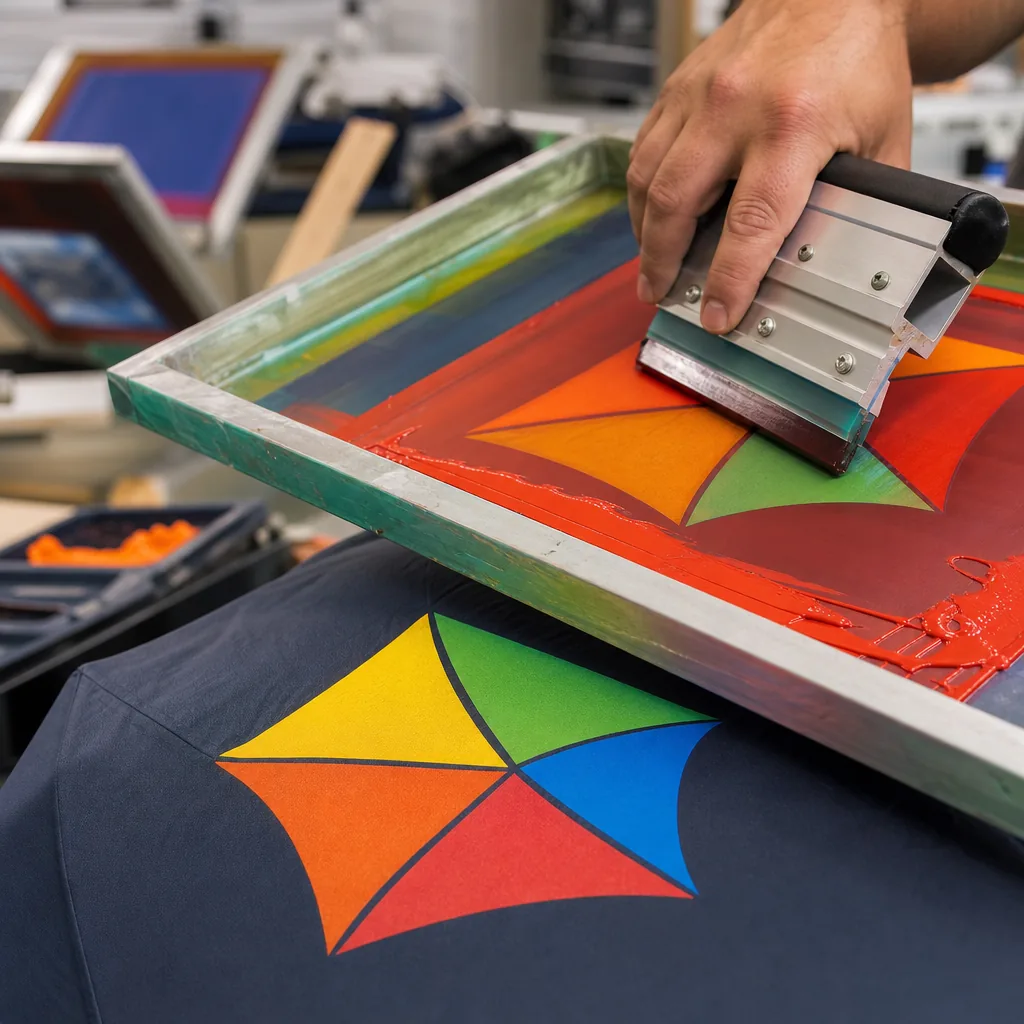
Direct print is the cheapest way to add a custom umbrella tie strap logo, and it is the right fit when unit cost, MOQ, and approval speed matter more than multi-season wear. Most factories screen print after strap cutting, using either polyester webbing or the same 190T or 210T pongee used for the canopy wrap. On 500-1,000 piece runs, a one-color printed umbrella strap is usually the fastest option to sample and release for 21-inch or 23-inch folding umbrellas used in giveaways, campaigns, and event programs. The limits are practical, not cosmetic: text under about 2 mm can close up on textured webbing, and print will wear first where the strap rubs against the handle, tip, or hook-and-loop edge. Wet-dry cycles and tight export carton packing also accelerate fading. If the umbrella is a short-life promotion, direct print keeps landed cost down; if the buyer needs a branded umbrella closure strap to stay crisp through repeated daily use, print is the weakest of the four methods.
Woven labels, sewn-in tabs, and rubber or silicone patches are better choices when the strap has to hold its branding over a longer service life. A woven logo strap is made separately on a narrow-fabric loom, then stitched onto the closure strap, so letter edges and color blocks stay cleaner than surface print on retail programs, 27-inch or 30-inch golf umbrellas, and private-label lines planned for two or three selling seasons. Sewn-in brand tabs are more discreet: the label sits in the side seam instead of covering the full strap face, which suits minimalist auto-open-close umbrellas, double-canopy vented styles, or matte-finish canopies where large graphics would look forced. A rubber logo patch umbrella detail sits at the premium end. The patch is typically molded in silicone or soft rubber, then stitched or heat-fixed, which adds tooling cost and requires tighter thickness control so the strap still wraps flat. That extra cost makes sense on higher-value umbrellas with fiberglass ribs, windproof frames tested above 50 mph, or UPF 50+ canopies. For buying decisions, the split is simple: use print for low-cost promotions, woven labels or tabs for premium retail, and molded patches for long-term private-label collections.
Material Choices That Affect Print and Wear
For umbrellas using 190T or 210T pongee canopies, strap material directly affects how sharp a custom umbrella tie strap logo looks in production and how well it holds up in use. The standard option is a pongee-wrapped strap with a light interlining, because it matches the canopy color and gives a smooth face for screen or heat-transfer printing with fine text, thin outlines, and small registration details. Tightly woven polyester tape is another strong choice for a printed umbrella strap: its flatter surface usually keeps print edges cleaner than ribbed nylon webbing, especially when lettering drops below about 3 mm high. Nylon or polyester webbing is tougher under abrasion, but the ribbed texture tends to break thin lines and soften small type, so it works better for bold marks than detailed artwork. If the buyer prefers a woven logo strap, jacquard straps and woven labels generally outwear surface print and present a more premium finish, but the artwork needs fewer details because the weave structure limits edge definition on small characters.
Wear life depends on trim construction as much as base fabric. Pongee straps should be turned and stitched or ultrasonically cut before folding; otherwise the edge can feather after a few hundred open-close cycles, particularly in humid markets. Polyester tape and nylon webbing resist fraying better, while a rubber logo patch umbrella eliminates print rub-off because the mark is molded in TPU or silicone rather than printed. The tradeoff is added bulk and stiffness, which is more noticeable on 21 inch and 23 inch folding umbrellas with 8K or 10K frames than on 27 inch or 30 inch straight models. For closure hardware, hook-and-loop is the lowest-cost option and gives the most tolerance on strap length, but exposed hooks can collect lint and scuff nearby 190T or 210T pongee. Snaps look cleaner at retail and hold strap shape better, but they require tighter sewing control on strap length and placement. Elastic closures pack quickly on fashion or kids’ umbrellas, yet repeated stretch can distort a branded umbrella closure strap over time. For a primary logo, the lowest-risk spec is usually a stable pongee or woven base with hook-and-loop or snap, with pull strength and stitch security checked at AQL 2.5 before packing.
Cost Drivers: MOQ, Sewing Complexity, and Production Time
MOQ usually shifts to the trim, not the umbrella frame. A self-fabric closure cut from the same 190T or 210T pongee canopy adds little sourcing risk, but a custom umbrella tie strap logo turns the strap into a separate purchased component with its own MOQ, approval cycle, and defect exposure. For a printed umbrella strap, buyers can often work within a 1,000 to 3,000 piece range when the artwork is screen printed on matching canopy fabric and sewn into a 21 inch, 23 inch, or 27 inch umbrella order. A woven logo strap typically carries a higher trim MOQ, often 3,000 to 5,000 pieces per design, because loom setup, yarn dye matching, and sample labels must be approved before output is stable. A rubber logo patch umbrella detail follows the same logic: add a mold charge plus a trim MOQ, which is hard to amortize on runs under about 1,000 units. The budgeting issue is straightforward: once the strap is customized, unit cost depends on tooling, color matching, accessory-vendor minimums, and whether excess trim inventory will remain after the umbrella PO is closed.
Labor is the second cost driver, and it rises faster than many buyers expect. A standard branded umbrella closure strap is usually a fast sequence: cut, fold, attach hook-and-loop, then add one box stitch before final inspection. Add a woven tab, folded edge, contrast bartack, or silicone patch, and the operation needs tighter positioning so the logo reads correctly when the umbrella is rolled. On lighter materials such as 190T pongee or clear POE, thicker patches may also require a different needle or adjusted stitch density to prevent puckering. Once the strap adds more than two extra sewing steps, line balancing should be reviewed; 8 to 12 extra seconds per unit is material on a 5,000 piece order. Lead time also stretches at both sample and bulk stages. A standard steel- or fiberglass-rib umbrella with a plain strap can often be sampled in 5 to 7 days and shipped in 25 to 35 days FOB after deposit, while custom strap details commonly push samples to 10 to 14 days and bulk production by another 3 to 7 days. Buyers should also budget for one extra approval gate covering strap placement, hook-and-loop peel strength, stitch security, and final AQL 2.5 inspection so a small trim detail does not hold shipment.
Inspection Standards for Strap Branding and Assembly
QC should start with the custom umbrella tie strap logo because buyers see the strap before they open the umbrella. Use the approved pre-production sample as the master and measure logo centering from both strap edges and the fold line, not by visual judgment alone; a practical tolerance is ±2 to 3 mm. For a printed umbrella strap, reject ghosting, fuzzy edges, uneven ink coverage, and under-cured print that cracks at the bend after folding, especially on dark 190T or 210T pongee where defects show faster. For a woven logo strap, check weave definition, pick density consistency, cut-edge fray, and whether small text stays legible once the strap is wrapped. If the design uses a rubber logo patch umbrella, the patch must sit flat with no corner lift, and the heat-bond or stitch line must not twist the strap profile or create a bulky closure that changes how the umbrella wraps.
Assembly inspection should prove durability, not just clean appearance. On the branded umbrella closure strap, stitching should hold a consistent 7 to 9 stitches per inch with no skipped stitches, loose thread ends, or failed back-tacks at the strap base. Verify closure strength with repeated wrap-and-release cycling plus pull checks on hook-and-loop or snap areas so the fastening does not peel, detach, or lose grip in use. Colorfastness checks should cover wet crocking on printed logos and heat-transfer risk in packed cartons, confirming that inks, woven yarns, or rubber do not bleed onto adjacent canopy fabric. Repeated-use wear should screen for edge curl, wear whitening, delamination, and shape distortion, especially on auto-open-close styles that load the strap harder. Final inspection should run to AQL 2.5, with off-center branding, weak attachment, or closure failure treated as major defects. Packed orientation also needs a QC check: on 21 inch and 23 inch compact umbrellas, inconsistent closing direction can turn the logo inward, fold it backward, or hide it completely, so inspectors should review presentation after sleeving, carton packing, and transit simulation against the approved sample.
Frequently Asked Questions
Does a custom tie strap increase umbrella MOQ?
Often yes, especially when it uses a custom woven label, rubber patch, or non-standard closure. A factory may keep the umbrella MOQ manageable, but the accessory supplier can set a separate minimum.
Which strap branding method holds up best in daily commuter use?
Woven labels and molded rubber patches usually outlast surface printing under repeated opening and closing. They are a better fit for higher-use programs such as retail, transit, and hotel umbrellas.
Which tie strap branding method works best for low-cost promotional umbrella orders?
Printed straps are usually the most cost-effective option for promo programs, especially when artwork is simple and order volume is high. They generally have the lowest unit add-on cost and the shortest sampling time, often 5-7 days faster than woven or molded logo components.
When should a buyer choose a rubber logo patch instead of a woven strap logo?
Choose a rubber or silicone patch when you want a raised, tactile look and stronger shelf impact for retail or private-label umbrellas. It usually suits mid- to higher-price programs better because tooling, patch development, and attachment steps can increase MOQ and extend lead time by about 7-15 days.
Can different strap branding methods affect umbrella production lead time and MOQ?
Yes. Printed straps typically support the lowest MOQ and fastest approval cycle, while woven logos and rubber patches often require separate label or mold setup. In practice, buyers should expect higher minimums for custom trims and allow extra time for color matching, sampling, and trim sourcing before bulk production starts.
Looking to Launch Your Custom Umbrella Line?
ZheBrella is a Zhejiang-based OEM/ODM umbrella manufacturer with 17 years of export experience. Free design, low MOQ from 100 pieces, windproof construction, full-color print.
Get Free Quote Now »People Also Search For
Related Articles

Umbrella Tie Strap Branding for Repeat Retail Programs
Learn how printed and woven tie-strap branding improves retail consistency, with guidance on materials, logo limits, MOQ...
Read More »Branded Umbrella Strap Closures With Printed or Woven Logos
Compare printed, woven, and molded branding options for umbrella strap closures, with MOQ, artwork limits, and factory l...
Read More »Umbrella Strap and Closure Branding for Stronger Daily Use
Turn closure straps into repeat brand exposure with the right print, weave, and construction. Compare options, durabilit...
Read More »