Umbrella Closure Systems: Straps, Snaps, and Velcro
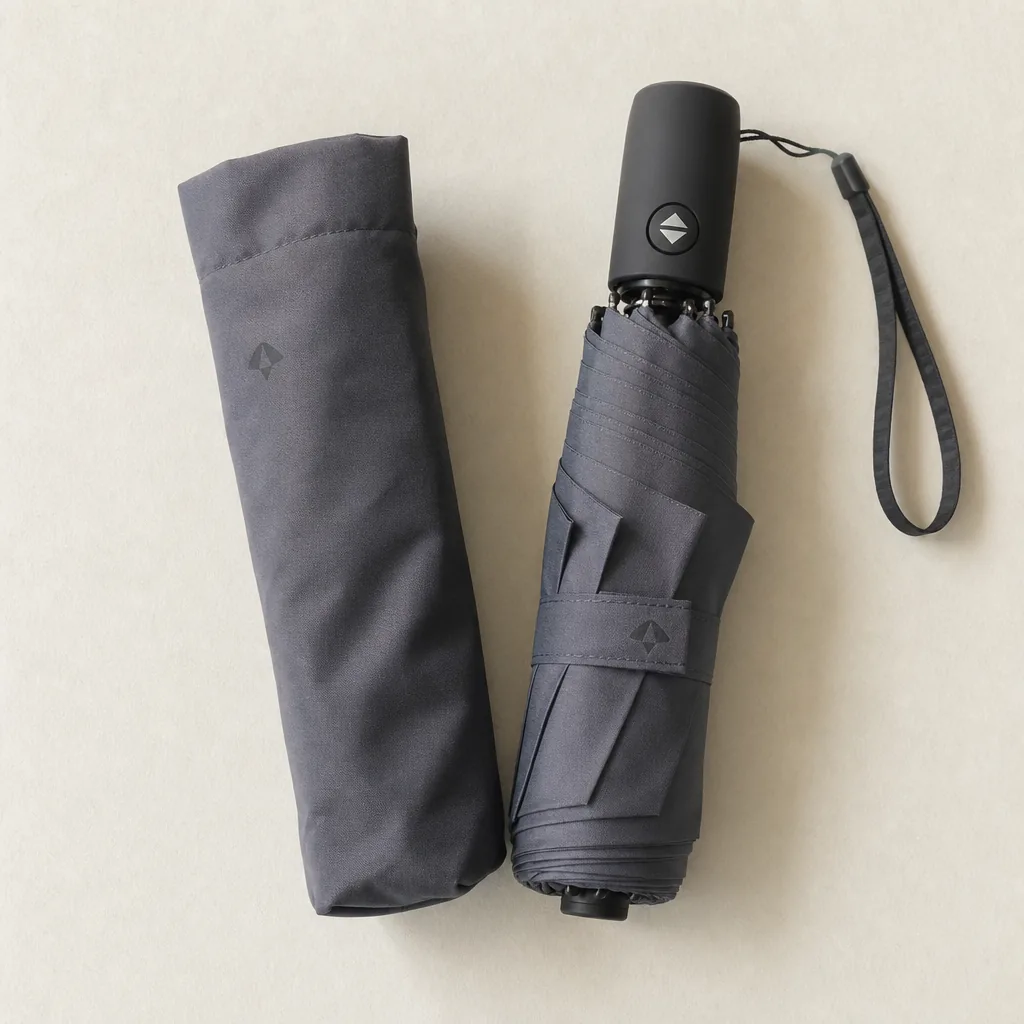
A folded umbrella looks simple, but the closure system is where daily usability, assembly speed, and brand perception either hold together or fall apart. On the factory floor, we see how a well-placed umbrella closure strap, snap, or hook-and-loop tab affects how cleanly the product packs, how often it comes back loose, and whether the customer feels quality in hand. Buyers who spec these details early avoid costly revisions later.
Why the closure matters more than buyers think
A closure looks minor on a spec sheet, but in daily use it decides whether an umbrella feels finished or cheap. A proper umbrella closure strap keeps wet canopy panels tight against the shaft, so the umbrella does not flop open in a bag, scratch a car seat, or drip all over office floors. On a 23" or 27" stick umbrella, the difference between a clean wrap and a loose tie is obvious the first week of use. Buyers usually focus on ribs, fabric, and print, then get stuck with complaints about the last 3 inches of the product. That is a mistake. The closure is the part the customer touches every time they shut the umbrella, so it affects memory more than the canopy color does.
Material choice matters because the closure has to survive repeated flexing, moisture, and dirty hands. A thin umbrella velcro tie is fast and cheap, but low-grade hook-and-loop can fray, pick up lint, and lose grip after a few months. A sewn fabric strap with a metal or plastic snap usually looks cleaner and holds its shape better on premium retail umbrellas. For promo items, an umbrella snap band can also carry branding more neatly than a wide velcro patch. On the factory floor, I care about stitch count, bartack reinforcement, and whether the elastic recovery matches the shaft diameter. If the fastening is too short, workers force it and wrinkle the canopy; too long, and it hangs loose and looks careless.
Good umbrella fastening reduces returns because it solves small annoyances that buyers rarely forecast: the umbrella stays bundled in transit, opens more neatly after rain, and packs better in cartons or display sleeves. For export programs, I usually specify the closure early alongside the canopy and handle, because changing it late can affect sewing time and packing dimensions. Our standard practice is to match the closure style to the product tier: simple woven strap for mass-market, snap band for a cleaner retail look, and velcro only when speed and cost matter more than appearance. That is also where brand perception gets decided. A customer may not describe the closure, but they notice when it is stiff, noisy, or peeling, and they read that as low overall quality in the umbrella itself.
Hook-and-loop vs snap vs tie
A good umbrella closure strap is mostly about feel in hand and how it ages after repeated wet-dry cycles. Hook-and-loop is the easiest to open with one hand, which is why an umbrella velcro tie shows up on value umbrellas and commuter models. The downside is obvious on the factory floor: lint, canopy fuzz, and sand reduce grab strength over time, especially on outdoor or beach use. A sewn fabric tie feels cleaner and costs less to replace, but it needs a neat fold and a little more care from the user. If the webbing is too narrow or the stitch density is weak, the closure twists, and the canopy looks sloppy when closed. That is why the best umbrella fastening is not the cheapest part, but the one that matches the intended use and how often the umbrella will be opened in a day.
A snap closure feels more finished and stays consistent longer, which is why buyers often prefer an umbrella snap band on premium gift umbrellas and compact models. A metal snap or molded plastic snap gives a positive click, so the user knows it is secured, and it does not pick up debris the way hook-and-loop does. The tradeoff is flexibility: if the wrap point is slightly off, the snap may miss by a few millimeters, and that becomes a nuisance on 21-inch and 23-inch folding umbrellas with tighter canopy packing. For export orders, I watch the placement tolerance closely because a snap that lands too far from the rib stack can rub the fabric edge and leave a crease. On higher-end umbrellas, the strap width, bartack length, and snap pull force all need to be balanced so the closure feels firm without crushing the canopy.
Tie systems are still the simplest and often the most durable when the spec is clear. A plain woven strap or fabric tie gives the least mechanical failure because there is no hook surface to wear out and no snap hardware to loosen, which is useful for large 27-inch and 30-inch golf umbrellas that see more wind loading and more frequent re-wrapping. It also keeps cost predictable on high-volume umbrella closure strap programs, especially when buyers want a clean look with matching canopy color and no visible hardware. The weak point is user convenience: ties are slower, and if the strap length is wrong, the bundle either flops open or is forced too tight. In practice, the best choice depends on the market: hook-and-loop for speed, snap for a cleaner premium feel, and tie for simplicity and long service life when the customer cares more about function than quick fastening.
Durability and wear over time
The closure is one of the first places an umbrella shows age, and the failure mode is usually predictable. A basic umbrella closure strap in woven polyester or elastic-backed webbing will outlast the canopy print, but only if the stitch pattern and bar-tack density are right. Cheap hook-and-loop closures lose holding strength when lint, sand, and wet fibers build up in the hooks; after a few hundred cycles, an umbrella velcro tie often starts to peel open under spring tension. In production, I pay more attention to the closure reinforcement than the decorative label, because a weak closure makes a good frame feel sloppy in the hand. On a 21-inch folding model, that small strip sees repeated bending, compression, and moisture exposure every time the user wraps the canopy after rain.
An umbrella snap band is usually more durable in terms of mechanical retention, but the hardware creates its own wear points. Plastic snaps can crack in cold weather or under off-center pulling, while metal snaps corrode if the plating is thin or the umbrella is stored wet. The sewn patch behind the snap matters as much as the snap itself; if the fabric is too light, the repeated snap force tears the stitching before the closure hardware actually fails. For daily commuter use, a properly made umbrella fastening should hold through thousands of open-close cycles without loosening, but that requires matching the closure to the shaft size, canopy weight, and rib tension. On larger 23-inch and 27-inch umbrellas, I prefer wider straps or reinforced snap tabs because the folded bundle is thicker and puts more stress on the closure point.
What lasts longest depends on the use case. For promotional giveaways, the closure often outlives the rest of the umbrella only if the user is gentle, but for retail-grade products the strap or snap should be designed as a consumable wear part that still survives normal service life. A stitched umbrella closure strap in 190T or 210T pongee usually ages better than adhesive-backed parts, because stitching tolerates flex and moisture better than glue. If the goal is longevity, keep the closure away from exposed metal edges, use dense thread lock on the bartacks, and avoid narrow tabs that cut into the canopy fold. Our standard practice is to test closures alongside the frame, not separately, because a good closure has to survive the same handling abuse as the canopy and ribs, especially on auto-open-close folding umbrellas that are stuffed into bags and reopened many times a week.
Branding on the closure strap
The closure band is one of the few parts of an umbrella that gets handled every time the product is opened and packed, so logo printing there has to survive abrasion, bending, and dirt better than most buyers expect. On a standard umbrella closure strap, the cleanest result usually comes from screen print or heat transfer on polyester webbing, with 1-color logos holding up best when the band is narrow, typically 8 mm to 15 mm wide. If the strap is black, white ink or a high-opacity transfer is safer than trying to print a subtle tone-on-tone mark that disappears once the band is folded. Our standard practice is to confirm the logo area before sampling because the usable print length is often shorter than the strap itself once stitching and seam allowance are counted. For promotional orders, the closure band is usually a better branding surface than the canopy when the client wants low-cost, high-volume customization without affecting panel cutting or seam registration.
Different fastening styles change what can be printed and how it wears. An umbrella velcro tie gives more flexibility for bold branding because the outer face is flat enough for a clean logo, but the hook-and-loop overlap can hide part of the artwork if the layout is not centered correctly. An umbrella snap band is less forgiving: the snap hardware steals real estate, so the logo has to stay clear of the male/female snap location or the print will crack around the metal. For higher-end programs, buyers often ask for woven labels, debossing, or a printed logo plus size marking so the umbrella fastening doubles as a product identifier. If the order is for retail or corporate gifting, I would push for a strike-off on the actual band material, not just the artwork file, because webbing dye uptake, print sharpness, and edge fray all affect how the closure looks after repeated use.
Matching closure to product tier
For low-cost promotional umbrellas, the simplest hardware usually wins. A basic umbrella closure strap in matching canopy fabric is the cleanest choice for 21" to 23" manual and auto-open styles because it is cheap to cut, easy to sew, and does not add bulk at the fold line. On a factory floor, the real issue is not style but consistency: if the strap width, stitch length, and bartack position drift, the closure starts twisting after a few hundred opens. For mass giveaways, a hook-and-loop umbrella velcro tie is acceptable when the buyer wants fast closure and broad tolerance in handling, but it collects lint and looks tired faster on dark polyester. ZheBrella’s standard practice for this tier is to keep the closure lightweight and low-cost, then spend the money on frame stability, usually fiberglass or light steel ribs rather than decorative closure hardware.
Mid-tier retail and corporate gift umbrellas need better umbrella fastening because the closure becomes part of the perceived quality. A snap band works well on 8K or 10K fold umbrellas, especially when the canopy uses 190T or 210T pongee and the buyer wants a neater finished look in a retail box. It holds shape better than a soft strap, but the snap must be set cleanly or it will tear the fabric at the fold point after repeated use. For higher-end auto-open-close models, I prefer a wider umbrella closure strap with a sewn keeper, because it distributes stress and gives more room for branding without making the handle area bulky. If the umbrella is windproof or vented, the closure should stay simple and durable; decorative hardware is a weak point that adds cost without improving performance.
Frequently Asked Questions
What is the band on an umbrella called?
It is the closure strap or tie - usually a hook-and-loop (Velcro) band, a snap strap, or a wrap tie that keeps the folded canopy neat. It is also a small but visible branding surface that many programs overlook.
Which umbrella closure is most durable?
Snap straps and quality hook-and-loop both hold up well; very cheap Velcro can lose grip over time as lint builds up. For premium products, a snap or a fabric tie with a branded label reads as higher quality.
Which closure system is best for a low-cost OEM umbrella program?
A hook-and-loop strap is usually the lowest-cost option and is easy to source in bulk. It also allows fast assembly, which helps keep production lead times shorter on high-volume orders.
When should a buyer choose a snap closure instead of a strap?
A snap closure is a better fit when the brand wants a cleaner look or more secure retention after repeated use. It is common on higher-end folding umbrellas where the closure is part of the product presentation.
Can the closure area be used for branding without affecting function?
Yes. Many factories add a woven label, printed logo, or embossed detail to the strap or band without changing how it closes. For OEM projects, this is usually easier to customize than the canopy panels and can be approved in the sample stage.
Looking to Launch Your Custom Umbrella Line?
ZheBrella is a Zhejiang-based OEM/ODM umbrella manufacturer with 17 years of export experience. Free design, low MOQ from 100 pieces, windproof construction, full-color print.
Get Free Quote Now »People Also Search For
Related Articles
Branded Umbrella Closures: Custom Straps, Snaps, and Tabs
Plan branded closure straps and tabs with the right fabric, fastening method, print treatment, MOQ, and QC standards for...
Read More »
Custom Umbrella Tie Straps: Printed, Woven, or Rubber Logos
Choose the right umbrella tie strap branding method by cost, MOQ, lead time, and durability for promo, retail, and priva...
Read More »Matching Umbrella Trim Colors to Brand Systems at Scale
Learn how to coordinate canopy, strap, handle, piping, and frame colors on branded umbrellas while managing MOQ, toleran...
Read More »