Matching Umbrella Trim Colors to Brand Systems at Scale
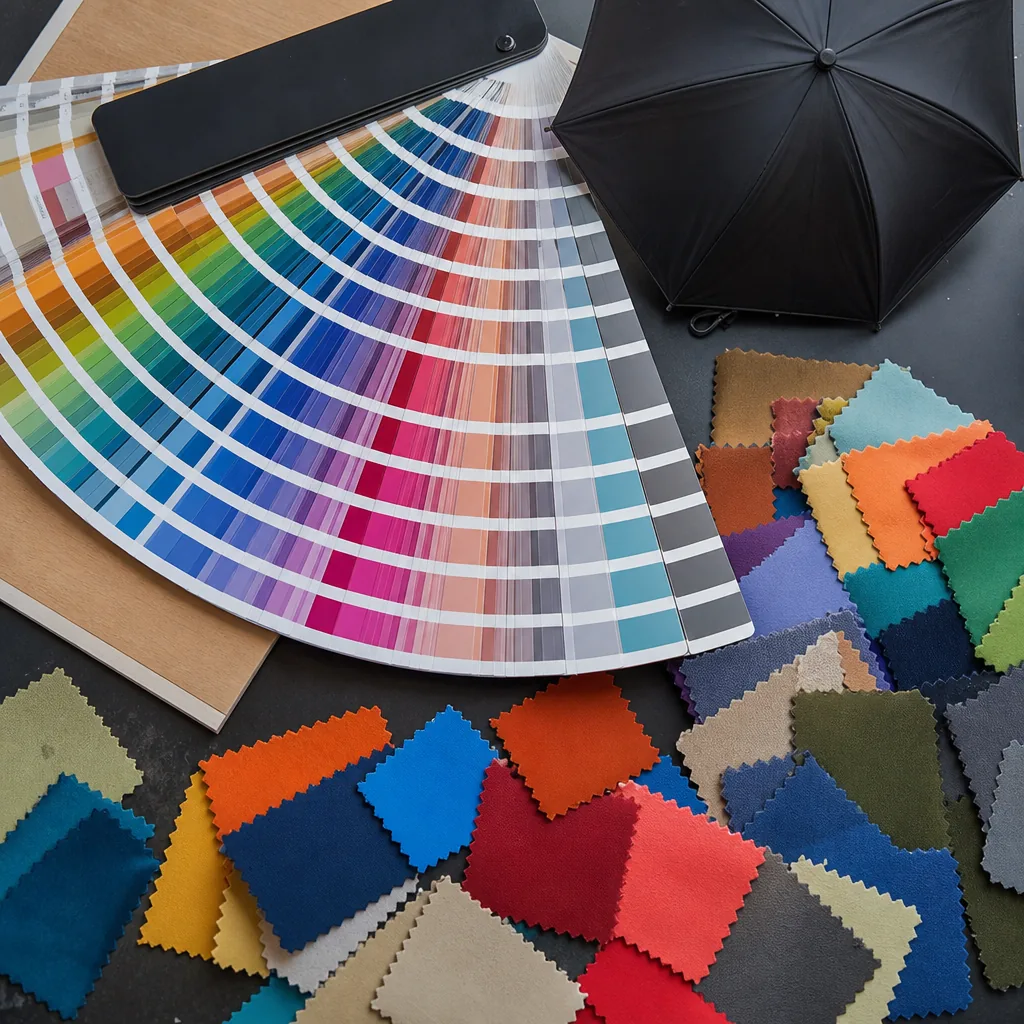
When a branded umbrella order moves from render to production, umbrella trim color matching becomes a supply-chain problem, not just a design choice. Canopy, strap, handle, piping, and frame colors each come from different materials, dye lots, and suppliers, so small variation can turn a clean brand system into a mismatch across thousands of units. At the factory level, the goal is to lock color targets early, control tolerances, and keep approvals realistic against MOQ and lead-time limits.
Which Umbrella Components Can Be Color Matched
For umbrella trim color matching, the easiest components to control are the soft goods: canopy panels, edge binding, handle tie strap, sleeve, and, on some models, the carry cover. These parts are usually cut from dyed pongee 190T or 210T, polyester, or PVC film, so buyers can often specify Pantone targets with good repeatability before assembly. In branded umbrella trim work, the canopy color, binding, and handle tie strap color are typically locked first because they drive the visual identity, add little to unit cost, and do not depend on plating baths, resin color, or mold changes. They are also the fastest color-matched umbrella parts to revise on repeat promotional umbrella sourcing orders because they do not require new tooling.
Harder parts are the structural and molded components: shaft, ferrule, tips, rib ends, and some handle styles. Wood handles can be stained, painted, or wrapped, but molded plastic handles are limited to the factory’s resin masterbatch options, so shade control is weaker than on fabric. Metal shafts and ferrules are usually plated, powder-coated, or painted, which means the final result depends on the finish system, scratch resistance target, and minimum run size rather than exact fabric-style matching. When buyers want umbrella trim color matching across a large order, the practical approach is to treat the canopy and soft trims as the primary brand carrier, then specify hard parts separately and accept that some will be close matches rather than exact matches.
The best way to reduce risk is to list each part in the tech pack with its own finish callout: canopy, binding, tie strap, handle, shaft, ferrule, tips, and sleeve details. For example, a black handle tie strap can be matched tightly to the canopy edge, while a plated ferrule may only need to stay in a neutral metal tone. Ask for a physical preproduction sample before bulk production, then approve the soft goods first and the hard parts second. That sequence keeps color decisions tied to material limits, avoids rework, and prevents a standard 3,000-piece order from turning into a long finish-matching cycle. It also makes it easier to compare FOB or DDP quotes, because custom finishes on molded or plated parts usually increase lead time and risk more than fabric color changes do.
Material Limits That Affect Final Color Accuracy
Umbrella trim color matching is a multi-substrate control problem, not a single Pantone sign-off. A brand color can hold reasonably well on 190T or 210T pongee, but the same target will shift on glossy injection plastic, matte rubberized coatings, polyester handle tie straps, fiberglass ribs, steel ferrules, and other small frame parts because each surface reflects light differently. Gloss usually reads brighter and slightly lighter; matte finishes look deeper and less saturated; coated metal can pick up a gray or cool cast that pushes red, navy, or green off by a visible step. That is why canopy-only approval often passes on a flat swatch and fails after assembly. For promotional umbrella sourcing, the buyer should review the full product under daylight and LED, not just the fabric alone.
Fabric variation adds another layer of risk. Pongee dye lots are not perfectly uniform from mill to mill, and the weave density on 190T versus 210T changes how much pigment sits on the yarn and how much backlight passes through the canopy. On darker colors, the shift may be minor; on pastels, the same branded umbrella trim can look washed out, uneven, or slightly translucent because the weave exposes every dye and finish difference. Exact matching across mixed materials is harder than canopy-only matching because you are controlling color, sheen, and opacity at the same time. A handle tie strap color may look correct next to a matte canopy edge in one light source and wrong in another, even if both were matched to the same LAB target.
The practical approach is to approve each critical component separately and then judge the assembled sample as a system. We treat the canopy panels, branded umbrella trim, color-matched umbrella parts, and handle tie strap color as separate control points because each substrate needs its own tolerance window. Ask for physical lab dips or production swatches on every material, then check them under D65 daylight and standard indoor LED before release. For fiberglass and steel frame elements, expect finish matching rather than exact color matching; those parts are usually too small, too reflective, or too coated to behave like the canopy. The goal is visual consistency across the whole umbrella, not identical chemistry across unrelated materials. That approach reduces rework, lowers approval disputes, and makes umbrella trim color matching more realistic at scale.
MOQ and Lead Time Rules for Custom-Colored Parts
Stock-color assembly is the fastest and lowest-cost option for promotional umbrella sourcing. The factory pulls from existing inventory for the handle, handle tie strap color, ferrule, runner cap, and rib-tip trim, then pairs those parts with standard canopy colors such as black, navy, red, or white. This works when the buyer can accept a close visual match instead of exact umbrella trim color matching. Once the project requires color-matched umbrella parts, the buying model changes: each molded or sewn component becomes a controlled item, and the MOQ typically moves to 500-1,000 pieces per color per part for ABS handles, polyester or webbing straps, and trim sets. If the color is split across multiple suppliers or molds, the MOQ can rise again because each stream needs its own setup, sampling, and material hold. Buying one branded umbrella trim color across several SKUs does not reduce risk; it increases the chance of visible mismatch between parts made in different batches.
Custom-dyed parts also add development time because approval happens on the actual substrate, not just a digital reference. A polyester strap, TPR handle, or EVA grip can shift after heat-setting, molding, or surface coating, so plan on 10-15 extra days for lab dips, strike-offs, sample revisions, and final color sign-off before mass production starts. That timeline gets longer when umbrella trim color matching is paired with auto-open mechanisms, because shaft length, spring force, button travel, and handle cavity tolerances must all align with the new part geometry. Double-canopy and vented constructions add another coordination step: edge binding, thread color, and trim placement have to be approved before sewing, which can push development out by about a week. For buyer control, lock Pantone targets, submit PO only after physical approval, and separate stock-color orders from custom runs so the factory can keep lead times predictable and reduce scrap.
Frame size affects how much risk sits in the trim package. On 8K or 10K umbrellas, custom-color work is manageable if the parts are approved early and the same color code is used across the canopy edge, strap, and accessory parts. On 16K frames or 30-inch golf umbrellas, the factory has less tolerance for variation because the trim batch must stay consistent through sewing, final assembly, and inspection. A fresh custom-color program usually needs 20-35 days before mass production begins, then the normal production lead time based on order quantity and terms. Buyers should also budget separately for AQL 2.5 pre-shipment inspection, FOB or DDP booking, and any last color recheck before loading. The practical rule is simple: stock-color assembly is the fastest path; newly matched components deliver tighter branding but require higher MOQ, longer sampling, and more schedule risk, especially when the order includes auto-open features or double-canopy construction.
Approval Standards for Multi-Part Color Coordination
A multi-part approval pack should lock down how lab dips, strike-offs, and sealed samples are used before production starts. For canopy panels, tape trim, handle tie strap color, sleeve piping, and printed backgrounds, procurement should require a signed reference standard, an agreed shade tolerance, and the viewing condition used for acceptance: daylight booth, D65 lamp, or office lighting. The PO should also state whether umbrella trim color matching is judged on loose components, assembled samples, or finished goods, and whether the review is done on a 21"/23"/27"/30" frame, flat, or under tension. Under AQL 2.5, buyers need to define whether color, print alignment, and visible appearance are major or minor defects, plus which surfaces count when the umbrella is open, closed, and at the rib pocket edge.
The approval file should separate each color-matched umbrella part by material and supplier so procurement can control risk at the BOM level. A branded umbrella trim package usually includes a 190T or 210T pongee canopy, POE or PVC transparent panel, fiberglass or steel ribs, plus grip, ferrule, and wrist strap. Keep one sealed sample per colorway, one production golden sample at the line, and clear photos of the approved state before mass release. The file should also capture the lab dip result, the strike-off result, the approved viewing light, and whether reorders must match the original sealed sample or the current production batch. That matters in promotional umbrella sourcing when resin, yarn, or pigment changes from lot to lot.
For repeat orders, document the control rule up front: the approved master sample, the acceptable delta from that master, and the disposition for cartons that miss AQL 2.5. If the buyer wants consistent appearance across factories or seasons, the approval pack should name who signs off on color, who signs off on construction, and whether replacement lots can be approved from photos or require physical comparison. Keep the standard practical: one reference sample in sealed storage, one line sample, and one inspection record tied to the PO. That reduces disputes over umbrella trim color matching and gives the buyer a defensible record when a handle tie strap color, trim tape, or print background shifts after the first shipment.
How to Control Cost Under FOB and DDP Shipments
Under FOB, the lowest unit price often hides the most expensive trim plan. Umbrella trim color matching can turn one umbrella into four or five separate sourcing items: tape, tip cap, ferrule cover, sleeve label, and handle tie strap color. Each custom color adds a dye lot, an incoming inspection point, and a mismatch risk during assembly. On 21" and 23" auto-open umbrellas, that means more bundle splitting, more WIP labels, and more labor at sewing and final check. If the buyer asks for one canopy color plus three branded umbrella trim accents, the factory usually pays in cutting efficiency and scrap, not just in material cost. Even a small shade difference can fail daylight comparison after final assembly, which creates rework on a component that may have already passed inspection separately.
The fastest way to control landed cost is to simplify the trim spec before sampling is approved. One primary trim color across the canopy strap, edge binding, and sleeve label usually gives the best balance of branding and throughput; hidden parts can stay stock black or white. That reduces color-matched umbrella parts inventory, shortens line setup, and makes promotional umbrella sourcing easier because the factory can buy more of each component in standard lots. It also lowers the risk of late rework if the Pantone target changes after bulk cutting starts. Once panels are cut, a trim change can force resewing, carton relabeling, or a partial lot hold when the handle tie strap color no longer matches the approved sample.
For DDP shipments, simplified branded umbrella trim makes quoting more predictable because the factory can estimate labor, packaging, and inspection risk from a stable bill of materials. A single trim color across the visible parts is easier to price under AQL 2.5 than a multi-shade program with custom tape, custom tips, and custom straps. It also reduces the chance that a buyer pays for air freight or expedited replenishment because one mismatched component stopped packing. If the goal is cost control, lock the trim spec before panel cutting, keep hidden components standard, and use umbrella trim color matching only where the branding value is clear. That gives a cleaner FOB quote and a more stable DDP landed cost for international buyers.
Frequently Asked Questions
Can the handle, strap, and canopy all match the same brand color exactly?
They can be matched closely, but exact uniformity across fabric, molded plastic, and coated surfaces is difficult because each material reflects color differently. A sealed sample is the best way to set an acceptable production standard.
Do custom-colored umbrella parts increase MOQ?
Yes, often significantly. Stock-color canopies may run at lower MOQs, while custom handles, ferrules, or trim usually require higher minimums because parts must be molded, dyed, or plated specifically for the order.
Which umbrella parts usually require separate color approvals instead of being matched as one set?
Canopy fabric, tie straps, handles, piping, and plastic or metal frame parts should be approved separately because each material takes pigment differently. A Pantone match on polyester will not look identical on ABS, EVA, or coated metal, so most factories provide separate lab dips or chip samples for each substrate.
What MOQ should buyers expect when requesting a non-standard trim color across multiple umbrella components?
For stocked components, some factories can support 500-1,000 units per colorway, but custom-molded or specially dyed handles, tips, and runners often push MOQ to 2,000-3,000 units per color. If several trim parts need unique pigmentation, buyers should confirm MOQ by component rather than by finished umbrella.
How much extra lead time does multi-part color matching usually add to a promotional umbrella order?
Compared with a standard stocked-color program, custom trim matching typically adds 7-14 days for lab dips, component sampling, and approval cycles. If new tooling or custom material dyeing is involved, the added lead time can extend to 20-30 days before mass production starts.
Looking to Launch Your Custom Umbrella Line?
ZheBrella is a Zhejiang-based OEM/ODM umbrella manufacturer with 17 years of export experience. Free design, low MOQ from 100 pieces, windproof construction, full-color print.
Get Free Quote Now »People Also Search For
Related Articles
Matching Umbrella Trim Colors to Brand Identity Systems
Learn how to specify trim colors on straps, piping, tips, and binding so branded umbrellas stay consistent across SKUs, ...
Read More »Matching Umbrella Trim Colors to Brand Identity at Scale
Learn how to standardize piping, straps, tips, and edge trim colors across umbrella orders while managing MOQ, tolerance...
Read More »
Matching Branded Umbrella Components Beyond the Canopy
Learn how to align canopy, strap, piping, sleeve, and handle colors so branded umbrellas look consistent across producti...
Read More »