Custom Umbrella Color Blocking for Stronger Brand Recognition
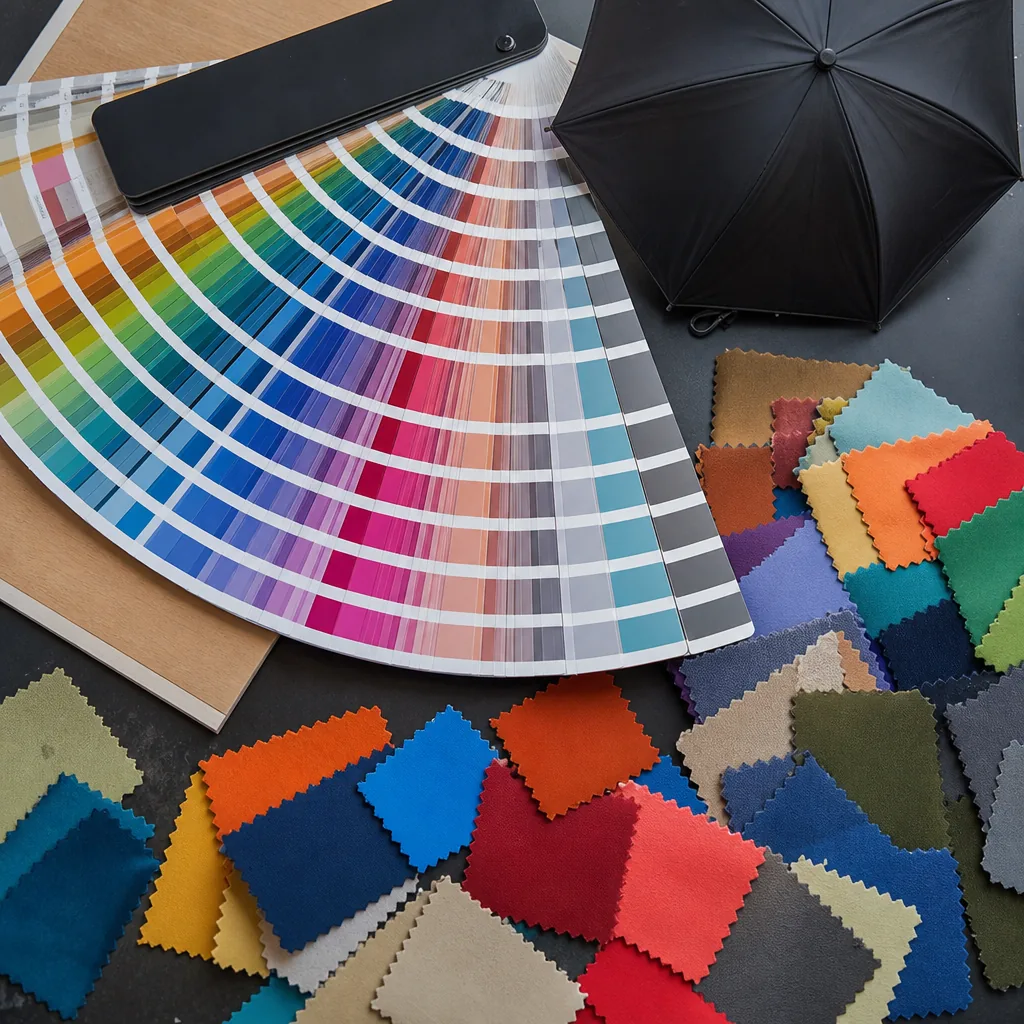
When a branded umbrella misses the target, it is usually not the logo artwork but the way panel colors, edge trim, and fabric availability work together on the production line. Buyers asking for stronger shelf impact need an umbrella color blocking design that reads clearly at distance without pushing MOQ, delaying dye lots, or creating avoidable matching issues between canopy panels, binding, and handle parts.
What color blocking means on umbrellas in production terms
On the factory floor, umbrella color blocking design is a manufacturing map: which canopy gores are cut in each color, how they are bundled, and the order they are sewn on an 8K or 10K frame. Common layouts are alternating panels, quarter splits where two adjacent gores use one shade and the opposite two use another, and contrast borders made by stitching a narrow edge band to each panel. Buyers should define the supporting parts at the same time, because they change the final visual read and the assembly workflow: matching straps or contrast straps, piping color, and coordinated handles. A navy 190T pongee canopy with a red strap reads differently at retail than the same canopy with a navy strap. Handle selection also needs to be locked early—matte black ABS, color-sprayed plastic, a rubberized J-handle, or an EVA grip—so the factory can approve molded or painted parts against the target shade before assembly rather than trying to correct mismatches at final packing.
The key sourcing decision is whether branded umbrella panel colors will use stock-dyed canopy material or custom-dyed fabric for OEM/ODM production. Stock-dyed fabric is typically available as ready-run 190T or 210T pongee, polyester, and clear POE or EVA, which keeps MOQ lower and usually holds lead time around 25 to 35 days on standard manual or auto-open styles. The tradeoff is color control: a stock red from one mill lot may not match the next closely enough for replenishment orders or later-cut replacement panels. Good factory practice is to place all blocked panels on one PO, keep them in the same dye lot, and label lay bundles before cutting. Custom-dyed fabric is the better route when custom umbrella color combinations need Pantone-level consistency across canopy, border, sleeve, strap, and handle paint. It adds lab-dip approval, increases MOQ because each shade is a dedicated dye run, and raises cost on three- or four-color programs, but it lowers brand risk and produces a cleaner OEM umbrella color layout for promotional umbrella color blocking and retail umbrella branding.
Choose layouts that fit the brand and the umbrella model
Choose the panel layout before approving swatches, because the same red, black, and white will read very differently on a 23 inch or 27 inch straight umbrella than on a 21 inch folding model. For corporate identity, the safest umbrella color blocking design is usually a balanced 8K canopy: alternate one brand color with a neutral across all 8 panels, or use four matched pairs set opposite each other. That symmetry keeps logo sightlines consistent as the canopy rotates, avoids a lopsided look in use, and preserves enough panel width for screen printing or heat-transfer graphics without crowding seam allowances. For banks, insurers, and trade-show programs, keep the OEM umbrella color layout to 2 or 3 canopy colors, then place accents on the tie strap, tips, or handle collar. That reduces cutting and sewing error risk, keeps branded umbrella panel colors readable at distance, and speeds approvals on standard MOQ orders because the layout is easier to sample and match.
Sports promotions, retail programs, and event visibility need a more deliberate rhythm. On an 8K frame, custom umbrella color combinations such as a 4-and-4 split, pinwheel alternates, or one dominant field with 2 accent panels create stronger contrast while staying practical for panel alignment in production. On a 16K canopy, each wedge is much narrower, so promotional umbrella color blocking reads more like striping than broad blocks; that works well for team colors, race sponsorships, and high-visibility event use, but logos usually need to stay on single panels because artwork crossing multiple narrow wedges breaks at the seams and looks busy. Closed presentation matters too. A straight umbrella wraps into a longer spiral, so buyers usually see a vertical slice of 2 or 3 colors plus the strap. A folding model compresses into thicker wraps, so the outermost panels dominate when closed. For retail umbrella branding, that makes asymmetrical layouts and finer 16K rhythm more viable for fashion-led SKUs, while crowd-recognition programs are usually stronger with repeated 8K blocks and fewer canopy colors.
Cost, MOQ, and lead-time effects of multi-color construction
For buyers, the main cost in an umbrella color blocking design is conversion, not just fabric. A 2-color canopy in stock 190T pongee usually adds only a modest upcharge, but 3- or 4-color construction increases handling at every step: separate fabric lots, more cutting-table spreads, stricter panel bundling, and a higher chance of wedge mix-ups on the sewing line. On an 8K canopy, all 8 panels must stay in the exact OEM umbrella color layout from cutting through edge folding and top-notch joining; on a 16K fashion umbrella, that risk roughly doubles with the panel count. In practice, each added canopy color can raise canopy labor by about 5% to 12%, while fabric waste also climbs because partial rolls do not consume evenly across branded umbrella panel colors. The impact is most visible on 21 inch and 23 inch promotional frames, where a small labor change can move the FOB unit price. That is why custom umbrella color combinations often force MOQ up earlier than buyers expect, especially when the factory must reserve low-usage shades that cannot be consumed across other orders.
MOQ and lead time depend first on whether the canopy uses stock shades or custom dyeing. Stock 190T and 210T pongee usually gives the lowest-risk path because mills commonly hold black, navy, red, royal blue, and white; with those shades, MOQ can sometimes stay around 500 to 1,000 pcs per colorway, depending on frame spec and print method. Once Pantone matching is required, mills typically ask for about 300 to 500 meters per shade, and polyester dye matching has real limits: dark saturated colors are usually stable, while fluorescents, very pale pastels, and retail umbrella branding shades that must align with packaging or plastic parts can shift between dye lots. Standard practice is lab-dip approval before cutting. If one panel shade is off, bulk sewing can stop until replacement fabric is dyed and rechecked. Timing expands in two stages: a single-color stock 190T canopy often ships in 25 to 35 days, 2- or 3-color stock layouts usually need several extra days for panel allocation and trial assembly, and custom dyeing typically adds 7 to 15 days before bulk cutting. Before booking FOB or DDP shipment, buyers should also allow more final inspection time, since AQL 2.5 checks on promotional umbrella color blocking must confirm panel sequence, seam cleanliness, symmetry, and visible shade consistency across the canopy.
Prevent color and performance issues in bulk orders
Most bulk failures in an umbrella color blocking design start at the fabric lot, not the artwork file. A render will not show how two dyed rolls meet at a sewn seam, so buyers should approve physical strike-offs on the actual canopy material before cutting—typically 190T or 210T pongee for rain umbrellas or POE for clear dome styles. On 8K and 10K canopies, compare adjacent branded umbrella panel colors under daylight and cool white light; white, yellow, and pastel panels expose lot drift faster than black, navy, or red. For tighter OEM umbrella color layout control, require all panels on one canopy to be cut from the same lot number so panel 1 through panel 8 are not mixed across dye batches. That single requirement cuts the risk of shade claims, rework, and replacement cost later in production.
The second checkpoint is assembly, because fabric tone changes once the canopy is tensioned on the frame. Ask for in-line assembly photos with the umbrella open and closed, then approve one finished sealed sample before mass production. This is especially important for promotional umbrella color blocking with contrast edge panels and for double-canopy vented styles, where the outer canopy and underlayer may come from separate rolls and reflect light differently after stitching. If the order uses auto-open-close frames, confirm the folded wrap presents the intended dominant panel; many retail umbrella branding programs miss at shelf level because the closed umbrella shows the wrong color first. At the same sign-off stage, lock performance specs for outdoor programs using custom umbrella color combinations: specify UV treatment or a tested UPF 50+ coating rather than a generic silver undercoat, and confirm frame material based on wind demand. On double-canopy windproof umbrellas rated above 50 mph, fiberglass ribs usually recover better after inversion, while steel reduces unit cost but is more prone to chipped paint and rust at rib joints. After approval, check finished samples lot by lot against the master standard and inspect to AQL 2.5 before packing so color consistency holds across cartons, not just the first sample.
Set QC and shipping terms that protect brand consistency
Freeze the umbrella color blocking design before bulk cutting. The purchase order and signed master sample should show the exact panel sequence clockwise from the closing strap, not just Pantone references or a sketch. Add a numbered 8K or 10K panel diagram, plus a model-color code for each SKU, so the sewing line can match the approved OEM umbrella color layout without guessing between similar cut bundles. Specify every visible match point on the PO: strap color, binding or edge tape, thread color, top cap, ferrule, handle, and any exposed rib color on clear POE canopies or umbrellas with contrasting trim. On larger 23-inch to 30-inch golf umbrellas, a single rotated panel or wrong strap shade is visible from several yards away, so these details belong in the approved sample pack, not in email comments. If the program includes multiple branded umbrella panel colors across related SKUs, require the factory to reference the same panel map at cutting, sewing, and packing. That simple control reduces rework, lowers claim risk, and protects retail umbrella branding when the order scales from sample to bulk.
Treat color placement as a pass-fail QC point. At final inspection, use AQL 2.5 to verify panel sequence against the signed master sample, confirm strap-to-canopy matching, check thread shade, and confirm that handles, tips, top caps, and other components match the correct model-color code. For mixed-color runs, carton assortment control is often the bigger failure point: each umbrella may be correct, but the export carton can still miss the required 24-piece ratio. Require carton marks showing style, color code, and quantity breakdown, then spot-check inner bundles during final packing. Shipping terms change who controls that risk. Under FOB Ningbo or FOB Shanghai, the buyer or forwarder takes over after handoff, so packing lists, carton marks, and per-color counts must be correct before cargo release. Under DDP, the factory coordinates more of the chain, which raises the chance of relabeling or consolidation errors on mixed-color umbrella orders. Put outer-carton assortment, per-color quantities, and replacement tolerance on the PO, and confirm stage timing early: about 7 to 10 days for sample approval and 25 to 35 days for bulk production, with extra days if custom umbrella color combinations require multiple accessory vendors.
Frequently Asked Questions
Does using multiple canopy colors always require custom dyeing?
No. Many factories offer stock canopy shades that can be combined to reduce MOQ and shorten lead time. Custom dyeing is usually needed only when brand colors fall outside available stock options.
Are color-blocked umbrellas harder to keep consistent across reorders?
They can be if the PO does not lock panel sequence, fabric code, and trim color clearly. A signed master sample and documented material references make repeat orders much more reliable.
Does adding more canopy colors always increase MOQ?
Not always. If the factory uses stock fabric colors already in the program, multi-panel layouts can often stay near the standard MOQ, while custom-dyed colors usually raise MOQ and add setup requirements.
Which umbrella parts are easiest to color-match without delaying production?
Binding, piping, strap, sleeve, and handle accents are usually faster to adjust than ordering a fully custom canopy color. Many buyers use these parts to carry brand colors when lead time is tight.
How should importers approve a color-blocked umbrella before mass production?
Approve both a panel layout file and a physical or photo sample showing canopy panels, trim, and logo placement together. This helps catch issues like weak contrast, incorrect panel sequencing, or mismatched trim before bulk cutting starts.
Looking to Launch Your Custom Umbrella Line?
ZheBrella is a Zhejiang-based OEM/ODM umbrella manufacturer with 17 years of export experience. Free design, low MOQ from 100 pieces, windproof construction, full-color print.
Get Free Quote Now »People Also Search For
Related Articles
Umbrella Color Blocking for Stronger Brand Recognition
Plan color-blocked umbrellas that read clearly at distance, fit MOQ budgets, and stay consistent across 190T or 210T can...
Read More »Branded Umbrella Color Blocking for Stronger Shelf Impact
Learn how panel color layouts, trim choices, and fabric specs shape logo visibility, shelf impact, and production consis...
Read More »
Color-Blocking Strategies for Brand-Driven Umbrella Design
Show how color-blocked umbrella layouts strengthen brand recognition while staying production-friendly, with fabric, pri...
Read More »