Umbrella Trim Color Decisions for Stronger Brand Recognition
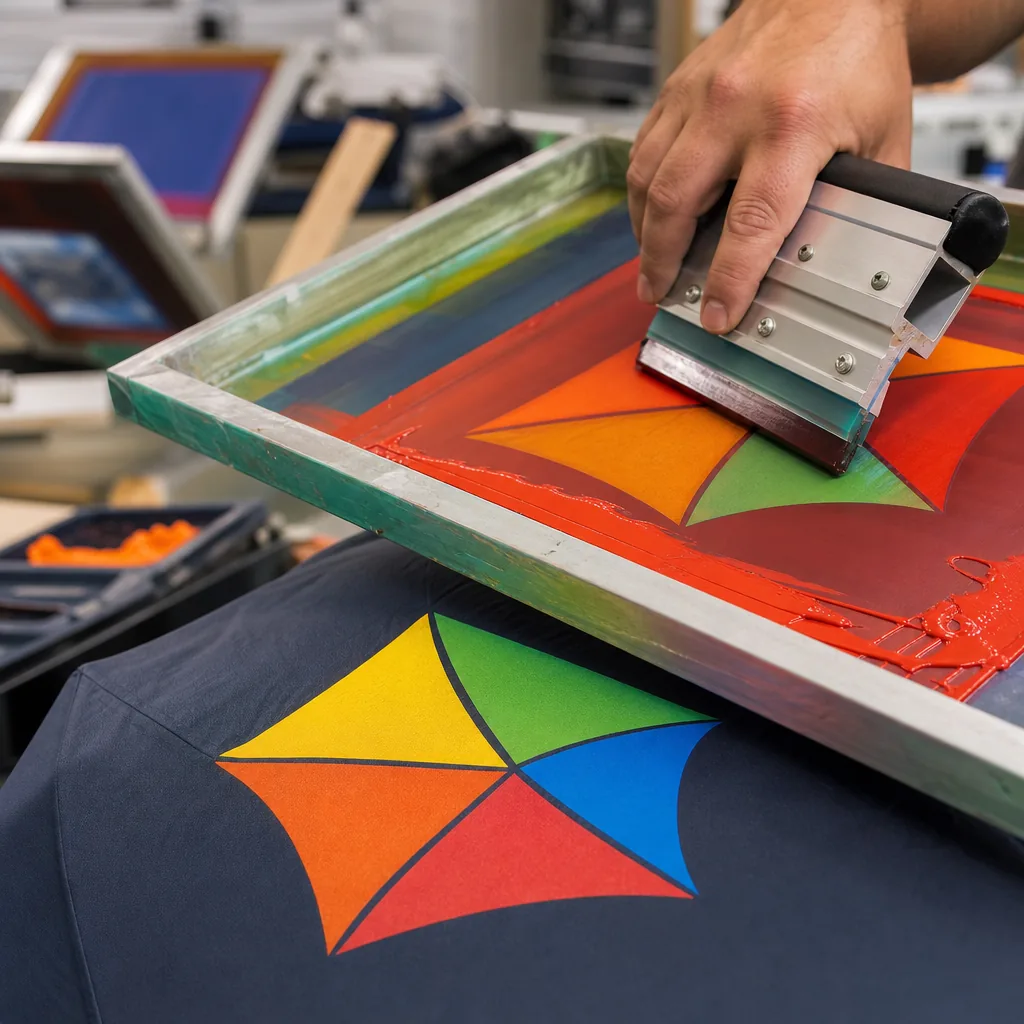
Choosing trim colors for a custom umbrella sounds simple until brand guidelines, fabric availability, minimums, and assembly tolerances start pulling in different directions. On our Songxia production floor, we see how umbrella trim color options, piping width, and frame accent finishes can strengthen brand recognition or create avoidable delays when they are not matched to the canopy fabric, rib structure, and batch setup from the start.
What Counts as Trim on a Branded Umbrella
On a branded umbrella, trim includes every visible accent beyond the main canopy panel. That usually means canopy piping or edge binding, the closing strap, top patch, shaft finish, exposed rib or stretcher color, tips, ferrule, handle, and sometimes the push button, strap snap, or woven label. The most visible trim element is usually the canopy piping color because it outlines the canopy from every angle, especially on 8K and 10K golf umbrellas in 27 inch and 30 inch sizes. Tip and ferrule colors are smaller details, but they still influence first-glance recognition in retail umbrella branding because shoppers read the whole silhouette before they inspect the print. When buyers compare umbrella trim color options, the practical split is soft trim versus hard trim. Soft trim covers sewn canopy and strap components; hard trim covers molded, plated, or painted frame and handle parts. That split matters because color range, MOQ, tooling limits, and unit cost usually differ sharply between those two categories.
Not all trim serves the same purpose. Piping, edge binding, and contrast color tape are primarily visual; they create a clean border and give you a contrast trim umbrella or branded umbrella color blocking effect without reworking the full canopy print. The strap is both visual and functional, since hook-and-loop quality, stitch density, and strap placement often fail before a 190T or 210T pongee canopy wears out. Tips, ferrules, and handles are structural parts, commonly molded in PP or ABS or finished with a rubberized coating, while shafts are specified in steel, aluminum, or fiberglass based on wind resistance, weight, and target cost. On clear POE, PVC, or EVA dome umbrellas, canopy piping color and handle color do more of the branding work because printable area is limited. On fabric umbrellas, trim color has to be reviewed against the base canopy shade, coating, and print method, whether screen print, heat transfer, or sublimation.
Trim strategy also changes by sales channel. In promotional programs, buyers often keep the canopy graphic simple and build recognition through one piping line, a matching strap, and handle accents because sewn trim usually carries a lower MOQ than a custom-molded handle or ferrule. In retail programs, the priority shifts to repeatability across multiple SKUs: 21 inch folding umbrellas, 23 inch stick umbrellas, and different mechanisms such as manual, auto-open, or auto-open-close. The control points are straightforward: approve Pantone references up front, confirm pre-production samples before bulk cutting, and check color consistency at final inspection under AQL 2.5. That reduces a common retail umbrella branding risk: a strap, handle, or ferrule that is technically close in color but visibly off against the canopy under store lighting. Used well, trim stops being a decorative extra and becomes a controllable brand system across a full umbrella line.
Choosing Trim Colors That Support the Brand
Choose umbrella trim color options for visibility first, then brand fit. Trim is often the clearest brand cue from about 3 meters away, especially in rain, so evaluate contrast on actual canopy fabric under daylight and after water exposure, not only from a screen proof. A black canopy with white or safety-yellow piping stays readable in motion; navy with red trim suits sports merchandise and event programs; dark green with black trim usually needs a larger logo because the edge detail gets lost. For retail umbrella branding and street-team giveaways, keep a clear light-dark value gap between canopy and trim so the outline remains legible when the fabric is wet and moving. On 23 inch and 27 inch straight umbrellas, 3 to 5 mm canopy piping color is usually enough to define the perimeter without crowding the design. Folding umbrellas show less trim area, so low-contrast binding disappears faster once the canopy starts shifting in wind. Approve trim against physical swatches and wet-test the fabric, because pongee darkens when saturated and can materially reduce edge contrast.
Tone matching is the better choice when the brand needs a premium look rather than maximum contrast. A contrast trim umbrella is useful, but controlled accents in the same color family often look cleaner across different lighting conditions: silver-gray binding on charcoal 190T pongee or deep burgundy trim on a wine-red 210T canopy are reliable examples. This kind of branded umbrella color blocking works best when the rest of the build is consistent, such as a matte black shaft, fiberglass ribs instead of basic steel, and a matching woven strap; trim cannot create a premium impression if the hardware looks mismatched. For cost-controlled branding, subtle accents often outperform full canopy printing. Stock-dyed fabric with custom piping, a matching tie strap, and one or two screen-printed panels usually gives better brand recognition at lower setup complexity than full sublimation, which requires tighter panel alignment and generally makes more sense on higher-MOQ programs. A hotel chain can use ivory or champagne trim on black, a bank can use red edge tape on navy, and a cosmetic brand can use blush trim on clear POE bubble umbrellas when lead time needs to stay around 25 to 35 days and unit cost is still under review.
Material and Frame Constraints Behind Color Choices
Frame construction determines umbrella trim color options before canopy Pantones are approved. A finished umbrella combines several substrates—ABS or PP handles, molded tips and runners, powder-coated or plated steel shafts, fiberglass ribs, and painted steel stretchers—and each accepts color with different tolerance and durability. Plastic parts usually give the closest PMS match, but custom-molded colors often raise MOQ to roughly 3,000-5,000 pieces per color. Metal hardware is less flexible. On cost-sensitive programs, shafts and ferrules are commonly limited to stock finishes such as black, silver, white, navy, or a short standard powder-coat range, because custom coating adds setup cost and can shift shade lot to lot. Buyers specifying a contrast trim umbrella should also check how much of that paid-for accent will actually be seen. On 21" and 23" auto-open-close folding frames, most of the shaft disappears when the umbrella is collapsed, so a custom shaft color can add cost with little brand value.
Frame choice narrows exposed color even further on automatic and windproof designs. Fiberglass ribs are preferred for flexibility and wind performance; an 8K or 10K vented frame can test above 50 mph, but exposed fiberglass components are typically kept black because heavy pigmentation can reduce consistency and flex. Steel ribs and stretchers accept spray or electrophoretic coatings more readily, which gives more visible accent-color potential on 27" golf umbrellas and 30" promotional umbrellas where the underframe stays in view. The tradeoff is practical: higher weight, more corrosion risk, and a greater chance of permanent bend after inversion. On 21" and 23" auto-open models, extra coating thickness at moving steel joints can also increase friction and misfire risk. For most retail umbrella branding, canopy details are the safer color vehicle: canopy piping color, edge binding, tie straps, or branded umbrella color blocking with alternating 190T or 210T pongee panels. Those trim points hold color more consistently across mixed materials and are easier to control to AQL 2.5 over a 35-45 day production run.
Production Impact on MOQ, Cost, and Lead Time
Custom trim decisions change MOQ and lead time before canopy cutting starts. Once you move beyond stock black, navy, or self-fabric trim, the factory has to align dyed binding, canopy piping color, tie straps, hook-and-loop tabs, and often thread lots so one finished umbrella does not show three different reds under retail lighting. The risk is highest on a contrast trim umbrella because the edge color is more visible than the printed logo, so a Pantone callout alone is usually not enough; buyers should expect physical swatches or a pre-production sample for approval. On most 21 inch and 23 inch folding umbrellas in 190T or 210T pongee, stock trim usually keeps MOQ around 500 to 1,000 pieces per SKU. A custom-dyed trim program typically moves the practical MOQ to about 1,000 to 3,000 pieces because mills and trim suppliers will not run small dye lots at a workable cost. When reviewing umbrella trim color options, confirm at quotation stage whether the factory is pulling from stocked binding inventory or opening a new dye lot, because that one choice affects sample timing, reorder flexibility, and the risk of shade variation between production lots.
The piece-price increase for custom trim is usually modest; the bigger issue is execution cost and reject risk. With stock pongee and stock binding, a branded umbrella color blocking program may add only $0.08 to $0.20 per piece versus a self-color edge. A custom trim setup more often adds $0.20 to $0.60, depending on color count, fabric type, and whether the frame is manual, auto-open, or auto-open-close. Clear POE or EVA canopies make mismatched trim, uneven stitch spacing, and heat marks easier to spot than woven pongee, so QC risk is higher and buyers should hold the factory to a clear approval standard before bulk production. Assembly also slows on umbrellas with fiberglass ribs, vented double-canopy construction, or 10K and 16K frames versus a basic 8K frame, which adds labor time at sewing and finishing. Standard stock colors usually support repeat orders at FOB Ningbo in 25 to 35 days after sample signoff; custom trim programs more often require 35 to 50 days once lab dips, courier approvals, and incoming trim inspection are included. Compare landed cost, not only factory price: under FOB, the buyer still covers freight, duty, customs clearance, and destination handling, while DDP rolls those costs into one number. That comparison matters more in retail umbrella branding when trim color creates multiple SKUs, because carton splits and added customs paperwork can wipe out apparent savings at the factory level.
Inspection Points for Multi-Component Color Consistency
Do not approve a trim-heavy umbrella from canopy fabric alone. With umbrella trim color options, first-glance quality is usually judged on the piping, edge binding, sleeve opening, closure strap, ferrule paint, tip finish, and handle insert before anyone notices whether the 190T pongee canopy is within tolerance. Your QC sheet should require shade checks across every visible component under one controlled light source, typically D65, plus the intended retail-light condition if the program is for store display. Set one pass standard before production starts: either an agreed Delta E tolerance or a signed physical swatch. Inspect cut panels before sewing, then compare sewn canopy piping color, strap fabric, webbing, molded plastic, and painted metal side by side, because polyester dye lots, injection-molded masterbatch, and spray-coated parts reflect color differently even when the target shade is the same. The risk is highest on white, beige, pastel, and saturated retail umbrella branding programs, where small variation looks like a production defect rather than intentional branded umbrella color blocking.
The next control point is damage resistance and assembly consistency. Ask for scuff inspection on all exposed trim because piping and binding can mark during sewing, folding, and packing. For painted ferrules, tips, and shaft sections, require a cross-hatch or tape adhesion test; for printed areas over dark trim, require rub testing so logos do not break or haze in transit. Assembly criteria should also be written into the inspection standard: no misaligned top notch, uneven tip tension, off-center binding, exposed glue, or mixed-component assembly that makes one panel look darker, wider, or tighter than the next. These defects are more visible on a 27-inch double-canopy vented frame than on a 23-inch 8K umbrella, so tolerances should be specific, not subjective. For bulk release, set the final inspection plan to AQL 2.5 and seal one approval sample before mass production using the exact canopy lot, trim tape, handle color, tip finish, and packaging. A signed, dated sealed sample gives inline and final inspectors a fixed reference and reduces disputes over whether a contrast trim umbrella is acceptable before FOB shipment.
Frequently Asked Questions
Do custom trim colors usually require higher MOQs than standard canopy colors?
Yes, especially when multiple molded or coated parts need matching. Using stock trim colors often reduces MOQ pressure and shortens sourcing time.
Will trim colors look the same on plastic, metal, and fabric parts?
Not exactly. The same target color can appear different across substrates, so buyers should approve assembled samples instead of relying on digital artwork alone.
Does adding a contrast piping color usually increase MOQ?
Usually yes, especially if the piping color is custom-dyed to match a specific Pantone. Many factories can keep MOQ near 500-1,000 pieces for stock trim colors, but custom trim shades often push the requirement higher and may add 7-10 days to sampling.
Which umbrella constructions show trim colors most clearly at retail?
Straight umbrellas and golf umbrellas usually show piping and edge trim better because the canopy perimeter is longer and flatter when open. Compact folding umbrellas can still use contrast trim, but the visual effect is smaller and should be paired with a strong canopy-panel color split or logo placement.
Can frame accents be matched to the canopy trim without slowing production too much?
Yes, if you use standard component colors such as black, white, or silver for tips, ribs, or handles. When buyers request custom-painted frame parts to match trim exactly, lead times typically extend by 10-15 days and defect tolerance on color consistency needs to be agreed in advance.
Looking to Launch Your Custom Umbrella Line?
ZheBrella is a Zhejiang-based OEM/ODM umbrella manufacturer with 17 years of export experience. Free design, low MOQ from 100 pieces, windproof construction, full-color print.
Get Free Quote Now »People Also Search For
Related Articles
Color-Blocking Strategies for Brand-Driven Umbrella Design
Show how color-blocked umbrella layouts strengthen brand recognition while staying production-friendly, with fabric, pri...
Read More »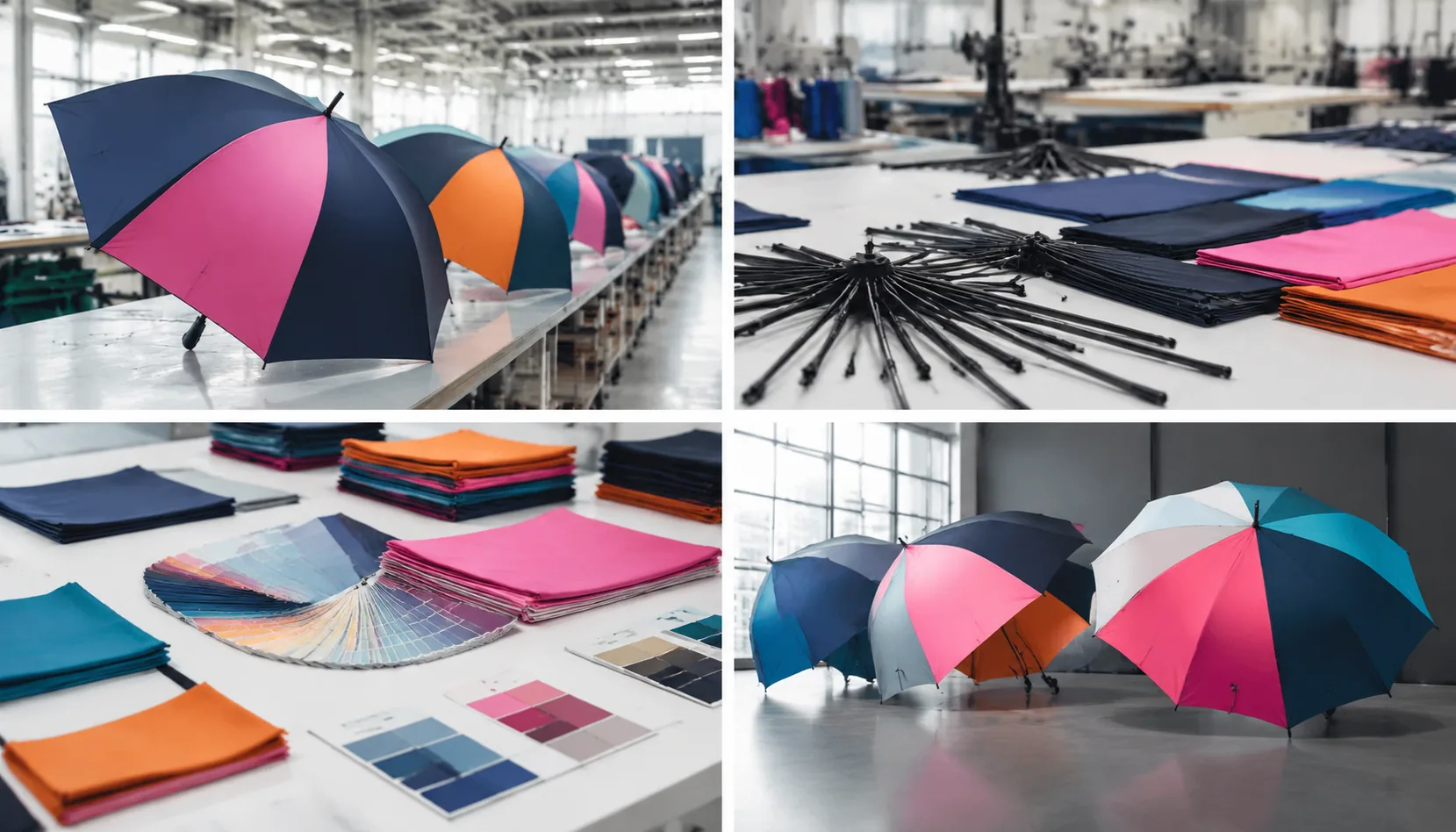
Umbrella Color Blocking for Clear Brand Recognition
See how color blocking, trim accents, and panel contrast help umbrellas read as branded products without relying on larg...
Read More »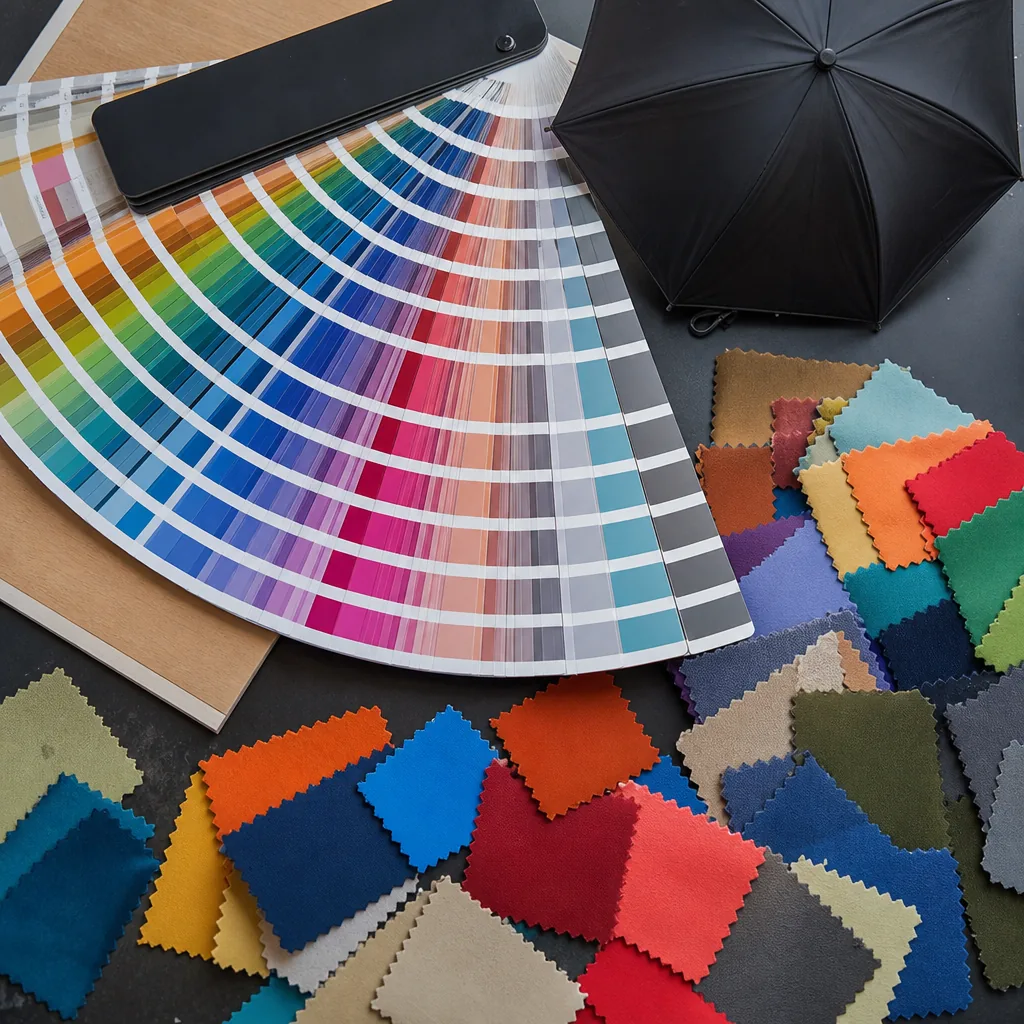
Custom Umbrella Color Blocking for Stronger Brand Recognition
Learn how to use panel blocking, trim choices, and stock color programs to boost brand recognition while controlling MOQ...
Read More »