Color Blocking Strategies for Branded Umbrella Canopies
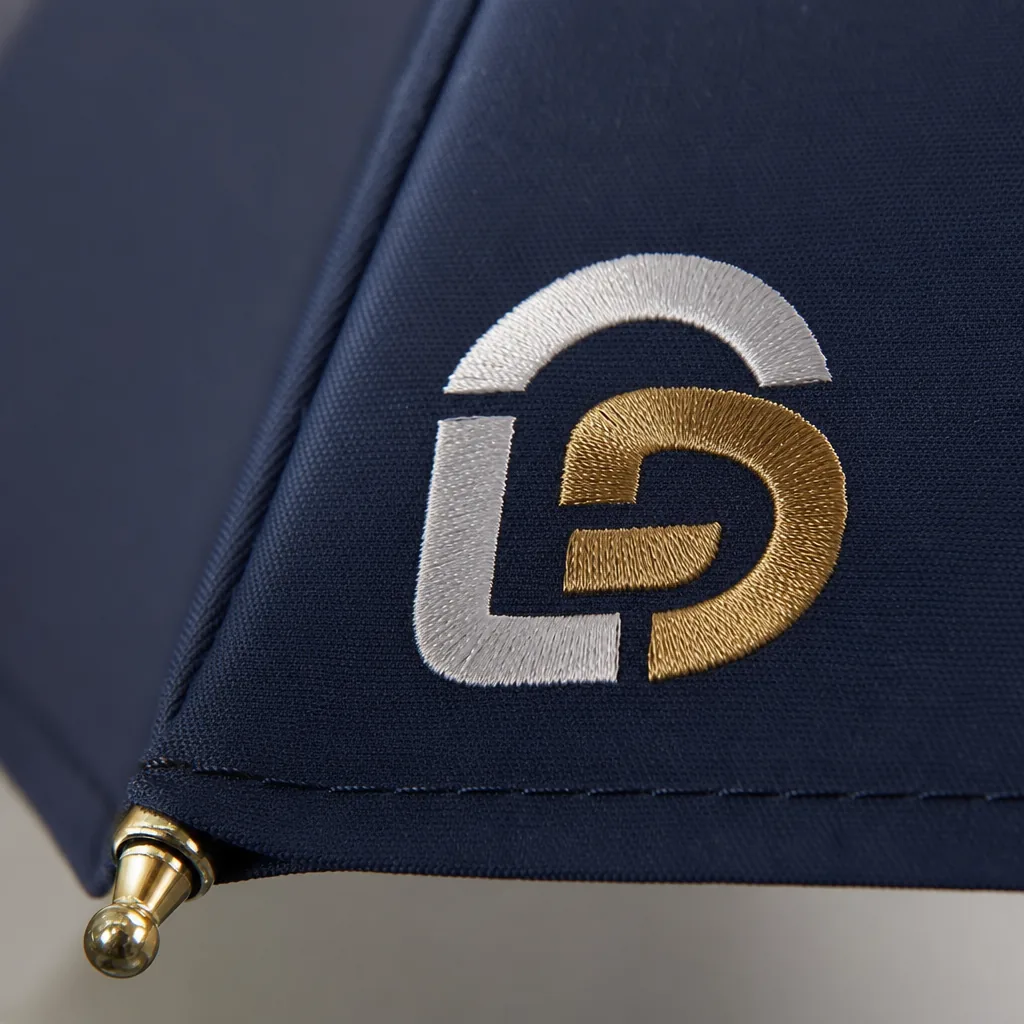
Choosing branded umbrella canopy colors is not just a design exercise; it is a manufacturing decision that affects dye matching, panel layout, stitching accuracy, and how clean the umbrella looks after repeated opening and closing. On the factory floor, the best color blocking strategies balance sharp brand recognition with practical constraints like fabric availability, seam tolerance, and print registration, so the final canopy looks consistent at scale.
Use contrast to improve brand recall
High-contrast canopy layouts help a logo register at a distance because the eye reads silhouette and value contrast before it reads copy. In street use, at a venue gate, or across a sidewalk, a dark canopy with a white or silver logo usually gives the cleanest result: the mark stays legible on a curved panel, in rain, and under shadow. That matters for branded umbrella canopy colors because low-contrast printing on matte polyester or 190T/210T pongee can disappear once the umbrella is moving. For most branded umbrella canopy colors, the practical rule is simple: keep the logo one full value step brighter or darker than the field, and avoid placing key text across seam lines unless the custom canopy layout was built for that location.
Bright trim on neutral fabric is a useful second option when the brand wants visibility without a fully saturated canopy. A white, gray, or khaki base with red, cobalt, or lime edge binding creates a strong outline that reads quickly and still leaves room for a clean logo lockup. This is common in umbrella color blocking for retail programs because the trim can carry the accent color while the body stays controlled and easy to print. For contrast panel umbrellas, I would usually keep the main field neutral and reserve the brighter color for the valance, edge tape, or one panel pair; that keeps the piece readable instead of busy.
Two-tone combinations work best when the brand needs stronger shelf impact as well as street presence. A split canopy, alternating panels, or a dark upper section with a lighter lower section can support brand color umbrellas without making the product feel overloaded. The goal is not to use more colors, but to place them where they sharpen recognition: logo on the highest-contrast panel, panel breaks aligned to the artwork, and repeatable placement across 21"/23"/27"/30" sizes. That approach reduces print risk, keeps production consistent under AQL 2.5 inspection, and gives retail buyers a layout that is easier to quote for MOQ, lead time, and FOB or DDP delivery.
Plan panel-by-panel color layouts
Alternating panels are the most efficient way to build branded umbrella canopy colors because the pattern repeats rib by rib and is easy to index during cutting and sewing. On an 8K frame, every-other-panel umbrella color blocking usually gives the best balance of visual impact and production control: the panel count is low enough that seam allowance, grain direction, and print registration can be held within normal shop tolerance, and first samples are easier to approve before bulk. On 16K umbrellas, the same layout still works, but each panel is narrower, so any drift in panel order or stitch length shows up faster around the dome. That means more QC on panel matching, more time at the sewing line, and a higher scrap risk if the factory is not controlling rib-by-rib layout carefully.
Split-canopy designs are usually the easiest custom canopy layout to keep symmetrical when the color break follows the centerline or a mirrored two-tone split. That makes them a strong choice for brand color umbrellas when the buyer wants a clean retail read without the visual complexity of more than two colors. The main production risk is alignment: the split has to land on the same rib positions on both sides, or the canopy will look off-center even if it opens normally. Compared with alternating panels, split canopies need tighter cutting, pairing, and final assembly control, especially on 16K frames where the narrower panels leave less margin for correction. For buyers, that usually means slightly higher labor cost, but lower visual risk if symmetry is the priority.
Color wedges and other angled contrast panel umbrellas are the hardest layouts to hold because every seam converges toward the cap, so a small error in angle, cap placement, or seam tension compounds as the panels close in. On 8K umbrellas, disciplined marking and sewing can still keep the wedge lines sharp, but the factory needs stricter sampling approval and more consistent seam control than it does for alternating panels. On 16K umbrellas, the tighter geometry makes this even less forgiving: narrow panels amplify any mismatch in rib indexing, and the finished canopy can read uneven if the sewing team is not maintaining exact symmetry. If the goal is lowest risk and repeatable output, alternating panels are the most economical, split canopies are the most symmetrical, and wedge layouts should be reserved for runs with tighter sewing control, lower AQL expectations, and enough lead time for careful approval before bulk cutting.
Select fabrics that hold color consistently
For branded umbrella canopy colors, fabric choice decides whether a custom canopy layout stays sharp after panel cutting, seam tension, and heat-setting or starts to look uneven in sunlight. 190T pongee is the common baseline for promotional and retail umbrellas: it has a soft matte face, good dye uptake, and solid print sharpness when the artwork stays inside one panel. 210T pongee is tighter and smoother, so it usually gives more uniform color coverage, cleaner edges, and better separation in umbrella color blocking where adjacent panels must read as distinct brand color umbrellas. Standard polyester is the lower-cost option for high-volume programs, but its sheen is less controlled, so the same dye lot can read differently from panel to panel after stitching and finishing.
That difference matters in production and approval. Matte pongee reduces glare and helps contrast panel umbrellas hold a cleaner visual line, while polyester can show more sheen variation that makes dark blocks look patchy and can soften fine details, especially across seams. In practice, 210T pongee is the better choice when the design depends on sharp logos, crisp block boundaries, or a premium hand feel; 190T remains acceptable when the decoration sits inside one panel and cost is the main constraint. For repeatable output, specify the color standard, seam placement, and a signed sample before bulk cutting, and keep acceptance tied to the approved swatch rather than a loose visual match.
If the umbrella must meet UPF 50+, darker base colors usually help because they absorb more UV before the coating carries the full load. Black, navy, and deep charcoal are common on branded umbrella canopy colors for that reason, but the fabric still needs a UV-rated coating or backing treatment to preserve performance without flattening the brand look. That is especially important with bright logos or high-contrast blocks: the base cloth should support the rating, not wash it out. A well-matched coating on 190T or 210T pongee usually keeps the surface readable and the colors saturated, while a weak finish can make the canopy look chalky after sun exposure. For procurement, most programs should lock fabric, coating, AQL 2.5 inspection, MOQ, and a 20-35 day lead time early, since decoration complexity and panel count drive both risk and cost.
Control color matching across components
Lock the visible color decisions before sampling: the canopy ground color, contrast panel placement, closure strap fabric, and logo ink. Those four elements define the first brand read on a standard 23-inch 8K straight umbrella, whether the canopy is 190T or 210T pongee. For branded umbrella canopy colors, assign a Pantone reference to each item at kickoff and approve a sealed swatch set before bulk cutting. In a custom canopy layout, the strap should usually match the dominant canopy panel, not the accent panel, because buyers and end users see the umbrella closed nearly as often as open. The main exception is a reversed white logo, where a darker strap can improve legibility. Keep tips, ferrules, and handles coordinated, but rank them lower: molded PP tips, rubberized ABS handles, plated steel ferrules, and woven pongee will not reflect light the same way even when matched to the same Pantone target.
Apply tight control where mismatch will break the umbrella color blocking, and allow tolerance where substrate differences make an exact match unrealistic. Fabric-to-fabric is the hard standard: canopy fabric and strap fabric should be approved by lab dip against Pantone under D65 lighting. Other materials—PP tip caps, ABS handles, plated ferrules, and any POE or PVC clear panels—should be managed to a commercial visual tolerance rather than forced into an exact match under every light source. The checkpoints that most affect perceived quality are alternating panels, seam piping, strap edge binding, logo ink, and hook handles that sit against the closed canopy in photos and retail packaging. Slight shade variation is usually acceptable on low-visibility parts such as inner runners, ferrule inserts, undercanopy stitching, and small end caps. On MOQ export orders, especially FOB lots split across multiple colorways, define those critical-match and approximate-match points in the approval sheet up front to reduce claims during AQL 2.5 inspection.
Review risk, MOQ, and lead-time tradeoffs
The main cost risk in branded umbrella canopy colors is fabric control, not sewing. A six-panel or eight-panel canopy built from stock 190T pongee can move faster because the cloth is already dyed, coated, and shade-card approved. Once the buyer asks for exact Pantone matching across multiple panels, each color usually needs its own dye lot, and every lot has to pass shade review, water repellency, shrinkage, and coating-adhesion checks. That turns a custom canopy layout into a sourcing problem. A contrast panel umbrella using stock navy, white, and red can often start around 500-1,000 pcs, while three custom-dyed colors may push MOQ to 2,000-3,000 pcs per color, especially on 210T pongee, RPET pongee, or UPF 50+ UV-coated fabric. For giveaways, promo events, and short-run campaigns, that extra fabric work adds cost without improving sell-through.
Sample timing follows the same pattern. A strike-off or pre-production sample made from stock fabric is often ready in 5-7 days after artwork approval. Custom dye lots add lab dips, buyer comments, revised dips, and sometimes a second coating test, which can push approval to 12-18 days before the first finished umbrella is assembled. That delay matters because umbrella color blocking also affects print registration across seams, heat-transfer placement near panel joins, and gradient alignment on the finished canopy. Our standard workflow is to approve fabric under D65 light, then check one completed 23-inch or 27-inch sample for seam match, logo position, and panel balance before bulk cutting starts. Under AQL 2.5, visible shade mismatch is a defect, so a near-stock substitute is usually the safer choice if the order is tied to a hard ship date.
For most corporate programs, stock color combinations are the better tradeoff when the order is below 1,000 pcs, the delivery window is under 30 days, or the brand color sits close to standard black, navy, royal blue, red, white, gray, or green. Fully custom dye lots make sense when the umbrella will be sold at retail, must match a national brand standard exactly, or will be reordered repeatedly, because the initial lab-dip and approval work can be reused across programs. Stock contrast panel umbrellas typically land in 20-30 days after sample approval, while custom-dyed branded umbrella canopy colors usually need 35-50 days, plus extra time if the frame is also nonstandard, such as 10K fiberglass ribs, auto-open-close construction, or a vented double-canopy windproof build. If color accuracy matters less than delivery certainty, accept the closest stock combination before cutting begins.
Frequently Asked Questions
Does color blocking make umbrellas more expensive to produce?
Usually yes, because it can require more fabric cutting, sewing, and color-specific material sourcing. Simple two-color layouts are often manageable, but complex multi-color patterns can raise both sample and bulk costs.
Which fabric shows brand colors most clearly?
Pongee 210T usually gives a smoother, denser look than 190T, so printed logos and solid color blocks often appear cleaner. The final result still depends on ink type, panel tension, and the chosen frame style.
How many canopy panels should carry the accent color for the best brand visibility?
For most 8-panel umbrellas, buyers usually use 2 to 4 accent panels to create contrast without making the canopy look too busy. This also keeps fabric sourcing and panel cutting simpler than alternating every panel in multiple colors.
Does color blocking affect minimum order quantity or lead time?
Yes, it can. A single-color canopy may start around 300-500 pieces, while multi-color blocked canopies often require 500-1,000 pieces depending on fabric availability and frame size. Lead time may increase by about 5-10 days if separate panel colors must be dyed or matched.
What layout limitations matter when placing logos on contrast panel umbrellas?
Logos should usually stay clear of panel seams, tip areas, and closing folds, because artwork crossing those zones can distort when the umbrella opens. A practical print area is often centered within one panel, with at least 1-2 cm clearance from stitched edges.
Looking to Launch Your Custom Umbrella Line?
ZheBrella is a Zhejiang-based OEM/ODM umbrella manufacturer with 17 years of export experience. Free design, low MOQ from 100 pieces, windproof construction, full-color print.
Get Free Quote Now »People Also Search For
Related Articles
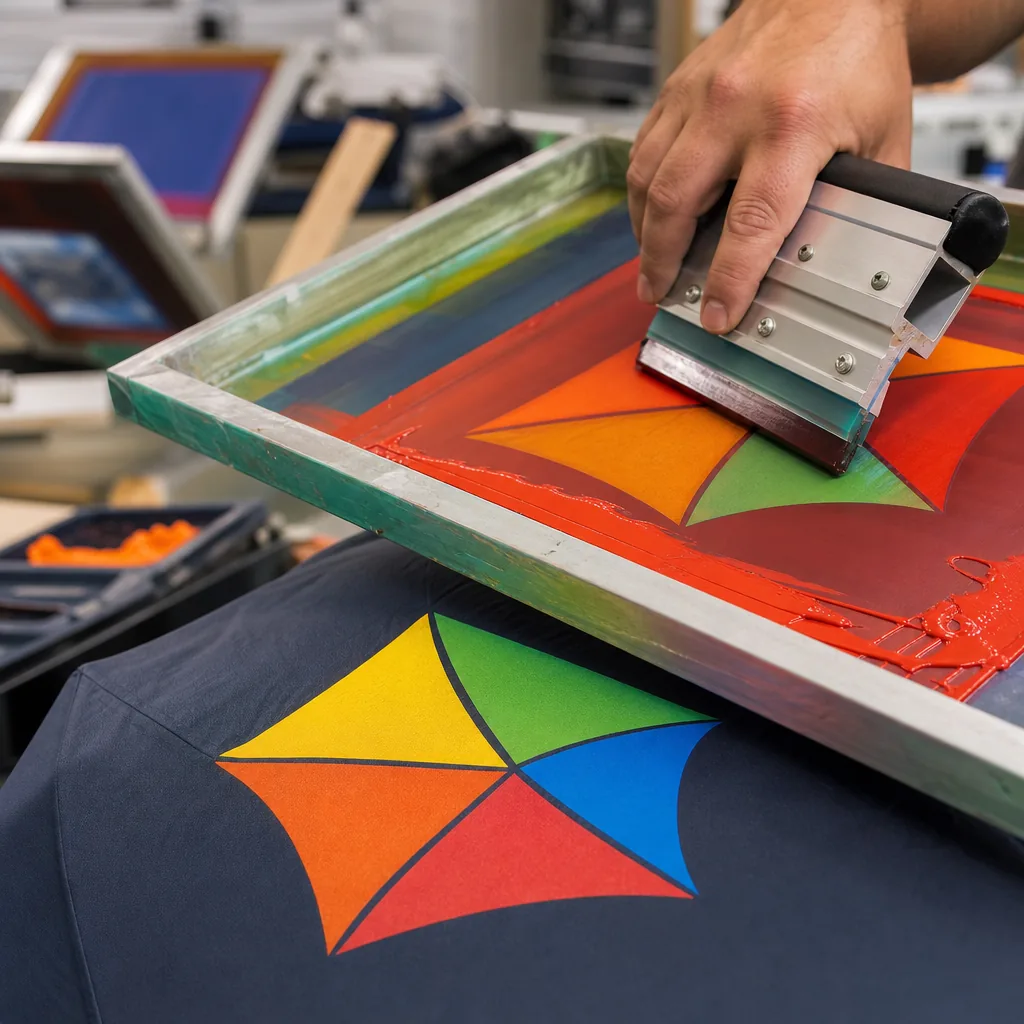
Color-Blocking Strategies for Brand-Driven Umbrella Design
Show how color-blocked umbrella layouts strengthen brand recognition while staying production-friendly, with fabric, pri...
Read More »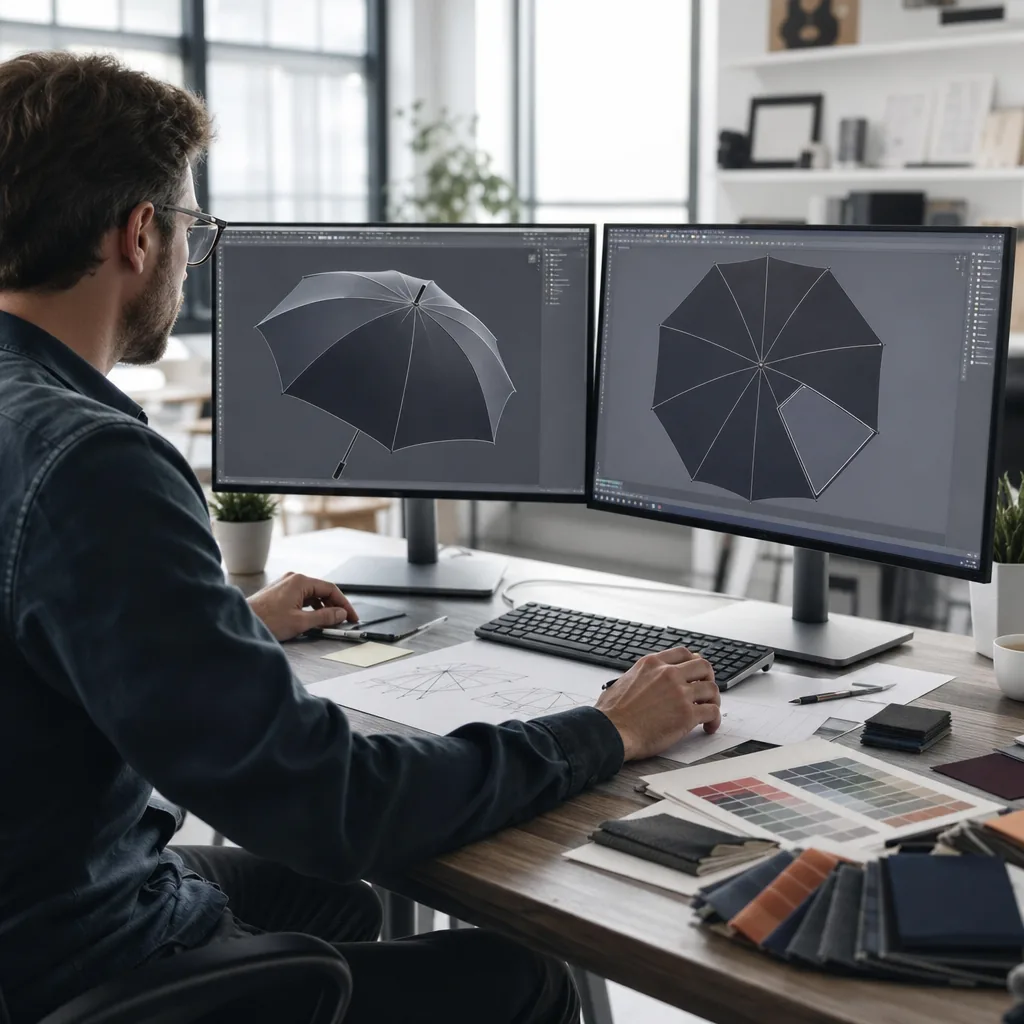
How Umbrella Color Blocking Improves Brand Visibility
See how panel colors, trims, and contrast blocks improve logo visibility on custom umbrellas while keeping brand colors ...
Read More »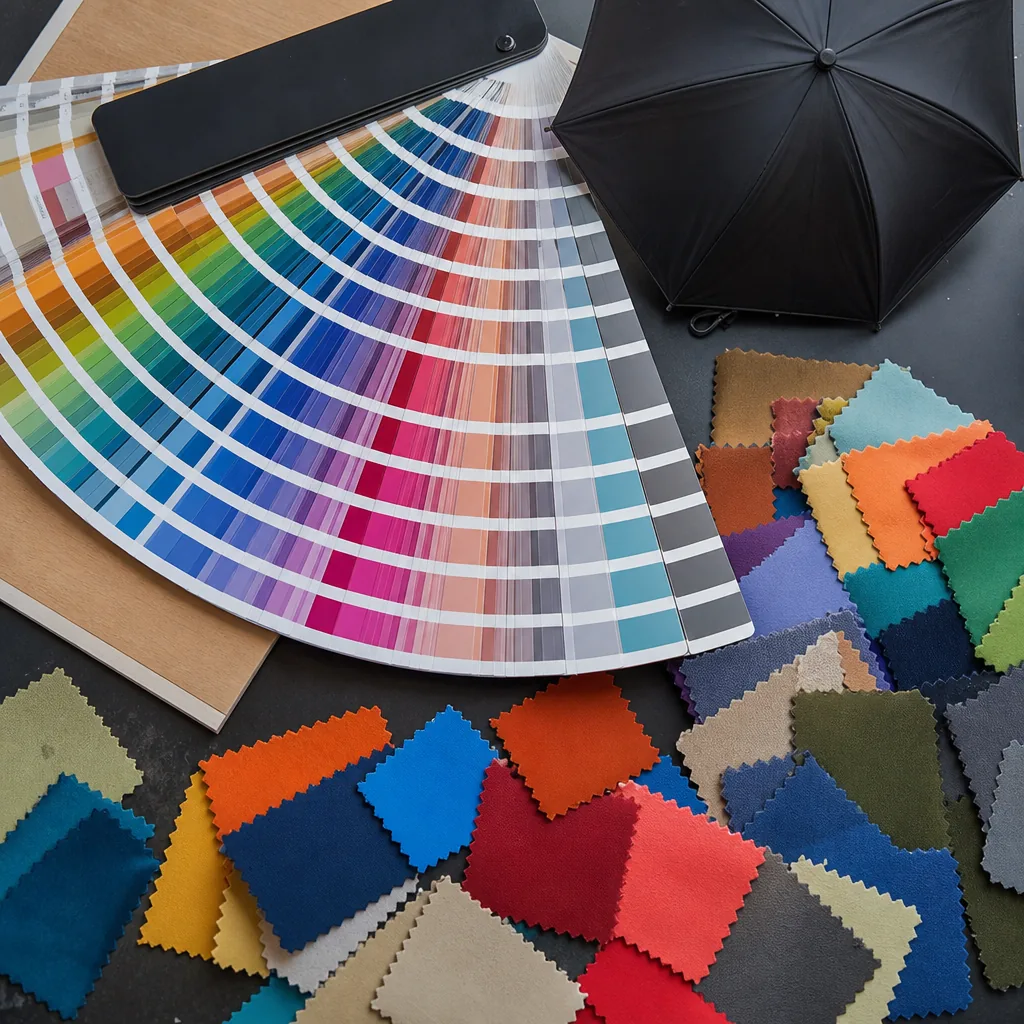
Custom Umbrella Color Blocking for Stronger Brand Recognition
Learn how to use panel blocking, trim choices, and stock color programs to boost brand recognition while controlling MOQ...
Read More »