Umbrella Color Blocking for Clear Brand Recognition
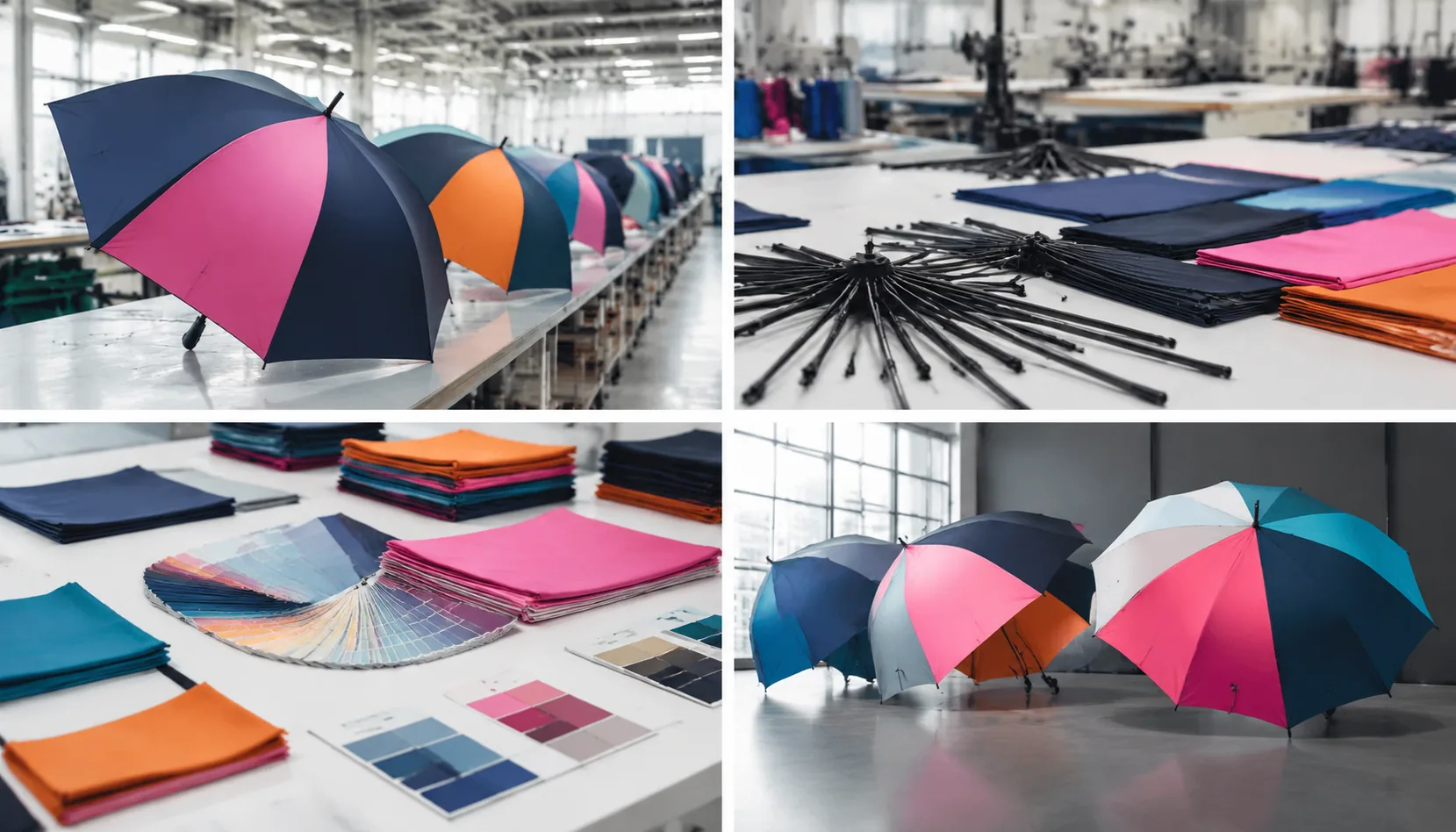
When an umbrella has to carry a brand in a crowded street or retail display, color often does the heavy lifting before a logo is even noticed. From the factory floor, the challenge is not just choosing bright panels but balancing contrast, trim placement, and print compatibility so the product reads cleanly at distance and still looks refined up close. Done well, umbrella color blocking turns a basic rain item into a recognizable brand asset without overprinting the canopy.
Why color blocking works for umbrella branding
Umbrella color blocking works because people recognize shape and contrast faster than they read a logo. A 23" or 27" canopy split into two or four high-contrast panels stands out on a sidewalk, in a parking lot, or across a trade show floor where a single-color top just disappears into the crowd. In practice, the strongest results come from pairing a dark field with a bright edge, or alternating two saturated tones so the silhouette is readable before the branding is even noticed. That is why umbrella color blocking is usually more effective than trying to force oversized artwork onto a small canopy panel.
For retail collections, contrast trim branding gives the line a consistent shelf identity without making every SKU look identical. A private label umbrella color system might use navy with red piping, black with lime panels, or white with a single accent rib line so buyers can build a family look across compact, golf, and telescopic models. The same canopy color strategy also works well for promotional programs where the buyer wants one color family for multiple campaigns, because the umbrella still feels branded even when the logo is small or placed on one panel only.
For event giveaways, brand recognition umbrellas need to be identifiable at a glance from far away, not just close-up in a photo. Alternating colors, vented tops with a contrasting undercanopy, and matched handle or ferrule accents help the umbrella read as part of the brand system even when the imprint area is limited. ZheBrella’s standard practice is to map the panel layout first, then size the logo to support the color story instead of fighting it, because the best result is a canopy that stays visually consistent in use, on video, and in group settings.
Choosing color structures that stay production-friendly
Solid canopies are the easiest way to keep `umbrella color blocking` production-friendly because the cutting table, sewing line, and inspection checkpoints stay simple. One fabric roll, one main Pantone target, and fewer seam intersections means less chance of shade drift between panels, which matters when buyers want brand recognition umbrellas that look consistent across 500 or 5,000 units. Two-tone layouts add real complexity only when the split line has to stay dead straight across the canopy crown and every panel edge must be matched for grain direction. Segmented layouts are the hardest: every extra color change creates more splice points, more thread ends to clean, and more opportunities for misaligned panels, so the factory usually treats them as a higher-risk private label umbrella color project and prices them accordingly.
For color performance, 190T pongee gives a softer hand and is usually fine for basic corporate colors, but 210T pongee holds dye a little deeper and reads more saturated under daylight, especially on dark reds, navy, and black. That difference matters when the canopy color strategy depends on exact logo contrast rather than just overall coverage. On a practical line, contrast trim branding is easier to control than full segmented blocking because the trim can be cut from narrow tape or binding stock, while the main canopy remains one color. In MOQ terms, solid and simple two-tone builds can often start at lower quantities, but once you ask for multiple segmented sections, mixed fabric lots, or strict color-matching tolerances, the minimum order quantity usually climbs because setup time and material loss go up fast.
Rib count affects the geometry more than the color itself, but it still changes how clean the layout looks. An 8K or 10K frame gives wider panels and a more obvious color field, while 16K creates narrower segments that make multi-color blocking look sharper and more uniform around the crown. That also means the seam rhythm changes: if the rib count and panel plan are not aligned, the eye catches uneven color spacing immediately. In practice, the cleanest result comes from matching the panel map to the rib symmetry first, then choosing whether the umbrella uses one body color, a two-tone split, or a fully segmented layout. Our standard practice is to lock the panel count before sampling, because fixing symmetry late in development almost always adds waste, rework, and extra lead time.
How frame and canopy structure affect color accuracy
In umbrella color blocking, the frame count decides where the eye sees the break first. An 8K canopy gives you fewer panels and wider color fields, so a two-tone layout usually reads cleanly from a distance; a 16K build adds more seam lines, which can make a simple block look busier unless the panel widths are planned around the panel geometry. On production runs, I always check seam placement against the artwork before cutting because a color band that looks centered in a flat mockup can land off-axis once the canopy is tensioned. For brand recognition umbrellas, that matters more than people expect: the logo may be perfect, but if the color block drifts across panels, the silhouette stops looking deliberate.
Fiberglass and steel ribs affect the final silhouette in different ways, and that changes how private label umbrella color choices should be handled. Fiberglass flexes more in wind, so the canopy can sit with a softer arc and slightly different light reflection; steel holds a stiffer shape, which makes panel edges look sharper but also exposes any mismatch in dye lot or print registration. That is why contrast trim branding works better on some frames than others: a dark edge on a rigid steel build can look crisp, while the same trim on a flexible fiberglass frame may twist visually at the tips. For a canopy color strategy, we check not just Pantone approval but how the frame loads the fabric in the open position.
Double-canopy and vented styles need their own color blocking rules because the upper and lower layers do not behave like a single sheet. If the vent panel is a separate color, the break line has to be placed where the inner layer still reads cleanly through the vent opening; otherwise the whole top looks patched instead of intentional. With a vented structure, color breaks can also shift when the umbrella opens under load, so I treat those styles as a separate approval sample, not just a variation of the standard build. ZheBrella’s standard practice is to verify the canopy in both fully open and wind-loaded positions before signing off on the final umbrella color blocking layout.
Balancing brand identity with print restraint
If the color system already does the heavy lifting, shrink the logo before you add more ink. That is the practical rule behind umbrella color blocking: when the canopy uses a strong, repeatable palette such as black-and-red, navy-and-white, or school-color pairings, the eye reads the product in half a second, and a large logo just fights the structure. On brand recognition umbrellas, a smaller mark on one panel, the tie, or the sleeve often looks cleaner than a full-panel print because the contrast trim branding is already carrying the identity. I usually tell buyers to reduce logo size when the color blocking is distinctive enough to be recognized at arm’s length, especially for giveaways, retail sets, or events where the umbrella itself is part of the branding.
A secondary mark still helps when the canopy color strategy is subtle or when the umbrella must do double duty across multiple channels. If the main color story is close to competitors, or if the product may sit in a car, office, or lobby where people only see a partial view, a small wordmark on the canopy plus a secondary mark on the strap can prevent the product from looking generic. That matters in private label umbrella color programs, where the shade, placement, and proportion need to stay identical from sample to repeat order; otherwise the line starts looking like random stock. The cleaner solution is usually one primary logo location and one support touchpoint, not four prints competing for attention.
Consistency across handle, strap, tip, and sleeve matters more than squeezing in extra decoration. If the canopy uses a saturated panel combination, keep the handle in a neutral tone, match the strap or closure tab to the dominant brand color, and avoid mixing metallic tips with soft-touch handles unless that contrast is part of the spec. The sleeve should either echo the canopy block or stay plain and restrained; mismatched sleeves are where good concepts usually fall apart in production. Our standard practice is to build the color system first, then lock the logo placement, so the finished umbrella reads as one object rather than a canopy with loose accessories attached.
Buyer checklist for color-blocked umbrella orders
For umbrella color blocking, the first thing to lock is the color standard itself: one Pantone reference per panel, plus a physical fabric swatch signed off under daylight and factory light. Do not rely on screen renders for brand recognition umbrellas, because polyester pongee 190T, 210T, and POE film all shift color differently after coating, sewing, and heat setting. Your canopy color strategy should also define where the contrast trim branding sits—valance, edge tape, tie, sleeve, or handle accent—so the factory is not guessing which color is primary and which is only a highlight.
The next approval is the panel layout, because an eight-panel stick umbrella and a 10K or 16K vented frame do not read the same when color is split across alternating gores. Confirm which panels carry the main brand color, whether the center top cloth or vent layer changes color, and whether the private label umbrella color treatment must stay symmetric on opposite panels. Ask for a sewn pre-production sample, not just a cut piece, and set a realistic sample timing window; if the order involves sublimation, Teflon coating, or UV UPF 50+ fabric, expect a different schedule than a plain black canopy.
Commercial terms need the same discipline. State the MOQ, packout details, and whether inspection is AQL 2.5 on critical, major, and minor defects, because mixed-color orders usually create extra points of failure at seams and tip alignment. FOB and DDP pricing can differ sharply once multi-color material sourcing is involved: separate dyes, higher fabric loss, extra cutting setups, and color-matching rejects all add cost. Our standard practice is to confirm shipping terms before final sample approval, since a low FOB quote can turn into a much higher landed cost once the carton count, freight class, and destination duties are calculated.
Frequently Asked Questions
Is color blocking better than large logo printing?
For some brands, yes, because it creates recognition even when the logo is small or partially hidden. It is especially useful for retail lines that need a more premium, fashion-forward look.
What should buyers sample first on a color-blocked umbrella?
Start with a full-color sample that shows the actual fabric shades, seam placement, and logo size in context. That lets you check whether the contrast reads correctly indoors and outdoors before approving mass production.
What color blocking setup works best for fast brand recognition on umbrellas?
The most effective setup is a high-contrast canopy with one dominant brand color and one secondary accent color on the panels, trim, or vent. Most buyers choose 2-color or 3-color layouts because they stay visible at distance without raising decoration cost too much.
Can you match umbrella panels and trim to Pantone brand colors?
Yes. For private label programs, factories typically match canopy fabric and trim to Pantone references within the limits of available polyester or pongee dye lots. Expect a lab-dip approval step before production, and plan for about 7-10 days for color sampling.
Does color blocking increase minimum order quantity?
Usually not by much, but it can if you need multiple custom fabric colors in one style. For many OEM umbrella programs, MOQ starts around 500-1,000 pieces per colorway, with longer lead times if the design uses several dyed components.
Looking to Launch Your Custom Umbrella Line?
ZheBrella is a Zhejiang-based OEM/ODM umbrella manufacturer with 17 years of export experience. Free design, low MOQ from 100 pieces, windproof construction, full-color print.
Get Free Quote Now »People Also Search For
Related Articles
Umbrella Trim Color Decisions for Stronger Brand Recognition
Learn how trim colors, piping, and frame accents shape brand recognition, while balancing MOQ, material choices, and pro...
Read More »Color-Blocking Strategies for Brand-Driven Umbrella Design
Show how color-blocked umbrella layouts strengthen brand recognition while staying production-friendly, with fabric, pri...
Read More »
Color Blocking and Trim Branding for Retail Umbrella Lines
Plan retail-friendly umbrellas with color blocking, trim accents, and logo placement that reinforce brand identity witho...
Read More »