How Umbrella Color Blocking Improves Brand Visibility
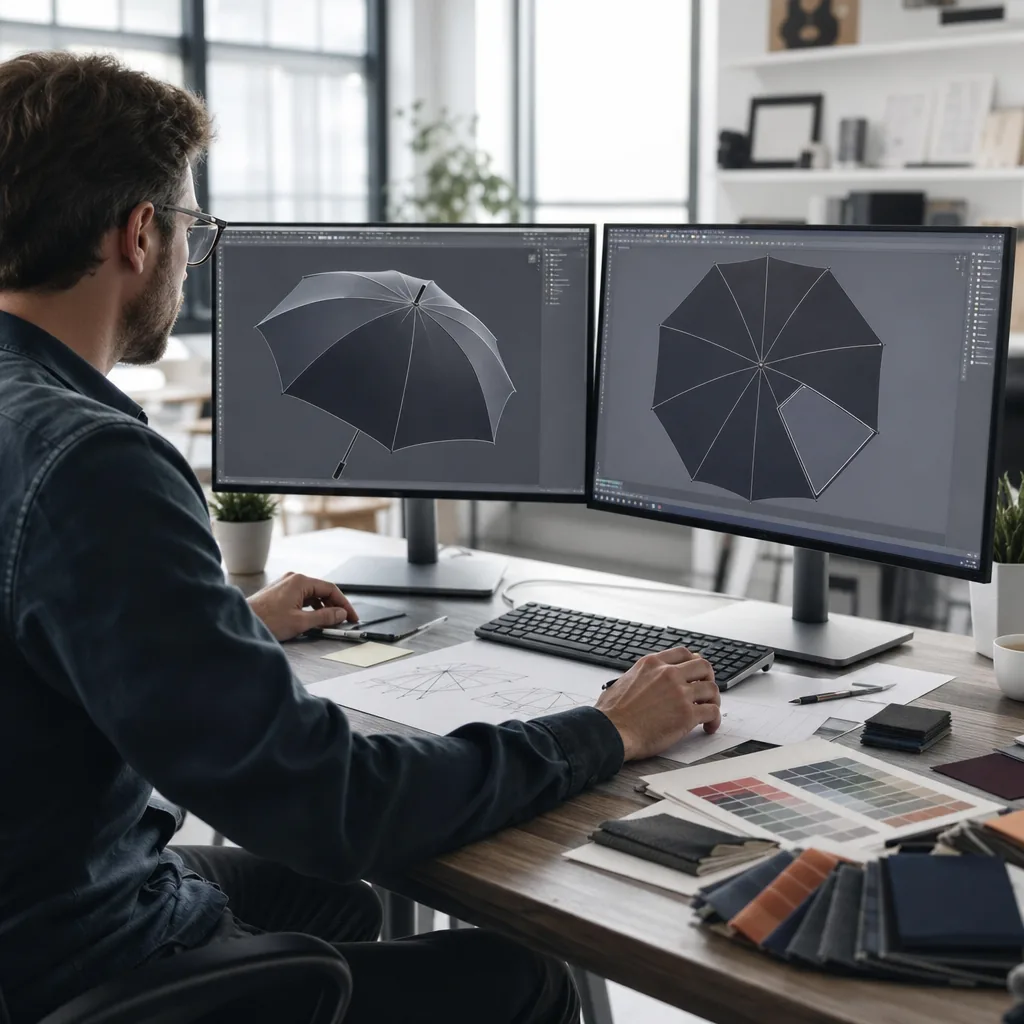
Brand visibility on an umbrella is decided long before the logo is printed; it starts with how the canopy panels, trims, and contrast areas guide the eye in motion and at a distance. On the factory floor, umbrella color blocking has to balance Pantone control, fabric availability, seam alignment, and print placement so the finished umbrella looks sharp in a crowd without drifting away from the buyer’s brand standards.
Use color blocking to make the logo read faster
Logo visibility depends on contrast before logo size. On a 23" or 27" canopy, white, silver, or yellow artwork on navy, black, forest green, or red separates quickly enough to read across a wet street and in phone photos. Royal blue on navy or gray on black can look acceptable on a Pantone sheet but flatten in rain, event crowds, and delivery-driver handoffs. Umbrella color blocking gives the mark a clean field instead of forcing it to compete with every gore. Before approving the strike-off, review the artwork at thumbnail size and from 10 to 20 meters; that test is closer to real exposure than a flat factory proof on a desk.
Use a simple two-tone layout when cost, lead time, and print risk matter. A dark 190T or 210T pongee base with one or two lighter logo panels creates branded umbrella colors without turning the canopy into visual noise. Alternating panels work well on 8K and 10K stick umbrellas because the rib layout already divides the gores, but keep the logo on one stable panel when possible. Printing across seams adds a 2 to 3 mm sewing-tolerance risk, which can make a correct print look skewed after assembly. A clean contrast canopy design also photographs better under overcast skies, trade-show lighting, and glossy Teflon-coated surfaces. For screen print or heat transfer, larger color blocks reduce registration problems compared with thin multi-color artwork spread across several panels.
Treat trim accents as brand cues, not extra decoration. Binding tape, a matching sleeve, a handle cap, or a narrow edge stripe can carry the palette while leaving the logo panel open. On double-canopy vented windproof umbrellas, the lower canopy is usually the safer logo position because the upper vent panels already create movement; branding both layers weakens recognition. With umbrella color blocking, keep the largest uninterrupted contrast area behind the mark and push accents to the edge or non-logo panels. This also supports AQL 2.5 inspection because bold blocks make print skew, color drift, and panel mismatch easier to catch before shipment. Buyers can specify 16K ribs, auto-open-close hardware, or UPF 50+ coating, but the program still fails if the logo cannot be read in a phone photo.
Choose combinations that hold up in production
Predictable umbrella color blocking starts with fabric and ink pairings that survive cutting, sewing, curing, and canopy tension. On pongee 190T, piece-dyed polyester with high-opacity screen print or heat-transfer logos gives the most stable branded umbrella colors because the fabric accepts ink evenly and hides the base shade better. Pongee 210T has a tighter weave and smoother hand, so fine logo edges print cleaner on navy, red, black, and royal blue panels. Sublimation works best on white or very light polyester; it has poor hiding power on dark panels and will not correct a weak contrast canopy design. Coated fabrics need separate testing. Teflon-treated pongee can reject ink without the right pretreatment, while silver UV and black-out coatings should be printed only on the outside face, with curing temperature controlled to prevent blistering, softening, or coating transfer.
Dye lot variation creates the fastest visual mismatch in bulk production. A Pantone-matched red from one roll can run half a shade warmer than the next, and the difference becomes obvious when eight panels meet at the crown. For contrast canopy design, approve bulk fabric under D65 light and warehouse LED because buyer teams often inspect samples indoors. ZheBrella keeps one color-blocked canopy within the same fabric batch where possible, especially on 8K and 10K frames where each panel has a large visible field. Transparent PVC, POE, and EVA canopies require flexible inks that resist cracking on fold lines and avoid heavy coverage near welded seams. A white logo on clear POE can deliver strong logo visibility, but only after adhesion testing with wet folding and 24-hour recovery.
Final balance depends as much on frame mechanics as artwork. Steel ribs and fiberglass ribs pull the canopy differently, and a 23-inch 8K umbrella usually shows more panel distortion than a 27-inch golf umbrella with a deeper canopy arc. If sewing allowance drifts by 2 mm per seam, a center stripe or alternating panel layout can rotate around the shaft, making the logo appear off-center when opened. For promotional rain gear, mark crown orientation, align cut panels by grain direction, and inspect the first 20 opened pieces before bulk sewing continues. On double-canopy vented windproof umbrellas, plan the lower canopy and top vent together because a bright under-panel can show through the vent and shift perceived brand color from a distance. Approve umbrella color blocking on a finished pre-production sample, not only on flat artwork.
Balance brand accuracy with print legibility
Brand accuracy fails if the logo cannot be read from 10 to 30 feet in rain, glare, or crowd movement. On a 23" or 27" canopy, specify the base panel color separately from the logo print zone. Navy, black, forest green, and burgundy may match the brand book on a desk proof, but a same-family logo can disappear on 190T pongee once the canopy curves over 8K or 10K ribs. Use umbrella color blocking to keep branded umbrella colors intact while improving logo visibility: alternate dark and light panels, reserve one light panel for the mark, or add a narrow blocking band that creates a clean edge around the print. This approach matters most for promotional rain gear used in parking lots, trade shows, and sports venues, where recognition at distance carries more value than perfect flat-artwork color matching.
Pay for Pantone matching when color drift creates approval or compliance risk: retail programs, franchise systems, licensed events, and strict corporate identity orders. For those jobs, approve a fabric or print strike-off under D65 lighting, then review both wet and dry appearance because coated 210T pongee, RPET pongee, POE, PVC, and EVA reflect color differently. Print method changes the result too. A heat-transfer logo on a dark panel needs different control than screen-printed white ink on a medium-blue canopy; white underbase, ink density, and curing temperature all affect contrast. For UPF 50+ UV-coated umbrellas or Teflon-finished rain umbrellas, approve the same coating, rib count, and panel layout planned for production, not only a flat swatch that hides gloss shift, rib shadow, and canopy curvature.
For 5,000 to 50,000-unit promotional runs, a controlled near-match often reduces cost and lead-time risk without hurting the campaign. Exact dyed-to-order Pantone fabric can add 7 to 15 days and raise MOQ because the mill must run a custom lot. A lower-risk specification is the closest available stock pongee paired with umbrella color blocking that places the logo on a high-contrast panel or print patch. Minor Delta E variation between panels matters less than whether the mark stays readable after sewing tolerance, rib shadow, and canopy stretch. At ZheBrella, we check logo visibility on a finished sample over steel or fiberglass ribs, not only on flat fabric, because the assembled umbrella is what the buyer’s audience will see.
Account for umbrella format and use case
Match the color plan to the umbrella format before approving artwork. A single-color corporate umbrella is the lowest-risk option for banks, hotels, insurance programs, and employee gifts because the logo sits on a clean 23 inch or 27 inch panel with little visual competition. On a standard 8K steel-frame auto-open umbrella with 190T pongee, review logo visibility in three real positions: closed in hand, half-open at chest height, and fully open above the shoulder. Dark navy, black, and bottle green can look executive on a dry proof, but wet fabric lowers contrast for small white or silver marks. For branded umbrella colors, the practical pass/fail test is not the tabletop Pantone match; it is whether the logo reads at 10 to 15 meters on a wet street. Umbrella color blocking reduces that risk by giving a dark corporate canopy a lighter logo panel, alternating contrast panel, or defined border field.
Retail-ready fashion umbrellas need a tighter construction review because the canopy is the product surface, not just a logo carrier. A 21 inch folding auto-open-close umbrella gives less uninterrupted print space than a 23 inch stick umbrella, so seam breaks affect multi-panel artwork, sublimation, and heat-transfer graphics. Contrast canopy design can use two-color radial panels, border bands, or split-tone outer and inner canopies, but the frame has to support the retail claim. On a vented windproof double-canopy umbrella, the upper vent layer can hide or interrupt artwork from side angles; keep the main logo on lower panels and use the vent as a secondary color accent. Fiberglass ribs and stretchers fit this category better than all-steel frames when the umbrella is sold as wind-resistant. A properly built 8K or 10K fiberglass frame should pass 50+ mph wind-tunnel testing, so the design choice does not become a warranty risk.
High-visibility event umbrellas work more like mobile signage than fashion accessories. For golf tournaments, outdoor queues, stadium activations, and promotional rain gear used by staff, a 27 inch or 30 inch golf umbrella with 10K or 16K ribs creates a broad visual field, but buyers should review the layout from above, front, and moving crowd angles instead of relying on a flat proof. POE, PVC, or EVA clear panels improve sightlines for traffic control, festivals, and security teams, but they reduce printable area and shift attention to borders, caps, and lower canopy bands. UV styles also change the read: UPF 50+ coatings, silver inner layers, and black-out linings can flatten color from underneath while the outer canopy still photographs well. At ZheBrella, umbrella color blocking is checked against the mechanism because manual, auto-open, and auto-open-close frames park folded panels differently; a strong open-canopy layout can look disordered when carried closed.
Set approval rules before mass production
Approval rules for umbrella color blocking need to be written before the first bulk fabric is cut, because a two-color layout can fail even when each individual color is correct. Require the mockup to show every canopy panel by position, not just a front view: panel 1 navy, panel 2 white, panel 3 navy, and so on for 8K, 10K, or 16K frames. For branded umbrella colors, ask the supplier to match Pantone TCX or TPX references on the actual fabric grade, such as 190T pongee, 210T pongee, POE, PVC, or EVA, because the same ink reads differently on coated polyester versus transparent plastic. Logo visibility should be checked against the darkest and brightest panels, especially if the mark crosses a seam or sits near a vented double-canopy overlap. A contrast canopy design looks sharp on a PDF, but on the sewing table a 3 mm panel misalignment can make the umbrella look cheap.
Brightness approval should include daylight review, not only a lightbox photo from the sample room. I prefer checking preproduction samples outdoors at midday and again under warehouse LED, because promotional rain gear is usually seen on streets, trade shows, golf courses, and event queues, not in perfect studio lighting. Fluorescent orange, lime, red, and royal blue can lose punch after Teflon water-repellent coating or UV UPF 50+ finishing, so the approved sample should state whether the brightness standard is before or after coating. For umbrella color blocking, also check seam allowance bleed, thread color, binding tape, tips, ferrule, runner, and handle color; buyers often approve only the canopy and then complain when black tips break the brand palette. If printing is added, screen print and heat-transfer logos need separate approval because white ink opacity over navy or black panels is a common weak point.
Multi-color construction changes MOQ, sampling cost, and lead time because the factory must purchase, cut, and balance more fabric lots. A plain 23 inch auto-open umbrella in one 190T pongee color may run at 500 pieces per color, while a four-panel color-blocked version may need 1,000 to 3,000 pieces depending on fabric stock and waste ratio. Sampling usually costs more than a solid canopy because the cutting room must set a panel map, the sewing line must control panel order, and QC must inspect shade consistency across the assembled canopy. Our standard practice is to require a signed preproduction sample, then run AQL 2.5 finish inspection for skipped stitches, puckering, color contamination, print placement, rib alignment, and open-close function. Allow 5 to 10 days for sampling and 25 to 45 days for bulk production after approval; DDP orders may need extra time for carton marking, customs data, and destination delivery booking.
Frequently Asked Questions
Does color blocking reduce logo clarity on umbrellas?
Not if the contrast is planned properly. A strong background-to-logo contrast usually improves clarity, but too many competing colors can weaken the brand mark and make the canopy look busy.
Are two-tone umbrellas more expensive to produce?
Usually yes, because they add complexity in cutting, panel matching, and color control. The premium depends on the number of colors, fabric changes, and whether the order needs custom Pantone matching.
Can umbrella factories match exact Pantone colors for color-blocked panels?
Yes, most OEM umbrella factories can match Pantone references for canopy fabric, trims, handles, and printing. Buyers should approve a fabric swatch or pre-production sample because polyester pongee, RPET, and coated fabrics can show slight shade differences.
What panel layout works best if the logo must be visible from a distance?
A common B2B layout is a solid or low-contrast logo panel beside darker contrast panels, with the logo printed on 2 opposite panels for 360-degree exposure. For golf umbrellas, larger 30-32 inch panels allow bigger logos and stronger visibility in outdoor promotions.
Does color blocking increase the MOQ or production time for custom umbrellas?
Color blocking usually does not change MOQ if standard fabric colors are used, but custom-dyed panel colors may require higher fabric minimums, often 500-1,000 pieces per color. Lead time is typically 25-45 days after sample approval, depending on fabric availability and logo printing method.
Looking to Launch Your Custom Umbrella Line?
ZheBrella is a Zhejiang-based OEM/ODM umbrella manufacturer with 17 years of export experience. Free design, low MOQ from 100 pieces, windproof construction, full-color print.
Get Free Quote Now »People Also Search For
Related Articles
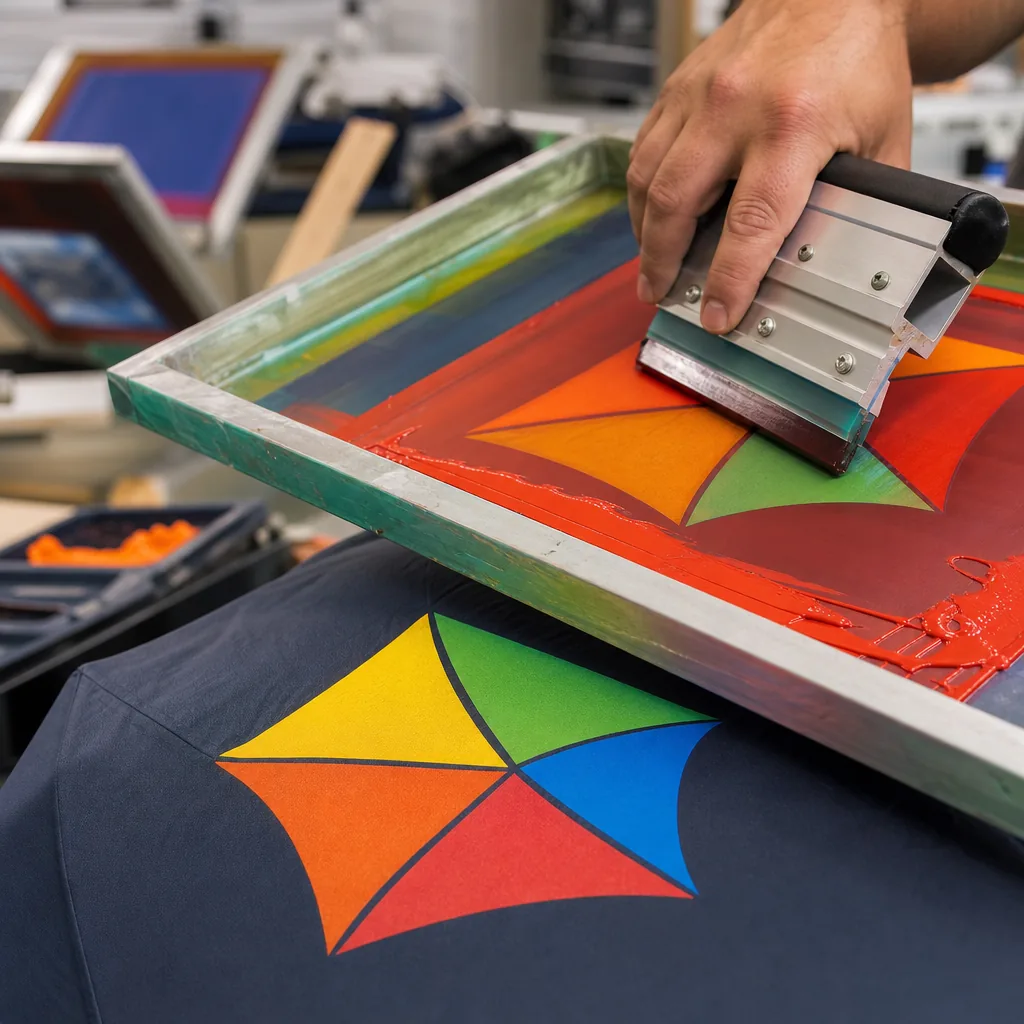
Color-Blocking Strategies for Brand-Driven Umbrella Design
Show how color-blocked umbrella layouts strengthen brand recognition while staying production-friendly, with fabric, pri...
Read More »
Umbrella Color Blocking for Stronger Brand Recognition
Plan color-blocked umbrellas that read clearly at distance, fit MOQ budgets, and stay consistent across 190T or 210T can...
Read More »Color Blocking Strategies for Branded Umbrella Canopies
See how contrast panels, trim colors, and color blocking improve brand recognition while staying manufacturable on custo...
Read More »